 Preview
 Send
Send Share
Share
 Details

 Download
 Similars
 X-Ray
X-Ray Diaporama
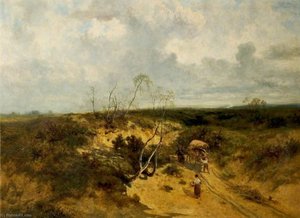
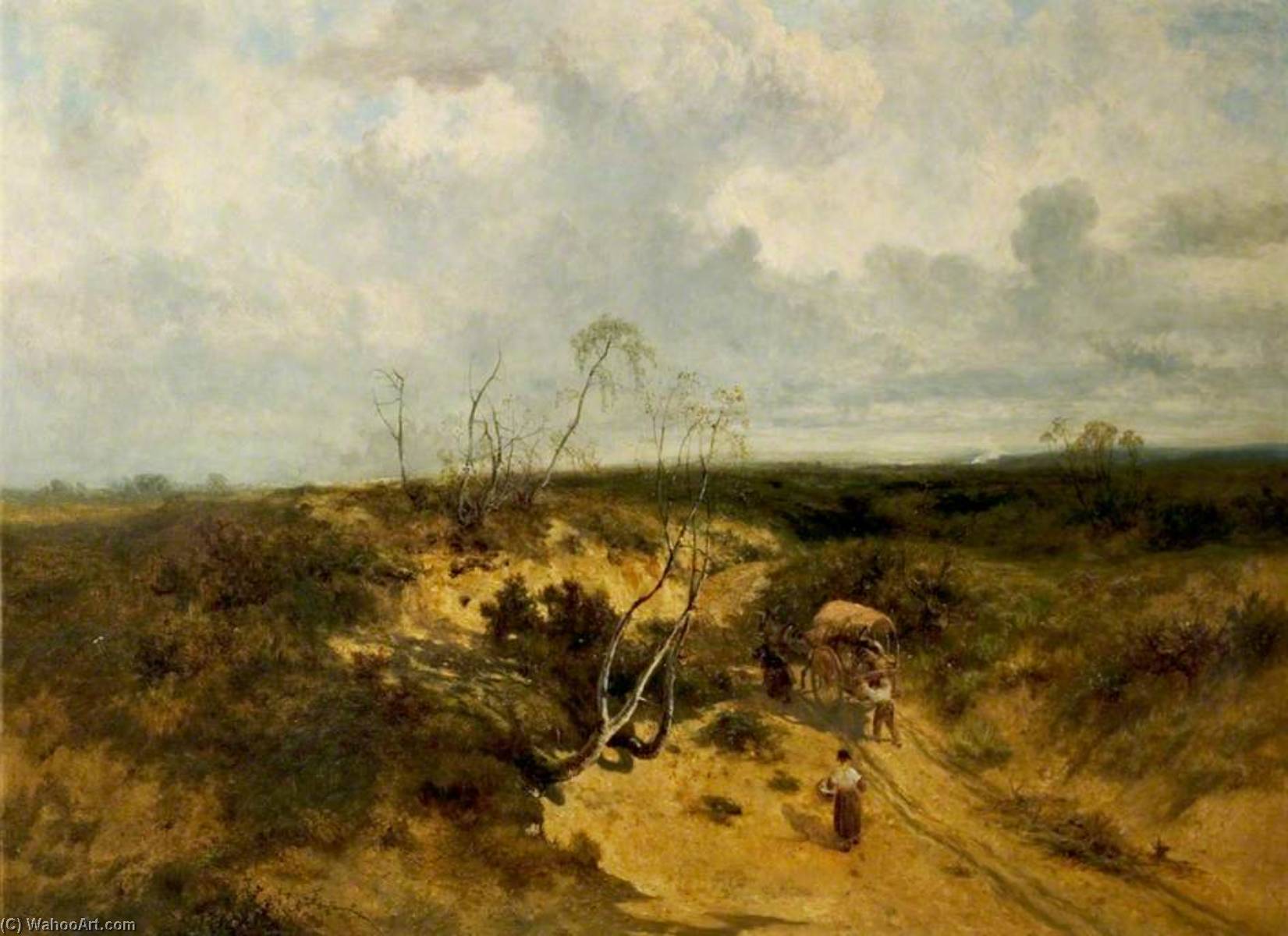
A Sandy Bit of Road
 Romanticism
 1874
1874 79.0 x 109.0 cm
 Nottingham Castle Museum And Art Gallery
 Read More
Hand Made Oil Reproduction
Hand-painted oil on canvas in your size and frame, made to order by our artists. ( Buy Print Buy Image)




































Pick from our preset sizes that match the artwork's original proportions.

You may enter your own dimensions to fit a specific frame or space. If your selected size does not match the original image's proportions, we will either crop the artwork or extend the painting with additional hand-painted elements. A digital mockup will be sent for your approval before production begins.
Please note that the on-screen preview does not reflect the actual cropping or extension. Only the mockup will accurately show the final composition.
While custom sizes are available, we recommend selecting a dimension from the predefined list to preserve the original proportions.
After order, ArtsDot.com team will email client for instructions and provide a mockup preview
Worldwide Delivery () in 3/4 weeks instead of standard 5 weeks. (23 August). No compromise on quality.

Free Worldwide Express Shipping

High-Quality Linen Canvas

Full Shipping Insurance

Customs Tax Refund Guarantee

True Color Matching Guarantee

60-Day Return Policy (Defects Only)

100% Money-Back Guarantee

Bulk Discount Offer
 Glass option is only available in size under 110 CM

A Sandy Bit of Road
Reproduction Medium
Reproduction Size
-


Total Price
$ 263
Artwork Description
The Painting's Composition
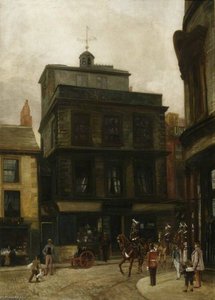
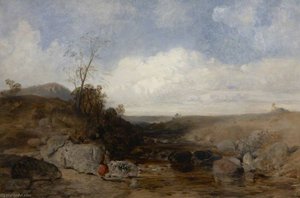
The painting features three people walking down a dirt road, with a horse-drawn carriage in the center of the image. A bird can also be seen flying above the road, adding to the natural ambiance of the scene. The use of warm colors and soft brushstrokes creates a sense of tranquility, inviting the viewer to step into the peaceful world of the painting. For more information on this artwork, visit John Wright Oakes: A Sandy Bit of Road on ArtsDot.Similar Works by Other Artists
Other notable artists have also created captivating landscapes that reflect the beauty of rural life. For example, Camille Pissarro's La Cote de Chou a Pontoise is a renowned Impressionist painting that showcases the artist's skillful depiction of light and atmosphere. Similarly, Winslow Homer's The Rustics and Jean Baptiste Armand Guillaumin's In the Countryside are excellent examples of landscape paintings that evoke a sense of serenity and peace. You can find more information on these artworks on ArtsDot, including Camille Pissarro: La Cote de Chou a Pontoise and Winslow Homer: The Rustics.- Handmade oil painting reproductions of A Sandy Bit of Road and other notable artworks are available on ArtsDot.
- These reproductions are created by skilled artists who use high-quality materials to ensure that the final product is indistinguishable from the original.
- By purchasing a handmade oil painting reproduction, you can own a piece of art history without breaking the bank.
For those interested in learning more about John Wright Oakes and his work, visit the Nottingham Castle Museum And Art Gallery or explore ArtsDot's collection of handmade oil painting reproductions. With its beautiful depiction of rural life and serene atmosphere, A Sandy Bit of Road is a must-see for art lovers and anyone looking to own a piece of history.
Related Artworks

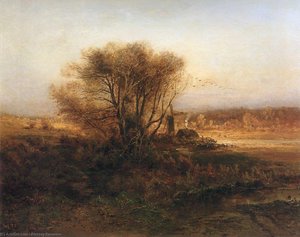
Artist Biography
The Soul of the Welsh Landscape: The Life and Art of John Wright Oakes
In the heart of the Victorian era, a period defined by both industrial expansion and a profound romantic longing for the untouched natural world, the works of John Wright Oakes emerged as a poignant bridge between reality and imagination. Born in 1820 at Sproston House near Middlewich, Cheshire, Oakes was a man whose lineage and upbringing provided a stable foundation for a life dedicated to the pursuit of aesthetic truth. While his early years were rooted in the English countryside, his artistic spirit found its true home amidst the rugged, mist-shrouded peaks and dramatic coastlines of Wales. His journey from a student of fine details to a master of atmospheric grandeur represents one of the most compelling narratives of nineteenth-century British landscape painting.
Oakes’s formal training began in Liverpool, where he studied under the guidance of John Bishop at the school attached to the Liverpool Mechanics’ Institution. This early education instilled in him a meticulous discipline that would later serve as the bedrock for his more expansive works. Interestingly, his initial foray into the art world was not through the sweeping vistas for which he is now celebrated, but through the delicate and precise genre of fruit paintings. These early still lifes, exhibited at the Liverpool Academy—where he eventually served as an honorary secretary—demonstrated a profound understanding of texture, light, and form. However, around 1843, a transformative shift occurred; drawn by the raw power of nature, Oakes began painting directly from the landscape, trading the controlled environment of the studio for the unpredictable beauty of the outdoors.
A Mastery of Light and Romantic Grandeur
The transition from still life to landscape allowed Oakes to explore the tenets of Romanticism, an art movement that prioritized emotion, the sublime, and the awe-inspiring power of the natural world. Influenced by the legendary techniques of masters like Turner and Constable, Oakes developed a signature style characterized by masterful tonal modulation and atmospheric perspective. He possessed a rare ability to capture the fleeting, ephemeral qualities of light—the way a sudden sunbeam pier sculpting through heavy clouds, or the soft, melancholic glow of twilight over a mountain glen. His canvases were not merely topographical records but emotional landscapes that invited the viewer to feel the dampness of the mist and the chill of the wind.
His technical prowess was particularly evident in his treatment of diverse terrains:
- Mountainous Vistas: In works inspired by Snowdonia, he utilized rugged textures and dramatic shadows to convey the intimidating majesty of the Welsh peaks.
- Coastal Scenes: His depictions of places like Aberffraw Bay and Malldraeth Sands showcased a fluid command of water, capturing the turbulent energy of the sea meeting the shore.
- Rural Serenity: In pieces such as A North Devon Glen, Autumn, he employed warm palettes and soft brushstrokes to evoke a sense of pastoral peace and seasonal transition.
Legacy and Artistic Triumph
The trajectory of Oakes’s career was marked by consistent recognition from the most prestigious institutions of his time. His debut in London at the Royal Academy in 1847, featuring On the River Greta, Keswick, signaled his arrival as a significant force in British art. Throughout his prolific life, he became a regular contributor to the Society of British Artists, the Dudley Gallery, and the Portland Gallery. His accolades were numerous, including being elected an Associate of the Royal Academy in 1876 and receiving honorary membership in the Royal Scottish Academy in 1883. Even as ill health began to impede his physical practice in his final years, his dedication to the craft remained unshaken, continuing to exhibit at the Royal Academy until the very end.
Today, the historical significance of John Wright Oakes lies in his ability to have captured the vanishing essence of the nineteenth-century landscape. His works, now held in esteemed collections such as the Walker Art Gallery and the Nottingham Castle Museum, serve as windows into a world of sublime beauty and quiet contemplation. He remains a vital figure for anyone seeking to understand the Victorian fascination with the wild, untamed corners of the British Isles, leaving behind a legacy of over 300 canvases that continue to resonate with visual splendor and psychological depth.
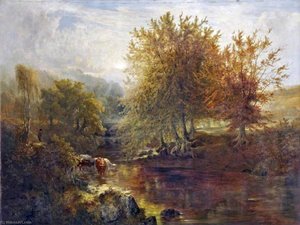
john wright oakes
1820 - 1887
Quick Facts
- Artistic Movement Or Style: Romantic Landscape Painting
- Artists Or Movements Influenced By This Artist: ['Romanticism']
- Artists Who Influenced This Artist: ['John Bishop']
- Date Of Birth: 1820
- Date Of Death: 1887
- Full Name: John Wright Oakes
- Nationality: English
- Notable Artworks:
- A North Devon Glen, Autumn
- A Sandy Bit of Road
- Slate Quarries, Llanberis
- Place Of Birth: Sproston House, Cheshire
Related Articles

John Constable's Masterpieces: Explore 25 Iconic Landscapes for Your Home
Journey through John Constable's 25 most celebrated landscapes. Explore Romanticism, Dedham Vale & his masterful use of light in iconic paintings like 'Hay Wain'. Find museum-quality art reproductions and elevate your home decor on ArtsDot.com.

John Singer Sargent's 25 Masterpieces: Portraits & Beyond | ArtsDot
Explore 25 iconic John Singer Sargent paintings – from dazzling portraits to Impressionist landscapes. Discover the stories behind Madame X, El Jaleo & more! Find museum-quality art reproductions and elevate your home decor with ArtsDot.com.

Romantic Landscapes: 10 Masterpieces for Your Home | ArtsDot
Journey through 10 Romantic landscape masterpieces by Friedrich, Turner & Cole. Explore emotional art, sublime nature scenes & iconic 19th-century paintings. Find museum-quality reproductions for your home at ArtsDot.com – discover the full collection online!
Cultivating Visions: A Historical Journey Through Rural Landscapes in Art
Explore the rich history of rural landscape painting with ArtsDot. Discover Impressionist masterpieces, key artists & movements. Find your perfect serene artwork and bring nature's beauty home.
Evoking Arcadia: A Historical & Aesthetic Exploration of Rural Landscape Art
Explore the rich history of pastoral landscape art, from classical Arcadia to Impressionism & beyond. Discover key artists, movements, and how to collect serene rural scenes for your home. Expert insights at ArtsDot.