 Preview
 Send
Send Share
Share
 Details

 Download
 Similars
 X-Ray
X-Ray Diaporama
Path of Gold


 Read More
Hand Made Oil Reproduction
Hand-painted oil on canvas in your size and frame, made to order by our artists. ( Buy Print Buy Image)




P118B $10

P118H $10

P118W $10

P438Z $10

P508JH $12

P508YH $12

P805H $10

P805Z $10

P919BZ $10

P919G $10

P919XJ $10

P959ZH $10

P968JZ $12

W106C $8

W218G $10

W218JH $8

W218Y $10

W307PJ $10

W316G $10

W316PJ $8

W316Y $10

W398PJ $8

W4111J $10

W500HY $15

W500JH $15

W692G $12

W849H $8

W940BG $15

W953PJ $8




Pick from our preset sizes that match the artwork's original proportions.

You may enter your own dimensions to fit a specific frame or space. If your selected size does not match the original image's proportions, we will either crop the artwork or extend the painting with additional hand-painted elements. A digital mockup will be sent for your approval before production begins.
Please note that the on-screen preview does not reflect the actual cropping or extension. Only the mockup will accurately show the final composition.
While custom sizes are available, we recommend selecting a dimension from the predefined list to preserve the original proportions.
After order, ArtsDot.com team will email client for instructions and provide a mockup preview
Worldwide Delivery () in 3/4 weeks instead of standard 5 weeks. (17 August). No compromise on quality.

Free Worldwide Express Shipping

High-Quality Linen Canvas

Full Shipping Insurance

Customs Tax Refund Guarantee

True Color Matching Guarantee

60-Day Return Policy (Defects Only)

100% Money-Back Guarantee

Bulk Discount Offer
 Glass option is only available in size under 110 CM

Path of Gold
Reproduction Medium
Reproduction Size
-


Total Price
$ 263
Artwork Description
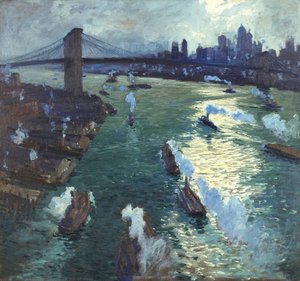
A Bridge Between Impressionism and Expressionism: Exploring Jonas Lie’s “Path of Gold”
Jonas Lie stands as an extraordinary artist—a pioneer bridging the gap between the serene beauty of Impressionism and the fervent emotion characteristic of Expressionism. Born in Moss, Norway, in 1880, his artistic journey took him across continents, establishing him as a prominent figure in both Norwegian art history and American landscape painting. “Path of Gold,” created around 1914, exemplifies this unique stylistic fusion, offering viewers an unforgettable glimpse into Lie’s vision of industrial progress intertwined with the grandeur of nature.The Landscape Vision: Impressionistic Roots
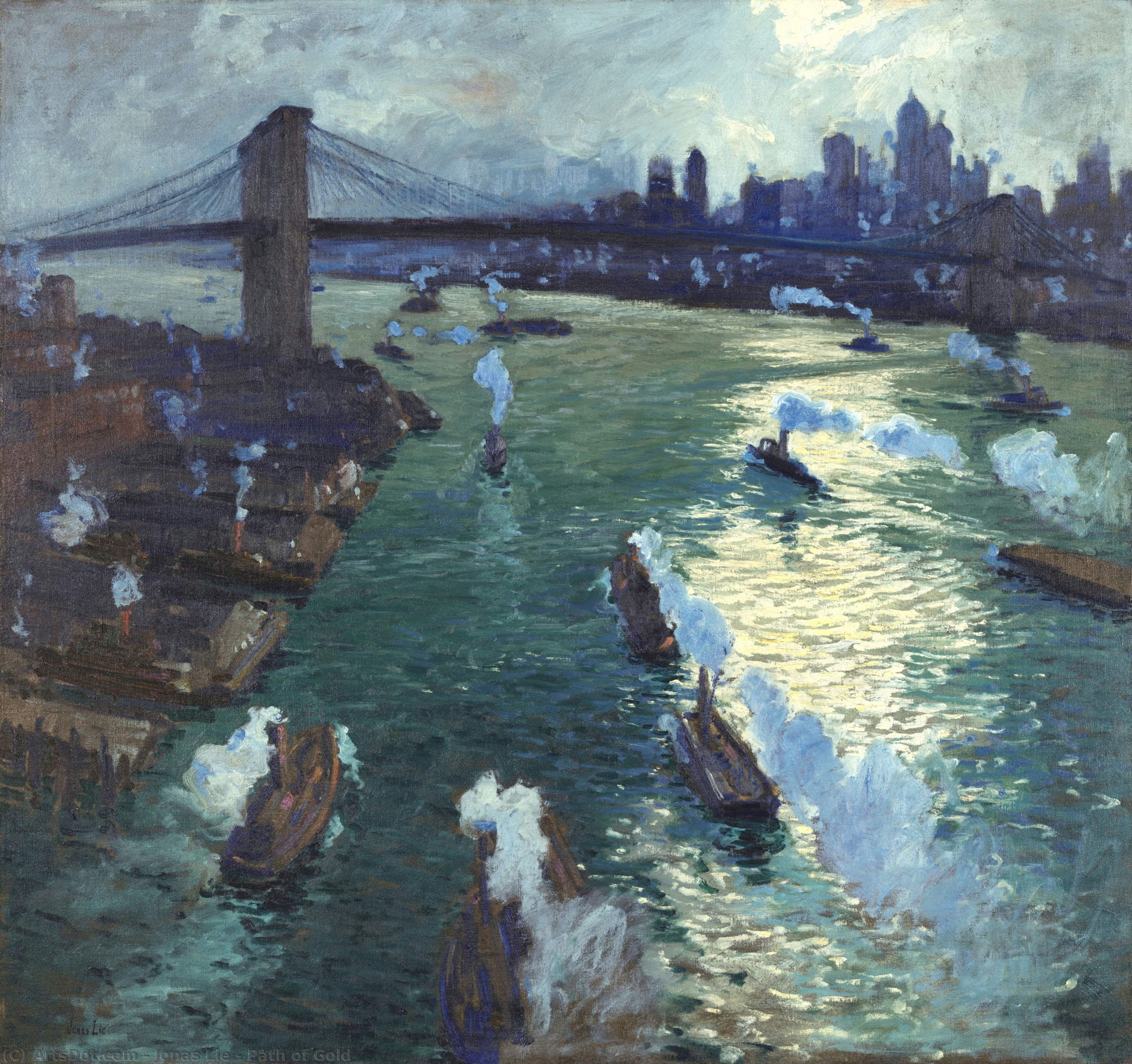
Lie's formative years instilled in him a deep connection to the Norwegian countryside—a foundation that profoundly influenced his artistic sensibilities. Like many Impressionists before him, he embraced Claude Monet and Camille Pissarro’s revolutionary approach to capturing fleeting moments of light and color. This exposure is palpable in “Path of Gold,” where Lie skillfully employs broken brushstrokes and vibrant hues to depict the East River landscape near Manhattan. The shimmering surface of the water reflects the diffused sunlight, creating an ethereal atmosphere that prioritizes sensory experience over precise representation. Notice how Lie captures the subtle gradations of color—the pale blues and greens blending seamlessly into one another—a technique directly inherited from Impressionistic masters.Industrial Harmony: Symbolism of Progress
However, “Path of Gold” transcends mere Impressionistic aesthetics; it carries a powerful symbolic message reflecting Lie’s belief in the harmonious coexistence of industry and natural beauty. Dominating the foreground are tugboats and barges laden with cargo, their smokestacks billowing upwards against the backdrop of the Brooklyn Bridge—a monumental structure symbolizing New York City's burgeoning prosperity during the early 20th century. This juxtaposition isn’t accidental; Lie deliberately sought to portray industrialization not as a destructive force but as an engine propelling humanity toward advancement and enlightenment. The bridge itself serves as a visual metaphor for connection—linking Brooklyn and Manhattan, representing the unification of urban dynamism with rural tranquility.Technical Mastery: A Painter's Delicate Touch
Lie’s technical prowess is evident in every detail of “Path of Gold.” He meticulously builds up layers of oil paint on canvas, achieving remarkable textural richness and depth. The artist’s brushstrokes are loose yet controlled—allowing for spontaneity while maintaining compositional coherence. Observe how Lie captures the reflections on the water surface with astonishing accuracy—a testament to his observational skills and unwavering commitment to capturing the essence of the scene. Furthermore, he skillfully employs atmospheric perspective—reducing color intensity and detail in distant objects—creating a convincing illusion of depth that enhances the painting’s visual impact.Emotional Resonance: Capturing the Spirit of an Era
Ultimately, “Path of Gold” succeeds in conveying the spirit of its time—a period marked by optimism about technological innovation and a yearning for beauty amidst industrial expansion. The painting evokes feelings of wonder and aspiration, inviting viewers to contemplate the transformative power of progress while appreciating the enduring allure of the natural world. Like many Expressionist landscapes of the era, Lie’s masterpiece isn't merely a depiction of scenery; it’s an embodiment of emotion—a heartfelt expression of faith in humanity’s capacity for creativity and resilience. It remains a captivating testament to Jonas Lie’s artistic vision and his enduring legacy as one of Norway’s most influential painters.Related Artworks
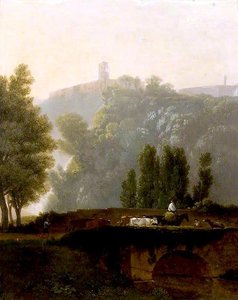
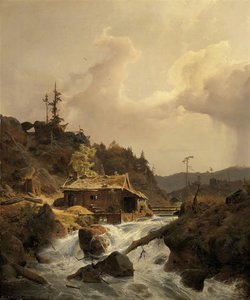
Artist Biography
Jonas Lie: A Pioneer of Norwegian Expressionism
Jonas Lie (April 29, 1880 – January 18, 1940) stands as a pivotal figure in the history of Norwegian art and a significant contributor to American Impressionism. Born in Moss, Norway, Lie’s artistic journey spanned continents, culminating in a distinguished career marked by landscapes imbued with emotional depth and technical innovation. His work embodies the spirit of Expressionism while simultaneously reflecting the influence of Impressionistic principles—a unique blend that cemented his place among the foremost artists of his era.- Early Life & Artistic Training: Lie’s formative years were shaped by a devout Christian upbringing and instilled in him a profound appreciation for nature. He pursued formal artistic training at the Art Students League of New York, immersing himself in the burgeoning Impressionist movement led by artists like Claude Monet and Camille Pissarro. This exposure proved instrumental in shaping his stylistic sensibilities and establishing a foundation for his future endeavors.
- Return to Norway & Landscape Painting: Upon returning to Norway, Lie dedicated himself primarily to landscape painting—a medium he championed with unwavering conviction. He sought to capture not merely visual appearances but also the emotional resonance of the Norwegian countryside, particularly coastal scenes and birch forests. His canvases pulsated with vibrant colors and visible brushstrokes, reflecting a deliberate rejection of academic conventions in favor of subjective experience.
Major Achievements & Artistic Style
Lie’s artistic style distinguished itself through its masterful execution of Impressionistic techniques combined with Expressionist sensibilities. He employed loose brushwork and layering of colors to convey atmospheric conditions—misty mornings, turbulent seascapes—and to infuse his paintings with palpable emotion. Recurring motifs included birch trees, reflecting the tranquility and spiritual significance of Norwegian forests, and depictions of ships returning home, symbolizing themes of homecoming and nostalgia. His meticulous attention to detail ensured that every element contributed to the overall expressive impact of his compositions.- The Panama Canal Expedition: Lie’s artistic ambition extended beyond Norway; he undertook a remarkable expedition to document the construction of the Panama Canal, producing a series of paintings that captured the grandeur and logistical challenges of this monumental undertaking. These works showcased his ability to translate complex visual information into emotionally resonant imagery.
- Recognition & Influence: Lie’s artistic achievements garnered considerable acclaim during his lifetime, notably culminating in his presidency of the National Academy of Design from 1934 until his death in 1940. His legacy continues to inspire artists today, serving as a testament to the transformative power of observation and emotional expression.
Notable Works
Several paintings exemplify Lie’s artistic prowess and stylistic vision. “The Old Ships Draw to Home Again” portrays a dramatic seascape under stormy skies, capturing the raw energy of the ocean with masterful brushwork and evocative color palettes. Similarly, “Birches” presents a serene depiction of birch trees bathed in autumnal light—a testament to Lie's ability to convey both beauty and melancholy simultaneously. "Path of Gold" showcases his exploration of coastal landscapes during sunset hours.- “The Old Ships Draw to Home Again”: An oil painting depicting a turbulent seascape, demonstrating Lie’s command of Impressionistic techniques and conveying the drama of the natural world.
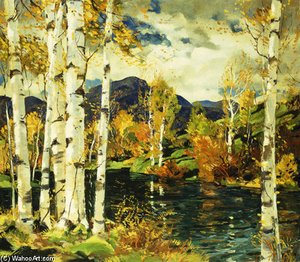
- "Birches": A landscape capturing the tranquility of birch forests during autumn, reflecting Lie's stylistic fusion of Expressionism and Impressionism.
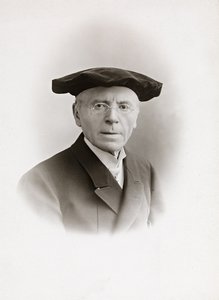
Jonas Lie
1880 - 1940 , Norway
Quick Facts
- Artistic Movement Or Style: Expressionism
- Date Of Birth: April 29, 1880
- Date Of Death: January 18, 1940
- Full Name: Jonas Lie
- Nationality: Norwegian American
- Notable Artworks:
- The Old Ships Draw to Home Again
- Birches
- Place Of Birth: Moss, Norway
Related Articles

Cézanne's Masterpieces: 25 Iconic Artworks to Transform Your Space
Journey through 25 iconic artworks by Paul Cézanne – a master of Impressionism and Post-Impressionism. Explore his landscapes, still lifes, and the stories behind these timeless masterpieces. Discover museum-quality reproductions & curated decor at ArtsDot.com.

Beyond the Horizon: 10 Landscape Masterpieces for Your Home Decor
Journey through 10 breathtaking landscape paintings by Monet, Van Gogh & more! Explore iconic artworks, artistic techniques & find inspiration for your home decor. Museum-quality reproductions at ArtsDot.com. Discover all masterpieces on ArtsDot.com

Evocations of Place: A Historical Journey Through Landscape Art
Explore the rich history of landscape art with ArtsDot. Discover renowned artists, movements like Impressionism & Romanticism, and expert guidance for collecting timeless pieces. Find your perfect serene escape today!
Evocations of Place: A Historical Journey Through Landscape Art
Explore the rich history of landscape art with ArtsDot. Discover renowned artists, movements like Impressionism & tonalism, and expert guidance for collecting timeless pieces. Find your perfect serene escape today!

John Constable's Masterpieces: Explore 25 Iconic Landscapes for Your Home
Journey through John Constable's 25 most celebrated landscapes. Explore Romanticism, Dedham Vale & his masterful use of light in iconic paintings like 'Hay Wain'. Find museum-quality art reproductions and elevate your home decor on ArtsDot.com.