 Preview
 Send
Send Share
Share
 Details

 Download
 Similars
 X-Ray
X-Ray Diaporama
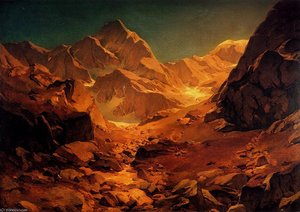
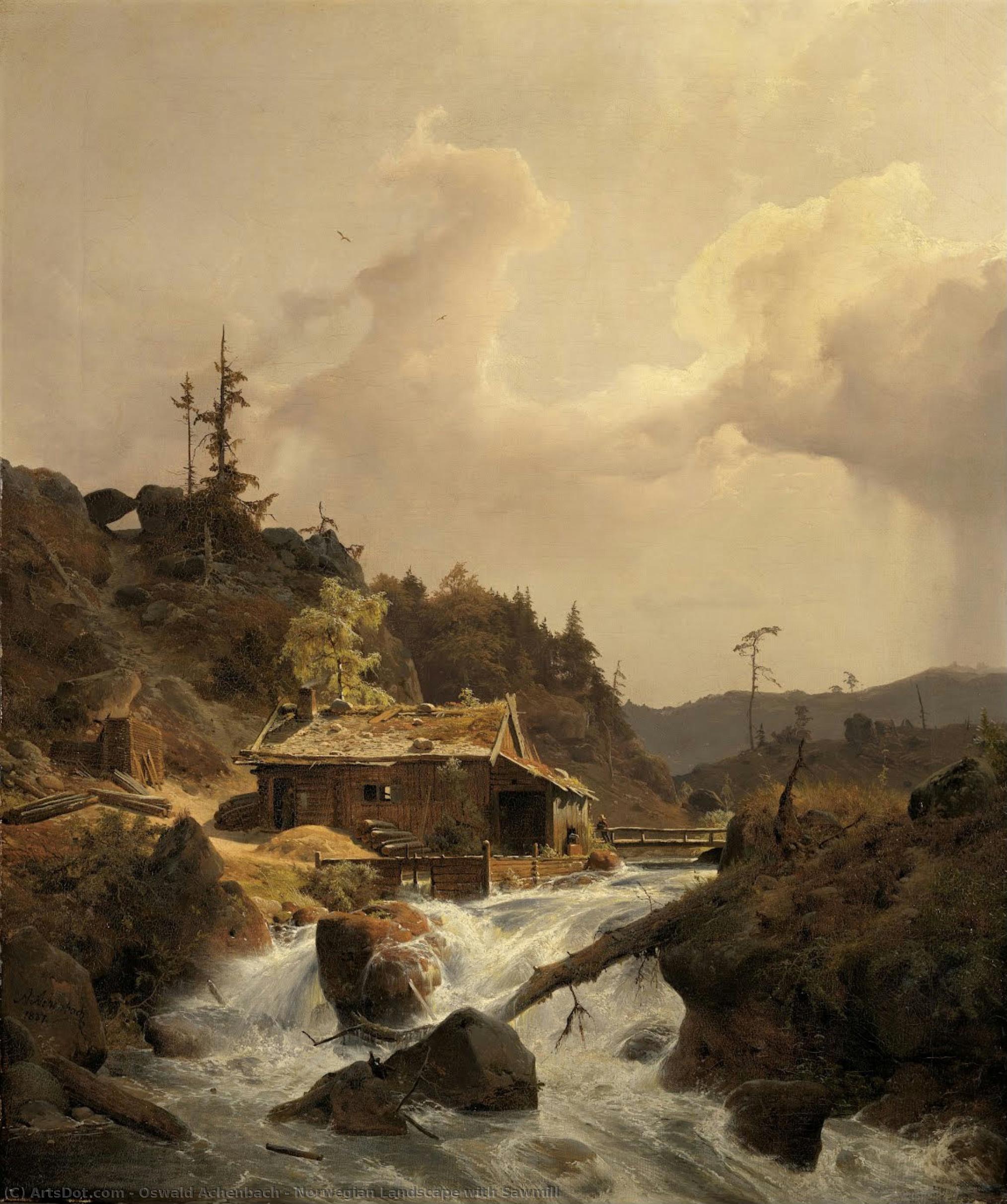
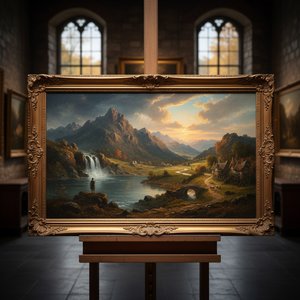
Norwegian Landscape with Sawmill
 Acrylic On Canvas
- WallArt
- Romanticism
 1839
1839- 19th Century
 72.0 x 61.0 cm
 Staatliche Kunsthalle Karlsruhe
 Read More
Hand Made Oil Reproduction
Hand-painted oil on canvas in your size and frame, made to order by our artists. ( Buy Print Buy Image)




P118B $10

P118H $10

P118W $10

P438Z $10

P508JH $12

P508YH $12

P805H $10

P805Z $10

P919BZ $10

P919G $10

P919XJ $10

P959ZH $10

P968JZ $12

W106C $8

W218G $10

W218JH $8

W218Y $10

W307PJ $10

W316G $10

W316PJ $8

W316Y $10

W398PJ $8

W4111J $10

W500HY $15

W500JH $15

W692G $12

W849H $8

W940BG $15

W953PJ $8




Pick from our preset sizes that match the artwork's original proportions.

You may enter your own dimensions to fit a specific frame or space. If your selected size does not match the original image's proportions, we will either crop the artwork or extend the painting with additional hand-painted elements. A digital mockup will be sent for your approval before production begins.
Please note that the on-screen preview does not reflect the actual cropping or extension. Only the mockup will accurately show the final composition.
While custom sizes are available, we recommend selecting a dimension from the predefined list to preserve the original proportions.
After order, ArtsDot.com team will email client for instructions and provide a mockup preview
Worldwide Delivery () in 3/4 weeks instead of standard 5 weeks. (17 August). No compromise on quality.

Free Worldwide Express Shipping

High-Quality Linen Canvas

Full Shipping Insurance

Customs Tax Refund Guarantee

True Color Matching Guarantee

60-Day Return Policy (Defects Only)

100% Money-Back Guarantee

Bulk Discount Offer
 Glass option is only available in size under 110 CM

Norwegian Landscape with Sawmill
Reproduction Medium
Reproduction Size
-


Total Price
$ 263
Artwork Description
A Serene Glimpse into Nordic Tranquility
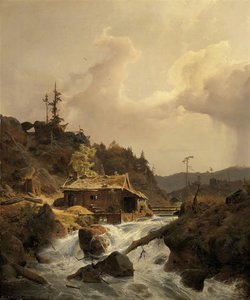
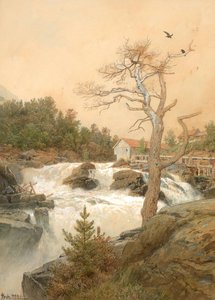
Oswald Achenbach’s Norwegian Landscape with Sawmill transports the viewer to a place suspended in time—a quintessential vision of Norwegian life carved out by the gentle persistence of nature. The scene unfolds with breathtaking realism, dominated by the rhythmic flow of a river that carves its path through verdant banks. It is more than just a depiction of scenery; it is an immersion into a pastoral idyll where human industry coexists in perfect harmony with the wild embrace of the wilderness. Notice how the small cluster of dwellings nestles near the water's edge, suggesting a life intimately connected to the rhythms of the current and the bounty it provides.
Mastery of Light and Atmosphere
Achenbach, a key figure in the Düsseldorf School, was renowned not only for his meticulous rendering of form but especially for his ability to capture ephemeral atmospheric conditions. In this painting, the light seems to emanate from within the landscape itself—a soft, diffused glow that bathes the surrounding trees and the clapboard siding of the houses. His technique allows the viewer to almost hear the gentle murmur of the water and feel the cool kiss of the air off the river. The composition is masterfully balanced; the central flow of the river draws the eye inward, while the placement of the secondary structures—one tucked to the left, another receding into the background on the right—gives the scene a wonderful sense of depth and lived-in history.
The Symbolism of Place and Industry
The inclusion of the sawmill is particularly evocative. It speaks to the enduring human spirit—the necessity of labor, the harnessing of natural resources, yet done so in a manner that feels respectful rather than conquering. The river itself functions as a powerful symbol: it represents passage, continuity, and the unstoppable march of time. Against this backdrop of perpetual flow stand the steadfast homes, embodying shelter, community, and tradition. It is a quiet meditation on how human endeavor can find its most peaceful footing when aligned with the natural world’s grand design.
Bringing Nordic Calm Home
For those who seek to infuse their living space or study with a sense of profound calm and historical depth, this reproduction offers an unparalleled opportunity. Owning a piece inspired by Achenbach’s vision allows one to curate a corner of enduring tranquility. The rich, earthy tones and the palpable sense of quietude make it a perfect focal point for any interior design scheme that values natural beauty and storied craftsmanship. It is a window not just into Norway, but into a more contemplative state of being.
Related Artworks
Artist Biography
A Life Immersed in Landscape: The World of Oswald Achenbach
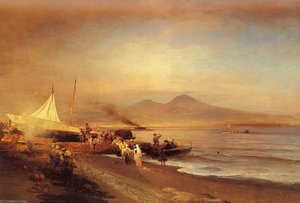
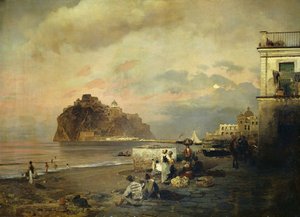
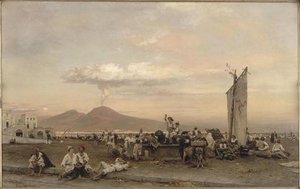
Oswald Achenbach, a name perhaps less immediately recognized today than some of his contemporaries, nevertheless occupied a prominent position within the 19th-century European art landscape. Born in Düsseldorf in 1827 and passing in 1905, Achenbach’s life was deeply interwoven with the artistic currents of the Düsseldorf School, a movement renowned for its dedication to realistic depictions of nature and atmospheric effects. He wasn't merely a painter of landscapes; he was an interpreter of light, color, and emotion within those scenes, particularly captivated by the allure of Italy. His story is one of both academic grounding and rebellious spirit, of familial artistic influence and individual stylistic evolution. Achenbach’s legacy extends beyond his canvases, influencing generations through his teaching at the prestigious Kunstakademie Düsseldorf. He and his brother, Andreas, were affectionately dubbed “the A and O of landscapes,” a testament to their combined dominance in the field—a playful nod to their initials mirroring the symbolic beginning and end.Early Influences and Artistic Formation
Achenbach’s path toward becoming a celebrated landscape artist wasn't predetermined by family tradition, though his brother Andreas would also achieve significant recognition. His father navigated various professions—brewer, guesthouse owner, bookkeeper—offering little indication of the artistic prominence to come. The family’s movements between Munich and Düsseldorf during Oswald’s childhood likely instilled in him a sense of place and observation, qualities that would later define his work. Remarkably, Achenbach entered the elementary class of the Kunstakademie Düsseldorf at the tender age of eight, circumventing the academy's usual age requirements—a clear indication of his precocious talent. His initial studies focused on foundational drawing skills and a brief foray into architecture, but it was his departure from formal instruction around 1841 that proved pivotal. This decision allowed him to immerse himself directly in nature, undertaking intensive independent study of the landscapes surrounding Düsseldorf. These early explorations laid the groundwork for his future artistic endeavors.The Italian Awakening and Developing Style
A turning point in Achenbach’s artistic journey arrived with his travels throughout Bavaria and Tyrol in 1843, followed by a transformative trip to northern Italy with friend Albert Flamm in 1845. These experiences ignited a lifelong passion for Italian landscapes, which would become a recurring theme throughout his oeuvre. His early paintings from this period, while demonstrating technical skill, initially reflected the influence of established artists like Johann Wilhelm Schirmer and Carl Rottmann—adhering to academic principles with detailed depictions of vegetation. However, Achenbach soon began to forge his own path, moving away from rigid adherence to convention. He developed a distinctive style characterized by an emphasis on atmospheric effects, vibrant color palettes, and a prioritization of capturing the *impression* of light rather than meticulous detail. This shift marked a departure toward a more emotive and subjective interpretation of nature.Challenging Conventions and Artistic Independence
Like many artists of his era, Achenbach found himself at odds with the rigid constraints of the Kunstakademie Düsseldorf. He actively sought alternative avenues for artistic expression, becoming an early member of two influential Düsseldorf associations: the “Association of Düsseldorf Artists for Mutual Support and Help” and the “Malkasten” (paintbox), founded in 1848. These groups provided a vital platform for artists operating outside the academy’s control, fostering collaboration through exhibitions, theatrical performances, and musical events. Achenbach's active participation demonstrated his commitment to an independent artistic community—a space where innovation could flourish free from institutional constraints. His career gained significant momentum with exhibitions at Eduard Schulte's Düsseldorf gallery from 1850 onwards, a crucial venue for showcasing work that challenged the established norms. Further travels, including a particularly impactful trip to Italy in 1850 alongside Arnold Böcklin and others, solidified his artistic vision. He focused on capturing color impressions and light effects through layered paint application, prioritizing atmosphere over precise representation.Legacy and Lasting Influence
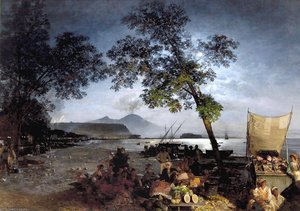
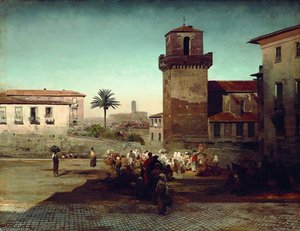
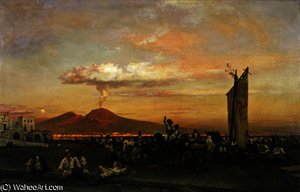
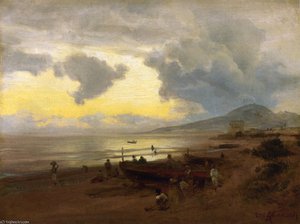
Achenbach’s mature work is celebrated for its ability to evoke emotion and atmosphere through masterful use of color and light. His depictions of Italian landscapes—the Bay of Naples, Roman scenes, and Venetian vistas—are particularly renowned. He became known for his vibrant canvases that captured the essence of these locations, imbuing them with a sense of warmth, serenity, and dramatic beauty. From 1863 to 1872, Achenbach served as a professor at the Düsseldorf Art Academy, passing on his knowledge and influencing subsequent generations of artists. While his fame may have waned somewhat over time, Oswald Achenbach’s contribution to 19th-century landscape painting remains significant. He stands as a testament to the power of artistic independence, the allure of Italian light, and the enduring appeal of capturing the beauty and emotion inherent in the natural world. His works continue to resonate with viewers today, offering a glimpse into a bygone era and a celebration of the timeless artistry of landscape painting. He truly captured the soul of the landscapes he painted.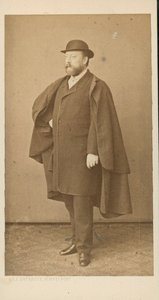
Oswald Achenbach
1827 - 1905 , Germany
Quick Facts
- Artistic Movement Or Style: Düsseldorf School, Romanticism
- Artists Or Movements Influenced By This Artist: Düsseldorf School artists
- Artists Who Influenced This Artist:
- Johann Schirmer
- Carl Rottmann
- Date Of Birth: February 2, 1827
- Date Of Death: February 1, 1905
- Full Name: Oswald Achenbach
- Nationality: German
- Notable Artworks:
- The Bay of Naples
- Fishermen with Naples Bay
- Quayside at Naples
- Place Of Birth: Düsseldorf, Germany
Related Articles

Romantic Landscapes: 10 Masterpieces for Your Home | ArtsDot
Journey through 10 Romantic landscape masterpieces by Friedrich, Turner & Cole. Explore emotional art, sublime nature scenes & iconic 19th-century paintings. Find museum-quality reproductions for your home at ArtsDot.com – discover the full collection online!

Beyond the Horizon: 10 Landscape Masterpieces for Your Home Decor
Journey through 10 breathtaking landscape paintings by Monet, Van Gogh & more! Explore iconic artworks, artistic techniques & find inspiration for your home decor. Museum-quality reproductions at ArtsDot.com. Discover all masterpieces on ArtsDot.com
Johan Christian Dahl: Pioneering Norwegian Romantic Landscape Painting
Explore the life & art of Johan Christian Dahl, Norway's first great Romantic painter. Discover his iconic landscapes, cultural impact, and lasting legacy with ArtsDot.

Evocations of Place: A Historical Journey Through Landscape Art
Explore the rich history of landscape art with ArtsDot. Discover renowned artists, movements like Impressionism & Romanticism, and expert guidance for collecting timeless pieces. Find your perfect serene escape today!
The Sublime and the Picturesque: Exploring Emotion & Nature in Romantic Landscape Painting
Explore the emotional power of Romantic landscape painting! Discover the sublime & picturesque traditions, key artists like Friedrich & Cole, and find your perfect artwork at ArtsDot.