 Preview
 Send
Send Share
Share
 Details

 Download
 Similars
 X-Ray
X-Ray Diaporama
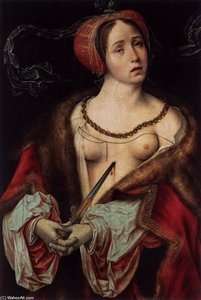
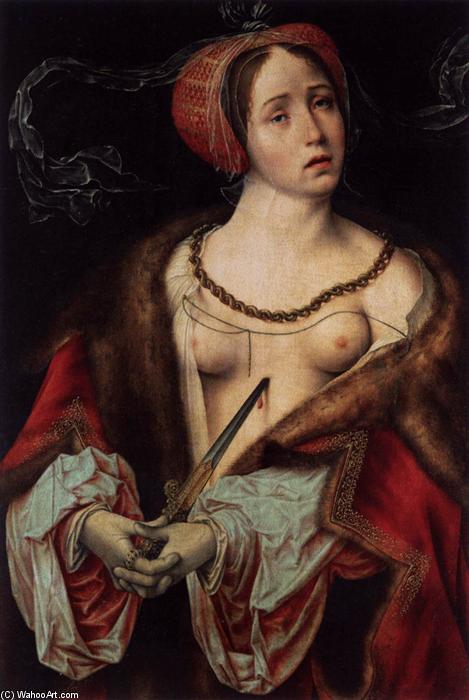
The Suicide of Lucretia


 Read More
Giclée / Art Print
Museum-quality giclée or canvas print with fast production and flexible finish options. ( Buy Hand Made Painting Buy Image)




P118B $10

P118H $10

P118W $10

P438Z $10

P508JH $12

P508YH $12

P805H $10

P805Z $10

P919BZ $10

P919G $10

P919XJ $10

P959ZH $10

P968JZ $12

W106C $8

W218G $10

W218JH $8

W218Y $10

W307PJ $10

W316G $10

W316PJ $8

W316Y $10

W398PJ $8

W4111J $10

W500HY $15

W500JH $15

W692G $12

W849H $8

W940BG $15

W953PJ $8




Pick from our preset sizes that match the artwork's original proportions.

You may enter your own dimensions to fit a specific frame or space. If your selected size does not match the original image's proportions, we will either crop the artwork or extend the image with a mirrored or solid-fill edge. A digital mockup will be sent for your approval before production begins.
Please note that the on-screen preview does not reflect the actual cropping or extension. Only the mockup will accurately show the final composition.
While custom sizes are available, we recommend selecting a dimension from the predefined list to preserve the original proportions.
Worldwide Delivery () in 2 weeks instead of standard 4/5 weeks. (27 August)

Free Worldwide Express Shipping

High-Quality Linen Canvas

Full Shipping Insurance

Customs Tax Refund Guarantee

True Color Matching Guarantee

60-Day Return Policy (Defects Only)

100% Money-Back Guarantee

Bulk Discount Offer
 Glass option is only available in size under 110 CM

The Suicide of Lucretia
Giclée / Art Print
Reproduction Size
-


Total Price
$ 63
Collectible Description
A Moment Frozen in Time: The Tragedy of Lucretia
Joos van Cleve’s “The Suicide of Lucretia,” painted around 1520, isn't merely a depiction of a historical event; it’s a visceral plunge into the heart of Roman tragedy. This arresting image, housed within the Kunsthistorisches Museum in Vienna, transcends its subject matter to become a profound meditation on shame, violence, and the enduring power of female defiance. The painting captures Lucretia, wife of Lucius Tarquinius Collatinus, at the precise moment she chooses death over dishonor after being brutally violated by her own cousin, Sextus Tarquinius. Van Cleve masterfully compresses this pivotal scene into a tightly framed composition, forcing the viewer to confront the raw emotion and devastating consequences of this act.
The painting’s immediate impact stems from its stark realism and dramatic lighting. The limited palette—primarily deep reds, blacks, and browns—creates an atmosphere of oppressive gloom, mirroring Lucretia's internal turmoil. Van Cleve employs a meticulous attention to detail, evident in the richly textured fabrics of her gown and the subtle modeling of her face – a face etched with anguish and resolve. The dagger, poised mid-strike, is rendered with unsettling precision, emphasizing the finality of her decision. It’s not a romanticized depiction of heroism; rather, it's a brutally honest portrayal of a woman driven to desperate measures.
Renaissance Roots: Contextualizing a Roman Legend
To understand “The Suicide of Lucretia,” one must first grasp the historical context surrounding its creation. The story itself is rooted in Roman mythology, recounted by Livy and Dionysius of Halicarnassus centuries after the events transpired. It served as a potent allegory for the overthrow of the Roman monarchy under Tarquin Superbus, demonstrating how a single act of injustice could ignite a revolution. Van Cleve, working within the artistic conventions of the Northern Renaissance, skillfully blended this classical narrative with the prevailing trends of his time – a synthesis that reflects the era’s fascination with both ancient history and emerging humanist ideals.
The painting's creation coincided with a period of intense political and social upheaval in Europe. The rise of powerful city-states like Florence and Venice, coupled with renewed interest in classical antiquity, fueled a desire to emulate the virtues and values of the Roman Republic. Lucretia’s act of defiance resonated deeply within this context, symbolizing resistance against tyranny and upholding principles of justice and honor. It's important to note that the story itself is debated; some historians suggest it was fabricated to justify the overthrow of the monarchy.
Symbolism and Emotional Resonance: A Study in Human Suffering
Beyond its historical significance, “The Suicide of Lucretia” is rich with symbolic meaning. The red of her gown—a color traditionally associated with passion, violence, and sacrifice—underscores the tragedy of her situation. Her posture, rigid yet vulnerable, conveys a profound sense of despair and determination. The dagger itself represents not just death but also the severing of ties to a life marred by shame and dishonor. Notably, Lucretia’s gaze is directed upwards, seemingly pleading for divine intervention or perhaps seeking solace in an imagined afterlife.
The painting's emotional impact is undeniably powerful. It doesn’t offer easy answers or sentimental resolutions; instead, it confronts the viewer with the uncomfortable realities of violence, betrayal, and the devastating consequences of injustice. Van Cleve’s masterful use of light and shadow, combined with his meticulous attention to detail, creates a scene that lingers in the memory long after viewing. It's a testament to the artist's ability to capture not just a historical event but also the profound human suffering at its core.
A Masterpiece of Dramatic Intensity
“The Suicide of Lucretia” remains a compelling and unsettling work of art, offering a poignant glimpse into the heart of Roman history and the enduring complexities of human emotion. Joos van Cleve’s skillful execution—his mastery of realism, his dramatic use of light and shadow, and his ability to convey profound psychological depth—solidify this painting's place as a significant achievement within the Northern Renaissance tradition. Reproductions capture only part of the original impact; experiencing it in person is an unforgettable encounter with a moment frozen in time.
Related Artworks
Artist Biography
The Master of Antwerp: The Life and Legacy of Joos van Cleve
In the bustling, mercantile heart of sixteenth-century Antwerp, a new era of visual storytelling was unfolding, driven by the brush of Joos van Cleve. Born around 1485 in Krefeld, Germany, this Flemish Renaissance master emerged not merely as a painter of great skill, but as a visionary bridge between two worlds. His career, which flourished from approximately 1511 until his death in 1540, represents a profound moment in art history where the meticulous, detailed traditions of the Netherlandish masters met the sweeping, atmospheric innovations flowing from the Italian Renaissance. To look upon a work by van Cleve is to witness a delicate dance between the tactile reality of Northern Europe and the idealized grace of the South.
The foundations of his genius were laid during his formative years under the tutelage of Jan Joest. This rigorous apprenticeship provided him with more than just technical proficiency; it immersed him in the monumental traditions of late Gothic art. One of his most significant early experiences involved assisting Joest on the high altar of the Kalkar Nikolaikirche, a project that demanded an understanding of grand scale and spiritual gravity. Through this work, van Clecept mastered the complex alchemy of pigment preparation and the painstaking layering of glazes—techniques that would later allow him to imbue his portraits with a lifelike luminosity and his religious scenes with a palpable sense of divinity.
A Synthesis of Northern Detail and Italian Grace
What truly distinguishes Joos van Cleve from his contemporaries was his restless, experimental spirit. While many artists of the period remained tethered to the rigid stylistic dogmas of their local guilds, van Cleve looked toward the horizon. He became a pioneer of Flemish Mannerism, a style characterized by an exceptional sensitivity to color and a remarkable unity of figures within a composition. Perhaps his most enduring contribution to the Northern Renaissance was his revolutionary use of landscape. Rather than utilizing static or symbolic backdrops, he introduced expansive, atmospheric vistas that breathed life into his subjects, creating a sense of depth and continuity between the human figure and the natural world.
This stylistic evolution was deeply influenced by the burgeoning trends in Italy. By integrating elements of Italianate perspective and a more fluid, rhythmic approach to anatomy, he transformed the traditional Flemish portrait into something far more psychologically complex. His subjects were no longer mere icons of status; they possessed an inner life, an emotional resonance that invited the viewer into a silent dialogue. This ability to convey profound human emotion through subtle facial expressions and delicate hand gestures remains one of his most celebrated achievements.
Historical Significance and Artistic Triumph
The legacy of Joos van Cleve is etched into the very fabric of Antwerp’s golden age. As a central figure in the city's artistic community, his workshop became a beacon of innovation, influencing generations of painters who followed. His ability to blend the following elements ensured his lasting impact on the history of European art:
- Technical Mastery: The seamless application of Netherlandish glazing techniques to achieve unparalleled texture and light.
- Compositional Innovation: The integration of vast, panoramic landscapes that expanded the narrative scope of religious and secular painting.
- Psychological Depth: A shift from purely symbolic representation toward a more humanistic, emotive portrayal of his subjects.
- Cultural Synthesis: The successful marriage of Northern European precision with the grace and movement of the Italian Renaissance.
Though his life ended in 1540, the echoes of his artistry continue to resonate. Joos van Cleve did not simply follow the trends of his time; he helped define them, leaving behind a body of work that serves as a testament to the transformative power of artistic synthesis. His paintings remain enduring windows into a period of immense cultural transition, capturing the moment when the medieval world began to dissolve into the light of the modern era.
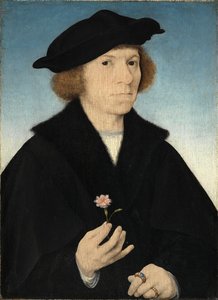
Joos van Cleve
1485 - 1540 , Germany
Quick Facts
- Artistic Movement Or Style: Renaissance Mannerism
- Artists Or Movements Influenced By This Artist: Italian Renaissance
- Artists Who Influenced This Artist: Jan Joest
- Date Of Birth: c. 1485
- Date Of Death: 1540
- Full Name: Joos van Cleve
- Nationality: Flemish
- Notable Artworks:
- The Adoration of the Magi - Left Wing
- The Holy Family
- Portrait of Henry VIII
- Place Of Birth: Krefeld, Germany
Related Articles
Albrecht Dürer's Masterpieces: 25 Iconic Artworks for Your Home | ArtsDot
Explore 25 iconic artworks by Albrecht Dürer, a master of the German Renaissance. Discover the stories behind Melencolia I, Knight Death and Devil & more. Find museum-quality art reproductions for your home at ArtsDot.com.
British Museum Masterpieces: Explore 25 Iconic Artworks & Decor Inspiration
Journey through 25 iconic artworks at the British Museum, London! Explore masterpieces from Egyptian sculptures to Renaissance paintings & uncover their stories. Find museum-quality art reproductions and curated decor ideas on ArtsDot.com.
Albrecht Dürer: A Renaissance Master's Legacy of Innovation and Self-Portraiture
Explore the life & art of Albrecht Dürer, a pivotal German Renaissance master. Discover his groundbreaking printmaking techniques, iconic self-portraits, and lasting influence on Western art history. A deep dive into innovation & symbolism.
Engraving's Golden Age: 10 Masterpieces That Redefined Art | ArtsDot
Journey through art history with our Top 10 Legendary Engravings! Explore masterpieces by Dürer, Rembrandt & Goya. Discover the stories behind these iconic prints and find museum-quality reproductions for your home at ArtsDot.com.
Northern Renaissance Masters: 10 Artworks That Shaped History |
Journey through the Northern Renaissance! Explore 10 iconic paintings by Jan van Eyck, Dürer & Bosch. Discover their stories, techniques & lasting impact. Find museum-quality art reproductions & elevate your home decor on .