 Preview
 Send
Send Share
Share
 Details

 Download
 Similars
 X-Ray
X-Ray Diaporama
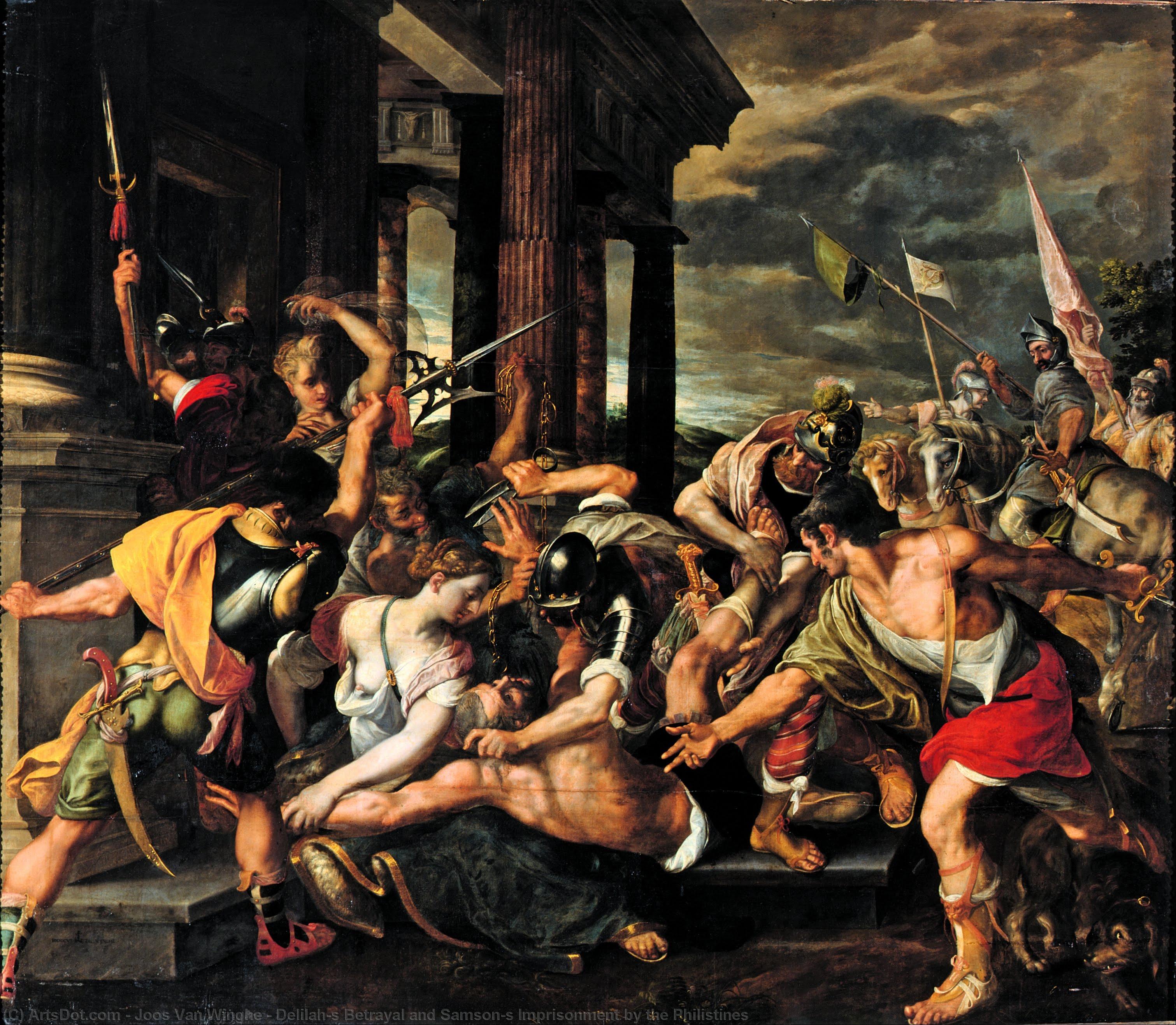
Delilah’s Betrayal and Samson’s Imprisonment by the Philistines
 Oil On Canvas
- WallArt
- Flemish Renaissance
 1580
1580- Early Modern
 243.0 x 316.0 cm
 Museum Kunstpalast
 Read More
Hand Made Oil Reproduction
Hand-painted oil on canvas in your size and frame, made to order by our artists. ( Buy Print Buy Image)




P118B $10

P118H $10

P118W $10

P438Z $10

P508JH $12

P508YH $12

P805H $10

P805Z $10

P919BZ $10

P919G $10

P919XJ $10

P959ZH $10

P968JZ $12

W106C $8

W218G $10

W218JH $8

W218Y $10

W307PJ $10

W316G $10

W316PJ $8

W316Y $10

W398PJ $8

W4111J $10

W500HY $15

W500JH $15

W692G $12

W849H $8

W940BG $15

W953PJ $8




Pick from our preset sizes that match the artwork's original proportions.

You may enter your own dimensions to fit a specific frame or space. If your selected size does not match the original image's proportions, we will either crop the artwork or extend the painting with additional hand-painted elements. A digital mockup will be sent for your approval before production begins.
Please note that the on-screen preview does not reflect the actual cropping or extension. Only the mockup will accurately show the final composition.
While custom sizes are available, we recommend selecting a dimension from the predefined list to preserve the original proportions.
After order, ArtsDot.com team will email client for instructions and provide a mockup preview
Worldwide Delivery () in 3/4 weeks instead of standard 5 weeks. (16 August). No compromise on quality.

Free Worldwide Express Shipping

High-Quality Linen Canvas

Full Shipping Insurance

Customs Tax Refund Guarantee

True Color Matching Guarantee

60-Day Return Policy (Defects Only)

100% Money-Back Guarantee

Bulk Discount Offer
 Glass option is only available in size under 110 CM

Delilah’s Betrayal and Samson’s Imprisonment by the Philistines
Reproduction Medium
Reproduction Size
-


Total Price
$ 263
Artwork Description
A Dramatic Tableau of Betrayal and Fate
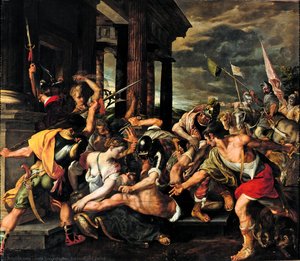
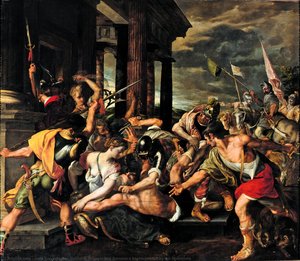
In the grand tradition of Flemish Renaissance storytelling, Joos van Winghe’s Delilah’s Betrayal and Samson’s Imprisonment by the Philistines stands as a breathtaking masterwork of narrative tension and historical drama. This monumental canvas, measuring an imposing 243 x 316 cm, transports the viewer directly into the heart of a biblical tragedy. The scene is set against the backdrop of classical architecture, where towering columns lend a sense of structural grandeur to a moment of profound human suffering. At the center of this swirling composition lies Samson, once a figure of incomparable strength, now reduced to a broken captive. Bound by heavy chains and stripped of his legendary power, his physical state—marked by the harrowing loss of his sight—serves as a visceral reminder of the consequences of deceit.
The painting is far from a solitary portrait; it is a bustling, cinematic world populated by a diverse cast of characters that breathe life into the historical setting. Men and women, draped in period-accurate costumes that evoke the late 16th century, move through the scene with varying degrees of purpose and indifference. Some figures engage in quiet observation, while others are caught in the kinetic energy of the surrounding crowd. The inclusion of horses, positioned both in the foreground and receding into the distance, adds a layer of atmospheric depth and suggests the larger scale of the Philistine presence, grounding the biblical myth within a tangible, historical reality.
Mastery of Light, Texture, and Emotion
Technically, Van Winghe demonstrates the sophisticated command of light and shadow characteristic of the era. The artist utilizes a rich palette to differentiate between the cold, hard surfaces of the stone columns and the soft, textured fabrics of the onlookers' garments. This interplay of light does more than just define form; it directs the viewer’s emotional journey. Light falls most poignantly upon the fallen Samson, highlighting his vulnerability and drawing the eye toward the tragedy at the center of the chaos. The shadows, meanwhile, shroud the periphery in mystery, suggesting the hidden motives and the looming threat of the Philistine forces.
For the discerning collector or interior designer, this piece offers more than mere decoration; it provides a profound focal point for any sophisticated space. The sheer scale and complexity of the work make it an ideal centerpiece for grand halls, libraries, or galleries where art is intended to provoke thought and conversation. A high-quality reproduction of this masterpiece allows one to bring the weight of history and the intensity of Renaissance emotion into a contemporary setting. It is a work that commands attention, inviting viewers to contemplate themes of strength, betrayal, and the inescapable nature of destiny through every meticulously rendered brushstroke.
Related Artworks

Artist Biography
A Life Bridging Courts and Canvases: The World of Joos van Winghe
Joos van Winghe, a name resonating softly through the annals of Flemish Renaissance art, embodies a fascinating transition between the grandeur of courtly patronage and the burgeoning artistic freedoms of the late 16th century. Born in Brussels around 1544, his life was one marked by travel, adaptation, and a quiet mastery of both portraiture and genre scenes. While biographical details remain somewhat fragmented – largely reliant on the observations of Karel van Mander, a contemporary artist and historian – enough is known to paint a picture of an individual deeply connected to the artistic currents of his time, yet forging a path uniquely his own. Van Winghe’s early education likely took place within Brussels itself, a vibrant center for painting under the Spanish Netherlands. However, it was a four-year sojourn in Rome that fundamentally shaped his aesthetic sensibilities. Living with a cardinal afforded him access to the rich artistic heritage of the Italian Renaissance and exposure to the burgeoning Mannerist style. This period proved pivotal; he absorbed the elegance and sophistication of Roman art, which would later subtly infuse his own work. His time wasn’t confined solely to Rome, as van Mander notes experiences in Parma where he painted a fresco of the Last Supper for the Servites monastery, further broadening his artistic vocabulary under the guidance of Jacopo Bertoja, alongside fellow Flemish artist Bartholomaeus Spranger.From Brussels Court to Frankfurt Refuge
Upon returning to Brussels around 1568, van Winghe swiftly ascended to become a court painter in the service of Alexander Farnese, Duke of Parma. This position secured him a degree of financial stability and access to prominent members of society, providing ample opportunities for portraiture – a genre he would consistently return to throughout his career. However, the political turmoil brewing within the Netherlands cast a long shadow over his life. The Fall of Antwerp in 1584, a watershed moment in the Eighty Years’ War, prompted van Winghe and his family to seek refuge elsewhere. This exodus was not merely a relocation; it represented a shift away from the constraints of Spanish rule and towards a more tolerant environment. He settled in Frankfurt am Main, joining a growing community of Flemish artists who had similarly fled religious persecution and political instability. The loss of his court position was filled by Otto van Veen, marking a definitive end to his life within the established artistic circles of Brussels. In Frankfurt, he became a burgher in 1588, integrating himself into the local society while continuing to practice his art.A Diverse Palette: Portraits, Allegories and Genre Scenes
Van Winghe’s oeuvre is characterized by its diversity, encompassing portraits, allegorical paintings, and genre scenes – often depicting merry companies or intimate domestic moments. His portraits are notable for their refined elegance and psychological insight, capturing not just the likeness of his sitters but also a sense of their inner character. While he initially adhered to the established conventions of Flemish portraiture, his time in Italy instilled a certain gracefulness and sophistication into his depictions. Beyond portraiture, van Winghe demonstrated a keen interest in allegorical subjects, often imbued with moral or political undertones. One painting described by Van Mander depicts a chained personification of Belgica (the Netherlands), suggesting a sympathetic stance towards the cause of Dutch independence. His genre scenes, lively and detailed, offer glimpses into the everyday life of his time. These works are not simply depictions of merriment; they often contain subtle narratives or symbolic elements that reward closer examination.Legacy and Influence: A Father’s Hand and a Son's Continuation
The influence of Joos van Winghe extends beyond his own artistic production, notably through his son, Jeremias van Winghe (1578-1645). Jeremias followed in his father’s footsteps, becoming a painter himself and contributing to the artistic landscape of Frankfurt. While Jeremias developed his own distinct style – specializing in kitchen scenes and still lifes – he undoubtedly benefited from his father's training and guidance. The elder van Winghe’s impact can also be seen in the broader context of Flemish art during this period. His ability to blend Italianate elegance with Flemish realism helped bridge the gap between Renaissance traditions and the emerging Baroque style. Although not as widely celebrated as some of his contemporaries, Joos van Winghe remains a significant figure in understanding the complexities of artistic life during a time of profound political and religious upheaval. He represents a generation of artists who were forced to adapt, innovate, and seek new patrons while striving to maintain their artistic integrity. His works offer a captivating window into the world of 16th-century Europe, reflecting both the splendor of courtly life and the anxieties of a nation in turmoil.- Born: Brussels, c. 1544
- Died: Frankfurt am Main, 1603
- Style: Flemish Renaissance, Mannerism
- Key Subjects: Portraits, Genre Scenes, Allegories
joos van winghe
1544 - 1603
Quick Facts
- Artistic Movement Or Style: Renaissance
- Artists Or Movements Influenced By This Artist: ['Dutch Masters']
- Artists Who Influenced This Artist: ['Pieter Bruegel the Elder']
- Date Of Birth: 1544
- Date Of Death: 1603
- Full Name: Joos van Winghe
- Nationality: Flemish
- Notable Artworks:
- Night Banquet and Masquerade
- Delilah’s Betrayal and Samson’s Imprisonment by the Philistines
- Samson and Delila
- Place Of Birth: Brussels
Related Articles
Illuminating Faith: Biblical Narrative & Artistic Expression Through the Ages
Explore the rich history of biblical art from Giotto to the Renaissance masters with ArtsDot. Discover symbolism, techniques & enduring legacies. Museum-quality reproductions & expert insights.
Illuminating Faith: Biblical Scenes & Their Enduring Legacy in Art History
Explore the profound history of biblical art! Discover Renaissance masterpieces by Giotto & more. Uncover symbolism, artistic techniques, and lasting influence. Expert insights at ArtsDot.
Sacred Narratives on Canvas: Exploring Biblical Art Across Centuries
Explore the rich history of biblical art from Giotto to the Renaissance masters. Discover symbolism, techniques & enduring legacies with ArtsDot – your source for museum-quality reproductions and expert art insights.
Jan Brueghel the Elder: A Master of Flemish Landscape & Allegory – Exploring Innovation & Influence
Explore the captivating world of Jan Brueghel the Elder, a Flemish Baroque master renowned for his stunning landscapes & allegorical paintings. Discover his collaborations with Rubens and lasting artistic legacy.
David Teniers II: Master of Flemish Genre & Social Commentary
Explore the captivating world of David Teniers II, a leading Flemish Baroque painter renowned for his lively genre scenes & insightful social commentary. Discover his masterpieces and legacy with ArtsDot.