The Teniers Family & Early Influences
 Wikipedia: David Teniers the Younger
David Teniers the Younger or David Teniers II (bapt. 15 December 1610 – 25 April 1690) was a Flemish Baroque painter, printmaker, draughtsman, miniaturist painter, staffage painter, copyist and art curator. He was an extremely versatile artist known ...
David Teniers the Younger, born in Antwerp in 1610, emerged from a family deeply entrenched in the artistic traditions of Flanders. His father, David Teniers the Elder, was a respected painter specializing in altarpieces and smaller devotional works. While not achieving the widespread renown of his son, the elder Teniers provided the foundational training that would shape young David’s career. This early exposure wasn't merely technical; it instilled a sense of craftsmanship and an understanding of religious iconography that subtly permeated even his later secular scenes. The family dynamic was also marked by financial instability, forcing David to supplement their income through diligent copying of established masters – a practice common at the time but one that honed his observational skills and broadened his stylistic repertoire. His brothers, Juliaan III and Abraham, though less prominent, further contributed to the artistic atmosphere within the household, creating a collaborative environment where experimentation and skill development flourished. This familial context is crucial to understanding Teniers’ early work; it wasn't born in isolation but as part of a lineage steeped in artistic dedication.
Genre Painting: A Window into 17th-Century Flemish Life
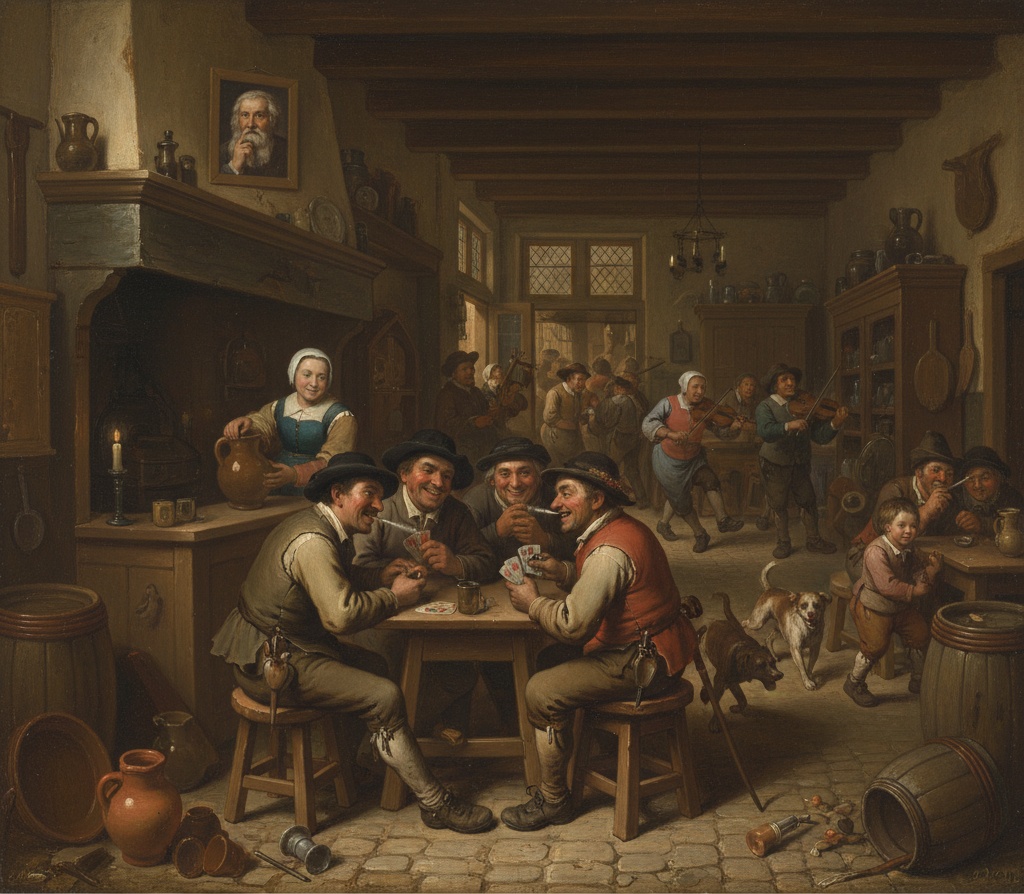
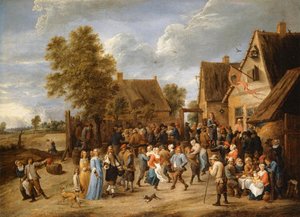
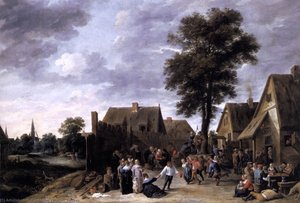 The Kermis at the Half Moon Inn
Explore 'The Kermis at the Half Moon Inn' by David Teniers II! A vibrant 17th-century Dutch genre painting depicting lively social life. Oil on canvas, masterful realism & detail.
The 17th century witnessed the rise of genre painting – depictions of everyday life, ordinary people engaged in common activities. Teniers became its undisputed master in Flanders. Unlike grand historical narratives or formal portraits, genre scenes offered a glimpse into the lives of the burgeoning middle class and the rustic existence of peasant communities. Teniers didn’t simply *record* this world; he imbued it with a vibrant energy and meticulous detail that captivated audiences. His taverns bustled with life, his village festivals overflowed with merriment, and even seemingly simple interiors radiated warmth and authenticity. He possessed an uncanny ability to capture the nuances of human interaction – the shared laughter, the boisterous arguments, the quiet moments of contemplation. This wasn’t mere observation; it was a celebration of Flemish culture, rendered with remarkable skill and sensitivity. The popularity of his work stemmed from its relatability; viewers saw reflections of their own lives and communities within these canvases.
Social Commentary & Satire in Teniers’ Work
Beneath the surface charm of Teniers' genre scenes often lay a subtle layer of social commentary. While he rarely engaged in overt political criticism, his paintings frequently offered gentle satire on human foibles and societal norms. The boisterous revelry depicted in works like “The Kermis at the Half Moon Inn” wasn’t simply celebratory; it hinted at the excesses of indulgence and the potential for disorder. Similarly, scenes of alchemists and physicians weren't merely depictions of scientific pursuits but often poked fun at charlatanism and the limitations of contemporary medical knowledge. This nuanced approach allowed Teniers to engage with complex social issues without directly challenging authority. He presented a mirror to society, reflecting both its virtues and its vices, inviting viewers to contemplate their own place within it. The tavern scenes, in particular, served as microcosms of Flemish life, revealing the complexities of class dynamics, gender roles, and moral behavior. His ability to balance humor with observation is what sets him apart from many of his contemporaries.
Teniers as Court Painter and Art Curator: Patronage and Collections
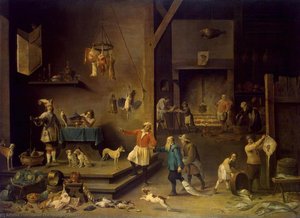
In 1651, Teniers’ career took a significant turn when he entered the service of Archduke Leopold William, the art-loving Governor General of the Habsburg Netherlands. Appointed court painter and curator of the Archduke's extensive collection, Teniers gained access to an unparalleled array of artworks – masterpieces from Italy, France, and across Europe. This position profoundly influenced his artistic development, exposing him to diverse styles and techniques. He wasn’t merely responsible for maintaining the collection; he actively documented it, creating a printed catalogue titled *Theatrum Pictorium* in 1660. This remarkable publication served as an invaluable resource for art historians, providing detailed engravings of the Archduke's holdings. Furthermore, Teniers painted numerous views of the gallery itself, offering glimpses into the opulent world of aristocratic patronage and showcasing his own artistic skill in depicting interior spaces. His role as curator demonstrates not only his artistic talent but also his deep understanding of art history and connoisseurship.
Technical Brilliance: Style, Technique, and Lasting Impact
Teniers’ technical mastery was undeniable. He employed a meticulous brushstroke, capturing textures with remarkable realism – the rough weave of peasant clothing, the polished surfaces of tavern furniture, the subtle play of light on faces. His color palette, while not as flamboyant as some of his Baroque contemporaries, was carefully chosen to create atmosphere and enhance the narrative impact of his scenes. He excelled in depicting crowds, arranging figures in dynamic compositions that drew the viewer’s eye through the canvas. His use of perspective and spatial organization created a sense of depth and realism that further immersed viewers in the world he depicted. Teniers' influence extended far beyond Flanders. His work was admired by French Rococo painters like Antoine Watteau, who emulated his genre scenes and celebrated his ability to capture everyday life with charm and wit. He founded the Antwerp Academy, aiming to revive Flemish art after a period of decline, solidifying his legacy as a pivotal figure in Baroque painting.
Exploring Key Works: 'Interieur d'Estaminet', 'Les Pèlerins', & 'The Kermis at the Half Moon Inn'
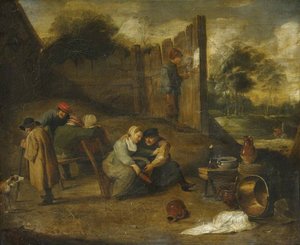
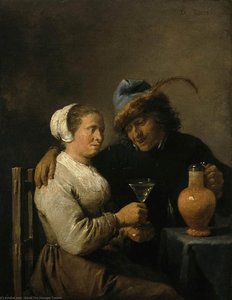
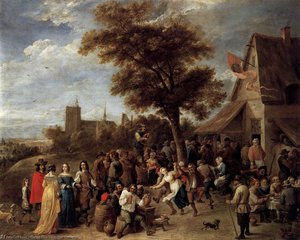
Consider “Interieur d’Estaminet,” a vibrant depiction of tavern life that exemplifies Teniers’ mastery of genre painting. The bustling scene, filled with lively characters and meticulous detail, offers a captivating glimpse into 17th-century Flemish society. “Les Pèlerins” showcases his skill in landscape painting, featuring a serene castle backdrop and figures rendered with earthy tones and delicate realism. The composition is balanced and harmonious, evoking a sense of tranquility. Finally, “The Kermis at the Half Moon Inn” embodies Teniers’ ability to capture lively social life – a boisterous celebration filled with merriment and subtle social commentary. These works, along with countless others, demonstrate his versatility as an artist and his enduring appeal. At ArtsDot.com, you can explore high-quality reproductions of these masterpieces, bringing the vibrant world of David Teniers II into your own home.