 Preview
 Send
Send Share
Share
 Details

 Download
 Similars
 X-Ray
X-Ray Diaporama
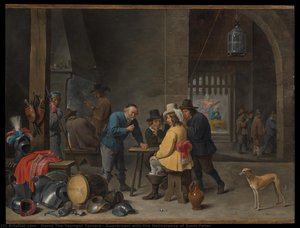
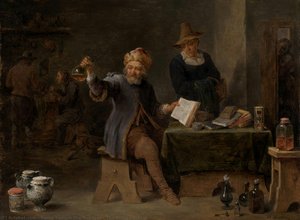
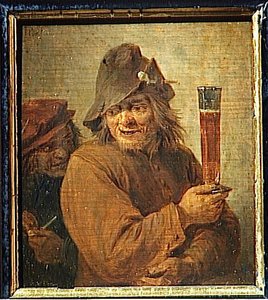
Tavern Scene
 Acrylic
- WallArt
- Baroque Painting
 1640
1640 21.0 x 17.0 cm
 Hermitage Museum
 Read More
Hand Made Oil Reproduction
Hand-painted oil on canvas in your size and frame, made to order by our artists. ( Buy Print Buy Image)




P118B $10

P118H $10

P118W $10

P438Z $10

P508JH $12

P508YH $12

P805H $10

P805Z $10

P919BZ $10

P919G $10

P919XJ $10

P959ZH $10

P968JZ $12

W106C $8

W218G $10

W218JH $8

W218Y $10

W307PJ $10

W316G $10

W316PJ $8

W316Y $10

W398PJ $8

W4111J $10

W500HY $15

W500JH $15

W692G $12

W849H $8

W940BG $15

W953PJ $8




Pick from our preset sizes that match the artwork's original proportions.

You may enter your own dimensions to fit a specific frame or space. If your selected size does not match the original image's proportions, we will either crop the artwork or extend the painting with additional hand-painted elements. A digital mockup will be sent for your approval before production begins.
Please note that the on-screen preview does not reflect the actual cropping or extension. Only the mockup will accurately show the final composition.
While custom sizes are available, we recommend selecting a dimension from the predefined list to preserve the original proportions.
After order, ArtsDot.com team will email client for instructions and provide a mockup preview
Worldwide Delivery () in 3/4 weeks instead of standard 5 weeks. (16 August). No compromise on quality.

Free Worldwide Express Shipping

High-Quality Linen Canvas

Full Shipping Insurance

Customs Tax Refund Guarantee

True Color Matching Guarantee

60-Day Return Policy (Defects Only)

100% Money-Back Guarantee

Bulk Discount Offer
 Glass option is only available in size under 110 CM

Tavern Scene
Reproduction Medium
Reproduction Size
-


Total Price
$ 263
Artwork Description
David Teniers the Younger’s Tavern Scene: A Snapshot of Flemish Baroque Life
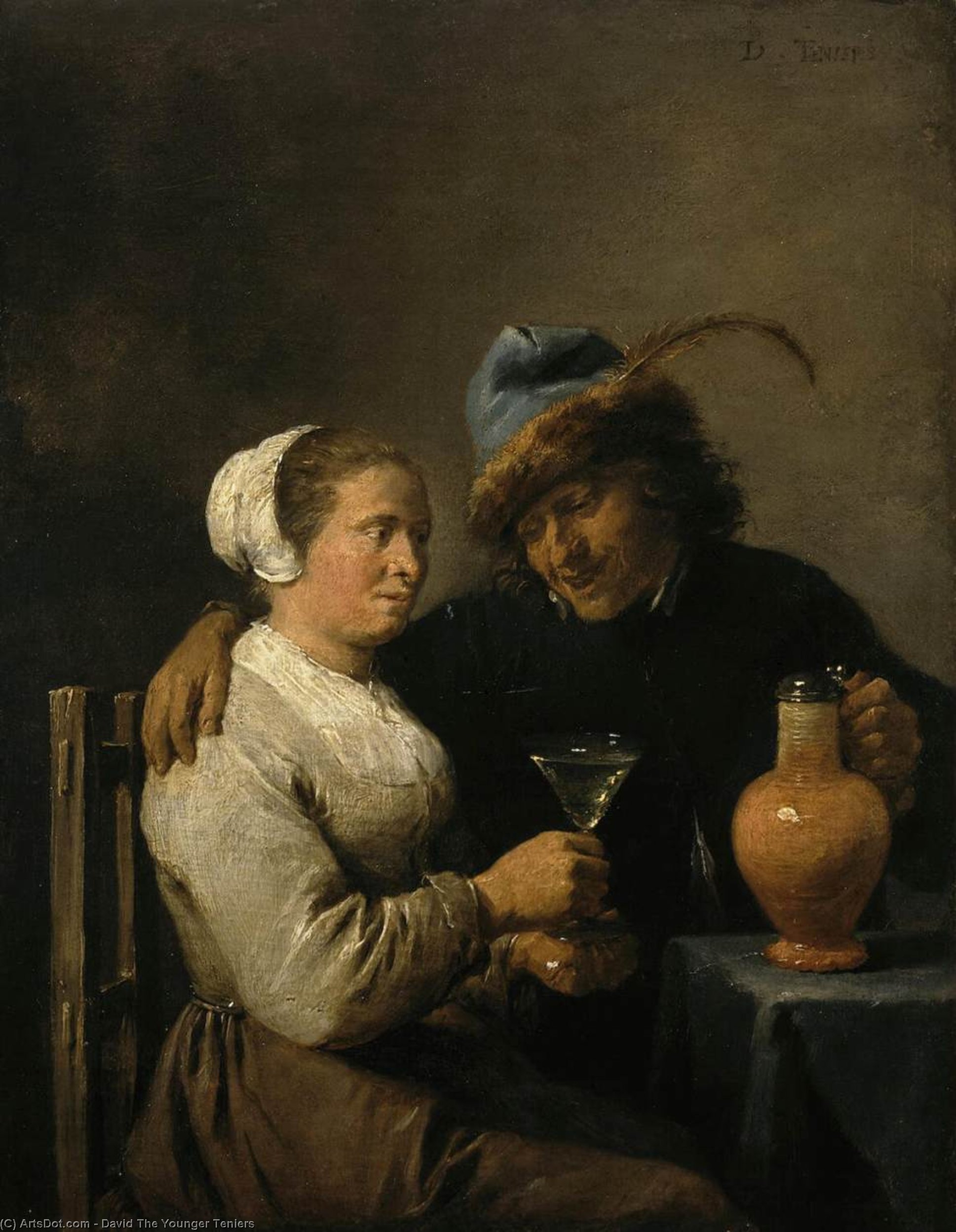
David Teniers the Younger (1610-1690), a luminary of Flemish Baroque painting, gifted us with “Tavern Scene,” an artwork that transcends mere depiction and delves into the very essence of 17th-century Antwerp society. Painted circa 1640, this captivating genre piece isn’t just about a convivial gathering; it's a meticulously crafted tableau brimming with symbolic resonance and executed with remarkable artistic skill.Subject Matter and Composition
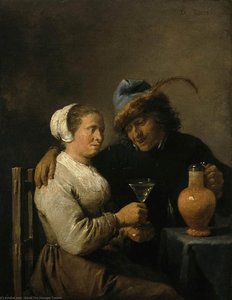
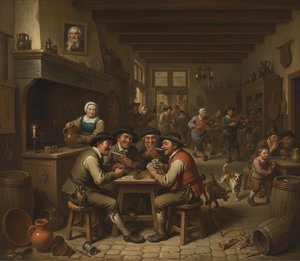
The painting portrays two figures seated at a table within a tavern interior—a man and woman engaged in conversation amidst the warmth of candlelight. A wine glass sits between them, subtly suggesting intimacy and shared enjoyment. Adding to the scene’s dynamism is another individual glimpsed in the background, though less prominent than the central subjects, hinting at the bustling activity characteristic of taverns during this period. Teniers skillfully employs perspective to create depth, anchoring the viewer's gaze within the confines of the tavern space. The inclusion of a vase on the table serves as an ornamental element, elevating the scene beyond simple realism and reflecting the decorative sensibilities prevalent in aristocratic homes.Style and Technique: Baroque Precision
Teniers’ style firmly establishes itself within the Baroque tradition—a movement defined by grandeur, dramatic lighting, and meticulous detail. Like many artists of his time, he embraced Rubens' influence, inheriting a penchant for vibrant color palettes and dynamic compositions. The artist demonstrates masterful brushwork, layering pigments to achieve textural richness and capturing subtle nuances of light and shadow. Notice how the artist skillfully renders the reflections on the wine glass and the textures of the wooden table—evidence of painstaking observation and technical prowess.Historical Context: Antwerp’s Golden Age
“Tavern Scene” emerges from Antwerp during its zenith as a cultural and economic powerhouse – The Dutch Golden Age was in full swing, fostering artistic innovation and attracting talent from across Europe. Taverns were not merely places for drinking; they functioned as social hubs where merchants, artisans, and intellectuals exchanged ideas and engaged in lively debate. Teniers’ depiction captures this vibrant atmosphere, offering a glimpse into the daily life of ordinary citizens amidst extraordinary artistic achievement.Symbolism: Beyond Representation
The painting speaks volumes about societal values during the period. The wine glass symbolizes hospitality and conviviality, while the attentive gaze of the woman conveys a sense of feminine grace and engagement. Furthermore, the presence of the vase—a common decorative motif in aristocratic interiors—underscores the importance of aesthetics within the broader cultural landscape. Teniers’ work isn't simply illustrating a scene; it’s communicating ideas about social status, relationships, and the pursuit of beauty.Emotional Impact: Capturing Human Connection
Ultimately, “Tavern Scene” succeeds in conveying an emotional resonance that transcends time. The painting evokes feelings of warmth, companionship, and quiet contemplation—moments of human connection captured with exquisite sensitivity. It invites viewers to imagine themselves transported back to Antwerp’s Golden Age, experiencing the palpable energy of a tavern filled with spirited conversation and shared pleasure. This artwork remains a testament to Teniers' ability to transform observation into enduring artistic expression.Related Artworks
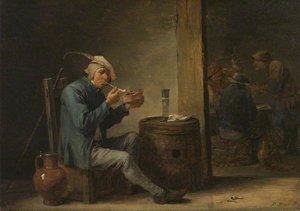
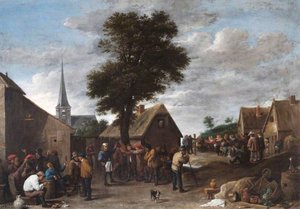
Artist Biography
David Teniers the Younger: Life and Legacy
Early Life and Family Background
- Born: Antwerp, Belgium, December 15, 1610.
- David Teniers the Younger came from a family deeply rooted in the artistic tradition of Flanders. His father, David Teniers the Elder, was also a painter, and several of his siblings pursued careers as artists.
- Training: He initially studied under his father, receiving foundational training in painting techniques and styles.
- The family faced financial difficulties at times, leading young David to make copies of older master paintings to contribute to the household income.
Artistic Development and Influences
- Early Influences: His early work was heavily influenced by his father’s style, focusing on smaller-scale cabinet paintings. He also absorbed influences from other Flemish masters like Pieter Bruegel the Elder.
- Rubens' Impact: A pivotal moment in Teniers’ development came through his association with Peter Paul Rubens. He married Anna Brueghel, daughter of Jan Brueghel the Elder, and Rubens served as a witness at their wedding, establishing a close relationship.
- Genre Specialization: Teniers gradually specialized in genre painting – depictions of everyday life – becoming renowned for his lively scenes of peasant festivals (kermesses), tavern interiors, and village landscapes.
Major Works and Artistic Style
- Genre Scenes: His most celebrated works are his genre paintings. These often depict bustling scenes of peasant life filled with merriment, dancing, drinking, and games.
- Kermess Paintings: The “Flemish Kermess” series exemplifies his style – vibrant colors, detailed compositions, and a keen observation of human behavior.
- Landscape Painting: Teniers also produced charming landscape paintings, often incorporating figures engaged in rural activities.
- Tavern Interiors: His tavern scenes are particularly notable for their realistic portrayal of everyday life and the lively atmosphere within these establishments.
Court Painter and Curator
- Service to Archduke Leopold Wilhelm: Teniers’ talent gained recognition at the Habsburg court. He became a court painter and curator for Archduke Leopold Wilhelm, the Governor General of the Spanish Netherlands.
- Collection Management: As curator, he was responsible for managing the Archduke's extensive art collection, creating an inventory and cataloging the works.
- Founding the Antwerp Academy: Teniers played a crucial role in establishing the Antwerp Academy of Fine Arts, aiming to revitalize Flemish painting after a period of decline following the deaths of Rubens and Van Dyck.
Historical Significance and Legacy
- Leading Genre Painter: David Teniers the Younger is considered the leading Flemish genre painter of his time, capturing the essence of 17th-century life with remarkable skill.
- Influence on Later Artists: His work influenced subsequent generations of Northern European painters and even impacted French Rococo artists like Antoine Watteau.
- Prolific Output: Teniers was an incredibly prolific artist, producing a vast body of work that continues to be admired for its charm, detail, and historical insight.
- Death: He died in Antwerp on April 25, 1690, leaving behind a lasting legacy as one of Flanders’ most important Baroque painters.
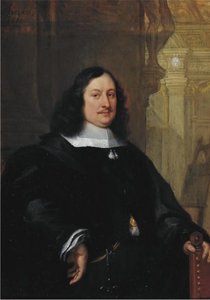
David Teniers the Younger
1610 - 1690 , Belgium
Quick Facts
- Birth Date: 1610
- Birth Place: Antwerp, Belgium
- Death Date: 1690
- Influenced By: Peter Paul Rubens
- Movement: Baroque
- Name: David Teniers the Younger
- Nationality: Flemish
- Notable Works:
- Two Drunkards
- Village Scene
- Kitchen Scene
- Flemish Kermess
Related Articles
David Teniers the Younger: Genre Painting & Social Commentary in Baroque Flanders
Explore the captivating world of David Teniers the Younger, a leading Flemish Baroque painter. Discover his genre scenes, social commentary, and lasting influence on 17th-century art. Learn about his life, techniques & legacy.
David Teniers II: Master of Flemish Genre & Social Commentary
Explore the captivating world of David Teniers II, a leading Flemish Baroque painter renowned for his lively genre scenes & insightful social commentary. Discover his masterpieces and legacy with ArtsDot.
Jacob Jordaens: Baroque Dynamism & Genre Innovation of the Antwerp School
Discover Jacob Jordaens, a leading Flemish Baroque painter renowned for his dynamic compositions & realistic genre scenes. Explore his life, art, and lasting influence with ArtsDot.

The Visceral Stage: Exploring Dramatic Narratives & Emotional Intensity in Baroque Art
Explore the dramatic world of Baroque art! Discover iconic masters like Caravaggio & Rembrandt, their techniques, and the movement's lasting impact. Expert insights for collectors & enthusiasts at ArtsDot.

Baroque Drama: Bringing Opulence & Emotion into Contemporary Interiors
Explore the opulent world of Baroque interior design! Discover key elements, modern applications & how to bring dramatic elegance into your home with 's authentic reproductions.