 Preview
 Send
Send Share
Share
 Details

 Download
 Similars
 X-Ray
X-Ray Diaporama
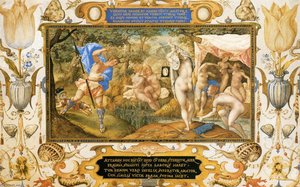
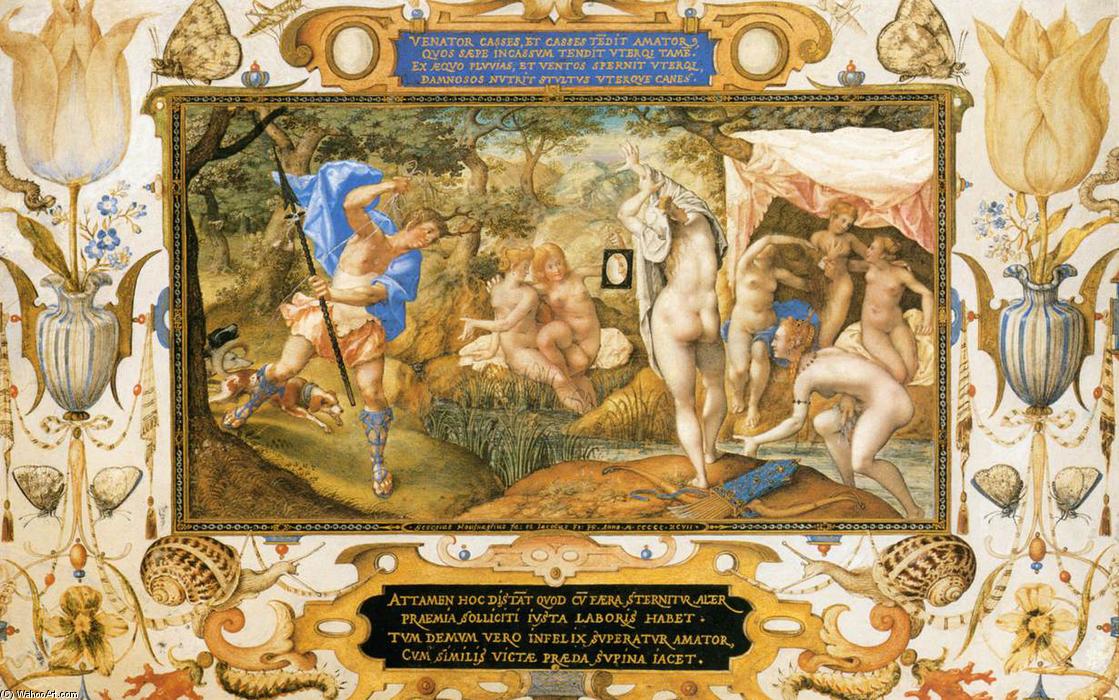
Diana and Actaeon
 Oil On Panel
- Baroque
 1597
1597- Renaissance
 220.0 x 339.0 cm
 The Louvre
 Read More
Hand Made Oil Reproduction
Hand-painted oil on canvas in your size and frame, made to order by our artists. ( Buy Print Buy Image)




P118B $10

P118H $10

P118W $10

P438Z $10

P508JH $12

P508YH $12

P805H $10

P805Z $10

P919BZ $10

P919G $10

P919XJ $10

P959ZH $10

P968JZ $12

W106C $8

W218G $10

W218JH $8

W218Y $10

W307PJ $10

W316G $10

W316PJ $8

W316Y $10

W398PJ $8

W4111J $10

W500HY $15

W500JH $15

W692G $12

W849H $8

W940BG $15

W953PJ $8




Pick from our preset sizes that match the artwork's original proportions.

You may enter your own dimensions to fit a specific frame or space. If your selected size does not match the original image's proportions, we will either crop the artwork or extend the painting with additional hand-painted elements. A digital mockup will be sent for your approval before production begins.
Please note that the on-screen preview does not reflect the actual cropping or extension. Only the mockup will accurately show the final composition.
While custom sizes are available, we recommend selecting a dimension from the predefined list to preserve the original proportions.
After order, ArtsDot.com team will email client for instructions and provide a mockup preview
Worldwide Delivery () in 3/4 weeks instead of standard 5 weeks. (17 August). No compromise on quality.

Free Worldwide Express Shipping

High-Quality Linen Canvas

Full Shipping Insurance

Customs Tax Refund Guarantee

True Color Matching Guarantee

60-Day Return Policy (Defects Only)

100% Money-Back Guarantee

Bulk Discount Offer
 Glass option is only available in size under 110 CM

Diana and Actaeon
Reproduction Medium
Reproduction Size
-


Total Price
$ 263
Artwork Description
Diana and Actaeon: A Flemish Masterpiece Bridging Renaissance and Baroque
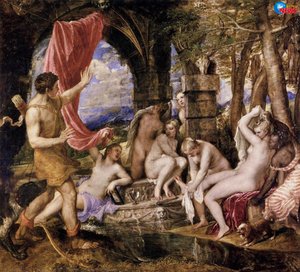
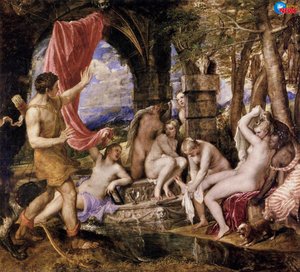
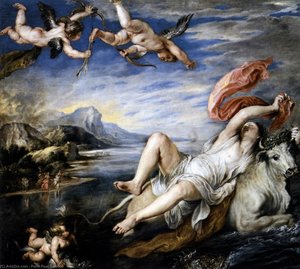
The painting Diana and Actaeon by Joris Hoefnagel (Georg Hoefnagel), completed in 1597, stands as a testament to the artistic fervor of the late sixteenth century—a period marked by both intellectual curiosity and profound spiritual contemplation. Currently residing within the Musée du Louvre in Paris, France, this monumental panel exemplifies Hoefnagel’s unparalleled skill in capturing the human form alongside the intricacies of the natural world, cementing his reputation as a pioneer of botanical illustration and topographical drawing. The Mythological Scene at its Core The artwork depicts the iconic mythological tale recounted by Ovid in his Metamorphoses: Diana, goddess of the hunt and protector of chastity, confronts Actaeon, a mortal hunter who unwittingly discovers her bathing alongside nymphs—female spirits inhabiting sacred groves. Hoefnagel’s depiction adheres to classical artistic conventions, prioritizing anatomical accuracy and meticulous observation of detail. The figures are rendered with graceful poses and drapery folds that convey movement and elegance, reflecting the humanist ideals prevalent during the Renaissance. Artistic Style: Precision and Illusion Hoefnagel's distinctive style is characterized by unwavering precision—evident in his meticulously drawn lines and subtle shading—combined with a masterful manipulation of perspective to create an illusion of three-dimensionality. Unlike many artists of his time who favored idealized representations, Hoefnagel sought to portray the natural world as it truly appeared, incorporating elements of observation and scientific inquiry into his artistic practice. The artist’s use of light and shadow is particularly noteworthy, sculpting forms with remarkable subtlety and enhancing the dramatic impact of the scene. A Window Into Renaissance Thought The painting's context within the broader intellectual landscape of the Renaissance illuminates its significance beyond mere aesthetic beauty. Hoefnagel’s work reflects the humanist preoccupation with understanding the human body—a cornerstone of anatomical studies undertaken by artists like Leonardo da Vinci—and aligns with the burgeoning interest in natural history and botany, fueled by expeditions to distant lands and a desire to catalog the wonders of creation. The inclusion of nymphs underscores the importance of pagan mythology within Renaissance culture, demonstrating an appreciation for classical traditions alongside Christian faith. Technical Considerations: Panel Painting and Color Palette Diana and Actaeon was executed on a panel—a wooden substrate covered with layers of gesso (preparation) and primer—allowing Hoefnagel to achieve exceptional surface smoothness and tonal control. The painting’s color palette is dominated by earthy hues—ochres, siennas, umbers—creating a harmonious blend of warmth and depth. Accents of blues and greens introduce visual contrast, emphasizing the verdant landscape surrounding Diana and Actaeon and contributing to the overall sense of realism. The artist's signature, visible on the lower right corner, serves as an emblem of artistic authorship and confirms the authenticity of this enduring masterpiece. Handmade Oil Paintings Reproductions: Bringing History Home If you yearn to experience the grandeur of Diana and Actaeon firsthand—to possess a tangible connection to one of the most celebrated artworks of the Renaissance—consider exploring reproductions crafted by skilled artisans at https://ArtsDot.com/. This platform offers access to high-quality prints and canvases that faithfully recreate Hoefnagel’s original vision, allowing art enthusiasts worldwide to appreciate the beauty and intellectual depth of this iconic painting. For further insights into Joris Hoefnagel's life and artistic legacy, visit https://ArtsDot.com/@/Joris-Hoefnagel. And delve deeper into the Musée du Louvre’s collection at /art/list/?Filter=A@D3B2AT-The-Louvre-Museum-Paris-France.Related Artworks

Artist Biography
Joris Hoefnagel: A Pioneer of Naturalism and Manuscript Illumination
Joris Hoefnagel, born in Antwerp around 1542 and tragically dying in Vienna in 1601, stands as a pivotal figure bridging the late Renaissance and the burgeoning Baroque periods. More than simply a painter, he was a master illuminator, a meticulous draftsman, and a keen observer of nature – a confluence of skills that cemented his legacy as one of the most influential artists of his time. His work, often characterized by an almost scientific precision combined with a captivating sense of beauty, profoundly impacted the development of both botanical illustration and topographical drawing, leaving an indelible mark on generations of European artists.
Hoefnagel’s early life remains somewhat shrouded in mystery, though we know he was the son of Jacob Hoefnagel, a successful diamond dealer and tapestry merchant. This privileged upbringing afforded him a comprehensive education, including fluency in several languages and an appreciation for the arts – a foundation that would prove crucial to his future career. While speculation persists regarding his formal training, most scholars believe he received instruction from Hans Bol, a prominent Flemish painter active in Antwerp during the 1570s. This apprenticeship likely introduced him to the intricacies of miniature painting, a skill that would become central to his artistic practice.
The Travels and Transformations
Hoefnagel’s career unfolded across Europe, shaped by both professional opportunities and turbulent political times. He spent time in France from 1560 to 1563, likely honing his skills and expanding his network of contacts before returning to Antwerp and then venturing into Spain between 1563 and 1567. These periods were marked by religious upheaval and artistic censorship, experiences that undoubtedly influenced the themes and styles he explored. His travels to Italy, particularly Venice, proved transformative, exposing him to the innovations of Renaissance masters like Titian and fostering a deeper appreciation for color and composition.
A significant turning point in Hoefnagel’s career arrived with his arrival in England in 1532, invited by Thomas More. He quickly established himself as a sought-after artist, producing portraits for the humanist scholar and capturing the grandeur of More's household. This association with More marked the beginning of a long and fruitful relationship with the English court, culminating in commissions from Henry VIII and Anne Boleyn. His work during this period showcased his remarkable draftsmanship and his ability to render intricate details with astonishing accuracy – qualities that would become hallmarks of his style.
A Master of Detail: Natural History and Topographical Drawing
Hoefnagel’s artistic reputation rests largely on his extraordinary illustrations of natural history subjects. Unlike earlier depictions, which often prioritized symbolic meaning over realistic representation, Hoefnagel approached botanical studies with a meticulousness bordering on scientific observation. His detailed renderings of flowers, insects, and animals – exemplified by works like “The Insects” and “The Flowers” – are not merely decorative; they represent a significant advance in the field of natural history illustration. These images were far more than pretty pictures; they served as valuable reference materials for scholars and physicians.
Furthermore, Hoefnagel’s contributions to topographical drawing were equally groundbreaking. He produced remarkably accurate depictions of cityscapes, landscapes, and architectural details – works that anticipated the rise of landscape painting as a distinct genre. His meticulous attention to perspective and his ability to capture the nuances of light and shadow demonstrated a mastery of technique rarely seen in his contemporaries. These drawings weren’t simply records of places; they were imbued with a sense of atmosphere and observation, reflecting Hoefnagel's keen eye for detail.
Legacy and Influence
Joris Hoefnagel’s impact on the course of art history is undeniable. His meticulous draftsmanship and his pioneering approach to natural history illustration profoundly influenced a generation of artists, including Rembrandt, Rubens, and later, botanical illustrators like Jan van Dijck. He essentially laid the groundwork for the development of scientific illustration as a distinct field, demonstrating the potential for artistic representation to serve both aesthetic and practical purposes.
Beyond his technical achievements, Hoefnagel’s work embodies a unique synthesis of humanist ideals, Renaissance aesthetics, and burgeoning scientific inquiry. His legacy endures not only in the surviving images themselves but also as a testament to the power of observation, precision, and artistic vision – qualities that continue to inspire artists and scholars today.
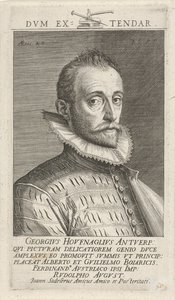
joris hoefnagel (georg hoefnagel)
1542 - 1601 , Belgium
Quick Facts
- Artistic Movement Or Style: Miniaturist, draughtsman
- Artists Or Movements Influenced By This Artist: ['Netherlandish painters']
- Artists Who Influenced This Artist: ['Hans Holbein the Younger']
- Date Of Birth: 1542
- Date Of Death: 1601
- Full Name: Joris Hoefnagel
- Nationality: Flemish
- Notable Artworks:
- The Ambassadors
- Floral Still Lifes
- Place Of Birth: Antwerp, Belgium
Related Articles
F.A.Q.: Multi-Panel Group Set Art – A Sophisticated Decor Solution for Elite Collectors
Discover 's exquisite multi-panel art sets – a sophisticated decor solution for elite collectors. Custom designs, premium reproductions & expert guidance. Elevate your space with lasting beauty.
Echoes of Olympus: Mythological Narratives in Western Art Through the Ages
Explore the captivating history of mythological narratives in Western art! From ancient Greece to modern masterpieces, discover iconic artworks & symbolism. Expert analysis and high-quality reproductions at ArtsDot.
25 Klimt Masterpieces: A Journey Through Iconic Art & Decor
Delve into the world of Gustav Klimt with our top 25 masterpieces! Explore his iconic paintings – 'The Kiss,' 'Portrait of Adele,' and more. Discover museum-quality reproductions & curated decor ideas. Explore the full collection online at ArtsDot.com.
Oil on Panel Masters: 10 Paintings That Revolutionized Art |
Journey through 10 legendary 'Oil on Panel' masterpieces by Van Eyck, Bosch & Bruegel. Explore the stories behind these iconic Renaissance & Baroque paintings and find museum-quality art reproductions to elevate your home decor. Discover all masterpieces on !
Top 10 Masterpieces for Your Living Room: Iconic Paintings & Art Decor Ideas |
Transform your living room with iconic art! Explore our guide to the Top 10 most famous paintings – from Van Gogh's Starry Night to Mona Lisa. Discover artist stories, techniques & find museum-quality reproductions for timeless decor. Explore the full collection on