 Preview
 Send
Send Share
Share
 Details

 Download
 Similars
 X-Ray
X-Ray Diaporama
Amersfoort


 Read More
Hand Made Oil Reproduction
Hand-painted oil on canvas in your size and frame, made to order by our artists. ( Buy Print Buy Image)




P118B $10

P118H $10

P118W $10

P438Z $10

P508JH $12

P508YH $12

P805H $10

P805Z $10

P919BZ $10

P919G $10

P919XJ $10

P959ZH $10

P968JZ $12

W106C $8

W218G $10

W218JH $8

W218Y $10

W307PJ $10

W316G $10

W316PJ $8

W316Y $10

W398PJ $8

W4111J $10

W500HY $15

W500JH $15

W692G $12

W849H $8

W940BG $15

W953PJ $8




Pick from our preset sizes that match the artwork's original proportions.

You may enter your own dimensions to fit a specific frame or space. If your selected size does not match the original image's proportions, we will either crop the artwork or extend the painting with additional hand-painted elements. A digital mockup will be sent for your approval before production begins.
Please note that the on-screen preview does not reflect the actual cropping or extension. Only the mockup will accurately show the final composition.
While custom sizes are available, we recommend selecting a dimension from the predefined list to preserve the original proportions.
After order, ArtsDot.com team will email client for instructions and provide a mockup preview
Worldwide Delivery () in 3/4 weeks instead of standard 5 weeks. (21 August). No compromise on quality.

Free Worldwide Express Shipping

High-Quality Linen Canvas

Full Shipping Insurance

Customs Tax Refund Guarantee

True Color Matching Guarantee

60-Day Return Policy (Defects Only)

100% Money-Back Guarantee

Bulk Discount Offer
 Glass option is only available in size under 110 CM

Amersfoort
Reproduction Medium
Reproduction Size
-


Total Price
$ 288
Artwork Description
A Glimpse Through Time: Amersfoort in Hoefnagel's Hand
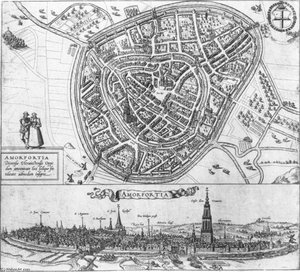
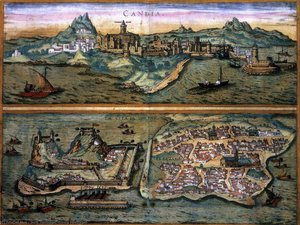
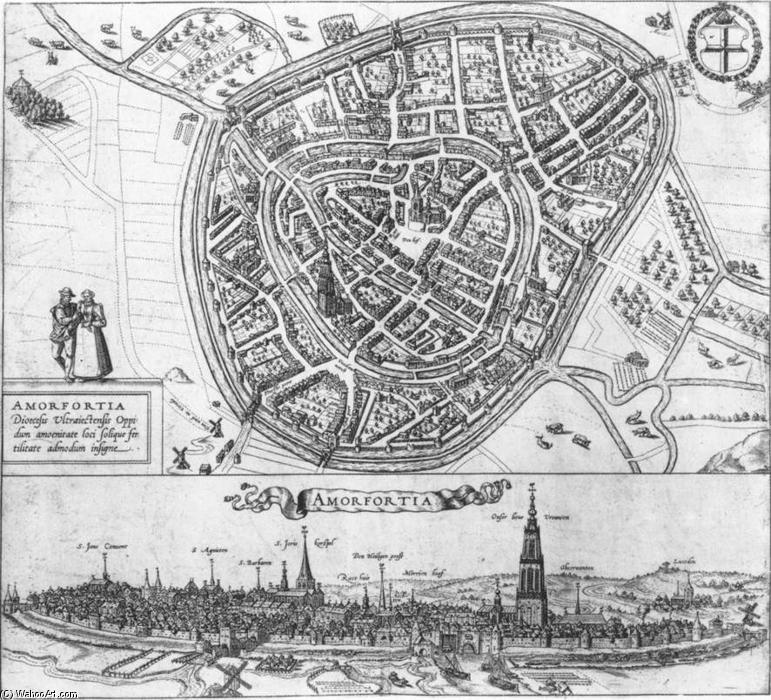
To gaze upon Joris Hoefnagel’s depiction of Amersfoort is not merely to look at an old map; it is to step through a meticulously preserved portal into the late sixteenth century. This engraving, dating from 1588, transcends the boundaries of mere cartography. It is a vibrant historical document rendered with the delicate precision of high art. Hoefnagel, that masterful illuminator and draftsman, gifted us more than just lines on paper; he offered an immersive vision of urban life in the burgeoning Dutch Golden Age. The composition itself is a breathtaking dialogue between the vast sweep of an aerial overview and the intimate drama unfolding at street level.
The Artistry of Line: Technique and Detail
Technically, this piece sings with the restrained elegance characteristic of fine engraving. Hoefnagel employed an almost scientific dedication to line work, utilizing cross-hatching and varying densities of ink to suggest depth, shadow, and texture where color could not speak. The monochromatic palette—a symphony of blacks, grays, and whites—forces the viewer’s attention entirely onto form and structure. Observe how the fine lines define every roofline, every canal edge, and every passing figure. This reliance on linear perspective is nothing short of miraculous; it creates an undeniable illusion of three-dimensional space, making the flat surface feel palpably deep. It speaks to a period when technical mastery was synonymous with artistic genius.
Life Captured: Subject Matter and Human Element
What elevates this work beyond a simple topographical study is its profound inclusion of human activity. The lower register invites us into the cobblestone thoroughfares, where figures go about their daily routines—a bustling tableau frozen in time. These people are not mere filler; they imbue Amersfoort with a palpable sense of life and purpose. From the grand architectural renderings to the small details of everyday commerce, Hoefnagel captures the very pulse of a thriving city. It is a celebration of human endeavor set against the enduring backdrop of stone and water.
Echoes of History: Symbolism and Context
For the collector or admirer of history, this piece resonates with deep symbolic weight. It represents not only the physical layout of Amersfoort but also the intellectual curiosity of its era—a desire to map, categorize, and understand the world through art. Hoefnagel’s work embodies a transition point in European art, bridging the detailed naturalism of the Renaissance with the burgeoning dramatic flair that would define the Baroque. Owning a reproduction allows one to connect directly with this moment of cultural crystallization, feeling the weight of 16th-century scholarship and artistic ambition.
Bringing the Past Home: For the Modern Interior
For those seeking art that anchors a space in narrative depth, this engraving offers unparalleled sophistication. Its restrained palette ensures it complements nearly any décor scheme, lending an air of cultivated, scholarly grandeur to a drawing-room or study. Imagine its presence, allowing natural light to play across its intricate lines, transforming the room into a gallery dedicated to historical wonder. It is a piece that whispers stories rather than shouting for attention—a timeless conversation starter that speaks volumes about taste and appreciation for enduring craftsmanship.
Related Artworks

Artist Biography
Joris Hoefnagel: A Pioneer of Naturalism and Manuscript Illumination
Joris Hoefnagel, born in Antwerp around 1542 and tragically dying in Vienna in 1601, stands as a pivotal figure bridging the late Renaissance and the burgeoning Baroque periods. More than simply a painter, he was a master illuminator, a meticulous draftsman, and a keen observer of nature – a confluence of skills that cemented his legacy as one of the most influential artists of his time. His work, often characterized by an almost scientific precision combined with a captivating sense of beauty, profoundly impacted the development of both botanical illustration and topographical drawing, leaving an indelible mark on generations of European artists.
Hoefnagel’s early life remains somewhat shrouded in mystery, though we know he was the son of Jacob Hoefnagel, a successful diamond dealer and tapestry merchant. This privileged upbringing afforded him a comprehensive education, including fluency in several languages and an appreciation for the arts – a foundation that would prove crucial to his future career. While speculation persists regarding his formal training, most scholars believe he received instruction from Hans Bol, a prominent Flemish painter active in Antwerp during the 1570s. This apprenticeship likely introduced him to the intricacies of miniature painting, a skill that would become central to his artistic practice.
The Travels and Transformations
Hoefnagel’s career unfolded across Europe, shaped by both professional opportunities and turbulent political times. He spent time in France from 1560 to 1563, likely honing his skills and expanding his network of contacts before returning to Antwerp and then venturing into Spain between 1563 and 1567. These periods were marked by religious upheaval and artistic censorship, experiences that undoubtedly influenced the themes and styles he explored. His travels to Italy, particularly Venice, proved transformative, exposing him to the innovations of Renaissance masters like Titian and fostering a deeper appreciation for color and composition.
A significant turning point in Hoefnagel’s career arrived with his arrival in England in 1532, invited by Thomas More. He quickly established himself as a sought-after artist, producing portraits for the humanist scholar and capturing the grandeur of More's household. This association with More marked the beginning of a long and fruitful relationship with the English court, culminating in commissions from Henry VIII and Anne Boleyn. His work during this period showcased his remarkable draftsmanship and his ability to render intricate details with astonishing accuracy – qualities that would become hallmarks of his style.
A Master of Detail: Natural History and Topographical Drawing
Hoefnagel’s artistic reputation rests largely on his extraordinary illustrations of natural history subjects. Unlike earlier depictions, which often prioritized symbolic meaning over realistic representation, Hoefnagel approached botanical studies with a meticulousness bordering on scientific observation. His detailed renderings of flowers, insects, and animals – exemplified by works like “The Insects” and “The Flowers” – are not merely decorative; they represent a significant advance in the field of natural history illustration. These images were far more than pretty pictures; they served as valuable reference materials for scholars and physicians.
Furthermore, Hoefnagel’s contributions to topographical drawing were equally groundbreaking. He produced remarkably accurate depictions of cityscapes, landscapes, and architectural details – works that anticipated the rise of landscape painting as a distinct genre. His meticulous attention to perspective and his ability to capture the nuances of light and shadow demonstrated a mastery of technique rarely seen in his contemporaries. These drawings weren’t simply records of places; they were imbued with a sense of atmosphere and observation, reflecting Hoefnagel's keen eye for detail.
Legacy and Influence
Joris Hoefnagel’s impact on the course of art history is undeniable. His meticulous draftsmanship and his pioneering approach to natural history illustration profoundly influenced a generation of artists, including Rembrandt, Rubens, and later, botanical illustrators like Jan van Dijck. He essentially laid the groundwork for the development of scientific illustration as a distinct field, demonstrating the potential for artistic representation to serve both aesthetic and practical purposes.
Beyond his technical achievements, Hoefnagel’s work embodies a unique synthesis of humanist ideals, Renaissance aesthetics, and burgeoning scientific inquiry. His legacy endures not only in the surviving images themselves but also as a testament to the power of observation, precision, and artistic vision – qualities that continue to inspire artists and scholars today.
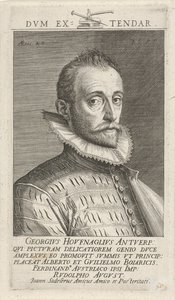
joris hoefnagel (georg hoefnagel)
1542 - 1601 , Belgium
Quick Facts
- Artistic Movement Or Style: Miniaturist, draughtsman
- Artists Or Movements Influenced By This Artist: ['Netherlandish painters']
- Artists Who Influenced This Artist: ['Hans Holbein the Younger']
- Date Of Birth: 1542
- Date Of Death: 1601
- Full Name: Joris Hoefnagel
- Nationality: Flemish
- Notable Artworks:
- The Ambassadors
- Floral Still Lifes
- Place Of Birth: Antwerp, Belgium
Related Articles
The Flourishing Canvas: A Historical & Artistic Exploration of Botanical Illustration
Explore the rich history of botanical illustration! Discover key artists like Havell & Barraband, learn about scientific accuracy & aesthetic beauty. Shop museum-quality reproductions at ArtsDot.
The Flourishing Canvas: A Historical Journey Through Botanical Illustration
Explore the captivating history of botanical illustration! Discover renowned artists like Robert Havell & Mary Walcott, learn about techniques, and find museum-quality art at ArtsDot.com.
The Flourishing Canvas: A Historical Journey Through Botanical Illustration
Explore the captivating history of botanical illustration! Discover renowned artists like Robert Havell & Mary Walcott, learn about techniques, and find museum-quality art at ArtsDot.com.
Victorian Botanical Painting: Science, Art & Aesthetic Sensibility
Explore the exquisite world of Victorian botanical art! Discover the science & artistry behind stunning floral illustrations by Gould, Muckley & more. Learn about collecting, value & investment at ArtsDot.
The Evocative Detail of Nature: A History of Naturalistic Illustration
Explore the rich history of botanical illustration! Discover pioneering artists like Maria Sibylla Merian & Marianne North. Learn about scientific precision, artistic expression, and find museum-quality reproductions at ArtsDot.