

 Preview
 Send
Send Share
Share
 Details

 Download
 Similars
 X-Ray
X-Ray Diaporama
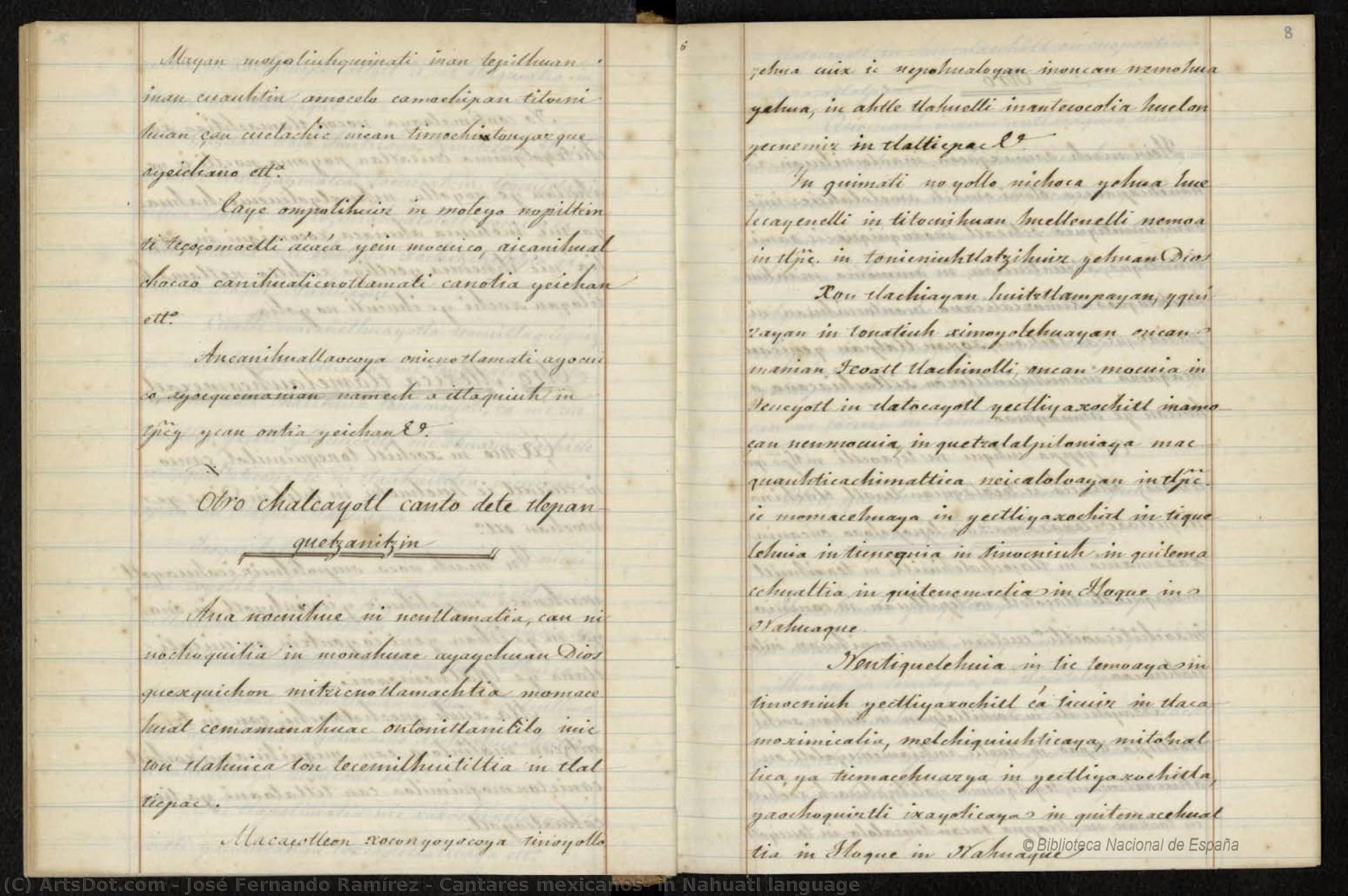
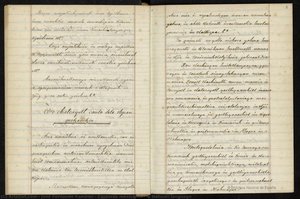
Cantares mexicanos, in Nahuatl language


 Read More
Giclée / Art Print
Museum-quality giclée or canvas print with fast production and flexible finish options. ( Buy Hand Made Painting Buy Image)




P118B $10

P118H $10

P118W $10

P438Z $10

P508JH $12

P508YH $12

P805H $10

P805Z $10

P919BZ $10

P919G $10

P919XJ $10

P959ZH $10

P968JZ $12

W106C $8

W218G $10

W218JH $8

W218Y $10

W307PJ $10

W316G $10

W316PJ $8

W316Y $10

W398PJ $8

W4111J $10

W500HY $15

W500JH $15

W692G $12

W849H $8

W940BG $15

W953PJ $8




Pick from our preset sizes that match the artwork's original proportions.

You may enter your own dimensions to fit a specific frame or space. If your selected size does not match the original image's proportions, we will either crop the artwork or extend the image with a mirrored or solid-fill edge. A digital mockup will be sent for your approval before production begins.
Please note that the on-screen preview does not reflect the actual cropping or extension. Only the mockup will accurately show the final composition.
While custom sizes are available, we recommend selecting a dimension from the predefined list to preserve the original proportions.
Worldwide Delivery () in 2 weeks instead of standard 4/5 weeks. (22 August)

Free Worldwide Express Shipping

High-Quality Linen Canvas

Full Shipping Insurance

Customs Tax Refund Guarantee

True Color Matching Guarantee

60-Day Return Policy (Defects Only)

100% Money-Back Guarantee

Bulk Discount Offer
 Glass option is only available in size under 110 CM

Cantares mexicanos, in Nahuatl language
Giclée / Art Print
Reproduction Size
-


Total Price
$ 63
Related Artworks

![Xtol: Dance Of The Ancient Mayan People, [front And Back Cover] — Octavio Medellín, Mexican Muralism](/media/artworks/images-thumb/3b/7f/3b7f31eb30c8867b3e82b4bcf6f17b6e.jpg)
![Mexican Landscape \n[paisaije Mexicano] — José Clemente Orozco, Mexican Muralism](/media/artworks/images-thumb/1b/4f/1b4fb08c1150706f7451e9f7b5673180.jpg)
Artist Biography
A Legacy of Discovery: The Life and Scholarship of José Fernando Ramírez
In the grand tapestry of nineteenth-century Mexican history, few figures loom as large or as intellectually profound as José Fernando Ramírez. Born in Parral, Chihuahua, in 1804, Ramírez was a man whose life was inextricably woven into the turbulent political and cultural fabric of his nation. While many remember him for his high-ranking roles in government, his true essence lay in his role as a pioneer of Mesoamerican scholarship—a scholar who looked backward through the mists of time to recover the lost voices of the Aztec and colonial past. His journey was one of profound contradictions: a liberal republican who served an emperor, and a diplomat who found his greatest solace in the ancient, silent manuscripts of a prehispanic world.
Ramírez’s intellectual foundation was built upon a rigorous legal education at San Luis Gonzaga University, a path that propelled him into the heart of Mexican political life. His career was marked by an extraordinary ascent through the halls of power, serving in the Chamber of Deputies and the Senate, and eventually presiding over the Ministry of Foreign Affairs under three different administrations. Even during the tumultuous era of the French intervention and the establishment of the Second Mexican Empire, Ramírez maintained a complex stance. Though he accepted the role of Minister of Foreign Affairs under Emperor Maximilian I, his heart remained anchored to his liberal convictions. This period of his life was defined by a delicate dance between duty to the state and personal ideology, a tension that eventually led him into exile in Europe following the tragic execution of the Emperor.
The Architect of Mexican Memory
Beyond the legislative chambers and diplomatic summits, Ramírez’s most enduring contribution to humanity lies in his tireless pursuit of historical truth. He possessed an almost intuitive ability to connect the modern Mexican identity with its ancestral roots. As the director of the National Museum and the head of the Imperial Academy of Sciences and Literature, he did not merely curate objects; he assembled a monumental collection of historical documents that served as the bedrock for future generations of historians. His work was characterized by an intense focus on prehispanic and sixteenth-century history, a field where he achieved unparalleled renown through his meticulous translations and rediscoveries.
One cannot discuss the legacy of Ramírez without mentioning his profound impact on the study of indigenous manuscripts. He had a remarkable talent for unearthing treasures that had been hidden in the shadows of colonial archives. His discovery of the Ramírez Codex in 1856, found within the convent of San Francisco in Mexico City, remains one of the most significant milestones in Mesoamerican ethnohistory. This manuscript, which provides a vital account of the origins of the peoples of New Spain, stands as a testament to his ability to bridge the gap between the written word and the ancient oral traditions of the Nahuatl people.
His scholarly repertoire was vast and deeply influential, encompassing works that brought the vibrant complexity of Aztec life to light. His achievements include:
- The Translation of Codices: Through his dedicated work on manuscripts such as the Mapa Quinatzin and the Codex Aubin, he allowed the voices of the ancestors to resonate in a modern academic context.
- Mentorship of Great Minds: He was the guiding force behind the intellectual development of Alfredo Chavero, whom he championed as one of the foremost historians of the nation.
- Preservation of Heritage: By directing the National Museum and building an impressive collection of historical documents, he ensured that the physical remnants of Mexico's past were protected from the ravages of time and political instability.
An Enduring Intellectual Presence
The final chapters of Ramírez’s life took him far from the sun-drenched landscapes of Chihuahua and Durango. Seeking refuge in Europe to escape the political volatility of a post-imperial Mexico, he spent his remaining years in Germany. It was in Bonn that he passed away on March 4, 1871, leaving behind a void in the Mexican academic community that would take decades to fill. Yet, even in death, his influence remained vibrant. The documents he rescued and the histories he reconstructed continue to serve as the primary sources for anyone seeking to understand the profound depth of Mesoamerican civilization.
Today, we recognize José Fernando Ramírez not merely as a politician or a diplomat, but as an architect of memory. He was a man who understood that a nation cannot truly move forward without a deep, respectful understanding of where it began. His life’s work serves as a bridge across centuries, connecting the ancient glory of the Aztec empire to the modern pursuit of historical identity. Through his eyes, the past was not a dead relic, but a living, breathing narrative waiting to be rediscovered.
josé fernando ramírez
1804 - 1871 , Mexico
Quick Facts
- Artistic Movement Or Style: Historical Painting
- Artists Or Movements Influenced By This Artist: ['Liberal Republicanism']
- Artists Who Influenced This Artist: ['Alfredo Chavero']
- Date Of Birth: May 5, 1804
- Date Of Death: March 4, 1871
- Full Name: José Fernando Ramírez
- Nationality: Mexican
- Notable Artworks: ['Cantares mexicanos']
- Place Of Birth: Parral, Mexico
Related Articles

19th Century Masterpieces: 10 Paintings That Defined an Era | ArtsDot
Journey through 19th century art with ArtsDot! Explore 10 iconic paintings – from Monet & Renoir to Courbet – and discover the stories behind Romanticism, Realism & Impressionism. Find museum-quality reproductions for your home decor. Explore the full collection online!
Revolution on Canvas: Exploring the Socio-Political Power & Artistic Legacy of Mexican Muralism
Explore the powerful world of Mexican muralism! Discover Diego Rivera, Frida Kahlo & Orozco's revolutionary art, social impact & lasting legacy. Expert insights & high-quality reproductions at ArtsDot.
Diego Rivera: A Revolutionary Vision of Mexican Identity Through Muralism
Explore the revolutionary murals of Diego Rivera and his profound impact on Mexican art & identity. Discover his techniques, iconic works like 'Man at the Crossroads,' and lasting legacy with ArtsDot.
José Clemente Orozco: A Revolutionary Vision of Mexican Muralism & the Human Condition
Explore the powerful world of José Clemente Orozco, a key figure in Mexican Muralism. Discover his revolutionary art, social commentary, and lasting impact on 20th-century painting. Learn about his unique style & legacy.

Harper's Weekly & the Anonymous Hand: Artistic Identity in 19th-Century America
Explore the fascinating world of Harper's Weekly & its often-anonymous artists! Discover Winslow Homer, Thomas Nast, and the impact of 19th-century illustration on American visual culture. A deep dive for art history enthusiasts.

