 Send
Send Share
Share
 Details

 Download
 Similars
 Diaporama
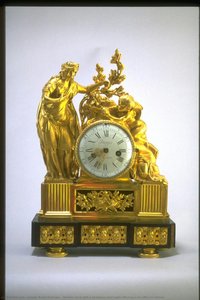
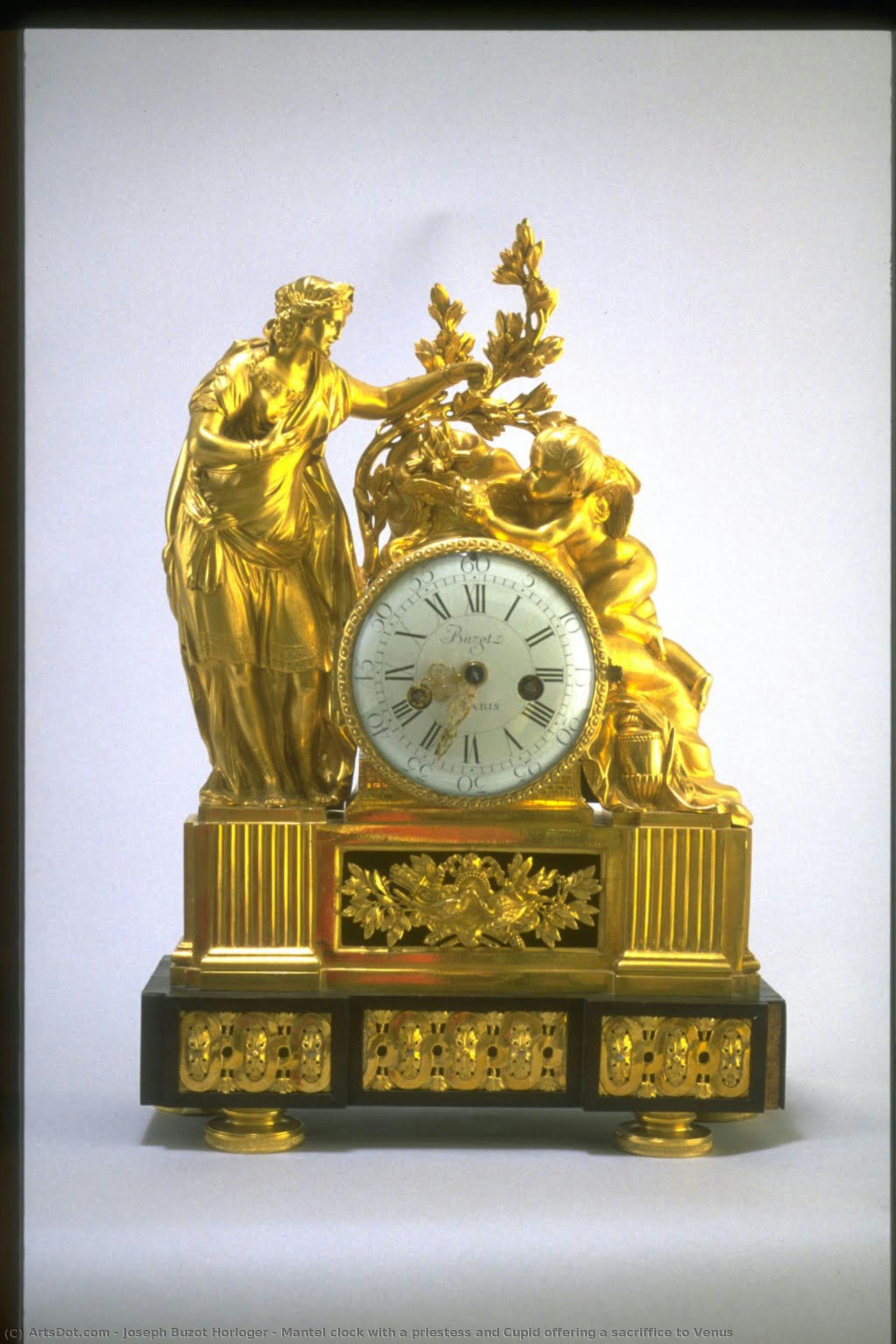
Mantel clock with a priestess and Cupid offering a sacriffice to Venus
 Metalwork
- Sculpture
- Neoclassicism
 1793
1793- Early Modern
 4.0 x 1.0 cm
 University of Michigan Museum of Art
 Read More
Hand Made Oil Reproduction
Hand-painted oil on canvas in your size and frame, made to order by our artists. ( Buy Print Buy Image)




































Pick from our preset sizes that match the artwork's original proportions.

You may enter your own dimensions to fit a specific frame or space. If your selected size does not match the original image's proportions, we will either crop the artwork or extend the painting with additional hand-painted elements. A digital mockup will be sent for your approval before production begins.
Please note that the on-screen preview does not reflect the actual cropping or extension. Only the mockup will accurately show the final composition.
While custom sizes are available, we recommend selecting a dimension from the predefined list to preserve the original proportions.
After order, ArtsDot.com team will email client for instructions and provide a mockup preview
Worldwide Delivery () in 3/4 weeks instead of standard 5 weeks. (23 August). No compromise on quality.

Free Worldwide Express Shipping

High-Quality Linen Canvas

Full Shipping Insurance

Customs Tax Refund Guarantee

True Color Matching Guarantee

60-Day Return Policy (Defects Only)

100% Money-Back Guarantee

Bulk Discount Offer
 Glass option is only available in size under 110 CM

Mantel clock with a priestess and Cupid offering a sacriffice to Venus
Reproduction Medium
Reproduction Size
-


Total Price
$ 263
Artwork Description
A Timeless Encounter: The Elegance of the Neoclassical Mantel Clock
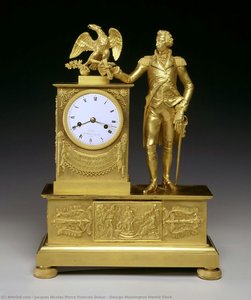
In the quiet intersection of functional horology and fine sculpture, the Mantel clock with a priestess and Cupid offering a sacrifice to Venus stands as a breathtaking testament to the artistry of the late eighteenth century. Created in 1793 by the skilled French horloger Joseph Buzot, this piece is far more than a mere timekeeper; it is a miniature stage where myth and devotion converge. The clock captures a moment of profound ritual, featuring a priestess and Cupid engaged in a sacred offering to Venus, the goddess of love. Through its delicate gold trim and intricate sculptural details, the work invites the viewer into a world of Neoclassical refinement, where every gilded edge serves to frame a narrative of eternal devotion.
Symbolism and the Language of Devotion
The composition of this exquisite timepiece is steeped in the symbolic language of the Enlightenment era. By depicting a priestess and Cupid—the winged messenger of desire—performing a sacrifice, the artist evokes themes of piety, passion, and the cyclical nature of time itself. The presence of Venus in the background acts as a celestial witness to the scene, grounding the movement of the clock's hands within a larger cosmic order. As the Roman numerals mark the passing hours, they do so amidst a tableau of mythological permanence. For the discerning collector, this piece offers a deep emotional resonance, representing the delicate balance between the fleeting moments of human life and the enduring legends of antiquity.
The interplay between the figures creates a sense of intimate drama. The interaction between the priestess and Cupid suggests a dialogue that transcends the physical medium, pulling the observer into their silent, sacred ceremony. This narrative depth makes the clock an extraordinary focal point for any curated space, offering a conversation piece that bridges the gap between historical storytelling and decorative splendor.
A Masterpiece for the Modern Interior
For interior designers and lovers of classical aesthetics, this reproduction offers an unparalleled opportunity to infuse a contemporary setting with historical soul. The warmth of the gold trim and the intricate sculptural elements provide a sophisticated texture that complements both opulent traditional mantels and minimalist modern consoles. Its small scale—measuring a delicate 4 x 1 cm in its original miniature form—belies the immense grandeur of its subject matter, making it an ideal accent for a library, a study, or a curated gallery wall.
Owning a high-quality reproduction of such a significant work from the era of Joseph Buzot allows one to possess a fragment of French history. It is an investment in atmosphere, bringing a sense of prestige and intellectual curiosity to any room. Whether placed as a centerpiece in a grand hall or tucked into a quiet corner of a reading nook, this clock serves as a luminous reminder of an age when even the most functional objects were treated as canvases for the sublime.
Related Artworks

Artist Biography
Claude Aubriet: A Master of Botanical Illustration
Claude Aubriet, a name perhaps less familiar than those of his contemporaries, stands as a quietly significant figure in the history of European art and scientific illustration. Born around 1651 (or possibly 1665) in Châlons-en-Champagne or Moncetz, France, Aubriet’s life was inextricably linked to the burgeoning world of botanical knowledge and the meticulous documentation demanded by the Royal Jardin du Roi in Paris. His career spanned nearly four decades, culminating in a legacy of exquisitely detailed plates that continue to be admired for their scientific accuracy and artistic beauty. Aubriet's early training remains somewhat shrouded in mystery, though he is believed to have begun his artistic journey as an illustrator for Joseph Pitton de Tournefort’s *Elemens de Botanique* in 1700. This collaboration marked the beginning of a long and fruitful partnership, with Aubriet contributing his unparalleled skill to documenting the flora encountered during Tournefort's extensive expeditions to the Middle East. These journeys weren’t merely geographical; they were pivotal for Aubriet’s development as an artist, exposing him to diverse cultures and botanical specimens previously unseen in Europe. The meticulousness required to capture these exotic plants – from detailed renderings of their leaves and flowers to careful depictions of their habitats – established a standard of precision that would define his work for years to come. Following Tournefort’s death, Aubriet continued his association with the Jardin du Roi, producing illustrations for *Les Vélins du Roi*, a series dedicated to showcasing the botanical treasures collected during royal expeditions. This period solidified his reputation as a leading botanical illustrator, and he was entrusted with the prestigious role of Royal Botanical Painter in 1707, succeeding Jean Joubert. His work wasn’t simply about reproduction; Aubriet possessed an innate ability to capture the essence of each plant, conveying its unique characteristics through subtle variations in line, color, and texture. He understood that a successful botanical illustration required not just accuracy but also a sense of artistry—a way to bring these silent subjects to life on paper. Aubriet’s artistic style is characterized by an almost obsessive attention to detail. His illustrations are remarkably precise, reflecting the scientific demands of his time. However, he wasn't merely a technician; there’s a delicate beauty in his work, a sense of quiet observation and reverence for the natural world. His use of light and shadow creates depth and volume, while his rendering of textures—the velvety petals of a flower, the rough bark of a tree—is astonishingly realistic. He employed watercolor techniques with remarkable skill, achieving subtle gradations of color that were rarely seen in contemporary botanical illustrations. His work served as invaluable documentation for botanists and naturalists, contributing significantly to the advancement of scientific knowledge.The Influence of Richard Cosway and Ozias Humphry
While Claude Aubriet’s contributions are often overlooked, his career unfolded within a vibrant artistic milieu, influenced by figures like Richard Cosway and Ozias Humphry. Cosway, renowned for his miniature portraits, demonstrated the importance of refined technique and elegant presentation – qualities that undoubtedly informed Aubriet's approach to botanical illustration. The meticulousness and attention to detail evident in Cosway’s work—particularly his portrait miniatures—suggest a shared aesthetic sensibility with Aubriet’s illustrations. Similarly, Ozias Humphry, another prominent painter of the period, specialized in portraits, but also developed a distinctive style characterized by bold colors and dramatic lighting. While their artistic paths diverged somewhat, both artists represented a shift towards greater realism and expressiveness within portraiture—influences that may have subtly shaped Aubriet’s approach to depicting botanical subjects. The impact of these influences is particularly evident in the way Aubriet rendered his plant subjects. He moved beyond simple depictions of form, striving to capture not only their physical appearance but also their essence – their vitality and beauty. He was a keen observer of nature, and this observation translated into his illustrations, which are imbued with a sense of wonder and appreciation for the natural world.A Legacy in Plates and Scientific Documentation
Claude Aubriet’s legacy lies primarily in his extensive body of botanical illustrations. His work is featured prominently in seminal texts such as Joseph Pitton de Tournefort's *Institutiones rei herbariae* (1719) and Sébastien Vaillant’s *Botanicon Parisense* (1727), both considered landmarks in the history of botany. These publications served as invaluable resources for botanists and naturalists, providing detailed depictions of plants from around the world. Beyond these published works, Aubriet created numerous private collections of botanical drawings, many of which are now housed in museums and private collections. His illustrations weren’t merely decorative; they were essential tools for scientific study. By meticulously documenting plant species, Aubriet contributed significantly to our understanding of botany and natural history. His work continues to be studied by botanists and art historians alike, serving as a testament to his skill, dedication, and artistic vision. The meticulous detail and beauty of his illustrations offer a unique window into the world of 18th-century science and art.Final Years and Recognition
Claude Aubriet spent his final years in Paris, continuing to work for the Jardin du Roi until his retirement in 1735. He died on December 3rd, 1742, leaving behind a remarkable body of work that continues to be celebrated today. While he may not have achieved widespread fame during his lifetime, Claude Aubriet’s contributions to botanical illustration are now recognized as significant and enduring. His legacy is one of meticulous observation, artistic skill, and a profound appreciation for the beauty and complexity of the natural world. His name, once relatively obscure, deserves greater recognition as a pivotal figure in the history of both art and science.
joseph buzot horloger
1742 - 1800 , France
Quick Facts
- Artistic Movement Or Style: Portrait painting
- Artists Or Movements Influenced By This Artist: ['None specified']
- Artists Who Influenced This Artist:
- Thomas Gainsborough
- Joshua Reynolds
- Date Of Birth: 8 September 1742
- Date Of Death: 9 March 1810
- Full Name: Ozias Humphry
- Nationality: English
- Notable Artworks: ['Charlotte, Princess Royal']
- Place Of Birth: Honiton, Devon, England
Related Articles
Golden Glow: How to Use Metallic Gold Artworks to Elevate Your Home Decor with Timeless Luxury
Discover how to elevate your home with the timeless elegance of metallic gold artworks. From sculptural metal pieces to gilded oil paintings, learn expert interior design tips for integrating luxurious gold accents into your space with sophistication and grace.
The Allure of Gold in Art History: Symbolism, Technique & Cultural Significance
Explore the rich history of gold in art! Discover symbolism, techniques & cultural significance from ancient civilizations to Klimt's masterpieces. Expert insights for collectors at ArtsDot.
Golden Masterpieces: 10 Paintings That Define Art History | ArtsDot
Explore 10 breathtaking paintings where gold leaf shines! From Klimt to Byzantine icons, discover art history’s most gilded masterpieces. Find museum-quality reproductions & elevate your home decor with ArtsDot. Explore the full collection online.
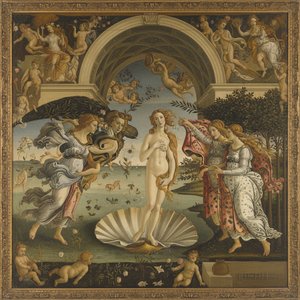
Botticelli's Masterpieces: Explore 25 Iconic Renaissance Paintings | ArtsDot
Journey through Botticelli's world with 25 iconic Renaissance paintings. Explore 'Birth of Venus,' 'Primavera,' and more—stories, techniques & timeless beauty. Find museum-quality art reproductions for your home at ArtsDot.com.

25 Klimt Masterpieces: A Journey Through Iconic Art & Decor
Delve into the world of Gustav Klimt with our top 25 masterpieces! Explore his iconic paintings – 'The Kiss,' 'Portrait of Adele,' and more. Discover museum-quality reproductions & curated decor ideas. Explore the full collection online at ArtsDot.com.