 Preview
 Send
Send Share
Share
 Details

 Download
 Similars
 X-Ray
X-Ray Diaporama
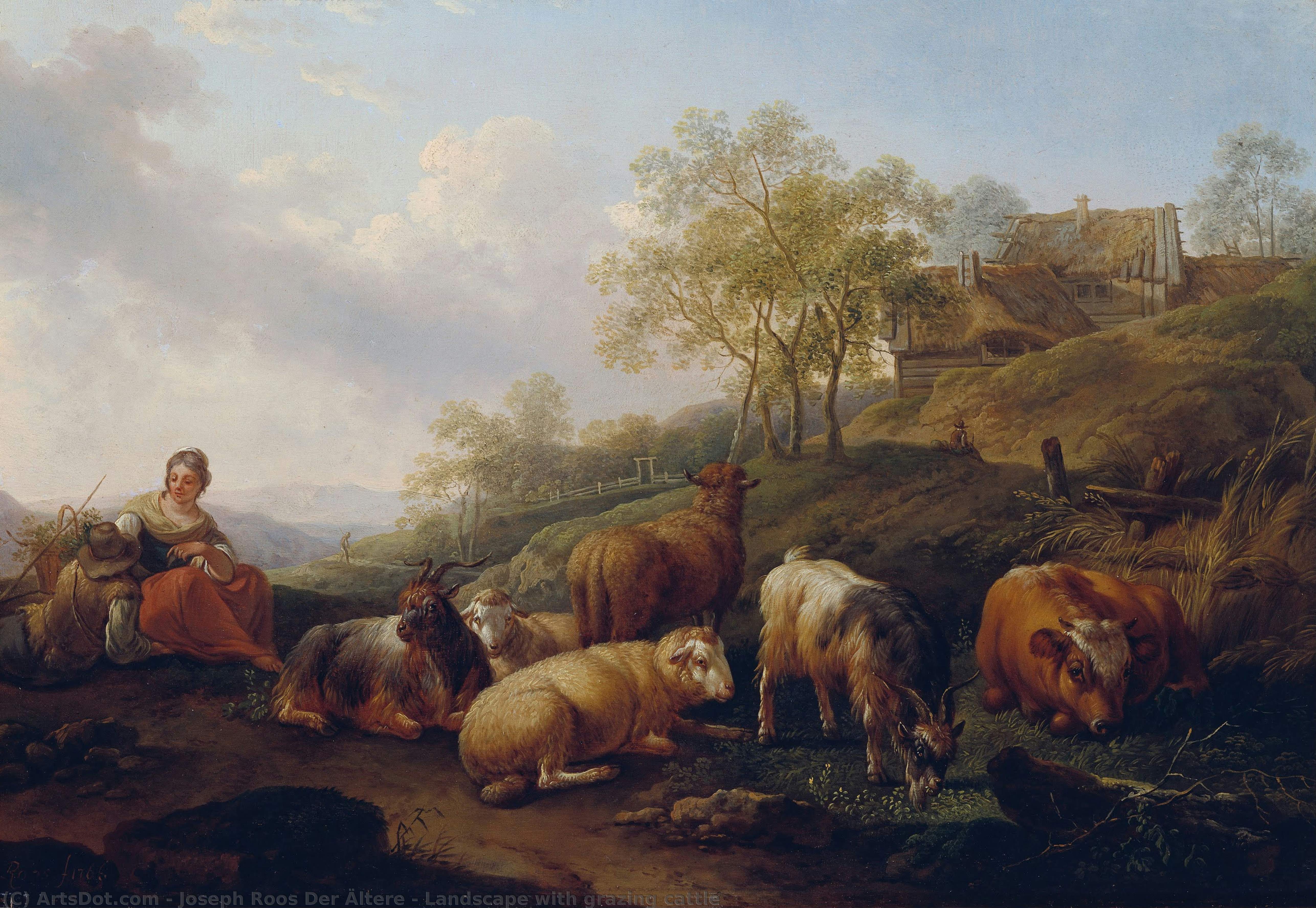
Landscape with grazing cattle


 Read More
Hand Made Oil Reproduction
Hand-painted oil on canvas in your size and frame, made to order by our artists. ( Buy Print Buy Image)




P118B $10

P118H $10

P118W $10

P438Z $10

P508JH $12

P508YH $12

P805H $10

P805Z $10

P919BZ $10

P919G $10

P919XJ $10

P959ZH $10

P968JZ $12

W106C $8

W218G $10

W218JH $8

W218Y $10

W307PJ $10

W316G $10

W316PJ $8

W316Y $10

W398PJ $8

W4111J $10

W500HY $15

W500JH $15

W692G $12

W849H $8

W940BG $15

W953PJ $8




Pick from our preset sizes that match the artwork's original proportions.

You may enter your own dimensions to fit a specific frame or space. If your selected size does not match the original image's proportions, we will either crop the artwork or extend the painting with additional hand-painted elements. A digital mockup will be sent for your approval before production begins.
Please note that the on-screen preview does not reflect the actual cropping or extension. Only the mockup will accurately show the final composition.
While custom sizes are available, we recommend selecting a dimension from the predefined list to preserve the original proportions.
After order, ArtsDot.com team will email client for instructions and provide a mockup preview
Worldwide Delivery () in 3/4 weeks instead of standard 5 weeks. (16 August). No compromise on quality.

Free Worldwide Express Shipping

High-Quality Linen Canvas

Full Shipping Insurance

Customs Tax Refund Guarantee

True Color Matching Guarantee

60-Day Return Policy (Defects Only)

100% Money-Back Guarantee

Bulk Discount Offer
 Glass option is only available in size under 110 CM

Landscape with grazing cattle
Reproduction Medium
Reproduction Size
-


Total Price
$ 263
Related Artworks
Artist Biography
Gavin Hamilton: The Antiquarian Painter of Rome
Gavin Hamilton (1723, Lanarkshire – 4 January 1798, Rome) stands as a singular figure in the history of art, a man inextricably linked to both the burgeoning neoclassical movement and the passionate pursuit of classical antiquities. More widely remembered for his extensive explorations of Roman ruins and his role as an arbiter of taste within the Roman artistic circles, Hamilton’s legacy is one of profound influence, shaping the visual language of his era through meticulously rendered history paintings and a deep engagement with the past. His life was a fascinating blend of Scottish heritage, Italian scholarship, and a relentless dedication to uncovering and interpreting the vestiges of antiquity – a pursuit that ultimately defined his artistic career. Born in Lanarkshire, Scotland, Hamilton’s early life was marked by intellectual curiosity and a strong connection to his family's lineage within the Scottish Enlightenment. Educated at Glasgow University under the tutelage of prominent scholars, he embarked on a ‘Grand Tour’ to Italy at a young age, immersing himself in the artistic and intellectual currents of Rome. This formative period proved pivotal, exposing him not only to the masterpieces of the Renaissance and Baroque but also to the growing fascination with classical antiquity that was transforming European art and thought. He spent several years studying under Agostino Masucci, a Roman painter known for his neoclassical style, further honing his technical skills and developing an appreciation for the idealized forms and balanced compositions characteristic of the era. Hamilton’s artistic career began in London during the 1750s, where he established himself as a portraitist, producing works for wealthy patrons and members of the British elite. However, it was his relocation to Rome in 1748 that truly cemented his place in art history. There, he dedicated himself almost entirely to studying and painting scenes from classical mythology and history – a deliberate choice reflecting his deep commitment to reviving the ideals of ancient Greece and Rome. His most celebrated series, the “Homeric Poems,” comprised six monumental canvases depicting episodes from Homer’s *Iliad*. These works were not merely decorative; they represented Hamilton's ambition to visually embody the epic grandeur and moral lessons embedded within the poem, influenced by scholars like Thomas Blackwell and George Turnbull who had championed a specific interpretation of Homer’s work. The paintings, engraved and disseminated widely across Europe, became immensely popular, establishing Hamilton as a leading figure in the neoclassical movement and profoundly influencing subsequent generations of artists.The Pursuit of Antiquities: A Dual Role
Hamilton's reputation extended far beyond his artistic achievements. He quickly gained renown as an enthusiastic and sometimes controversial “antiquarian,” actively seeking out Roman ruins and artifacts, often through unorthodox means. His relentless excavations in the vicinity of Rome – a practice that frequently drew criticism from local authorities and landowners – fueled speculation about his motives and methods. While some viewed him as a reckless plunderer, others recognized his crucial role in documenting and preserving these remnants of antiquity. He meticulously sketched and cataloged his discoveries, contributing significantly to the growing body of knowledge about Roman history and culture. This dual role—as both artist and antiquarian—created a unique position for Hamilton, allowing him to directly inform his artistic practice with firsthand experience of the classical world. His paintings were not simply imaginative recreations but were grounded in a tangible understanding of Roman architecture, sculpture, and daily life.Key Works and Artistic Style
Hamilton’s artistic style is characterized by its meticulous detail, balanced compositions, and a restrained emotionalism. He adhered closely to the principles of neoclassical art, drawing inspiration from the works of artists such as Raphael and Michelangelo. His history paintings are notable for their clarity of form, precise rendering of drapery, and carefully orchestrated spatial arrangements. The “Homeric Poems,” with their monumental scale and dramatic lighting, exemplify his ability to convey both narrative complexity and emotional resonance. His painting *Death of Lucretia*, a powerful depiction of the Roman legend, became particularly influential, inspiring a series of "oath paintings" across Europe – including Jacques-Louis David’s *Oath of Brutus* – that sought to capture the spirit of civic virtue and patriotic sacrifice.Legacy and Historical Significance
Gavin Hamilton's influence on 18th-century art is undeniable. He played a key role in shaping the neoclassical aesthetic, promoting a return to classical ideals and establishing new standards for historical painting. His work helped to legitimize the study of antiquity within artistic circles and contributed significantly to the development of archaeological scholarship. However, his legacy is also complicated by his controversial activities as an antiquarian, raising important questions about the ethics of collecting and preserving cultural heritage. Despite these complexities, Gavin Hamilton remains a fascinating and significant figure in art history—a painter who bridged the gap between artistic creation and historical investigation, leaving behind a body of work that continues to captivate and inspire today.Further Resources
joseph roos der ältere
1723 - 1787 , Germany
Quick Facts
- Artistic Movement Or Style: Neoclassical history painter
- Artists Or Movements Influenced By This Artist:
- Thomas Blackwell
- George Turnbull
- Artists Who Influenced This Artist:
- Agostino Masucci
- Sir Joshua Reynolds
- Date Of Birth: 1723
- Date Of Death: 1798
- Full Name: Gavin Hamilton
- Nationality: Scottish
- Notable Artworks:
- Death of Lucretia
- Homer's Iliad cycle
- Place Of Birth: Lanarkshire, Scotland
Related Articles
Idyllic Visions: Exploring the Pastoral Scene in Art History – From Arcadia to Modern Interpretations
Explore the captivating history of pastoral art from classical Arcadia to modern masterpieces. Discover key artists like Millet & Cole at ArtsDot. Find serene landscape paintings for your home.

Beyond the Horizon: 10 Landscape Masterpieces for Your Home Decor
Journey through 10 breathtaking landscape paintings by Monet, Van Gogh & more! Explore iconic artworks, artistic techniques & find inspiration for your home decor. Museum-quality reproductions at ArtsDot.com. Discover all masterpieces on ArtsDot.com
Idyllic Visions: Exploring the Pastoral Tradition in Western Art – Themes, Techniques & Enduring Appeal
Explore the rich history of pastoral art from classical Arcadia to contemporary interpretations. Discover key artists, themes & collecting tips at ArtsDot.

John Constable's Masterpieces: Explore 25 Iconic Landscapes for Your Home
Journey through John Constable's 25 most celebrated landscapes. Explore Romanticism, Dedham Vale & his masterful use of light in iconic paintings like 'Hay Wain'. Find museum-quality art reproductions and elevate your home decor on ArtsDot.com.

Evocations of Place: A Historical Journey Through Landscape Art
Explore the rich history of landscape art with ArtsDot. Discover renowned artists, movements like Impressionism & Romanticism, and expert guidance for collecting timeless pieces. Find your perfect serene escape today!