 Preview
 Send
Send Share
Share
 Details

 Download
 Similars
 X-Ray
X-Ray Diaporama
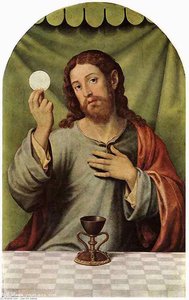
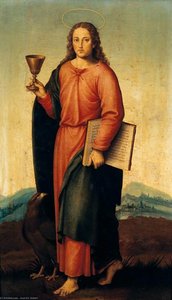
Christ with the Chalice
 Oil
Oil- WallArt
- Baroque Realism
 Renaissance
 101.0 x 63.0 cm
 Szépmûvészeti Múzeum
 Read More
Giclée / Art Print
Museum-quality giclée or canvas print with fast production and flexible finish options. ( Buy Hand Made Painting Buy Image)




P118B $10

P118H $10

P118W $10

P438Z $10

P508JH $12

P508YH $12

P805H $10

P805Z $10

P919BZ $10

P919G $10

P919XJ $10

P959ZH $10

P968JZ $12

W106C $8

W218G $10

W218JH $8

W218Y $10

W307PJ $10

W316G $10

W316PJ $8

W316Y $10

W398PJ $8

W4111J $10

W500HY $15

W500JH $15

W692G $12

W849H $8

W940BG $15

W953PJ $8




Pick from our preset sizes that match the artwork's original proportions.

You may enter your own dimensions to fit a specific frame or space. If your selected size does not match the original image's proportions, we will either crop the artwork or extend the image with a mirrored or solid-fill edge. A digital mockup will be sent for your approval before production begins.
Please note that the on-screen preview does not reflect the actual cropping or extension. Only the mockup will accurately show the final composition.
While custom sizes are available, we recommend selecting a dimension from the predefined list to preserve the original proportions.
Worldwide Delivery () in 2 weeks instead of standard 4/5 weeks. (25 August)

Free Worldwide Express Shipping

High-Quality Linen Canvas

Full Shipping Insurance

Customs Tax Refund Guarantee

True Color Matching Guarantee

60-Day Return Policy (Defects Only)

100% Money-Back Guarantee

Bulk Discount Offer
 Glass option is only available in size under 110 CM

Christ with the Chalice
Giclée / Art Print
Reproduction Size
-


Total Price
$ 63
Collectible Description
A Divine Encounter: The Serenity of Christ with the Chalice
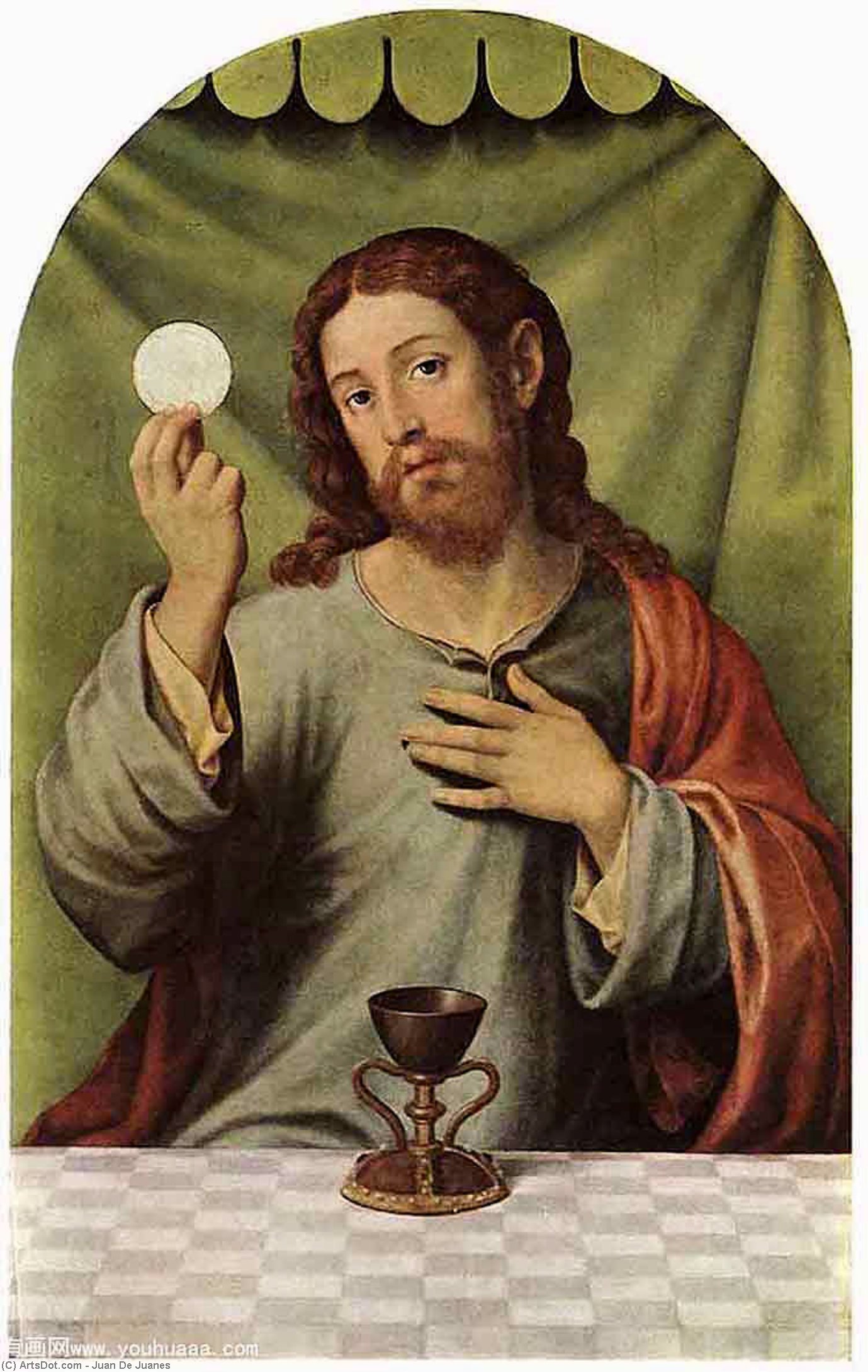
In the quietude of Juan de Juanes’ Christ with the Chalice, the viewer is not merely an observer but a participant in a profound moment of spiritual contemplation. This masterpiece, emerging from the golden age of the Valencian Renaissance, captures the figure of Jesus Christ in a state of sublime grace. The composition is intimate, focusing on the upper torso of Christ as he emerges against a deep, verdant curtain that falls in heavy, textured folds. His expression—a delicate balance of serenity and solemnity—invites the soul to pause. With long, flowing brown hair and a neatly groomed beard, his features possess a soft realism that bridges the gap between the divine and the human, making the sacred subject feel tangibly present within our own space.
The technical brilliance of Juanes lies in his ability to harmonize the meticulous detail of the Northern Flemish tradition with the idealized elegance of the Italian High Renaissance. One can observe this mastery in the way light dances across the figure’s hands and face, creating a luminous quality that seems to emanate from within. The artist employs a sophisticated use of chiaroscuro, where subtle shadows define the musculature of the chest and the gentle gesture of the hand resting upon the heart. This interplay of light and shadow lends a three-dimensional weight to the figure, ensuring that the painting possesses a commanding physical presence that is essential for any curated art collection.
Symbolism and the Sacred Eucharist
Every element within this composition serves a higher theological purpose, weaving a narrative of sacrifice and eternal covenant. In his right hand, Christ holds a small, pale communion wafer, raised slightly as if in the midst of a silent blessing. Below, resting upon a table adorned with a striking checkered pattern, sits the chalice—the vessel of the Eucharist. The contrast between the dark, rhythmic squares of the tablecloth and the metallic gleam of the cup draws the eye toward this central symbol of the blood of Christ. This arrangement is not merely decorative; it is a liturgical tableau that evokes the profound mystery of the Last Supper, reminding the faithful of the enduring bond between the Creator and humanity.
The color palette, dominated by muted greens, rich browns, and earthy tones, contributes to the painting's somber yet peaceful atmosphere. These colors do not compete for attention but rather provide a stable, grounded backdrop that allows the spiritual light of the subject to shine. For the interior designer or collector, this piece offers a unique opportunity to introduce a sense of historical gravity and meditative calm into a room. Whether placed in a private study, a grand library, or a dedicated prayer space, the artwork acts as an anchor of tranquility, commanding respect through its quiet strength and timeless beauty.
A Legacy for the Modern Collector
Owning a reproduction of such a significant work by Juan de Juanes is more than an aesthetic choice; it is an engagement with the history of Spanish Renaissance art. As a pivotal figure who blended the realism of the North with the grace of the South, Juanes created works that resonate across centuries. This painting, with its meticulous craftsmanship and evocative imagery, remains a testament to an era where art was the primary vessel for expressing the deepest human emotions and spiritual aspirations. For those seeking to adorn their homes with pieces that offer both intellectual depth and visual splendor, Christ with the Chalice stands as an incomparable choice, bringing the majesty of the sixteenth century into the contemporary heart of the home.
Related Artworks
Artist Biography
Juan de Juanes: A Valencian Renaissance Master
- Name: Juan de Juanes (Vicente Juan Masip)
- Born: 1510, La Font de la Figuera, Spain
- Died: 1579, Bocairent, Spain
Early Life and Training
- Juan de Juanes was born in La Font de la Figuera, the son of Vicente Masip, also a painter. His father likely studied in Italy, potentially Venice, influencing his artistic style.
- He received early training from his father, developing skills that would later define his own work.
- The presence of Italian painters Paolo da San Leocadio and Francesco Pagano working for Cardinal Rodrigo Borgia in Valencia exposed Juanes to Italian Renaissance techniques.
Artistic Development and Style
- Juanes's style is characterized by a blend of Flemish influences with the Italian High Renaissance, particularly that of Raphael and Sebastiano del Piombo.
- He primarily focused on religious subjects, reflecting his devout nature and the prevalent artistic themes of the time.
- His works are noted for their dignity of conception, accurate drawing, beautiful color palettes, and meticulous detail.
- Masip adopted the patronymic name Juanes to distinguish himself from his father, also a painter with a similar style.
Major Works and Achievements
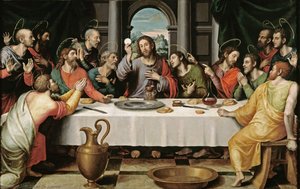
- The Last Supper: One of his most famous works, demonstrating his mastery of perspective and composition.
- Holy Family: A recurring theme in his oeuvre, showcasing his ability to depict tenderness and piety.
- Virgin and the Child with Sts John the Baptist and John the Evangelist: Exemplifies his skill in portraying religious figures with grace and realism.
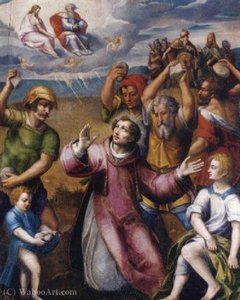
- Saint Steven Retable: Painted for the main altarpiece at the church of San Esteban in Valencia, considered to be among his finest works.
Historical Significance
- Juan de Juanes is recognized as a leading figure in the Valencian school of painters during the 16th century.
- He significantly contributed to the development of Renaissance art in Spain, blending Italian influences with local traditions.
- His works are valued for their technical skill and devotional quality, providing insights into the religious beliefs and artistic practices of his time.
- He is considered the foremost member of the Valencian school of painters by many historians.

Juan de Juanes
1510 - 1579 , Spain
Quick Facts
- Artistic Movement Or Style: Spanish Renaissance
- Artists Who Influenced This Artist:
- Leonardo da Vinci
- Raphael
- Sebastiano del Piombo
- Date Of Birth: 1510
- Date Of Death: 1579
- Full Name: Juan de Juanes
- Nationality: Spanish
- Notable Artworks:
- Portrait of Alfonso V
- Holy family
- Virgin and the Child
- Place Of Birth: Valencia, Spain
Related Articles

Goya's Masterpieces: Explore 25 Iconic Paintings & Art Prints | ArtsDot
Delve into the world of Francisco Goya with ArtsDot. Explore 25 iconic paintings – from 'The Third of May' to his haunting Black Paintings. Discover the stories, techniques & emotions behind these Spanish masterpieces. Find museum-quality art reproductions for your home at ArtsDot.com!
About Us
Discover our story! We bring world-class art into your life through expert curation, personalized creations, and free previews. Trusted by individuals and businesses since 2000.
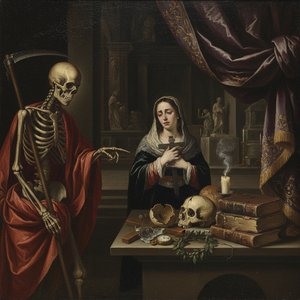
Juan de Valdés Leal: Baroque Realism, Memento Mori & Theatricality of Spanish Grief
Explore the powerful Baroque realism of Juan de Valdés Leal (1622-1690). Discover his somber masterpieces, iconic 'In Ictu Oculi', and profound explorations of mortality. Museum-quality reproductions available at ArtsDot.

Fra Angelico's Masterpieces: 25 Renaissance Paintings for Your Home | ArtsDot
Explore 25 breathtaking masterpieces by Fra Angelico, a Renaissance master. Discover the stories behind his iconic frescoes, Annunciations & religious art. Find museum-quality reproductions and elevate your home decor with ArtsDot.com.
Sacred Narratives Embodied: A Comprehensive Exploration of Religious Iconography in Art History
Explore the rich history of religious iconography in art! Discover symbolism, movements & masterpieces from Byzantine to Renaissance periods. Expert insights for collectors and enthusiasts at ArtsDot.