 Preview
 Send
Send Share
Share
 Details

 Download
 Similars
 X-Ray
X-Ray Diaporama
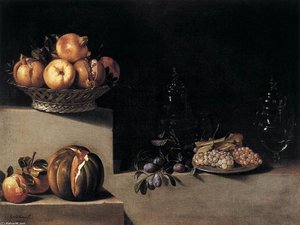
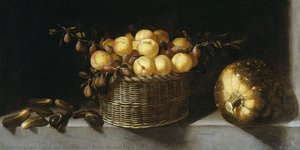
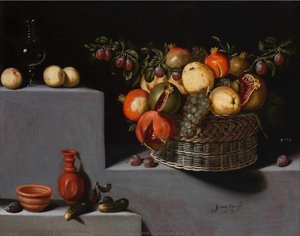
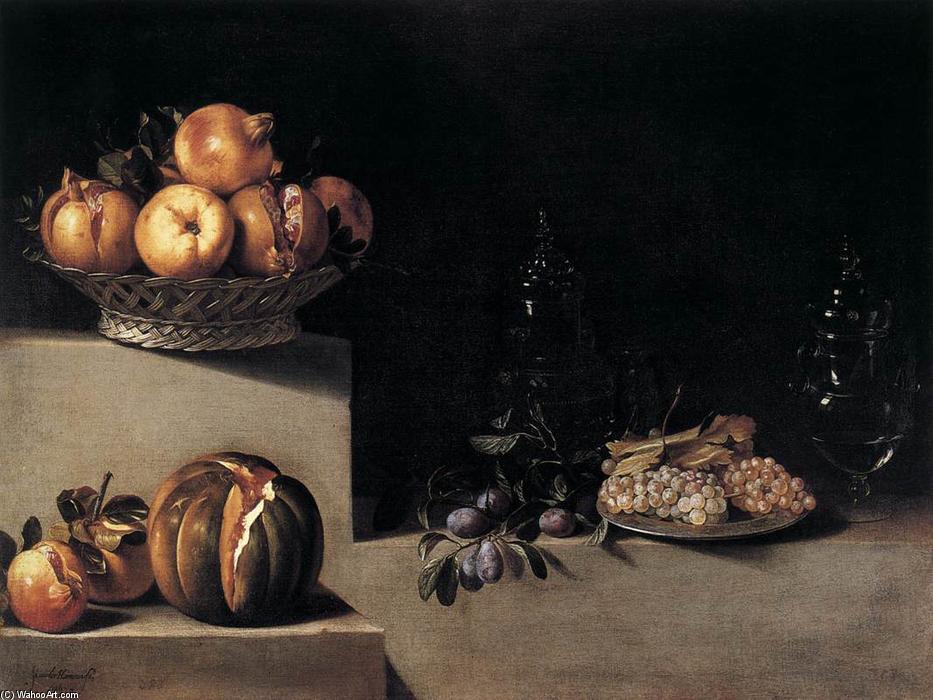
Still-Life with Fruit and Glassware
 Oil On Canvas
- WallArt
- Baroque Still Life
 1626
1626 84.0 x 11.0 cm
 Museum of Fine Arts
 Read More
Hand Made Oil Reproduction
Hand-painted oil on canvas in your size and frame, made to order by our artists. ( Buy Print Buy Image)




P118B $10

P118H $10

P118W $10

P438Z $10

P508JH $12

P508YH $12

P805H $10

P805Z $10

P919BZ $10

P919G $10

P919XJ $10

P959ZH $10

P968JZ $12

W106C $8

W218G $10

W218JH $8

W218Y $10

W307PJ $10

W316G $10

W316PJ $8

W316Y $10

W398PJ $8

W4111J $10

W500HY $15

W500JH $15

W692G $12

W849H $8

W940BG $15

W953PJ $8




Pick from our preset sizes that match the artwork's original proportions.

You may enter your own dimensions to fit a specific frame or space. If your selected size does not match the original image's proportions, we will either crop the artwork or extend the painting with additional hand-painted elements. A digital mockup will be sent for your approval before production begins.
Please note that the on-screen preview does not reflect the actual cropping or extension. Only the mockup will accurately show the final composition.
While custom sizes are available, we recommend selecting a dimension from the predefined list to preserve the original proportions.
After order, ArtsDot.com team will email client for instructions and provide a mockup preview
Worldwide Delivery () in 3/4 weeks instead of standard 5 weeks. (17 August). No compromise on quality.

Free Worldwide Express Shipping

High-Quality Linen Canvas

Full Shipping Insurance

Customs Tax Refund Guarantee

True Color Matching Guarantee

60-Day Return Policy (Defects Only)

100% Money-Back Guarantee

Bulk Discount Offer
 Glass option is only available in size under 110 CM

Still-Life with Fruit and Glassware
Reproduction Medium
Reproduction Size
-


Total Price
$ 263
Artwork Description
A Window Into 17th-Century Spain: Juan van der Hamen’s Still Life with Fruit and Glassware
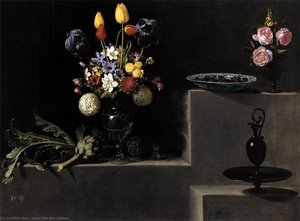
Juan van der Hamen y León's "Still Life with Fruit and Glassware," painted in 1626, isn’t merely a depiction of objects; it’s a carefully orchestrated meditation on abundance, light, and the fleeting beauty of earthly possessions. Housed within the Museum of Fine Arts in Houston, this oil-on-canvas masterpiece offers a captivating glimpse into the burgeoning world of still life painting during the Spanish Golden Age – a period where meticulous detail and dramatic lighting were paramount.
Van der Hamen’s work stands as a pivotal example of the “bodegón,” a genre that flourished in Spain during the 17th century. Unlike earlier, more chaotic arrangements, van der Hamen's compositions are characterized by an almost unsettling order and geometric precision. He meticulously arranged a bowl overflowing with ripe apples, oranges, and pears – symbols of prosperity and fertility – alongside a gleaming silver bowl, delicate glassware, and a partially draped cloth. The artist’s skill lies not just in rendering the textures and colors of each object with astonishing realism, but also in creating a sense of depth and volume through subtle variations in light and shadow.
The Language of Light and Shadow
Van der Hamen was deeply influenced by the principles of chiaroscuro – the dramatic contrast between light and dark – which were hallmarks of Baroque painting. Notice how the objects are bathed in a warm, diffused glow, highlighting their surfaces and creating an illusion of three-dimensionality. The darker background serves to intensify the vibrancy of the fruit and glassware, drawing the viewer’s eye directly to the central composition. This masterful use of light isn't simply decorative; it imbues the scene with a sense of drama and immediacy, as if we are witnessing a fleeting moment captured in time.
The artist’s background, shaped by his Flemish father and Spanish mother, is evident in his approach. He inherited a precision from his Northern European heritage while simultaneously embracing the Spanish penchant for rich color palettes and dramatic lighting. This fusion of influences results in a style that is both technically sophisticated and emotionally resonant.
Symbolism and the Vanitas Theme
Beyond its aesthetic beauty, “Still Life with Fruit and Glassware” carries subtle symbolic weight. The arrangement aligns closely with the *vanitas* tradition – a genre of still life paintings that served as reminders of mortality and the transience of earthly pleasures. The decaying fruit, the delicate glassware, and the ticking watch (implied by the setting) all point to the inevitability of death and decay. However, van der Hamen doesn’t present this message in a morbid way; instead, he frames it within a context of opulent beauty, suggesting that even in the face of mortality, life's pleasures are worth savoring.
The inclusion of specific objects – such as the silver bowl and the Venetian glass – speaks to the wealth and international trade connections of 17th-century Spain. These items represent not only material possessions but also the cultural exchange that characterized this era. The careful arrangement, therefore, becomes a visual testament to both earthly abundance and the broader historical context in which it was created.
A Timeless Masterpiece for the Modern Eye
“Still Life with Fruit and Glassware” remains remarkably captivating today. Its meticulous detail, dramatic lighting, and subtle symbolism continue to resonate with viewers across centuries. Whether admired as a technical achievement or appreciated for its evocative portrayal of human experience, this painting stands as a testament to the enduring power of still life art – a genre that invites us to contemplate beauty, mortality, and the fleeting nature of time.
Related Artworks
Artist Biography
A Life Bathed in Light: The World of Juan van der Hamen
Born into a world poised between the fading grandeur of the Spanish Golden Age and the burgeoning Baroque, Juan van der Hamen y León emerged as a pivotal figure in 17th-century Spanish painting. Baptized in Madrid on April 8, 1596, his lineage was a fascinating blend of cultures – his father, Jan van der Hamen, a Flemish courtier who had established himself in Spain decades prior, and his mother, Dorotea Witman Gómez de León, possessing noble Toledan ancestry. This dual heritage would subtly inform the artist’s style, bridging Northern European precision with a distinctly Spanish sensibility. While concrete evidence of Jan van der Hamen's own artistic pursuits remains elusive, he instilled in his son a connection to the court of Philip II and later Philip III, providing young Juan with access to a world of patronage and opportunity. The family consciously embraced their Spanish identity by incorporating “Gómez de León” into their names, a testament to their integration into Iberian society. Juan would inherit positions within the royal household, serving as an unsalaried painter – a role that offered stability while allowing him the freedom to explore his artistic vision.From Versatility to Mastery: The Artistic Journey
Van der Hamen’s documented artistic career began in 1619 with a commission for a still life intended for the royal palace of El Pardo, marking an early foray into what would become his signature genre. However, to define him solely as a painter of *bodegones* – the Spanish term for still lifes – would be a disservice to his remarkable versatility. He demonstrated proficiency across a broad spectrum of subjects: religious history paintings, allegorical scenes, landscapes imbued with atmosphere, even depictions of everyday life and portraiture. His ability to navigate these diverse styles speaks to a restless curiosity and a dedication to honing his craft. Serving both Philip III and Philip IV, Van der Hamen quickly established the popularity of still life painting within Madrid’s artistic circles during the 1620s. This period witnessed an explosion of creativity from his hand, particularly in 1622, when he produced a remarkable volume of still lifes. Initially influenced by the meticulous detail and spacious compositions characteristic of Flemish art, Van der Hamen gradually evolved his style. He absorbed the innovations of artists like Sánchez Cotán, adopting asymmetrical arrangements that created more dynamic and complex spatial constructions within his paintings. This shift marked a move towards a uniquely Spanish Baroque aesthetic, characterized by dramatic contrasts of light and shadow and an intense realism.Still Life, Portraiture, and Allegory: Defining Achievements
While Van der Hamen’s oeuvre is diverse, he is most enduringly celebrated for his contribution to the genre of still life. He elevated the *bodegón* from a relatively minor category to one of significant artistic merit, imbuing everyday objects with a sense of dignity and symbolic weight. His depictions weren't merely exercises in technical skill; they were meditations on mortality, transience, and the beauty found within the mundane. Beyond still life, Van der Hamen achieved considerable success as a portraitist, capturing the likenesses of prominent intellectuals and writers of his time – luminaries such as Lope de Vega, Francisco de Quevedo, and Luis de Góngora. These portraits weren’t simply representations of physical appearance; they were insightful psychological studies, prompting philosophical discussions about the very nature of representation. Offering to Flora, painted in 1627, stands as a testament to his ability to synthesize different genres. This large-scale allegorical work seamlessly blends portraiture with a lavish floral still life, depicting the goddess of flowers surrounded by an abundance of spring blooms. The painting showcases his mastery of Flemish compositional techniques and his keen understanding of how light interacts with textures – particularly fabrics. His *Portrait of a Dwarf* (circa 1623) is notable for its naturalistic portrayal, anticipating later works by Velázquez and demonstrating his sensitivity to individual character. The commission to paint Cardinal Francesco Barberini in 1626, after an initial attempt by Velázquez proved unsatisfactory, further cemented Van der Hamen’s reputation; the resulting portrait was so admired that the cardinal commissioned three additional paintings from him.A Lasting Legacy: Bridging Traditions and Shaping a Style
Juan van der Hamen's tragically short life – he died in 1631 at the age of just thirty-five – belies the profound impact he had on Spanish art. He played a crucial role in establishing still life painting as a respected genre, challenging conventional hierarchies within the artistic world. His meticulous technique, realistic style, and innovative compositions influenced generations of Spanish artists who followed. He served as a vital bridge between the artistic traditions of Flanders and the emerging Spanish Baroque aesthetic, synthesizing elements from both to create a uniquely Iberian visual language. While his religious works and landscapes remain less well-known today, they demonstrate the breadth of his talent and his willingness to experiment with different styles. His portraits offer invaluable insights into the intellectual and cultural life of 17th-century Spain. Today, Van der Hamen’s paintings are exhibited in leading museums across Europe and America, solidifying his place as a key figure in Spanish art history – a master whose work continues to captivate and inspire with its beauty, realism, and enduring power.- Major Influences: Flemish painting traditions, Sánchez Cotán
- Key Characteristics: Realistic detail, dramatic lighting, asymmetrical compositions, versatility across genres.
- Notable Works: *Offering to Flora*, *Portrait of a Dwarf*, numerous still lifes and portraits of prominent Spanish intellectuals.

Juan van der Hamen
1596 - 1631 , Spain
Quick Facts
- Artistic Movement Or Style: Baroque, Still Life
- Artists Or Movements Influenced By This Artist:
- Velázquez
- Spanish Baroque
- Artists Who Influenced This Artist:
- Sánchez Cotán
- Flemish artists
- Date Of Birth: 1596
- Date Of Death: 1631
- Full Name: Juan van der Hamen y León
- Nationality: Spanish
- Notable Artworks:
- Offering to Flora
- Portrait of a Dwarf
- Cardinal Barberini Portrait
- Place Of Birth: Madrid, Spain
Related Articles
Van Gogh's Masterpieces: Explore 25 Iconic Paintings & Art for Your Home
Journey through Vincent van Gogh's 25 most iconic paintings! Explore 'Starry Night', 'Sunflowers,' and more—discover the stories, techniques & emotions behind these Post-Impressionist masterpieces. Find museum-quality art reproductions for your home at ArtsDot.com.
Early Netherlandish Masters: 10 Paintings That Revolutionized Art & Decor
Journey into the Early Netherlandish Renaissance! Explore 10 iconic paintings by Jan van Eyck, Rogier van der Weyden & more. Discover stunning detail, symbolism, and oil painting techniques. Find museum-quality art reproductions for your home at ArtsDot.com.
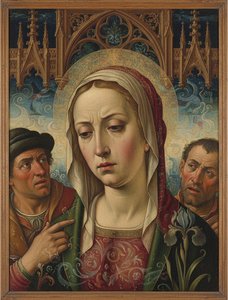
Hugo van der Goes: Devotion, Innovation & the Psychological Depth of Early Netherlandish Painting
Explore the revolutionary art of Hugo van der Goes – a master of Early Netherlandish painting renowned for his dramatic realism, psychological depth & profound influence on Renaissance artists. Discover his iconic works and lasting legacy.

Rembrandt's Masterpieces: Explore 25 Iconic Paintings & Prints | ArtsDot
Journey through Rembrandt van Rijn's 25 most iconic paintings & etchings. Explore Dutch Golden Age masterpieces, dramatic chiaroscuro, and timeless portraits. Find museum-quality art reproductions to elevate your home decor on ArtsDot.com.

Early Netherlandish Masters: 10 Paintings That Revolutionized Art & Decor
Journey into the world of Early Netherlandish painting! Explore 10 masterpieces by Jan van Eyck, Rogier van der Weyden & more. Discover stunning detail, symbolism & Renaissance art for your home decor. Find museum-quality reproductions on ArtsDot.com