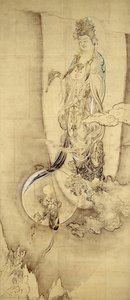
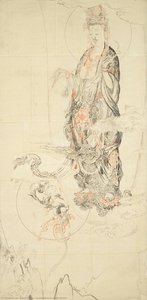
![Avalokitesvara/draft Sketch\n\navalokitesvara/draft Sketch [1/8] — Kanō Enshin](/media/artworks/images/full/06/39/0639e7ae24294c37a9119ddb10a8e86f.Jpg)
 Preview
 Send
Send Share
Share
 Details

 Download
 Similars
 X-Ray
X-Ray Diaporama
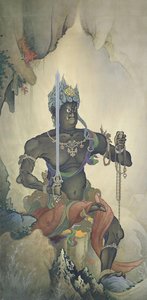
Avalokitesvara/Draft Sketch\n\nAvalokitesvara/Draft Sketch [1/8]
 Japanese Modernism
 46.0 x 800.0 cm
 Read More
Hand Made Oil Reproduction
Hand-painted oil on canvas in your size and frame, made to order by our artists. ( Buy Print Buy Image)




































Pick from our preset sizes that match the artwork's original proportions.

You may enter your own dimensions to fit a specific frame or space. If your selected size does not match the original image's proportions, we will either crop the artwork or extend the painting with additional hand-painted elements. A digital mockup will be sent for your approval before production begins.
Please note that the on-screen preview does not reflect the actual cropping or extension. Only the mockup will accurately show the final composition.
While custom sizes are available, we recommend selecting a dimension from the predefined list to preserve the original proportions.
After order, ArtsDot.com team will email client for instructions and provide a mockup preview
Worldwide Delivery () in 3/4 weeks instead of standard 5 weeks. (20 August). No compromise on quality.

Free Worldwide Express Shipping

High-Quality Linen Canvas

Full Shipping Insurance

Customs Tax Refund Guarantee

True Color Matching Guarantee

60-Day Return Policy (Defects Only)

100% Money-Back Guarantee

Bulk Discount Offer
 Glass option is only available in size under 110 CM

Avalokitesvara/Draft Sketch\n\nAvalokitesvara/Draft Sketch [1/8]
Reproduction Medium
Reproduction Size
-


Total Price
$ 263
Related Artworks

Artist Biography
Kanō Enshin (狩野芳崖) – A Legacy of Serenity and Tradition
Kanō Hōgai (狩野芳崖, February 27, 1828 – October 5, 1888) stands as one of the final luminaries of the Kanō school, a movement that profoundly shaped Japanese art history. Born in Shimonoseki, Japan, he descended from a lineage steeped in artistic excellence—his father served as chief painter to the daimyo, granting him early exposure to the highest echelon of artistic patronage and training. Recognizing his innate talent, he was dispatched to Edo (now Tokyo) at eighteen to pursue formal studies under Kanō Shōsen’in and other masters of the era, immersing himself in the techniques and philosophies that would define his artistic vision.- Early Training & Influences: Hōgai's formative years were marked by rigorous instruction in brushwork, pigment preparation, and compositional principles—elements central to the Kanō school’s distinctive aesthetic. He absorbed the teachings of prominent figures like Sesshū and Sesson, inheriting their dedication to capturing spiritual essence through meticulous observation and understated elegance.
- Commissioned Masterpieces & Recognition: Hōgai swiftly gained renown for his ability to execute monumental ceiling paintings commissioned by Edo Castle, demonstrating mastery over scale and perspective—skills honed during a period of intense artistic experimentation. His work was showcased at the Paris International Exposition of 1876, securing international acclaim and establishing him as a pivotal voice in Japanese art discourse.
The Turbulent Years & Adaptations Amidst Change
Following the Meiji Restoration in 1868, Japan underwent dramatic transformations—economic instability disrupted traditional artistic endeavors, forcing Hōgai to diversify his income streams beyond painting commissions. He ventured into iron casting, reclaimed land for agricultural use, and operated a writing instrument shop – pragmatic steps necessitated by circumstance yet reflecting an enduring spirit of innovation. Notably, he returned to Edo in 1877 and dedicated himself to studying the works of Japan’s artistic giants, including Sesshū and Sesson, furthering his understanding of classical aesthetics.- Shimazu Patronage & Artistic Refinement: His association with the Shimazu clan provided invaluable opportunities for scholarly pursuits and access to masterpieces of Japanese art history.
The Painting Appreciation Society & Rediscovering Tradition
Recognizing the growing neglect of Japan’s classical arts—particularly Heian and Nara paintings—Kanō Hōgai spearheaded the establishment of the Painting Appreciation Society (観画会, kangakai). This collective aimed to revitalize interest in these foundational artistic traditions, fostering dialogue between artists and scholars alike. Collaborating with Ernest Fenollosa, Okakura Kakuzō, and Hashimoto Gahō, he championed a renewed appreciation for subtlety and spiritual depth—values that resonated deeply within the broader artistic community.Legacy & Enduring Influence
Kanō Hōgai passed away in 1888, leaving behind a remarkable oeuvre characterized by serene landscapes, idealized depictions of Buddhist deities (particularly Avalokitesvara), and masterful execution of Kanō school techniques. His work continues to inspire artists today, embodying the enduring power of tradition—a testament to his unwavering commitment to preserving Japan’s artistic heritage. He is remembered as one of the last great masters of the Kanō school, whose legacy persists in the meticulous beauty and spiritual contemplation found within his paintings.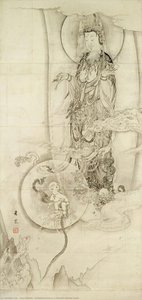
kanō enshin
1828 - 1888 , Japan
Quick Facts
- Artistic Movement Or Style: Kanō School
- Artists Or Movements Influenced By This Artist: ['Buddhist Art']
- Artists Who Influenced This Artist: ["Kanō Shōsen'in"]
- Date Of Birth: February 27, 1828
- Date Of Death: October 5, 1888
- Full Name: Kanō Hōgai
- Nationality: Japanese
- Notable Artworks:
- Avalokitesvara as a Merciful Mother
- Avalokitesvara/Draft Sketch
- Place Of Birth: Shimonoseki, Japan
Related Articles
Ephemeral Expressions: Exploring the Nuances of Ink on Paper Through History & Contemporary Art
Explore the captivating world of ink wash painting – from its ancient origins to contemporary masters. Discover techniques, symbolism & conservation insights with ArtsDot.com.
Serenity on Canvas: A Guide to the Timeless Beauty of Japanese Landscape Painting
Discover the serene beauty of Japanese landscape painting. From Hokusai's iconic woodblock prints to meditative sumi-e ink washes, explore a visual journey through the 'floating world' and learn how to bring this timeless Zen aesthetic into your modern home decor.

Hokusai's Masterpieces: 25 Iconic Prints & Paintings for Art Lovers | ArtsDot
Journey through Katsushika Hokusai’s 25 most iconic artworks, including *The Great Wave*. Explore the ukiyo-e master's history, style & timeless Japanese woodblock prints. Find museum-quality reproductions for your home at ArtsDot.com.

Ephemeral Lines: Exploring Emotional Resonance in Ink Sketching Traditions
Explore the profound art of ink sketching! Discover techniques to express emotion, master line work, and cultivate artistic sensitivity. Learn from historical masters & unlock your creative potential.
Xie Zhiliu: A Legacy of Ink Wash Painting & Modern Chinese Literati Tradition
Explore the legacy of Xie Zhiliu, a master of Chinese ink wash painting & prominent figure in modern art. Discover his techniques, influences, and contributions to literati tradition. A guide for discerning collectors.

![Avalokitesvara/Draft Sketch\n\nAvalokitesvara/Draft Sketch [1/8]](/media/artworks/images/thumbnails/ff/d1/ffd1eb6debdd40e68cf39808b6ea59a5.jpg)