 Preview
 Send
Send Share
Share
 Details

 Download
 Similars
 X-Ray
X-Ray Diaporama
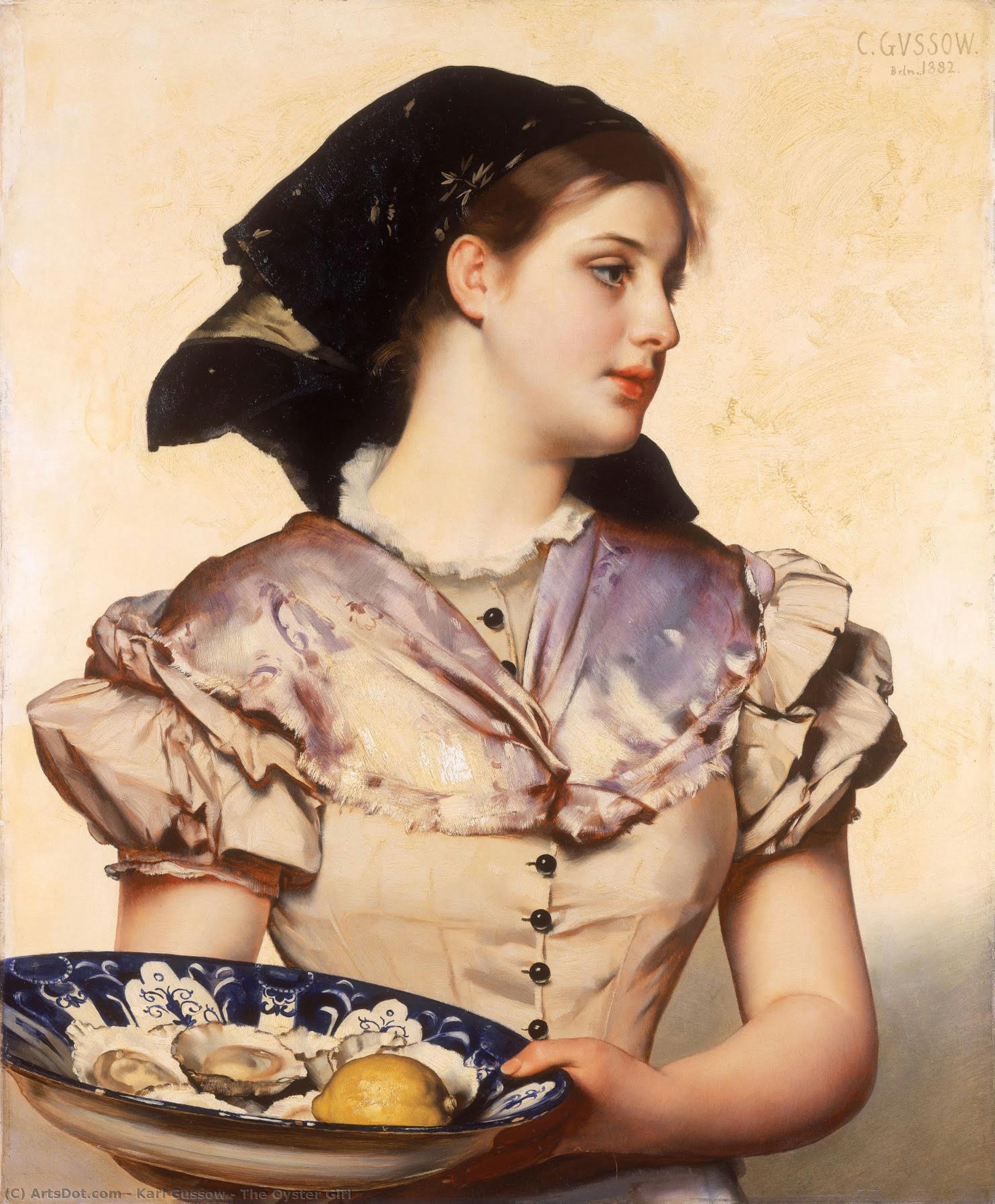
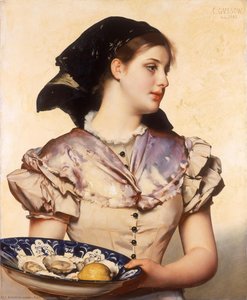
The Oyster Girl
 Oil On Canvas
- WallArt
- Naturalism
 1882
1882- 19th Century
 630.0 x 764.0 cm
 Walker Art Gallery
 Read More
Hand Made Oil Reproduction
Hand-painted oil on canvas in your size and frame, made to order by our artists. ( Buy Print Buy Image)




































Pick from our preset sizes that match the artwork's original proportions.

You may enter your own dimensions to fit a specific frame or space. If your selected size does not match the original image's proportions, we will either crop the artwork or extend the painting with additional hand-painted elements. A digital mockup will be sent for your approval before production begins.
Please note that the on-screen preview does not reflect the actual cropping or extension. Only the mockup will accurately show the final composition.
While custom sizes are available, we recommend selecting a dimension from the predefined list to preserve the original proportions.
After order, ArtsDot.com team will email client for instructions and provide a mockup preview
Worldwide Delivery () in 3/4 weeks instead of standard 5 weeks. (17 August). No compromise on quality.

Free Worldwide Express Shipping

High-Quality Linen Canvas

Full Shipping Insurance

Customs Tax Refund Guarantee

True Color Matching Guarantee

60-Day Return Policy (Defects Only)

100% Money-Back Guarantee

Bulk Discount Offer
 Glass option is only available in size under 110 CM

The Oyster Girl
Reproduction Medium
Reproduction Size
-


Total Price
$ 263
Artwork Description
A Moment Frozen in Naturalism
In the quiet, evocative depths of Karl Gussow’s 1882 masterpiece, The Oyster Girl, we encounter more than just a portrait; we step into a meticulously reconstructed moment of nineteenth-century life. The painting presents us with a young serving girl, dressed in the modest, neat attire of a rural peasant, holding forth a plate of freshly opened oysters accompanied by a bright slice of lemon. There is an immediate, tactile intimacy to the scene, as if the viewer has just approached her stall or table. Gussow, a prominent figure in the German school of Naturalism, achieves here what his contemporary Anton von Werner described as the "exact reproduction of nature." Every element, from the glistening moisture on the oyster shells to the soft, diffused light catching the curve of her cheek, serves to ground the subject in a profound, unvarnished reality.
The technical mastery on display is nothing short of breathtaking, making this piece an ideal centerpiece for those who appreciate the fine details of academic realism. Gussow employs a sophisticated layering technique, using oil paints on canvas to build a sense of physical weight and texture. The artist’s brushwork is particularly evident in the rugged, organic forms of the oyster shells, which contrast beautifully with the smooth, porcelain-like rendering of the girl's skin. His palette is a masterclass in subtlety, dominated by muted tones of pink, purple, beige, and earthy browns. This restrained color scheme does not merely decorate the canvas; it creates an atmosphere of quiet dignity and serenity, allowing the soft highlights and gentle shadows to guide the eye toward the subject’s soulful expression.
Symbolism and the Soul of the Subject
Beyond its surface-level realism, The Oyster Girl carries a weight of symbolic resonance that speaks to the era's fascination with class, labor, and the beauty found in the mundane. The oysters themselves—luxurious yet harvested from the sea—act as a bridge between the humble status of the girl and the sensory delights of the natural world. There is a poignant tension in her gaze; she possesses an air of quiet strength and composure that transcends her station. Gussow was not merely recording a likeness; he was attempting to capture the very essence of his sitter. Through the use of one-point linear perspective, the artist draws our focus inward, centering the composition on her face and upper body, effectively isolating this moment from the bustle of the outside world and inviting a deep, emotional connection with the viewer.
For the discerning collector or interior designer, this painting offers a timeless elegance that complements both classical and contemporary spaces. Its ability to evoke nostalgia while maintaining a sharp, modern clarity through its detailed execution makes it a versatile choice for high-end decor. Whether placed in a sunlit gallery or a sophisticated study, The Oyster Girl serves as a window into a bygone era of craftsmanship and observation. It is a piece that does not demand attention through loud colors or dramatic movement, but rather earns it through a persistent, quiet beauty that rewards repeated viewing, much like the very treasures she holds in her hands.
Related Artworks




Artist Biography
A Life Immersed in Portraiture: The World of Karl Gussow
Karl Gussow, born in 1843 and passing away in 1907, occupies a fascinating, often understated position within the landscape of late 19th-century German painting. While not achieving the widespread renown of some contemporaries, his work – particularly his intimate portraits – offers a compelling window into the psychological complexities of the Victorian era and the burgeoning Symbolist movement. Gussow’s artistic journey was one deeply rooted in observation, a meticulous study of character, and an evolving sensitivity to the emotional currents beneath the surface of societal convention. He wasn't merely recording likenesses; he was attempting to capture something of the *soul* of his sitters, often women from the middle and upper classes of Berlin society. His dedication to this pursuit led him to become a highly sought-after portraitist, though his artistic ambitions extended beyond simple representation.Early Training and Artistic Development
Gussow’s formal training began at the Prussian Academy of Arts in Berlin, an institution steeped in tradition and focused on academic realism. However, he quickly found himself drawn to a more nuanced approach than the rigid standards often enforced. He supplemented his academy studies with private lessons and extensive self-directed exploration, absorbing influences from Dutch Masters like Rembrandt and Frans Hals – artists renowned for their masterful use of light and shadow and their ability to convey psychological depth. This early exposure to the Northern Renaissance tradition is evident in Gussow’s handling of texture, color, and his commitment to portraying individual character. He also traveled extensively throughout Italy, absorbing the atmosphere and artistic heritage of the region, though he ultimately returned to Berlin, believing that his true subject matter lay within the lives unfolding around him. It was during this period that he began to develop a distinctive style characterized by soft brushwork, muted palettes, and an emphasis on capturing fleeting moments of introspection.The Portraits: Windows into Victorian Psychology
Gussow’s reputation rests primarily upon his portraits, which number over two hundred works. These are not grand, ostentatious displays of wealth or status; rather, they are intimate studies of individuals – often women – caught in moments of quiet contemplation. “The Oyster Girl”, perhaps his most famous work, exemplifies this approach. The young woman’s gaze is direct yet melancholic, her expression hinting at a hidden vulnerability beneath a veneer of composure. Similarly, “Mrs. Hedwig Woworsky” reveals a subject lost in thought, the subtle play of light and shadow accentuating the lines of worry etched upon her face. Gussow's skill lay not just in technical proficiency but in his ability to establish a rapport with his sitters, coaxing out their inner lives onto canvas. He eschewed elaborate backgrounds or symbolic props, focusing instead on the sitter’s face, hands, and posture as primary vehicles for conveying emotion.Symbolism and Realism: A Delicate Balance
While firmly rooted in realism, Gussow's work also displays a subtle but significant engagement with Symbolist themes. He wasn’t an overtly “Symbolist” painter in the manner of Gustave Moreau or Odilon Redon; his symbolism is more understated, woven into the fabric of everyday life rather than presented as explicit allegories. The recurring motifs of pearls – often associated with purity and hidden beauty – and oysters – representing both fragility and potential – suggest a preoccupation with themes of female identity, societal expectations, and the complexities of inner experience. His portraits can be seen as explorations of the psychological burdens placed upon women in Victorian society, hinting at suppressed desires, unspoken anxieties, and the limitations imposed by social convention. This delicate balance between realism and symbolism is what sets Gussow apart from many of his contemporaries, imbuing his work with a unique emotional resonance.Legacy and Historical Significance
Karl Gussow’s influence, though not widely celebrated in mainstream art history, can be detected in the works of later portraitists who sought to move beyond mere representation. His emphasis on psychological depth and his sensitive portrayal of female subjects paved the way for a more nuanced understanding of Victorian society and the inner lives of its inhabitants.- His work provides valuable insight into the social and cultural context of late 19th-century Berlin.
- Gussow’s portraits offer a compelling alternative to the often idealized depictions of women prevalent in academic art.
- The subtle symbolism embedded within his paintings continues to fascinate and intrigue viewers today.
karl gussow
1843 - 1907
Quick Facts
- Artistic Movement Or Style: Realism
- Artists Or Movements Influenced By This Artist: ['Anton von Werner']
- Artists Who Influenced This Artist:
- Arthur von Ramberg
- Ferdinand Pauwels
- Date Of Birth: February 25, 1843
- Full Name: Karl Gussow
- Nationality: German
- Notable Artworks:
- The Oyster Girl
- Mrs. Hedwig Woworsky
- Place Of Birth: Havelberg, Germany
Related Articles

German Expressionism's 10 Defining Masterpieces | Art for Your Home
Explore 10 defining German Expressionism masterpieces – from Munch's 'The Scream' to Kandinsky’s abstracts. Discover the artists, stories & bold colors behind this powerful art movement. Find museum-quality reproductions at ArtsDot.com.

Anton von Werner: Imperial Painter, Historical Witness & Shifting German Identity
Explore the life & work of Anton von Werner, Imperial Germany's leading painter. Discover his dramatic depictions of war, unification, and court life – a fascinating insight into 19th-century German history & art.

The Visceral Cry of a Nation: Exploring Emotion & Distortion in German Expressionism
Explore the powerful world of German Expressionism with ArtsDot. Discover Kirchner, Nolde & Die Brücke's emotive masterpieces. Learn about this pivotal art movement and its lasting impact on modern art.

The Northern Awakening: Artistic Innovation & Cultural Transformation in the German Renaissance
Explore the artistic innovation of the German Renaissance! Discover Dürer, the Danube School & Reformation art. Learn about techniques, materials & lasting influence. Find museum-quality reproductions at ArtsDot.

Realism's Revolution: 10 Masterpieces That Changed Art |
Explore 10 defining Realism masterpieces – Courbet, Millet & more. Discover the stories behind these iconic paintings and their impact on art history. Find museum-quality reproductions for your home at !