 Send
Send Share
Share
 Details

 Download
 Similars
 Diaporama
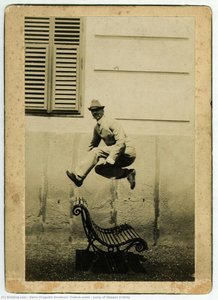
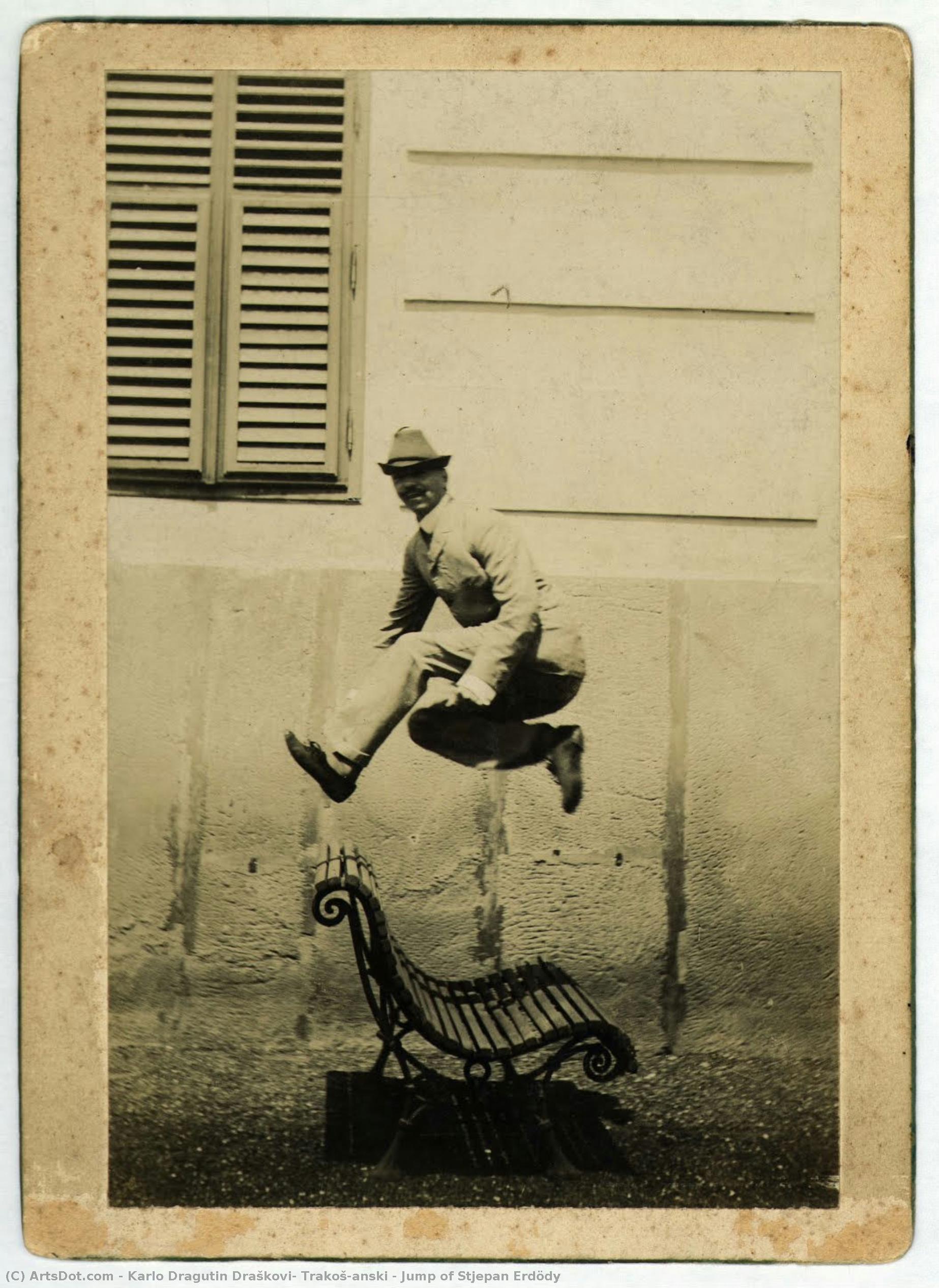
Jump of Stjepan Erdödy
 Black and White Photography
- Photo
- National Romanticism
 1894
1894- 19th Century
 17.0 x 12.0 cm
 The Museum of Arts and Crafts
 Read More
Giclée / Art Print
Museum-quality giclée or canvas print with fast production and flexible finish options. ( Buy Hand Made Painting Buy Image)




































Pick from our preset sizes that match the artwork's original proportions.

You may enter your own dimensions to fit a specific frame or space. If your selected size does not match the original image's proportions, we will either crop the artwork or extend the image with a mirrored or solid-fill edge. A digital mockup will be sent for your approval before production begins.
Please note that the on-screen preview does not reflect the actual cropping or extension. Only the mockup will accurately show the final composition.
While custom sizes are available, we recommend selecting a dimension from the predefined list to preserve the original proportions.
Worldwide Delivery () in 2 weeks instead of standard 4/5 weeks. (23 August)

Free Worldwide Express Shipping

High-Quality Linen Canvas

Full Shipping Insurance

Customs Tax Refund Guarantee

True Color Matching Guarantee

60-Day Return Policy (Defects Only)

100% Money-Back Guarantee

Bulk Discount Offer
 Glass option is only available in size under 110 CM

Jump of Stjepan Erdödy
Giclée / Art Print
Reproduction Size
-


Total Price
$ 63
Collectible Description
A Frozen Moment in Time: The Vitality of Drašković’s Lens
In the quiet annals of photographic history, few images capture the raw, unscripted pulse of life as strikingly as Jump of Stjepan Erdödy. Captured in 1894 by the gifted Karlo Dragutin Drašković Trakošćanski, this photograph serves as a breathtaking precursor to the modern era of action photography. At a time when the medium was often relegated to static, posed portraits, Drašković dared to experiment with the ephemeral. The image presents a man, caught in mid-air, defying gravity as he leaps over a wooden bench. Clad in the formal attire of the late 19th century—complete with a suit and hat—the subject’s dynamic movement creates a startling contrast against the stillness of his surroundings. This is not merely a record of an event; it is a masterful capture of "moment photography," a technique that was revolutionary in Croatia and among the earliest successful attempts globally to freeze motion within a frame.
The composition of the piece invites the viewer into a nostalgic, sun-drenched afternoon. Set against the backdrop of a rustic outdoor scene, the photograph features elements of domesticity and nature: a sturdy bench, solitary chairs, and a delicate potted plant that anchors the left side of the frame. The interplay between the man’s soaring silhouette and the architectural permanence of the nearby building creates a tension between the fleeting second and the enduring landscape. For the discerning collector or interior designer, this work offers a profound sense of movement and life, making it an exquisite focal point for spaces that celebrate historical depth and the beauty of spontaneous human expression.
The Pioneer of Croatian Naturalism
To understand the technical brilliance of this photograph, one must look to the artist himself. Karlo Drašković Trakošćanski was a figure of immense aesthetic sensitivity, operating at the intersection of nobility and the burgeoning avant-garde. As a member of the elite Wiener Camera Club, he brought a level of technical excellence to his work that transcended mere hobbyism. His approach was deeply rooted in the spirit of National Romanticism, a movement that sought to find beauty in the authentic textures of folk life, landscapes, and the human condition. In Jump of Stjepan Erdödy, we see the seeds of what would later become the Zagreb School of aesthetics—a style characterized by a naturalist's eye for detail and an emotional connection to the subject matter.
The monochrome palette of the photograph enhances its timeless quality, stripping away the distractions of color to focus the viewer’s attention on light, shadow, and form. The subtle gradients of grey allow the texture of the man's clothing and the weathered wood of the bench to emerge with tactile clarity. This piece does more than document a jump; it symbolizes the breaking of boundaries—both physical and artistic. It represents the moment photography transitioned from a tool of documentation to a medium of art, capable of capturing the very essence of vitality. For those seeking to adorn their collections with works that possess both historical gravity and an infectious, joyful energy, this reproduction stands as a testament to the enduring power of the captured moment.
Related Artworks
Artist Biography
A Life of Nobility and Light
The story of Karlo Dragutin Drašković Trakošćanski is one of quiet elegance and the pursuit of beauty through a lens. Born in 1873 in Bratislava, Slovakia, his early years were shaped by the prestige of the prominent Croatian noble family, the Drašković. This lineage, rooted in ancient tribes such as the Kršelac, Stupić, or Poletčić, provided him with an upbringing steeped in culture and influence. Though history often remembers the grand titles of the nobility, Karlo found his true calling not in the politics of the court, but in the delicate, emerging medium of photography. As an amateur photographer, he possessed a rare eye for capturing the ephemeral moments of the late 19th century, translating the light and shadow of his era into enduring visual records.
His life was brief, marked by a tragic early departure when he passed away in Beč in 1900. Despite this short lifespan, the traces of his artistic curiosity remain. His work, though not widely known to the masses, is celebrated for its high quality and technical sophistication. He approached photography with the soul of a painter, seeking to capture more than mere documentation; he sought to evoke the same atmosphere found in the great canvases of his time.
Artistic Influences and Visual Language
The aesthetic sensibilities of Karlo Dragutin Drašković Trakošćanski were deeply intertwined with the classical traditions of European painting. While he worked with the camera, his gaze was guided by the masters of portraiture and landscape. He drew profound inspiration from the works of Baron Gros Antoine Jean, particularly the refined elegance found in pieces such as Portrait of Madame Récamier. This influence is evident in the way he composed his subjects, imbuing his photographic portraits with a sense of dignity and aristocratic grace.
Furthermore, the sweeping, atmospheric qualities of landscape painting played a vital role in his development. The works of Joachim Patenier, known for his evocative landscapes such as Landscape with the Rest on the Flight, likely informed his approach to natural light and depth. By studying these masters, Karlo was able to bridge the gap between the emerging technology of photography and the timeless traditions of fine art, creating images that felt both modern and deeply rooted in the classical canon.
Legacy and Presence in Art Collections
Though he operated as an amateur, the significance of his photographic contributions is preserved within several esteemed institutions. His work serves as a window into the social fabric of the late 19th century, capturing a world on the cusp of profound change. The presence of his photographs in diverse collections highlights the reach of his artistic vision across borders.
His photographic legacy can be found in notable locations such as:
- The Kursk Deineka Picture Gallery in Russia, where his work sits alongside masters like Konstantin Andreyevich Somov and Ivan Ivanovich Shishkin.
- Mestská Galeria in Presov, Slovakia.
- St. Catherine Church in Besztercebánya, Slovakia.
Today, Karlo Dragutin Drašković Trakošćanski is remembered not just as a member of the Croatian nobility, but as an artist who used the nascent medium of photography to capture the light of a vanishing era. His ability to synthesize the grandeur of his heritage with the technical precision of early photography ensures that his visual contributions continue to resonate with historians and art enthusiasts alike.
karlo dragutin drašković trakošćanski
1873 - 1900 , Slovakia
Quick Facts
- Artistic Movement Or Style: Photography
- Artists Or Movements Influenced By This Artist: ['Landscape Photography']
- Artists Who Influenced This Artist:
- Baron Gros Antoine Jean
- Joachim Patenier
- Date Of Birth: December 29, 1873 Bratislava Slovakia
- Date Of Death: January 12, 1900 Beč Austria
- Full Name: Karlo Dragutin Drašković Trakošćanski
- Nationality: Croatian
- Notable Artworks: ['Jump of Stjepan Erdödy']
- Place Of Birth: Bratislava Slovakia
Related Articles

Dark Masterpieces: 10 Iconic Paintings Dominated by Black Tones |
Explore 10 iconic paintings dominated by black tones, from Rembrandt’s chiaroscuro to Goya's dark expressions. Discover the stories behind these masterpieces & find museum-quality art reproductions for your home at .
Mars Black Masterpieces: 10 Iconic Paintings & Timeless Art Decor Ideas
Delve into the power of 'Mars Black' with 10 iconic paintings by masters like Rembrandt & Caravaggio. Explore dramatic chiaroscuro, gothic art, and timeless beauty. Find museum-quality reproductions & elevate your home decor on .
Lamp Black & Masterpieces: 10 Paintings That Define Shadow & Light |
Delve into the captivating world of 'Lamp Black' tones with 10 iconic paintings by masters like Rembrandt & Caravaggio. Explore Baroque chiaroscuro, dramatic lighting & shadow in art history. Find museum-quality reproductions at
Ivory Black Masters: 10 Paintings That Define Dramatic Art |
Delve into the power of 'Ivory Black' with 10 iconic paintings by masters like Rembrandt & Caravaggio. Explore dramatic chiaroscuro, gothic moods & timeless art history. Find museum-quality reproductions and elevate your home decor at

Monochrome Visions: Exploring the Aesthetic & Historical Significance of Black & White Photography
Explore the rich history & artistic power of black and white photography. From early techniques to iconic masters like Ansel Adams, discover why monochrome continues to captivate art lovers today. Expert insights for collectors.