 Preview
 Send
Send Share
Share
 Details

 Download
 Similars
 X-Ray
X-Ray Diaporama
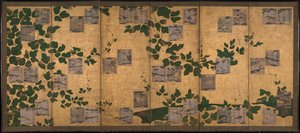
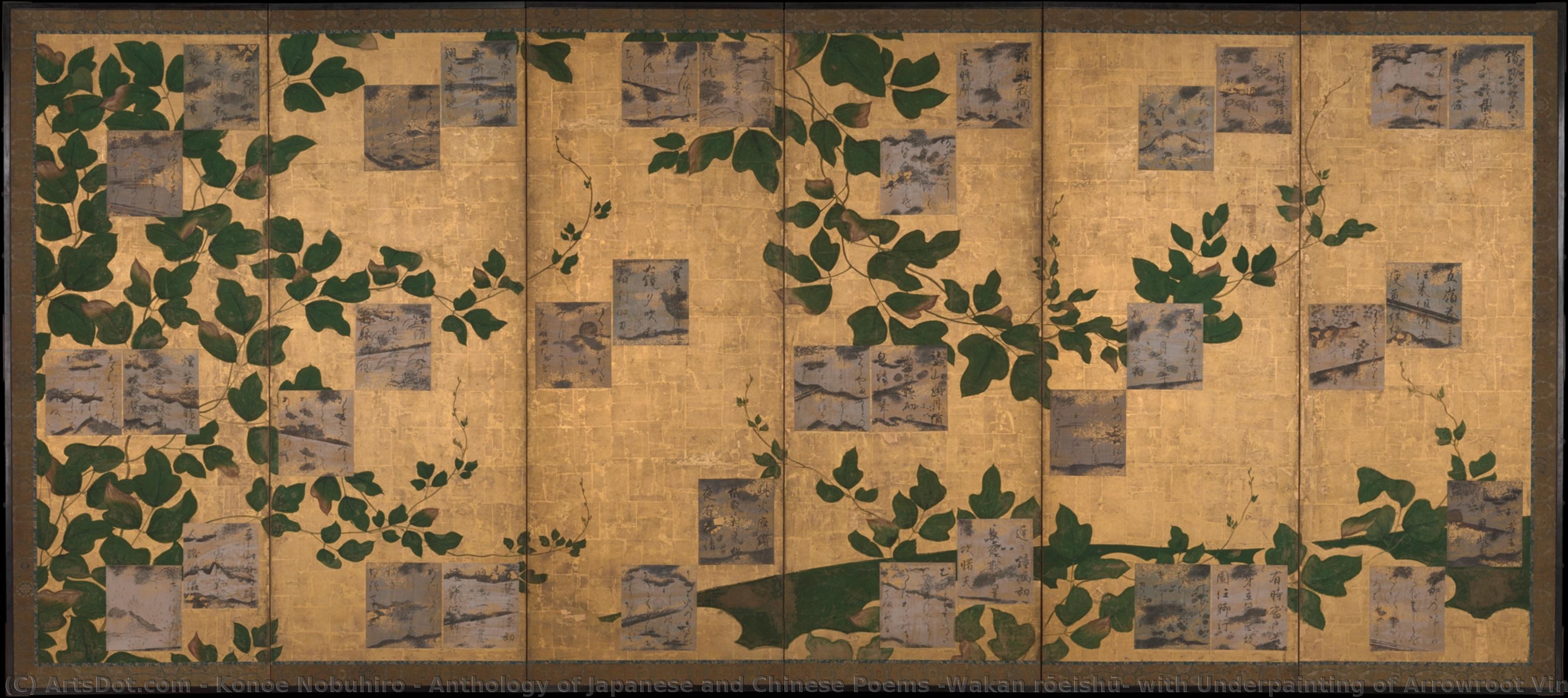
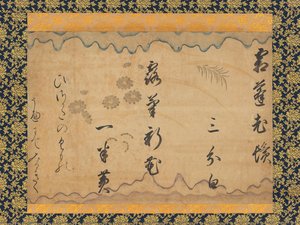
Anthology of Japanese and Chinese Poems (Wakan rōeishū) with Underpainting of Arrowroot Vines


 Read More
Hand Made Oil Reproduction
Hand-painted oil on canvas in your size and frame, made to order by our artists. ( Buy Print Buy Image)




































Pick from our preset sizes that match the artwork's original proportions.

You may enter your own dimensions to fit a specific frame or space. If your selected size does not match the original image's proportions, we will either crop the artwork or extend the painting with additional hand-painted elements. A digital mockup will be sent for your approval before production begins.
Please note that the on-screen preview does not reflect the actual cropping or extension. Only the mockup will accurately show the final composition.
While custom sizes are available, we recommend selecting a dimension from the predefined list to preserve the original proportions.
After order, ArtsDot.com team will email client for instructions and provide a mockup preview
Worldwide Delivery () in 3/4 weeks instead of standard 5 weeks. (31 August). No compromise on quality.

Free Worldwide Express Shipping

High-Quality Linen Canvas

Full Shipping Insurance

Customs Tax Refund Guarantee

True Color Matching Guarantee

60-Day Return Policy (Defects Only)

100% Money-Back Guarantee

Bulk Discount Offer
 Glass option is only available in size under 110 CM

Anthology of Japanese and Chinese Poems (Wakan rōeishū) with Underpainting of Arrowroot Vines
Reproduction Medium
Reproduction Size
-


Total Price
$ 263
Related Artworks
Artist Biography
Diego Velázquez: The Master of Light and Observation
Diego Rodríguez de Silva y Velázquez, a name synonymous with artistic mastery in the 17th century, remains one of the most revered figures in Western art history. Born in Seville in 1599, his life was inextricably linked to the court of King Philip IV of Spain, and it was within those gilded walls that he honed his extraordinary talent – a talent characterized by an unparalleled ability to capture not just appearances but also the very essence of human experience. Velázquez’s legacy isn't simply one of technical skill; it’s a testament to his profound understanding of light, shadow, and the subtle nuances of observation, qualities that continue to inspire artists centuries later.
Early Life and Artistic Training
Velázquez’s early life remains somewhat shrouded in mystery. He was baptized on June 6, 1599, in Seville, the firstborn son of Juan Rodríguez de Silva y Velázquez, a notary, and Jerónima Velázquez. His family's origins were complex; his paternal grandparents were Portuguese conversos – Jews who had converted to Christianity – adding an intriguing layer to his lineage. He received his initial artistic training under the tutelage of Francisco Pacheco, a local painter whose studio served as a vibrant hub for aspiring artists. Pacheco’s approach emphasized naturalism and meticulous detail, providing Velázquez with a solid foundation in traditional techniques. However, it was Pacheco's own style – characterized by idealized portraits and religious scenes – that Velázquez quickly sought to transcend, embarking on a journey toward a more direct and emotionally resonant representation of reality.
The Court Painter and the Development of His Style
Velázquez’s career truly took flight when he was summoned to Madrid in 1623 to paint a portrait of King Philip IV. This commission proved pivotal, catapulting him into the heart of the Spanish court and establishing his position as the king's official painter. Over the next four decades, he served as a tireless chronicler of royal life, producing an astonishing array of portraits – not just of the royal family but also of courtiers, servants, dwarves, and even stray dogs. Initially influenced by the Venetian painters whose works were housed in the Spanish Royal Collection, Velázquez gradually developed his own distinctive style, characterized by a masterful use of *tenebrismo*—a dramatic contrast between light and dark—and loose, expressive brushwork. He moved away from the polished surfaces favored by earlier generations, embracing a more tactile and immediate approach to painting.
Key Works and Artistic Innovations
Velázquez’s oeuvre is remarkably diverse, encompassing historical scenes, mythological subjects, still lifes, and, most famously, portraits. *Las Meninas* (1656), arguably his masterpiece, remains a subject of endless fascination and scholarly debate. This complex and layered painting depicts the Infanta Margarita being attended by her maids of honor, with King Philip IV and Queen Mariana observing from a mirror. It’s a brilliant exploration of perspective, illusion, and the very act of representation – questioning who is truly being painted and what constitutes reality within the scene. Other significant works include *The Surrender at Breda* (1634-35), a monumental depiction of the end of the Eighty Years' War, and numerous portraits of Philip IV and his family, each capturing the sitter’s personality with remarkable insight. His still lifes, particularly those depicting kitchen scenes, are equally compelling, showcasing his ability to render textures and details with astonishing precision.
Legacy and Influence
Diego Velázquez's influence on subsequent generations of artists is immeasurable. His innovative use of light, shadow, and brushwork paved the way for Impressionism in the 19th century, inspiring figures like Édouard Manet, Claude Monet, and Paul Cézanne. Artists as diverse as Pablo Picasso, Salvador Dalí, and Francis Bacon have repeatedly turned to Velázquez’s work for inspiration, reinterpreting his iconic images and exploring their psychological depth. Today, his paintings reside primarily in the Museo del Prado in Madrid, where they continue to draw millions of visitors each year. Velázquez's legacy extends beyond the realm of art; he is remembered as a master observer, a keen psychologist, and one of the greatest painters who ever lived – a testament to the power of seeing, capturing, and conveying the world around us with unparalleled skill and sensitivity.
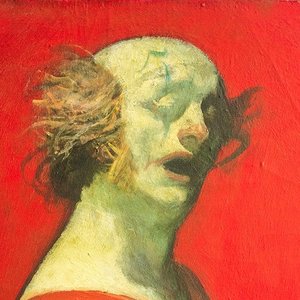
konoe nobuhiro
1599 - 1649 , Japan
Quick Facts
- Artistic Movement Or Style: Baroque, Tenebrism
- Artists Or Movements Influenced By This Artist:
- Realism
- Impressionism
- Artists Who Influenced This Artist:
- Caravaggio
- Venetian painting
- Date Of Birth: June 6, 1599
- Date Of Death: August 6, 1660
- Full Name: Diego Rodríguez de Silva y Velázquez
- Nationality: Spanish
- Notable Artworks:
- Las Meninas
- Philip IV
- Venus at Her Mirror
- Place Of Birth: Seville, Spain
Related Articles
Serenity on Canvas: A Guide to the Timeless Beauty of Japanese Landscape Painting
Discover the serene beauty of Japanese landscape painting. From Hokusai's iconic woodblock prints to meditative sumi-e ink washes, explore a visual journey through the 'floating world' and learn how to bring this timeless Zen aesthetic into your modern home decor.

Xie Zhiliu: A Legacy of Ink Wash Painting & Modern Chinese Literati Tradition
Explore the legacy of Xie Zhiliu, a master of Chinese ink wash painting & prominent figure in modern art. Discover his techniques, influences, and contributions to literati tradition. A guide for discerning collectors.

Hokusai's Masterpieces: 25 Iconic Prints & Paintings for Art Lovers | ArtsDot
Journey through Katsushika Hokusai’s 25 most iconic artworks, including *The Great Wave*. Explore the ukiyo-e master's history, style & timeless Japanese woodblock prints. Find museum-quality reproductions for your home at ArtsDot.com.

William Owen: A Poetic Vision of War & Landscape in British Modernism
Explore the poignant war poetry of Wilfred Owen, a key figure in British Modernism. Discover his innovative style, themes of loss & camaraderie, and lasting impact on 20th-century literature. Analysis & historical context included.
Floating World: The Captivating Art and Legacy of Japanese Ukiyo-e
Explore the profound beauty of Japanese Ukiyo-e. Discover the history, masters like Hokusai, and the enduring legacy of the 'Floating World' through an expert art-historical lens.