 Preview
 Send
Send Share
Share
 Details

 Download
 Similars
 X-Ray
X-Ray Diaporama
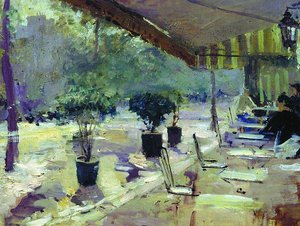
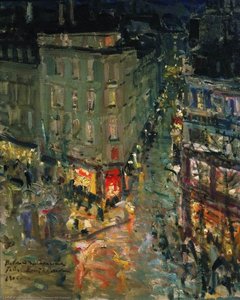
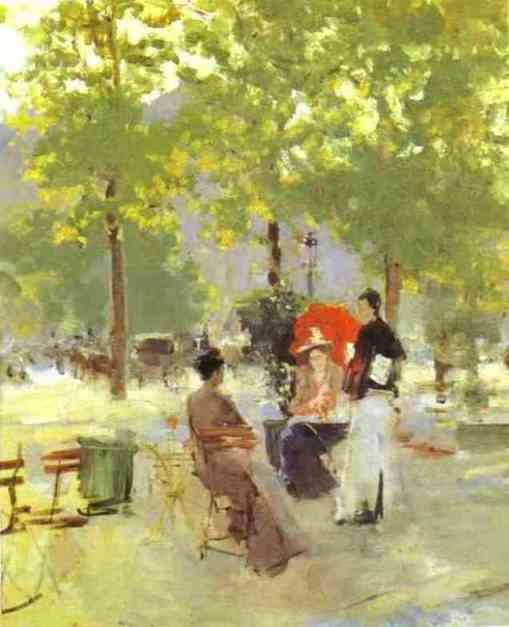
Parisian Cafe
 Acrylic On Canvas
- WallArt
- Impressionism
 1898
1898 52.0 x 43.0 cm
 Tretyakov Gallery
 Read More
Hand Made Oil Reproduction
Hand-painted oil on canvas in your size and frame, made to order by our artists. ( Buy Print Buy Image)




P118B $10

P118H $10

P118W $10

P438Z $10

P508JH $12

P508YH $12

P805H $10

P805Z $10

P919BZ $10

P919G $10

P919XJ $10

P959ZH $10

P968JZ $12

W106C $8

W218G $10

W218JH $8

W218Y $10

W307PJ $10

W316G $10

W316PJ $8

W316Y $10

W398PJ $8

W4111J $10

W500HY $15

W500JH $15

W692G $12

W849H $8

W940BG $15

W953PJ $8




Pick from our preset sizes that match the artwork's original proportions.

You may enter your own dimensions to fit a specific frame or space. If your selected size does not match the original image's proportions, we will either crop the artwork or extend the painting with additional hand-painted elements. A digital mockup will be sent for your approval before production begins.
Please note that the on-screen preview does not reflect the actual cropping or extension. Only the mockup will accurately show the final composition.
While custom sizes are available, we recommend selecting a dimension from the predefined list to preserve the original proportions.
After order, ArtsDot.com team will email client for instructions and provide a mockup preview
Worldwide Delivery () in 3/4 weeks instead of standard 5 weeks. (16 August). No compromise on quality.

Free Worldwide Express Shipping

High-Quality Linen Canvas

Full Shipping Insurance

Customs Tax Refund Guarantee

True Color Matching Guarantee

60-Day Return Policy (Defects Only)

100% Money-Back Guarantee

Bulk Discount Offer
 Glass option is only available in size under 110 CM

Parisian Cafe
Reproduction Medium
Reproduction Size
-


Total Price
$ 263
Artwork Description
A Window Into Parisian Life: Konstantin Korovin’s “Parisian Cafe”
Konstantin Alexeievitch Korovin's "Parisian Cafe," painted in 1898, stands as a quintessential emblem of Russian Impressionism—a movement that sought to capture the fleeting beauty of everyday life and the transformative effects of natural light. More than just a depiction of a café scene, it’s an invitation into a moment frozen in time, resonating with nostalgia for Belle Époque Paris and embodying Korovin's masterful ability to convey atmosphere and emotion through color and brushwork.The Scene Unfolds: Composition and Color Palette
The painting presents a tranquil tableau of Parisian life. Lush greenery frames the café terrace, dominated by mature trees casting dappled shade onto tables occupied by patrons enjoying their afternoon tea. Korovin skillfully employs a vibrant palette—primarily greens, yellows, and blues—to recreate the warmth of sunlight filtering through the foliage and reflecting off the surfaces of the buildings. Notice how he uses complementary colors – particularly orange hues in the café interior – to heighten visual interest and create depth within the composition. The placement of figures is deliberate; they are positioned organically throughout the space, contributing to a sense of spontaneity and realism.Technique: Impressionistic Brushstrokes and Light Rendering
Korovin’s technique exemplifies the core tenets of Impressionism. Loose, visible brushstrokes dominate the canvas, eschewing traditional blending methods in favor of capturing the immediacy of perception. He achieves remarkable luminosity by layering thin washes of color—a hallmark of Impressionist practice—allowing light to illuminate the scene and imbue it with vibrancy. The artist’s meticulous attention to detail is evident in the rendering of textures – from the rough bark of the trees to the polished surfaces of the tables – furthering the illusion of reality.Historical Context: Embracing Modernity Amidst Tradition
Painted during a period of significant social and artistic change, “Parisian Cafe” reflects Russia’s burgeoning engagement with European artistic trends. Korovin was deeply influenced by Impressionists like Claude Monet and Pierre-Auguste Renoir, who championed the pursuit of capturing fleeting moments and prioritizing subjective experience over academic conventions. Simultaneously, he remained rooted in Russian realism, grounding his work in observations of the natural world and portraying scenes of daily life with sensitivity and accuracy. The painting captures a spirit of optimism and dynamism—a desire to embrace the advancements of modernity while preserving cherished traditions.Symbolism: Light as Emotion and Atmosphere
Beyond its visual beauty, “Parisian Cafe” carries symbolic weight. Light itself becomes an expressive element, conveying warmth, tranquility, and joy. Korovin’s masterful use of color and brushwork communicates not merely what is seen but how it feels—the sensation of being immersed in a beautiful Parisian afternoon. The café setting represents social interaction and leisure – themes central to Impressionist art's exploration of human experience. It speaks to the desire for beauty, connection, and escape from the pressures of urban life.Emotional Impact: A Moment Preserved
Ultimately, “Parisian Cafe” succeeds in transporting the viewer back to a bygone era. The painting evokes feelings of serenity, nostalgia, and appreciation for simple pleasures. Korovin’s evocative depiction captures the essence of Parisian culture at its zenith—a celebration of light, color, and human connection that continues to inspire admiration today. It serves as a testament to the enduring power of Impressionism's ability to capture not just what is visible but what is felt—a timeless masterpiece resonating with beauty and emotion across generations.Related Artworks
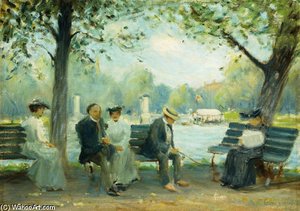
Artist Biography
A Life Painted in Light: The World of Konstantin Korovin
Konstantin Alexeievitch Korovin, born December 5, 1861, in Moscow, emerged as a pivotal figure in the blossoming of Russian Impressionism. His life was a vibrant interplay between academic training and a passionate embrace of modern artistic currents, ultimately forging a unique style that captured both the fleeting beauty of light and the soul of a changing Russia. Born into a merchant family with surprising artistic leanings – his father possessed a university degree and favored arts over commerce – Korovin’s path was subtly paved for creative exploration. His elder brother, Sergei Korovin, also a noted realist painter, further nurtured this environment. From an early age, the seeds of artistry were sown, leading him to enroll in the Moscow School of Painting, Sculpture and Architecture at just fourteen years old, where he studied under the tutelage of Vasily Perov and Alexei Savrasov. It was here that formative friendships with Valentin Serov and Isaac Levitan began, bonds that would sustain his artistic journey throughout his life. These early connections were crucial in shaping Korovin’s aesthetic sensibilities and providing a supportive network within the burgeoning Russian art scene.From Academic Roots to Impressionistic Visions
Korovin's initial academic training provided a solid foundation, but it was a brief sojourn at the Imperial Academy of Arts in St. Petersburg that sparked a sense of dissatisfaction. Finding the academy’s methods stifling and outdated, he returned to Moscow and continued his studies under Vasily Polenov. This proved transformative. Polenov introduced Korovin to Savva Mamontov's Abramtsevo Circle, a haven for artists, craftsmen, and intellectuals dedicated to fostering a uniquely Russian artistic identity. It was within this vibrant community that Korovin truly began to blossom. His travels broadened his horizons; a trip to Paris in 1885 proved particularly impactful. He later wrote of the shock he experienced encountering French Impressionism, recognizing in their work a freedom and expressiveness that resonated deeply with his own artistic inclinations. This encounter wasn’t merely imitative, however. Korovin didn't simply adopt the Impressionist style; he filtered it through his Russian sensibility, creating something distinctly his own. His early works began to reflect this synthesis, showcasing a growing mastery of light, color, and atmosphere.Landscapes of the North and Theatrical Innovations
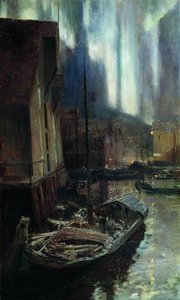
The late 19th century saw Korovin embark on a series of journeys that profoundly influenced his artistic output. Captivated by the stark beauty of the northern landscapes, he traveled to Norway in 1888 and again with Valentin Serov in 1894, coinciding with the construction of the Northern Railway. These expeditions yielded a stunning collection of paintings – *Norwegian Port*, *St. Triphon's Brook in Pechenga*, *Hammerfest: Aurora Borealis*, and *The Coast at Murmansk* – that captured the raw power and ethereal quality of the Arctic regions. The aurora borealis, in particular, became a recurring motif, allowing Korovin to explore the interplay of light and color with breathtaking effect. Simultaneously, Korovin’s talents extended beyond canvas and into the realm of theater design. He began working with Savva Mamontov's opera company, revolutionizing stagecraft by moving away from purely representational sets towards evocative “mood décor” that conveyed the emotional essence of a performance. This innovative approach established him as a leading figure in Russian theatrical design, influencing generations of artists to come.Legacy and Lasting Influence
In 1905, Korovin achieved the prestigious title of Academician of Painting, further solidifying his position within the Russian art establishment. He continued teaching at the Moscow School of Painting, Sculpture and Architecture from 1909 to 1913, imparting his knowledge and passion to a new generation of artists. Though his later life was marked by periods of exile and hardship – he spent time in Paris following the Russian Revolution – Korovin’s artistic legacy remained secure. His paintings continue to captivate audiences with their vibrant colors, atmospheric depth, and evocative power. He passed away on September 11, 1939, leaving behind a body of work that stands as a testament to his unique vision and enduring contribution to Russian Impressionism. Konstantin Korovin wasn’t merely a painter of landscapes or theatrical sets; he was a master of capturing fleeting moments, conveying emotions through light and color, and bridging the gap between artistic tradition and modern innovation. His influence can be seen in the works of countless artists who followed, cementing his place as one of Russia's most beloved and significant painters. His ability to infuse scenes with an emotional resonance continues to inspire awe and admiration.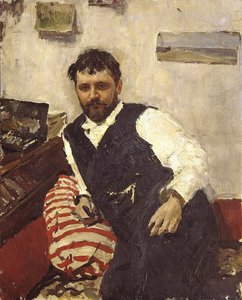
Konstantin Alexeievitch Korovin
1861 - 1939 , Russia
Quick Facts
- Artistic Movement Or Style: Impressionism
- Artists Or Movements Influenced By This Artist: ['Russian Impressionism']
- Artists Who Influenced This Artist:
- Vasily Perov
- Alexei Savrasov
- Vasily Polenov
- Date Of Birth: December 5, 1861
- Date Of Death: September 11, 1939
- Full Name: Konstantin Alexeievitch Korovin
- Nationality: Russian
- Notable Artworks:
- On the Balcony
- Spanish Women
- Paris Cafe
- Cafe de la Paix
- Place Of Birth: Moscow, Russia
Related Articles
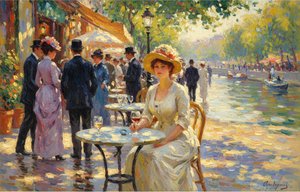
Konstantin Korovin: A Master of Russian Impressionism & Evocative Light
Explore the captivating world of Konstantin Korovin, a leading Russian Impressionist painter renowned for his vibrant landscapes & innovative theater designs. Discover his life, legacy, and enduring artistic impact.

Beyond the Horizon: 10 Landscape Masterpieces for Your Home Decor
Journey through 10 breathtaking landscape paintings by Monet, Van Gogh & more! Explore iconic artworks, artistic techniques & find inspiration for your home decor. Museum-quality reproductions at ArtsDot.com. Discover all masterpieces on ArtsDot.com
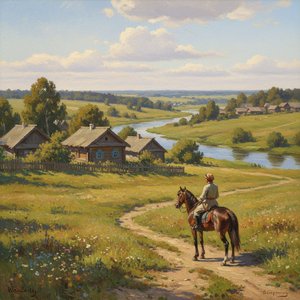
Vasily Polenov: A Pioneer of Landscape Impressionism & Russian National Identity
Explore the captivating landscapes of Vasily Polenov, a pivotal figure in Russian art history. Discover his lyrical realism, biblical series & influence on Impressionism. Learn about the 'Knight of Beauty' and his enduring legacy.

Evocations of Place: A Historical Journey Through Landscape Art
Explore the rich history of landscape art with ArtsDot. Discover renowned artists, movements like Impressionism & Romanticism, and expert guidance for collecting timeless pieces. Find your perfect serene escape today!

Cézanne's Masterpieces: 25 Iconic Artworks to Transform Your Space
Journey through 25 iconic artworks by Paul Cézanne – a master of Impressionism and Post-Impressionism. Explore his landscapes, still lifes, and the stories behind these timeless masterpieces. Discover museum-quality reproductions & curated decor at ArtsDot.com.