

 Preview
 Send
Send Share
Share
 Details

 Download
 Similars
 X-Ray
X-Ray Diaporama
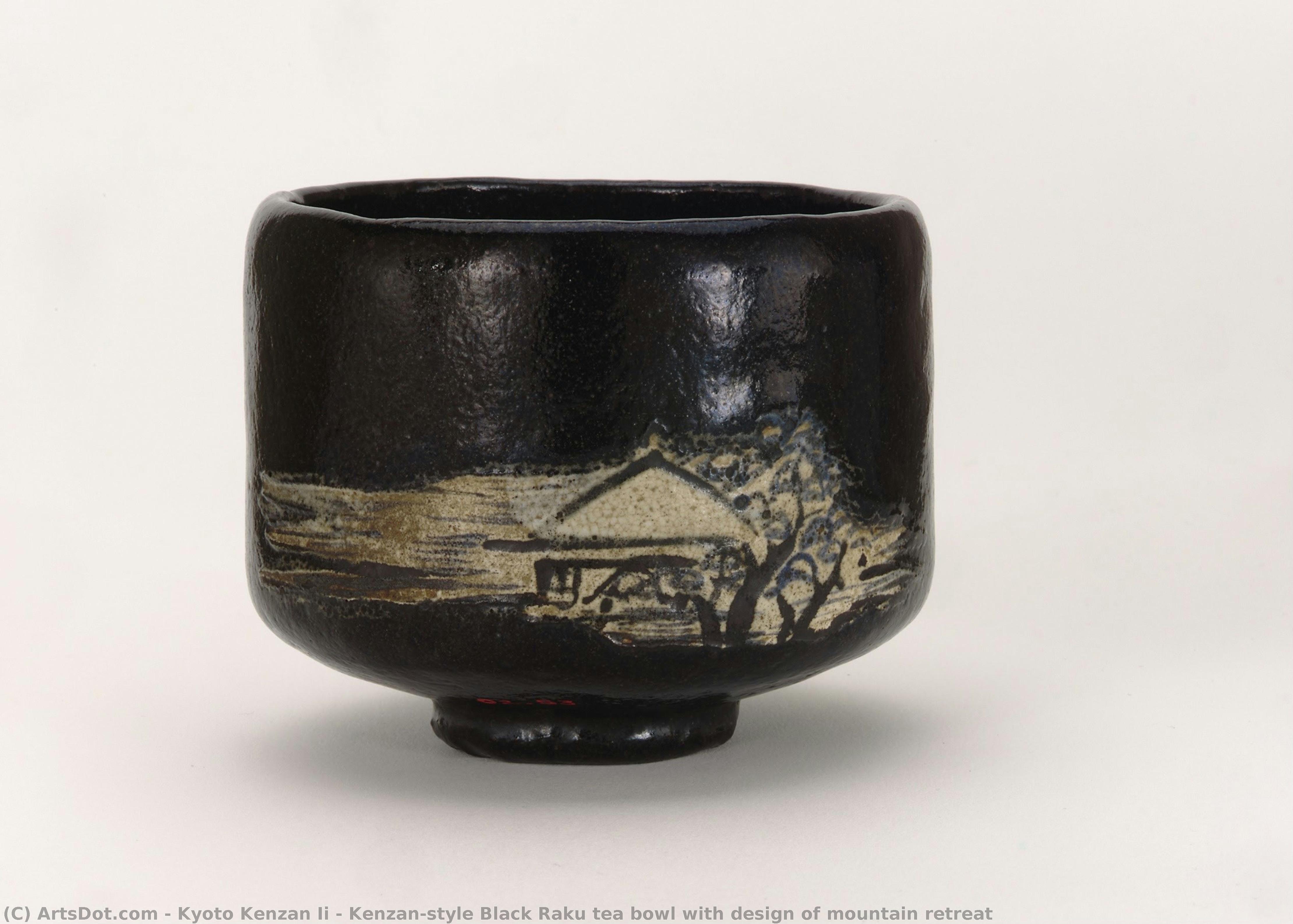
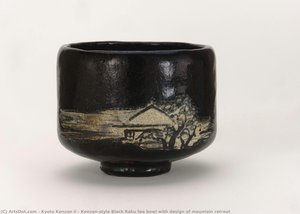
Kenzan-style Black Raku tea bowl with design of mountain retreat


 Read More
Purchase a high-resolution, enhanced digital image, far superior to the online preview.
Each file is meticulously prepared by our in-house specialists using advanced tools and expert manual retouching. We ensure every image has exceptional clarity, precise color accuracy, and fine detail.
The final file is delivered via email within 72 hours, optimized for immediate use in professional, editorial, and print environments. This is the same quality trusted by top-tier design studios, publishers, and galleries.
Digital Image
Download a high-resolution file for personal display, printing, and creative projects. ( Buy Print Buy Hand Made Painting)
Included in Every Digital Image Order
Expert Digital Delivery, Guaranteed
When you choose ArtsDot.com, you're not just getting an image - you're receiving a professionally enhanced digital artwork, crafted with precision and backed by a satisfaction guarantee. Here's everything that comes with your order, automatically:

Fast Email Delivery
Your high-resolution digital image file will be emailed to you within 72 hours of ordering - ready for immediate use.

AI-Enhanced Digital File
Your artwork is professionally optimized using advanced AI tools and manual editing, ensuring maximum detail, clarity, and color accuracy.

Free Lifetime Re-Delivery
Accidentally deleted or lost your file? No worries - we'll resend it to you anytime, free of charge.

No Import Fees - Ever
Enjoy your artwork instantly with zero customs, duties, or delivery fees - digital downloads are always tax-free.

Color Accuracy Guarantee
We ensure your digital image reflects the original colors as closely as possible using professional tools and color management.

60-Day Satisfaction Guarantee
If you're not satisfied with your digital image, we'll revise it or refund 100% within 60 days - no questions asked.

100% Money-Back Guarantee
Not satisfied? Get a full refund within 60 days of receiving your digital file - no questions asked.

Bulk Order Discounts
Buy 3 images, save 10% - Buy 5, save 15% - Buy 10+, save 20%. Great for creative projects, galleries, and agencies.
Related Artworks
Artist Biography
The Legacy of the Kenzan Lineage
In the heart of Kyoto, during the vibrant Edo period, a profound artistic lineage was forged through clay and fire. Kyoto Kenzan II, born as Ogata Ihachi around 1720, emerged not merely as a successor but as a vital custodian of a revolutionary aesthetic. While his predecessor, the legendary Ogata Kenzan, had already transformed Japanese ceramics by treating the vessel as a canvas for painterly expression, Ihachi dedicated his life to refining and expanding this delicate balance between form and fine art. His identity was deeply intertwined with the Rimpa School, an artistic movement that celebrated the decorative elegance of nature. Through his hands, the traditions of the Kenzan style were preserved, ensuring that the rhythmic beauty of Japanese landscapes could be held and experienced in the palm of one's hand.
Ihachi’s journey was shaped by a rigorous and multifaceted education that transcended the simple boundaries of craft. Growing up amidst the cultural sophistication of Kyoto, he immersed himself in the study of Confucian scholarship and the disciplined strokes of calligraphy. These intellectual pursuits were harmonized with the spiritual depth of Zen Buddhism, providing him with a worldview where every line and glaze could reflect the profound interconnectedness of all living things. This scholarly foundation allowed him to approach pottery not just as a technician, but as a philosopher of form, imbuing his ceramic works with a sense of meditative stillness and intellectual weight.
Symbolism and the Language of Nature
The artistry of Kyoto Kenzan II is most profoundly felt in his mastery of symbolic motifs. His work often serves as a silent poetry, utilizing bold, graphic patterns to communicate ancient truths about the natural world. He frequently turned to auspicious botanical elements—such as the resilient pine and the flexible bamboo—to weave narratives of strength, renewal, and endurance into his designs. These were not merely decorative flourishes; they were deeply embedded in the Japanese cosmological belief in the cyclical nature of existence and the pursuit of longevity.
Beyond flora, Ihachi’s compositions often captured the ethereal grandeur of the landscape. His ability to translate the vastness of mountain retreats and the majesty of Mount Fuji onto the curved surfaces of tea bowls and plates demonstrated a remarkable spatial intelligence. By integrating stylized landscapes with geometric precision, he created a sense of depth that invited the viewer into a miniature, tranquil universe. This seamless blend of the organic and the structured became the hallmark of his contribution to the Kenzan style, making his pieces much more than functional objects; they were windows into a spiritualized landscape.
Technical Mastery and Lasting Impact
To achieve such evocative results, Ihachi utilized highly sophisticated techniques that pushed the boundaries of 18th-century ceramic production. He was particularly adept at employing Raku ware methods, a process celebrated for its ability to produce unpredictable and breathtaking glaze effects. Through the careful manipulation of kiln temperatures and the application of iron pigments and enamels under transparent lead glazes, he achieved a stunning range of textures and luminous colors. His work often featured a captivating contrast between the rugged, earthy qualities of the clay and the delicate, brilliant highlights of his painted motifs.
The historical significance of Kyoto Kenzan II lies in his ability to bridge the gap between the classical traditions of his ancestors and the evolving tastes of the Edo period. His notable achievements, such as his exquisite hexagonal plates adorned with Jurōjin—the deity of longevity—stand as testaments to his skill in merging religious iconography with high-art aesthetics. Today, his legacy continues to resonate within the world's most prestigious collections, from the Freer Gallery of Art to the Metropolitan Museum of Art. He remains a pivotal figure whose work continues to inspire an appreciation for the harmony, resilience, and enduring beauty found within the intersection of earth and art.
kyoto kenzan ii
Japan
Quick Facts
- Artistic Movement Or Style: Raku ware
- Artists Or Movements Influenced By This Artist: ['Rimpa School']
- Artists Who Influenced This Artist:
- Ninsei
- Ogata Kōrin
- Full Name: Ogata Ihachi
- Nationality: Japanese
- Notable Artworks:
- Jurōjin Plate
- Cedar Grove Plate
- Hana-kago Scroll
- Eight Bridges Painting
- Place Of Birth: Kyoto, Japan

