 Preview
 Send
Send Share
Share
 Details

 Download
 Similars
 X-Ray
X-Ray Diaporama
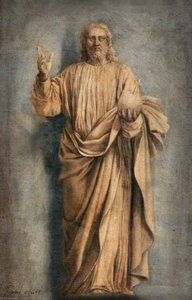
Christ The Judge
 Oil On Canvas
- WallArt
- Renaissance
 36.0 x 23.0 cm
 The Louvre
 Read More
Hand Made Oil Reproduction
Hand-painted oil on canvas in your size and frame, made to order by our artists. ( Buy Print Buy Image)




P118B $10

P118H $10

P118W $10

P438Z $10

P508JH $12

P508YH $12

P805H $10

P805Z $10

P919BZ $10

P919G $10

P919XJ $10

P959ZH $10

P968JZ $12

W106C $8

W218G $10

W218JH $8

W218Y $10

W307PJ $10

W316G $10

W316PJ $8

W316Y $10

W398PJ $8

W4111J $10

W500HY $15

W500JH $15

W692G $12

W849H $8

W940BG $15

W953PJ $8




Pick from our preset sizes that match the artwork's original proportions.

You may enter your own dimensions to fit a specific frame or space. If your selected size does not match the original image's proportions, we will either crop the artwork or extend the painting with additional hand-painted elements. A digital mockup will be sent for your approval before production begins.
Please note that the on-screen preview does not reflect the actual cropping or extension. Only the mockup will accurately show the final composition.
While custom sizes are available, we recommend selecting a dimension from the predefined list to preserve the original proportions.
After order, ArtsDot.com team will email client for instructions and provide a mockup preview
Worldwide Delivery () in 3/4 weeks instead of standard 5 weeks. (21 August). No compromise on quality.

Free Worldwide Express Shipping

High-Quality Linen Canvas

Full Shipping Insurance

Customs Tax Refund Guarantee

True Color Matching Guarantee

60-Day Return Policy (Defects Only)

100% Money-Back Guarantee

Bulk Discount Offer
 Glass option is only available in size under 110 CM

Christ The Judge
Reproduction Medium
Reproduction Size
-


Total Price
$ 263
Artwork Description
Christ The Judge by LA HYRE, Laurent de
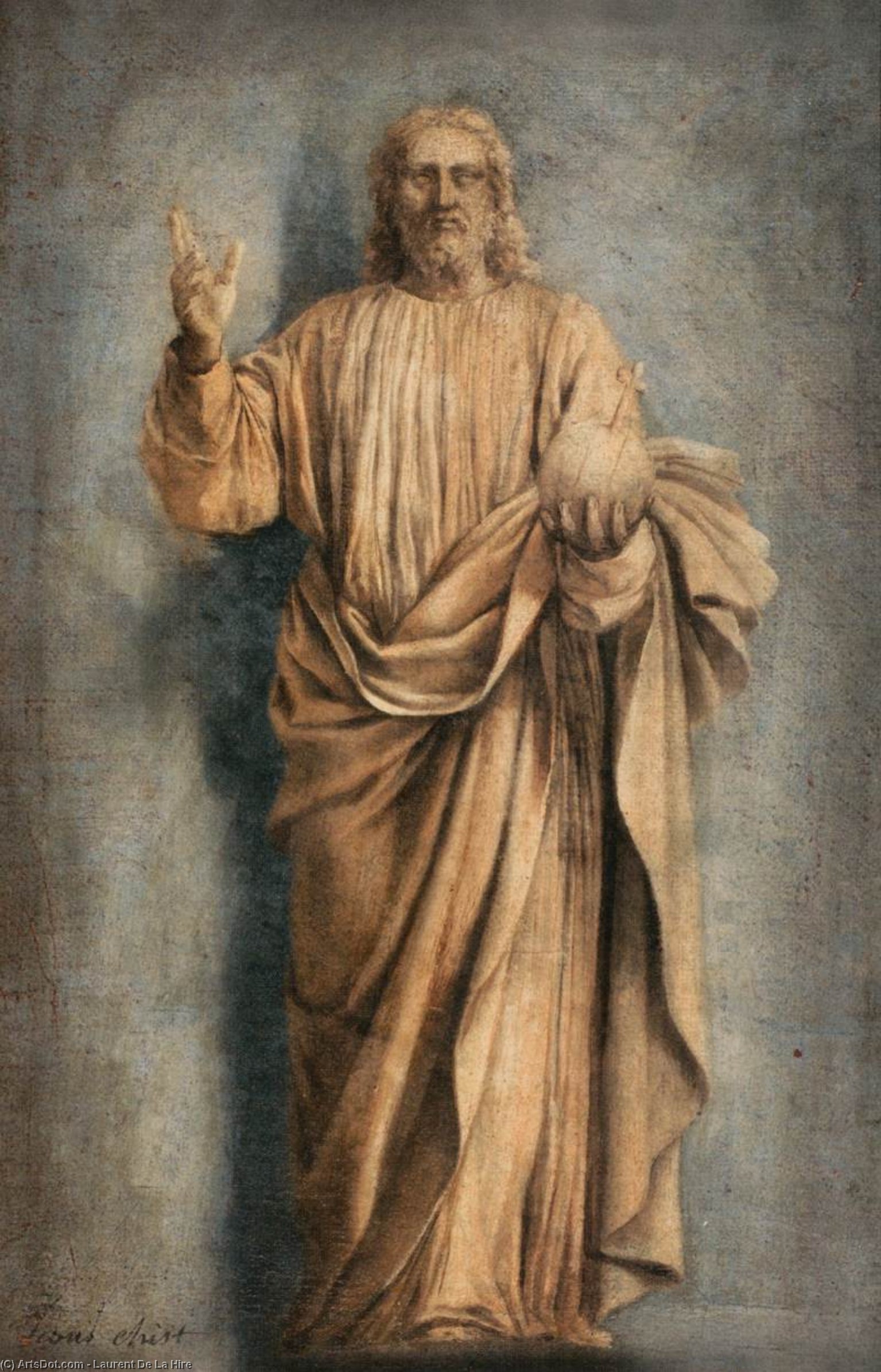
Laurent de La Hyre’s “Christ The Judge” (c. 1630) stands as a testament to the enduring power of Renaissance artistic vision—a grisaille masterpiece that captures not merely an image but an essence of faith and divine authority. Found within the refectory of the Miinims on Place Royale in Paris, this monumental panel exemplifies La Hyre’s mastery of colorless pigment technique, offering a glimpse into the aesthetic sensibilities of its time. The artwork depicts Jesus Christ in a commanding three-quarter pose, gesturing with one hand as if pointing towards heaven—a gesture laden with symbolic significance representing guidance and blessing. Beneath his gaze rests a sphere held delicately in his other hand; interpretations vary, ranging from symbolizing the cosmos – reflecting God’s dominion over creation – to embodying divine wisdom and contemplation. La Hyre meticulously rendered Christ's anatomy with remarkable accuracy, adhering to humanist ideals prevalent during the Renaissance period. La Hyre’s technique—the application of thin glazes layered upon a gesso ground—is characterized by painstaking brushwork and an exceptional ability to achieve luminous effects despite the absence of color. This method, favored by artists like Rembrandt himself, allowed for subtle gradations of tone and texture, creating depth and dimensionality within the monochrome composition. The artist skillfully employed atmospheric perspective, subtly receding into the background to heighten the sense of space and grandeur. The grisaille technique—the use of shades of grey—was particularly popular in ecclesiastical art during the Baroque era, serving as a deliberate choice to focus attention on spiritual contemplation rather than visual spectacle. It was considered appropriate for liturgical settings where subdued illumination would enhance the solemnity of prayer. The artwork’s emotional impact is profound – conveying reverence and humility before the majesty of God.- Artist: Laurent de La Hyre
- Year Created: c. 1630
- Medium: Oil Paint on Gesso Ground (Grisaille)
- Location: Refectory of the Miinims, Place Royale, Paris
Additional Research & Context
Further exploration reveals that La Hyre’s “Christ The Judge” aligns with broader artistic trends of its era. Like Rembrandt, he embraced a humanist approach to art, prioritizing anatomical realism and psychological depth—a departure from earlier Gothic conventions. This grisaille panel exemplifies the stylistic sophistication of Parisian Baroque art during the reign of Louis XIII, reflecting the influence of Mannerism and emphasizing spiritual contemplation. The artwork’s placement within a religious institution underscores its purpose as a devotional image intended to inspire piety and reverence among worshippers.Symbolic Elements
The composition is rich in symbolic references. Christ's gesture directs the viewer's gaze upwards, symbolizing faith and divine grace. The sphere represents cosmic order and God’s omnipresence—a visual metaphor for spiritual enlightenment. La Hyre’s masterful use of light and shadow contributes to the artwork’s dramatic effect, enhancing its emotional resonance and reinforcing its solemn character.Technical Considerations
The grisaille technique demanded considerable skill and patience from La Hyre. Achieving luminous effects through monochrome pigment requires meticulous layering of thin glazes—a process that necessitated careful observation and precise brushwork. The resulting surface possesses a velvety smoothness, indicative of the artist’s dedication to achieving textural perfection. This remarkable artwork continues to inspire admiration for its artistic excellence and spiritual profundity.Related Artworks
Artist Biography
Rembrandt: A Master of Light and Shadow
Rembrandt Harmenszoon van Rijn, born on July 15, 1606, in Leiden, Netherlands, remains one of the most profoundly influential figures in Western art. His legacy extends far beyond his stunningly realistic portraits and dramatic biblical scenes; he fundamentally reshaped how artists approached light, emotion, and the very essence of human experience. Rembrandt’s life was a complex tapestry woven with threads of artistic brilliance, financial struggles, personal loss, and an unwavering dedication to his craft. He died on October 4, 1669, in Amsterdam, leaving behind a vast and deeply moving body of work that continues to captivate audiences centuries later. ### Early Life and Artistic Foundations Rembrandt’s early life was marked by the practical realities of being the son of a miller. While his father provided for his education with a basic Latin schooling, Rembrandt's true passion lay in art. He initially apprenticed under Jacob van Swanenburgh, a local painter, gaining foundational skills in oil painting and drawing. However, it was his brief time studying at the University of Leiden that proved pivotal – not through academic pursuits, but as a catalyst for his artistic independence. Disillusioned with the rigid structure of university life, he quickly abandoned his studies to pursue his own path, seeking experience by working under Pieter Lastman in Amsterdam. This early exposure to a more established and technically demanding style laid the groundwork for Rembrandt’s later development, though he would ultimately forge his own distinctive voice. Crucially, unlike many artists of his time who traveled to Italy to study classical art, Rembrandt believed that the richness and variety of Dutch life offered ample inspiration. ### The Rise of a Master: Amsterdam and Early Success Around 1631, Rembrandt moved to Amsterdam, a vibrant hub of commerce and artistic innovation. This shift proved transformative for his career. Amsterdam’s burgeoning merchant class provided a wealthy clientele eager to commission portraits and historical scenes – a far more lucrative environment than the small, provincial market he had known in Leiden. He quickly established himself as a sought-after artist, securing commissions from prominent families like the van Ruytenburch and the de Ploeg. His early works, often characterized by their meticulous detail and realistic depictions of everyday life, began to attract considerable attention. However, Rembrandt’s ambition extended beyond mere portraiture; he was drawn to dramatic narratives and complex psychological portraits, foreshadowing his later masterpieces. ### The Development of Style: Light, Emotion, and the Self-Portrait Rembrandt's artistic style underwent a remarkable evolution throughout his career. Initially influenced by Lastman’s technical precision, he gradually developed a unique approach characterized by an intense use of light and shadow – *chiaroscuro* – to create dramatic effects and evoke powerful emotions. He wasn’t simply illuminating a scene; he was exploring the inner lives of his subjects, capturing their moods and vulnerabilities with unparalleled sensitivity. This shift is particularly evident in works like "The Night Watch" (1642), where the interplay of light and darkness creates a dynamic and almost theatrical atmosphere. Furthermore, Rembrandt's prolific self-portraits offer an extraordinary window into his evolving personality and artistic process. These paintings reveal not only his physical appearance but also his thoughts, emotions, and even his struggles with aging and mortality. ### Late Works and Lasting Legacy As he aged, Rembrandt’s style became increasingly expressive and introspective. His later works are often characterized by a looser brushwork, a greater emphasis on emotional intensity, and a willingness to experiment with unconventional compositions. Despite facing financial difficulties in his final years – exacerbated by his compulsive buying habits – Rembrandt continued to produce some of his most profound and moving paintings, including "The Return of the Prodigal Son" (1669) and “Simon’s Mother.” These works are imbued with a deep sense of compassion and spiritual insight. Rembrandt's influence on subsequent generations of artists is immeasurable. He revolutionized painting by demonstrating the power of light to shape perception, by exploring the complexities of human emotion, and by forging a deeply personal and expressive style that remains unmatched in its intensity and beauty. His work continues to be studied, admired, and celebrated worldwide as a testament to the enduring power of art to illuminate the human condition.Key Works
- The Night Watch (1642) – A monumental group portrait showcasing Rembrandt’s mastery of composition and dramatic lighting.
- The Return of the Prodigal Son (1669) – A deeply moving depiction of forgiveness and redemption, demonstrating Rembrandt's profound understanding of human emotion.
- Self-Portraits (Numerous examples throughout his career) - Offer unparalleled insight into the artist’s life and artistic development.
- The Storm on the Sea of Galilee (1633) – A dramatic depiction of a biblical story, showcasing Rembrandt's innovative use of light and shadow to create a sense of movement and chaos.
- Belshazzar’s Feast (1635) - A lavishly detailed scene from the Book of Daniel, demonstrating Rembrandt’s skill in rendering opulent settings and capturing dramatic moments.
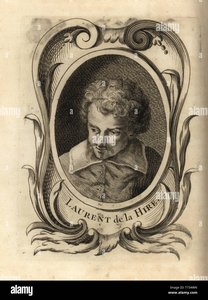
laurent de la hyre
1606 - 1656 , France
Quick Facts
- Artistic Movement Or Style: Baroque
- Artists Or Movements Influenced By This Artist:
- Rubens
- Dutch Baroque
- Artists Who Influenced This Artist: ['Caravaggio']
- Date Of Birth: July 15, 1606
- Date Of Death: October 4, 1669
- Full Name: Rembrandt Harmenszoon van Rijn
- Nationality: Dutch
- Notable Artworks:
- The Night Watch
- Belshazzar's Feast
- Self-Portrait with Saskia
- Place Of Birth: Leiden, Netherlands
Related Articles

Demandes Commerciales
APS ofrece reproducciones de bellas artes y encargos personalizados desde 2004. Confían en nosotros corporaciones, hoteles y coleccionistas selectos para obras de arte de calidad museística, servicio discreto y soluciones artísticas completas. ¡Póngase en contacto con nosotros para obtener un presupuesto personalizado!

Goya's Masterpieces: Explore 25 Iconic Paintings & Art Prints | ArtsDot
Delve into the world of Francisco Goya with ArtsDot. Explore 25 iconic paintings – from 'The Third of May' to his haunting Black Paintings. Discover the stories, techniques & emotions behind these Spanish masterpieces. Find museum-quality art reproductions for your home at ArtsDot.com!
Águeda Ruiz de la Prada: A Study of Eclecticism & Emotional Resonance in Contemporary Spanish Painting
Discover the vibrant world of Ágatha Ruiz de la Prada, a leading figure in contemporary Spanish art. Explore her eclectic style, emotional depth & legacy – a must-read for discerning collectors.

A riguardo di noi
Découvrez notre histoire ! Nous apportons l'art de classe mondiale dans votre vie grâce à une sélection experte, des créations personnalisées et des aperçus gratuits. Approuvé par les particuliers et les entreprises depuis 2000.
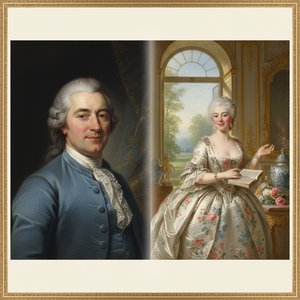
Maurice Quentin de La Tour: Light, Shadow & the Rococo Portrait
Explore the captivating world of Maurice Quentin de La Tour, a master of Rococo portraiture. Discover his innovative pastel techniques, intimate depictions of French aristocracy, and lasting artistic legacy. Learn more at ArtsDot.