 Preview
 Send
Send Share
Share
 Details

 Download
 Similars
 X-Ray
X-Ray Diaporama
Visit of an English fleet to Rio de Janeiro


 Read More
Giclée / Art Print
Museum-quality giclée or canvas print with fast production and flexible finish options. ( Buy Hand Made Painting Buy Image)




P118B $10

P118H $10

P118W $10

P438Z $10

P508JH $12

P508YH $12

P805H $10

P805Z $10

P919BZ $10

P919G $10

P919XJ $10

P959ZH $10

P968JZ $12

W106C $8

W218G $10

W218JH $8

W218Y $10

W307PJ $10

W316G $10

W316PJ $8

W316Y $10

W398PJ $8

W4111J $10

W500HY $15

W500JH $15

W692G $12

W849H $8

W940BG $15

W953PJ $8




Pick from our preset sizes that match the artwork's original proportions.

You may enter your own dimensions to fit a specific frame or space. If your selected size does not match the original image's proportions, we will either crop the artwork or extend the image with a mirrored or solid-fill edge. A digital mockup will be sent for your approval before production begins.
Please note that the on-screen preview does not reflect the actual cropping or extension. Only the mockup will accurately show the final composition.
While custom sizes are available, we recommend selecting a dimension from the predefined list to preserve the original proportions.
Worldwide Delivery () in 2 weeks instead of standard 4/5 weeks. (27 August)

Free Worldwide Express Shipping

High-Quality Linen Canvas

Full Shipping Insurance

Customs Tax Refund Guarantee

True Color Matching Guarantee

60-Day Return Policy (Defects Only)

100% Money-Back Guarantee

Bulk Discount Offer
 Glass option is only available in size under 110 CM

Visit of an English fleet to Rio de Janeiro
Giclée / Art Print
Reproduction Size
-


Total Price
$ 63
A Grand Maritime Spectacle: The Arrival of the English Fleet
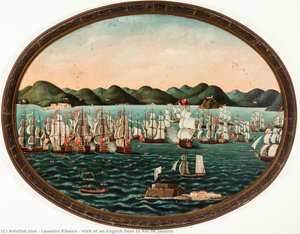
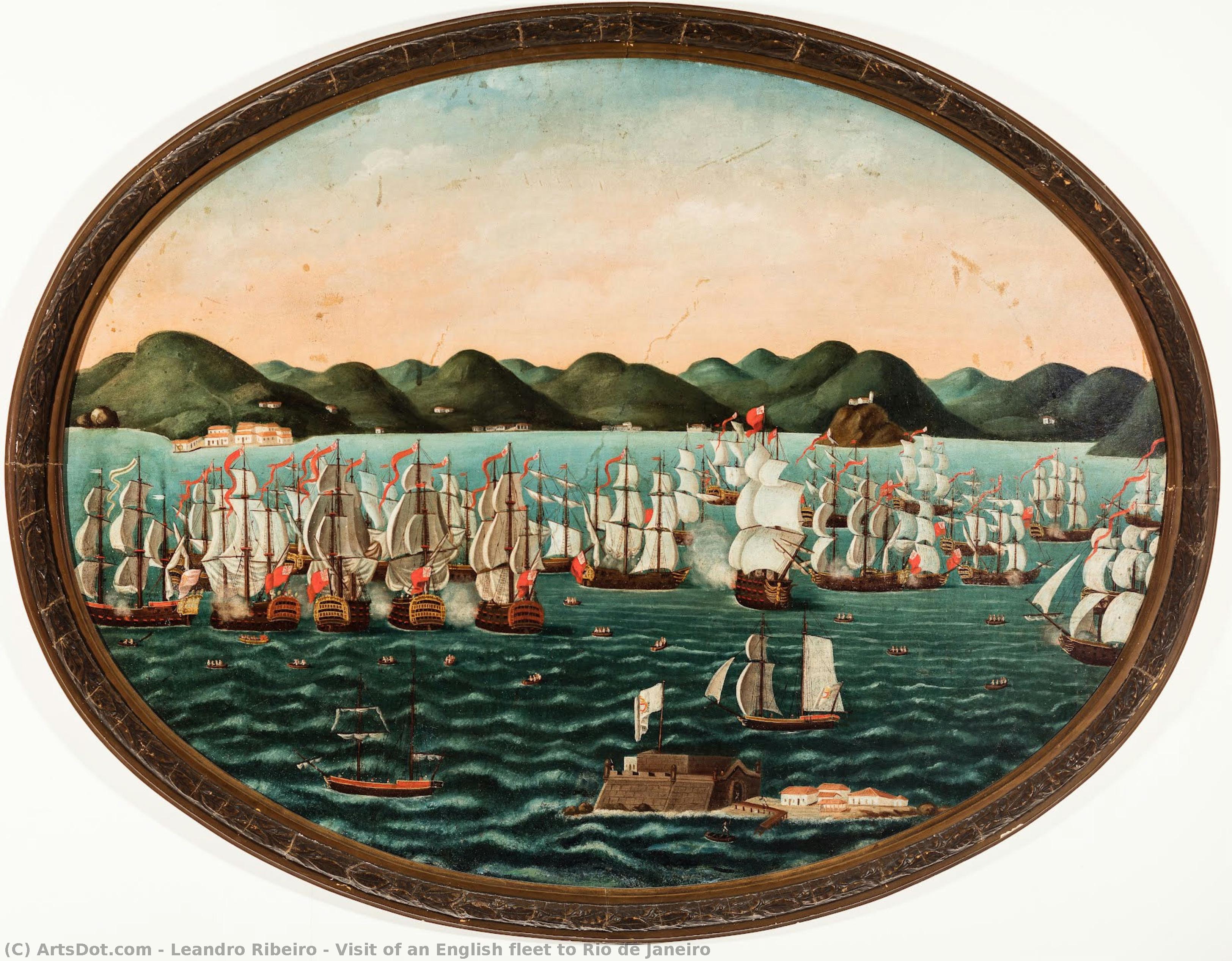
In this breathtaking oil on canvas, the viewer is transported back to the year 1798, witnessing a moment of profound historical tension and maritime grandeur. The painting captures the monumental arrival of an English fleet in the waters of Rio de Janeiro, a scene rendered with a meticulous eye for detail that breathes life into the bustling harbor. At first glance, the composition draws the eye across a dark blue sea, where small white waves dance against the hulls of various vessels. On the right, a sturdy brown fortress stands sentinel upon an islet, its guardhouses populated by tiny, watchful soldiers, while nearby, the pristine white houses of the coast suggest a peaceful life about to be interrupted by the sheer scale of the approaching armada.
The artist masterfully orchestrates a sense of movement and depth, guiding the gaze from the intimate foreground—where two men labor at a pier—to the vast, intimidating horizon. A small canoe, bearing a white flag with a central shield, drifts near a larger vessel, serving as a delicate precursor to the massive ships that dominate the background. These great vessels, with their full-length white sails catching the light and red pennants fluttering in the breeze, represent the overwhelming power of the English naval presence. The sight of cannon batteries firing, leaving behind ephemeral puffs of white smoke, adds a layer of visceral drama, reminding us that this is not merely a parade, but a display of formidable military might.
Technique and the Art of Atmospheric Storytelling
The technique employed in this work reflects a deep reverence for 18th-century maritime traditions. Through the use of layered oil glazes, the artist achieves a luminous quality in the sky, where reddish-white clouds drift through a brilliant blue expanse, creating a sense of atmospheric perspective that makes the distant mountains feel both reachable and immense. The contrast between the heavy, dark hulls of the ships and the ethereal lightness of the sails creates a rhythmic visual tension that keeps the viewer's eye constantly moving across the canvas. Every brushstroke contributes to the texture of the sea, from the frothy crests of the waves to the calm, reflective surfaces near the shore.
For the discerning collector or interior designer, this piece offers more than just a historical record; it provides a window into an era of exploration and colonial complexity. The painting functions as a centerpiece of narrative power, capable of anchoring a room with its epic scale and dramatic lighting. Whether placed in a formal study, a grand hallway, or a sophisticated living space, the artwork invites contemplation on themes of sovereignty, encounter, and the relentless passage of time. It is a masterful reproduction that captures the soul of a bygone era, making it an invaluable acquisition for those who seek to surround themselves with art that tells a story as much as it defines a space.
Related Artworks



Artist Biography
The Dual Legacy of Leandro Ribeiro
In the grand tapestry of modern talent, few figures present as intriguing a duality as Leandro Ribeiro. While much of the global spotlight has traditionally fallen upon his prowess on the football pitch—a career defined by the disciplined athleticism of a striker for Daejeon Hana Citizen—there exists a quieter, more contemplative dimension to his identity. Born in Porto Alegre, Brazil, on January 13, 1995, Ribeiro embodies a unique intersection of physical vigor and creative introspection. His journey is not merely one of sporting milestones across clubs like Sport Club Internacional and Maccabi Netanya, but a narrative of a soul deeply connected to the vibrant, rhythmic essence of his Brazilian heritage.
To understand the artistic spirit of Ribeiro is to look toward the sweeping landscapes and cultural heartbeats of Brazil. Though his professional life has been shaped by the rigorous demands of international football, his creative inclinations suggest a profound resonance with the masters of Brazilian art history. One can imagine his aesthetic sensibilities being guided by the bold, emotive strokes of Tarsila do Amaral or the sweeping, rhythmic compositions of Emiliano Di Cavalcanti. These legends of the Brazilian modernism movement utilized vibrant hues and expressive forms to capture the very soul of their nation, a tradition that provides a rich, ancestral wellspring for Ribeiro’s potential artistic explorations.
A Vision of Brazilian Heritage
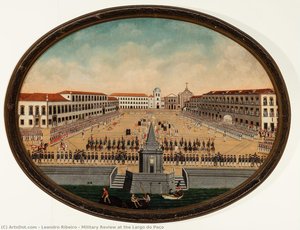
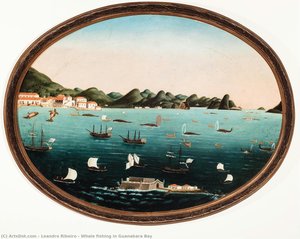
The essence of Ribeiro’s creative identity is deeply rooted in the depiction of historical grandeur and the lived experiences of the Brazilian people. His work serves as a window into a bygone era, focusing on the evocative power of 19th-century life. Through his lens, we encounter the dramatic tension of naval scenes, the rugged determination found in whale fishing expeditions, and the structured elegance of military reviews. These subjects are not merely historical records but are imbued with a sense of movement and color that celebrate the maritime and social complexities of Rio de Janeiro and beyond.
The significance of his artistic perspective lies in this ability to bridge the gap between the past and the present. By focusing on themes such as:
- Naval Narratives: Capturing the salt-sprayed intensity of maritime life and the historical importance of Brazil's coastal identity.
- Cultural Documentation: Reimagining the social ceremonies and military parades that once defined the public landscape of 19th-century Brazil.
- Natural Majesty: Utilizing the vibrant, tropical palette to depict the raw beauty of Brazilian wildlife and landscapes.
In every brushstroke, there is an attempt to honor the legacy of his homeland. Ribeiro’s work transcends simple representation; it is an emotional pilgrimage through time. For the observer, engaging with his vision offers more than just a glimpse at historical accuracy—it provides a sensory experience of a nation's pride, its struggles, and its enduring beauty. As he continues to navigate the worlds of both sport and art, Leandro Ribeiro remains a compelling figure, proving that the passion required for the stadium is the very same fire that fuels the canvas.

leandro ribeiro
1995 - , Brazil
Quick Facts
- Artistic Movement Or Style: Historical Painting
- Artists Or Movements Influenced By This Artist: ['Dada Art Movement']
- Artists Who Influenced This Artist:
- Tarsila do Amaral
- Emiliano di Cavalcanti
- Date Of Birth: January 13, 1995
- Full Name: Leandro Joaquim Ribeiro
- Nationality: Brazilian
- Notable Artworks:
- Military Review at the Largo do Paço
- Visit of an English fleet to Rio de Janeiro
- Whale fishing in Guanabara Bay
- Place Of Birth: Porto Alegre, Brazil
Related Articles

Goya's Masterpieces: Explore 25 Iconic Paintings & Art Prints | ArtsDot
Delve into the world of Francisco Goya with ArtsDot. Explore 25 iconic paintings – from 'The Third of May' to his haunting Black Paintings. Discover the stories, techniques & emotions behind these Spanish masterpieces. Find museum-quality art reproductions for your home at ArtsDot.com!

About Us
Discover our story! We bring world-class art into your life through expert curation, personalized creations, and free previews. Trusted by individuals and businesses since 2000.

John Constable's Masterpieces: Explore 25 Iconic Landscapes for Your Home
Journey through John Constable's 25 most celebrated landscapes. Explore Romanticism, Dedham Vale & his masterful use of light in iconic paintings like 'Hay Wain'. Find museum-quality art reproductions and elevate your home decor on ArtsDot.com.
Willem van de Velde the Elder: Master of Maritime Painting & Chronicler of the Dutch Golden Age
Discover the captivating maritime paintings of Willem van de Velde the Elder, a master chronicler of the Dutch Golden Age. Explore his unparalleled realism and lasting influence on naval art history.

Peter De Wint: A Master of British Landscape & Quiet Pastoral Beauty
Discover the serene landscapes of Peter De Wint (1784-1849), a master of British Romanticism. Explore his life, technique & investment potential with expert insights from ArtsDot.