 Preview
 Send
Send Share
Share
 Details

 Download
 Similars
 X-Ray
X-Ray Diaporama
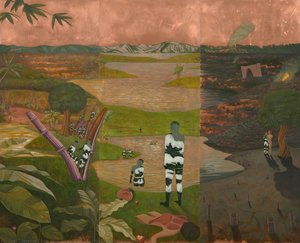
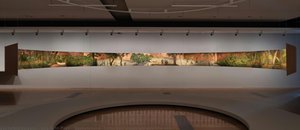
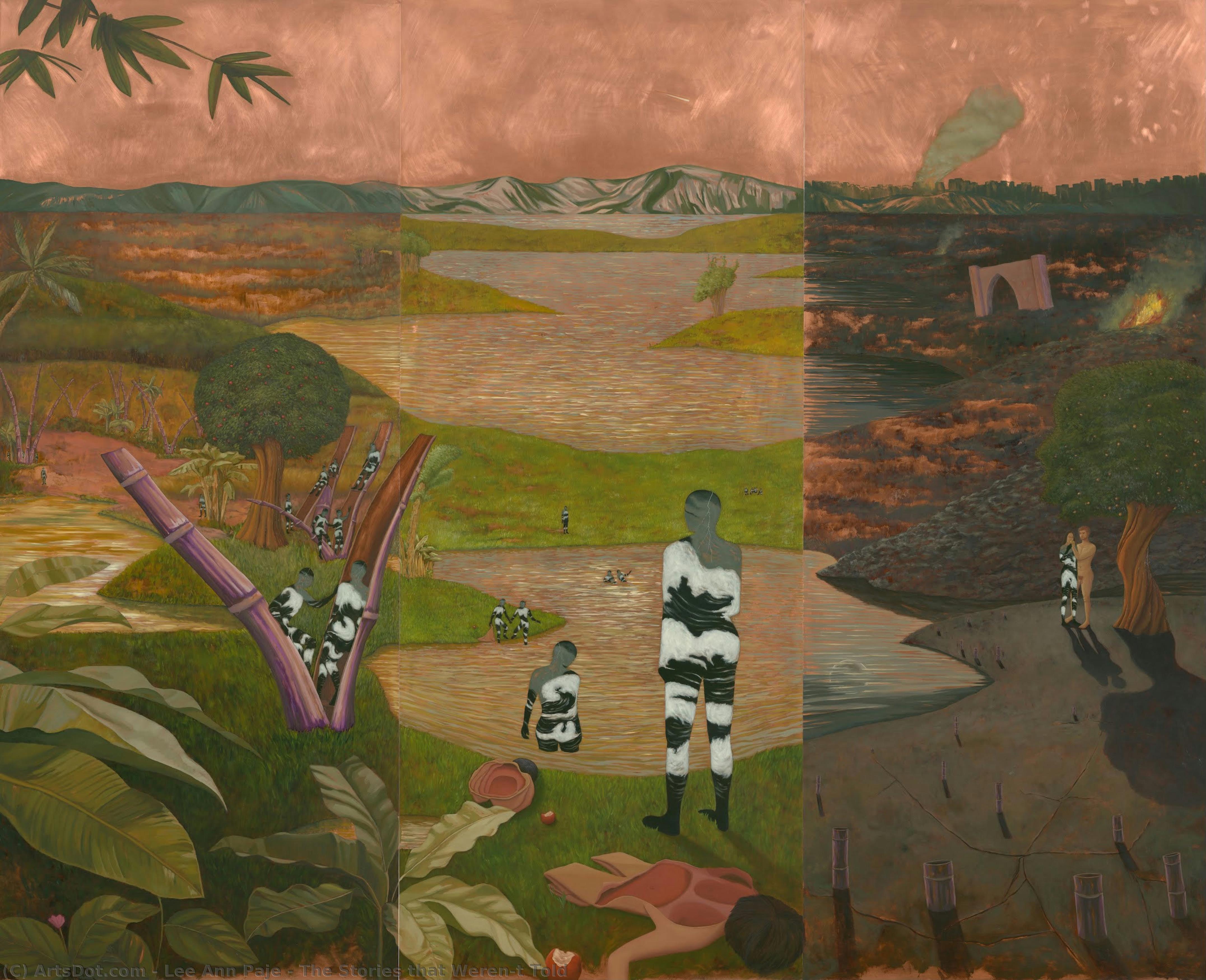
The Stories that Weren’t Told
 Oil On Copper
 2019
2019- Contemporary
 243.0 x 300.0 cm
 Queensland Art Gallery | Gallery of Modern Art
 Read More
Giclée / Art Print
Museum-quality giclée or canvas print with fast production and flexible finish options. ( Buy Hand Made Painting Buy Image)




P118B $10

P118H $10

P118W $10

P438Z $10

P508JH $12

P508YH $12

P805H $10

P805Z $10

P919BZ $10

P919G $10

P919XJ $10

P959ZH $10

P968JZ $12

W106C $8

W218G $10

W218JH $8

W218Y $10

W307PJ $10

W316G $10

W316PJ $8

W316Y $10

W398PJ $8

W4111J $10

W500HY $15

W500JH $15

W692G $12

W849H $8

W940BG $15

W953PJ $8




Pick from our preset sizes that match the artwork's original proportions.

You may enter your own dimensions to fit a specific frame or space. If your selected size does not match the original image's proportions, we will either crop the artwork or extend the image with a mirrored or solid-fill edge. A digital mockup will be sent for your approval before production begins.
Please note that the on-screen preview does not reflect the actual cropping or extension. Only the mockup will accurately show the final composition.
While custom sizes are available, we recommend selecting a dimension from the predefined list to preserve the original proportions.
Worldwide Delivery () in 2 weeks instead of standard 4/5 weeks. (24 August)

Free Worldwide Express Shipping

High-Quality Linen Canvas

Full Shipping Insurance

Customs Tax Refund Guarantee

True Color Matching Guarantee

60-Day Return Policy (Defects Only)

100% Money-Back Guarantee

Bulk Discount Offer
 Glass option is only available in size under 110 CM

The Stories that Weren’t Told
Giclée / Art Print
Reproduction Size
-


Total Price
$ 63
Collectible Description
A Tapestry of Myth and Modernity
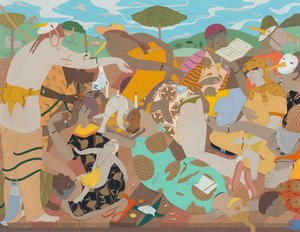
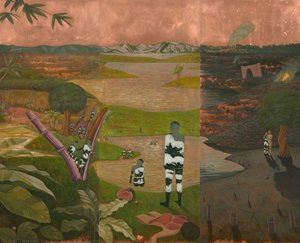
In the monumental oil painting "The Stories that Weren’t Told," artist Lee Ann Paje invites viewers into a profound, liminal space where ancient folklore meets contemporary social critique. This breathtaking work, executed on copper panels, serves as a visual dialogue between two powerful creation myths: the biblical account of Adam and Eve and the Filipino legend of Malakas at Maganda. Through her masterful command of composition, Paje weaves a narrative that transcends simple storytelling, instead offering a complex exploration of how identity is forged within the structures of myth. The painting presents a landscape where tropical lushness merges with temperate flora, creating a surreal, primordial environment centered around a reflective body of water—a mirror to the soul and the histories we carry.
The artist’s choice of medium is as significant as the subject matter itself. By painting on copper, Paje imbues her work with an inherent sense of permanence and luster. The metallic sheen of the copper interacts with the oil pigments to create a depth that traditional canvas cannot replicate, suggesting an endurance that mirrors the resilience of the marginalized voices she seeks to uplift. This technique allows the light to dance across the surface, much like the shifting tides of the "limitless seascapes" that inhabit her compositions. The work takes the structural form of a triptych and polyptych, drawing inspiration from traditional Catholic altarpieces, thereby reclaiming a sacred format to present a new, inclusive vision of paradise.
Symbolism and the Reimagined Self
At the heart of this masterpiece lies a radical reimagining of gender and existence. Paje utilizes the concept of "primordial beings"—human vessels that are unbound by traditional gender binaries—to challenge the rigid social, cultural, and historical stereotypes embedded in our foundational myths. While the legend of Malakas at Maganda suggests a split from a single bamboo stalk, implying a predefined roles for men and women, Paje’s figures exist in a state of fluid potential. The painting features a striking contrast between two distinct scenes: one where a community gathers by the water, engaged in the quiet intimacy of shared existence, and another featuring a solitary figure in a white suit navigating a dense, jungle-like environment.
This juxtaposition invites the collector and the observer to contemplate the tension between the collective and the individual, and between established tradition and personal liberation. The presence of glimpses of cityscapes amidst the primordial vegetation serves as a poignant reminder of our modern reality, suggesting that even within our most ancient archetypes, the pulse of contemporary civilization remains ever-present. For the interior designer or art enthusiast, this piece offers more than mere decoration; it provides a profound intellectual anchor for any space, sparking conversations about history, equity, and the beauty of the untold.
An Invitation to New Paradises
To encounter "The Stories that Weren’t Told" is to undergo an emotional journey through layers of memory and hope. Paje’s palette, characterized by bold colors and striking compositions, evokes a sense of wonder and mystery, drawing the eye into the depths of her painted lakes and thick foliage. Her work does not merely recount the past; it actively constructs a "new visual space" where those previously left in the shadows can re-envision their future. It is an art of reclamation—a way to look at the landscape of our shared humanity and see not just what was written, but what was purposefully omitted.
For those seeking to acquire a high-quality reproduction of this extraordinary work, it represents an opportunity to possess a piece of contemporary Philippine excellence. Whether placed in a curated gallery setting or as a centerpiece in a sophisticated residential interior, the painting’s scale and complexity command attention. It stands as a testament to the power of art to act as a vessel for change, reminding us that within every untold story lies the seed of a different, more inclusive paradise.
Related Artworks
Artist Biography
A Tapestry of Myth and Identity
Born in the vibrant landscape of Quezon City, Philippines, in 1980, Lee Ann Paje has emerged as a profound voice in contemporary art, weaving together the threads of personal narrative with the grand tapestries of ancient myth. Her artistic journey is rooted in academic excellence, having graduated magna cum laude from the University of the Philippines Diliman. This rigorous foundation in painting provided her with more than just technical prowess; it instilled a deep respect for the medium that would later allow her to push the boundaries of traditional surfaces. Paje does not merely paint; she constructs alternative realities where the boundaries between the historical and the contemporary, the human and the divine, begin to dissolve.
The essence of Paje’s work lies in its ability to confront the complexities of gender, identity, and social structures through a lens of myth-making. She possesses a unique talent for adapting imagery from fairy tales, Hollywood cinema, and folklore to critique the pervasive ideologies that shape our worldviews. By revisiting these familiar stories, she uncovers the hidden layers of inequality and seeks to re-envision them, offering paths for marginalized voices to find themselves within the narrative. Her art serves as a bridge between the rigidity of past traditions and the fluid, often challenging, nature of contemporary lifestyles.
Mastery of Medium and Materiality
What distinguishes Paje’s practice is her meticulous and experimental approach to materiality. While many artists remain tethered to canvas, Paje finds a poetic resonance in unconventional surfaces, most notably oil on copper. This choice of medium lends her works a luminous, almost ethereal quality, where the metallic sheen interacts with bold colors to create a sense of depth and permanence. Her versatility extends far beyond the panel; she is equally adept at working with wood, resin, paper, and even video, treating each material as a deliberate participant in her storytelling.
Her sculptures—often fold-out forms made of wood or paper—defy conventional expectations of how surface and form should meld. This seamless integration of texture and shape mirrors the themes of her work: the blurring of boundaries between the self and the collective, and the intersection of the physical and the symbolic. Whether through a large-scale installation or an intimate print, there is a consistent, painstaking attention to detail that invites the viewer into a state of deep contemplation, making every piece feel like a rediscovered relic from a lost civilization.
Global Recognition and Artistic Legacy
The trajectory of Lee Ann Paje’s career is marked by significant milestones that have brought her Filipino perspective to the global stage. Her talent was notably recognized in 2018 when she secured both the Grand Prize and the People’s Choice Award at the prestigious Don Papa Rum Art Competition. Such accolades, alongside her participation in international residencies like Art Omi in New York and LIA in Leipzig, Germany, have solidified her standing within the international art community. Her work has been featured in prominent venues such as Art Taipei and the 10th Asia Pacific Triennial of Contemporary Art (APT10) at QAGOMA, Australia.
As she continues to evolve, Paje’s significance lies in her role as a cultural interlocutor. She does not simply document the present; she actively participates in the creation of new myths that can accommodate the diverse identities of our time. Her ability to synthesize Filipino creation stories with Judeo-Christian motifs into hybrid, visionary landscapes ensures that her work remains both deeply personal and universally resonant. Through her art, the stories that were once left untold are given a vibrant, indelible form, ensuring that the struggle for equality and the celebration of individuality are etched into the very fabric of contemporary visual history.
lee ann paje
1980 - , Philippines
Quick Facts
- Artistic Movement Or Style: Feminist art
- Date Of Birth: 1980
- Full Name: Lee Ann Paje
- Nationality: Filipino
- Notable Artworks:
- Somewhere, someday when we are the sea
- Колегіум Святенни в Оксфорді
- Place Of Birth: Quezon City, Philippines
Related Articles

The Enduring Legacy of Oil on Canvas: Technique, History & Aesthetic Impact
Explore the rich history & techniques of oil painting – from Renaissance masters to Impressionism. Discover pigments, layering methods, and why this timeless medium endures. Expert insights for artists & art enthusiasts.
The Luminous Legacy of Oil on Copper: Unveiling the Rare Medium of Renaissance Brilliance
Discover the breathtaking brilliance of oil on copper. Explore how this rare Renaissance medium creates unmatched luminosity and depth, perfect for collectors seeking timeless elegance and museum-quality mastery in their home decor.

Oil on Canvas: A Historical & Technical Exploration of a Timeless Artistic Medium
Explore the rich history & enduring techniques of oil painting on canvas. Discover the science behind its longevity, conservation practices, and contemporary relevance. Expert insights for art enthusiasts.

The Enduring Power of Painting: A Historical & Contemporary Exploration of Form and Emotion
Explore the rich history & enduring techniques of oil painting with ArtsDot. Discover masterpieces, learn about art collecting, and find authentic handmade reproductions crafted by skilled artists.

The Enduring Legacy of Oil on Canvas: Technique, History & Contemporary Practice
Explore the rich history & enduring techniques of oil painting on canvas. Discover the science behind its longevity, conservation practices, and contemporary relevance. Expert insights for art enthusiasts.