 Preview
 Send
Send Share
Share
 Details

 Download
 Similars
 X-Ray
X-Ray Diaporama
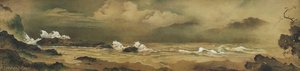
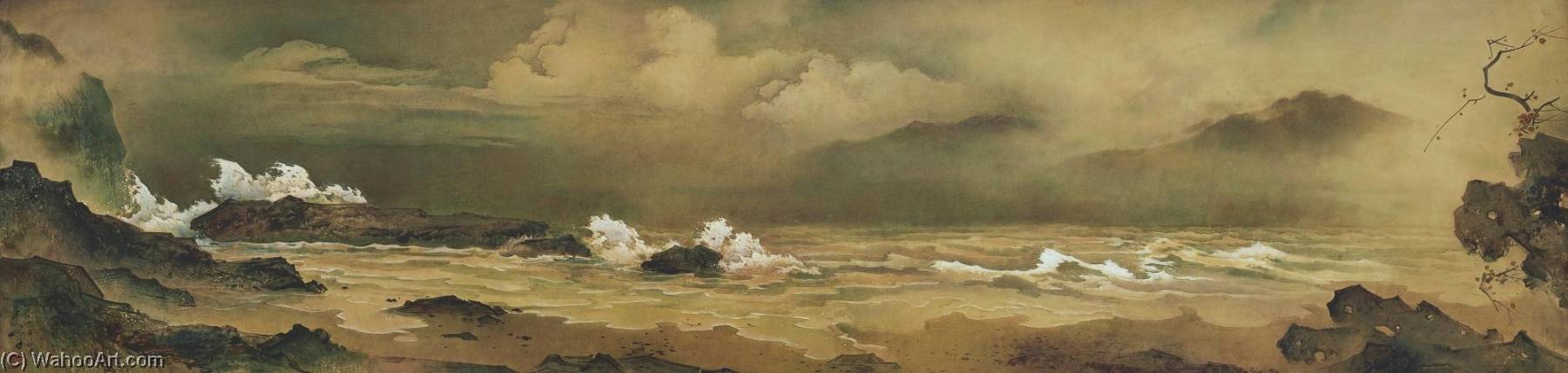
Laut dengan Deburan Ombaknya (Breaking the Waves)
 Contemporary Realism
 82.0 x 320.0 cm
 Read More
Giclée / Art Print
Museum-quality giclée or canvas print with fast production and flexible finish options. ( Buy Hand Made Painting Buy Image)




































Pick from our preset sizes that match the artwork's original proportions.

You may enter your own dimensions to fit a specific frame or space. If your selected size does not match the original image's proportions, we will either crop the artwork or extend the image with a mirrored or solid-fill edge. A digital mockup will be sent for your approval before production begins.
Please note that the on-screen preview does not reflect the actual cropping or extension. Only the mockup will accurately show the final composition.
While custom sizes are available, we recommend selecting a dimension from the predefined list to preserve the original proportions.
Worldwide Delivery () in 2 weeks instead of standard 4/5 weeks. (27 August)

Free Worldwide Express Shipping

High-Quality Linen Canvas

Full Shipping Insurance

Customs Tax Refund Guarantee

True Color Matching Guarantee

60-Day Return Policy (Defects Only)

100% Money-Back Guarantee

Bulk Discount Offer
 Glass option is only available in size under 110 CM

Laut dengan Deburan Ombaknya (Breaking the Waves)
Giclée / Art Print
Reproduction Size
-


Total Price
$ 63
Related Artworks

Artist Biography
Lee Man Fong: A Pioneer of Indonesian Art
Born in Guangzhou, China, in 1913, Lee Man Fong’s artistic journey was one of remarkable transformation and ultimately, a profound contribution to the development of art in Indonesia. His early life, marked by hardship following his father's death, instilled within him a resilience and a keen observation of human experience – qualities that would profoundly shape his distinctive style. Initially working as a newspaper sketch artist, Lee’s talent quickly garnered attention, leading to opportunities that propelled him beyond the confines of his native China.
Moving to Singapore in 1930 and subsequently settling in Jakarta, Indonesia, he found himself immersed in a vibrant cultural landscape undergoing significant change. This period witnessed a burgeoning artistic community grappling with questions of identity – particularly for Chinese artists navigating a new environment. Influenced by the nationalist Persagi group and the Indische-Holland kunstkring, Lee began to experiment with blending traditional Chinese brushwork techniques with Western visual conventions, laying the groundwork for what would become known as the Nanyang style.
The Nanyang Style and Early Works
Lee Man Fong’s artistic approach was characterized by a remarkable sensitivity to light, color, and atmosphere. He eschewed the academic realism prevalent in many European art movements, instead favoring a looser, more expressive style that captured the essence of Southeast Asia – its lush landscapes, vibrant wildlife, and the everyday lives of its people. His early works often depicted scenes of rural life, capturing the dignity and simplicity of peasant farmers, fishermen, and women engaged in traditional activities. The influence of Chinese landscape painting is evident in his compositions, particularly in the use of atmospheric perspective and the depiction of rolling hills and waterways.
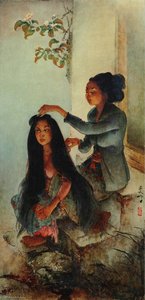
Notable amongst these early works are paintings like “Laut dengan Deburan Ombaknya” (Breaking the Waves), a dramatic seascape that showcases his mastery of capturing the power and beauty of the ocean. The loose brushstrokes, evocative color palette, and dynamic composition convey a sense of movement and energy, reflecting the spirit of the Indonesian coast. Similarly, "Mencari Kutu" offers a poignant glimpse into daily life, portraying two women in a quiet moment of intimacy – a testament to Lee’s ability to find beauty and significance in the ordinary.
A Royal Patronage and Artistic Evolution
Lee Man Fong's artistic reputation steadily grew throughout the 1950s and 60s, culminating in a pivotal moment when he was appointed as the official painter for the Indonesian presidential palace in 1961. This prestigious appointment provided him with unprecedented access to resources and opportunities, allowing him to further refine his style and explore new themes. His work during this period often featured portraits of Sukarno, Indonesia’s charismatic first president, reflecting a close relationship built on mutual respect and artistic appreciation.
During his time as the presidential painter, Lee continued to draw inspiration from the natural world, depicting scenes of Indonesian wildlife – horses, birds, and other animals – with remarkable detail and sensitivity. His paintings during this era are characterized by a serene quality, reflecting Sukarno’s preference for art that evoked feelings of peace and harmony. He skillfully blended elements of Chinese brushwork with Western techniques, creating a unique visual language that was distinctly his own.
Legacy and Influence
Lee Man Fong's legacy extends far beyond the canvases he created. He played a crucial role in establishing the Nanyang style as a distinct artistic movement in Indonesia, influencing generations of artists who followed. His work continues to be celebrated for its beauty, sensitivity, and profound connection to the Indonesian landscape and culture. His ability to capture the essence of everyday life, combined with his mastery of technique and his deep understanding of Chinese and Western art traditions, cemented his place as one of Indonesia’s most important artists.
Lee Man Fong passed away in Jakarta in 1988, leaving behind a rich artistic legacy that continues to inspire and captivate audiences today. His paintings serve as a powerful reminder of the transformative power of art and its ability to bridge cultures and connect people across time and space.
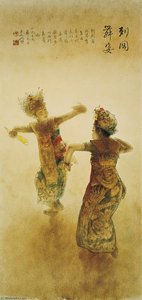
Quick Facts
- Artistic Movement Or Style: Nanyang School
- Artists Or Movements Influenced By This Artist: ['Indonesian art']
- Artists Who Influenced This Artist:
- Western artists
- Chinese brushwork
- Date Of Death: 1988-04-03
- Full Name: Lee Man Fong
- Nationality: Chinese/Indonesian
- Notable Artworks:
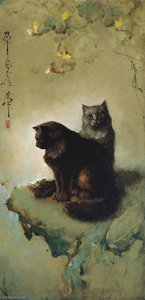
- Cats
- Laut dengan Ombaknya
- Mencari Kutu
- Place Of Birth: Guangzhou, China
Related Articles

Hokusai's Masterpieces: 25 Iconic Prints & Paintings for Art Lovers | ArtsDot
Journey through Katsushika Hokusai’s 25 most iconic artworks, including *The Great Wave*. Explore the ukiyo-e master's history, style & timeless Japanese woodblock prints. Find museum-quality reproductions for your home at ArtsDot.com.
Alfred East: Pioneering Plein Air & Evoking Atmospheric Landscapes
Explore the life & work of Alfred East, a pioneer of British plein air painting. Discover his techniques for capturing atmospheric landscapes, Barbizon influences, and lasting legacy. Learn more at ArtsDot.

Romantic Landscapes: 10 Masterpieces for Your Home | ArtsDot
Journey through 10 Romantic landscape masterpieces by Friedrich, Turner & Cole. Explore emotional art, sublime nature scenes & iconic 19th-century paintings. Find museum-quality reproductions for your home at ArtsDot.com – discover the full collection online!

Evocations of Place: A Historical Journey Through Landscape Art
Explore the rich history of landscape art with ArtsDot. Discover renowned artists, movements like Impressionism & Romanticism, and expert guidance for collecting timeless pieces. Find your perfect serene escape today!
Serenity on Canvas: A Guide to the Timeless Beauty of Japanese Landscape Painting
Discover the serene beauty of Japanese landscape painting. From Hokusai's iconic woodblock prints to meditative sumi-e ink washes, explore a visual journey through the 'floating world' and learn how to bring this timeless Zen aesthetic into your modern home decor.