 Send
Send Share
Share
 Details

 Download
 Similars
 Diaporama
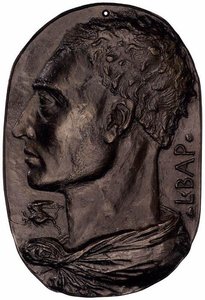
Self-Portrait


 Read More
Giclée / Art Print
Museum-quality giclée or canvas print with fast production and flexible finish options. ( Buy Hand Made Painting Buy Image)




































Pick from our preset sizes that match the artwork's original proportions.

You may enter your own dimensions to fit a specific frame or space. If your selected size does not match the original image's proportions, we will either crop the artwork or extend the image with a mirrored or solid-fill edge. A digital mockup will be sent for your approval before production begins.
Please note that the on-screen preview does not reflect the actual cropping or extension. Only the mockup will accurately show the final composition.
While custom sizes are available, we recommend selecting a dimension from the predefined list to preserve the original proportions.
Worldwide Delivery () in 2 weeks instead of standard 4/5 weeks. (18 August)

Free Worldwide Express Shipping

High-Quality Linen Canvas

Full Shipping Insurance

Customs Tax Refund Guarantee

True Color Matching Guarantee

60-Day Return Policy (Defects Only)

100% Money-Back Guarantee

Bulk Discount Offer
 Glass option is only available in size under 110 CM

Self-Portrait
Giclée / Art Print
Reproduction Size
-


Total Price
$ 63
Collectible Description
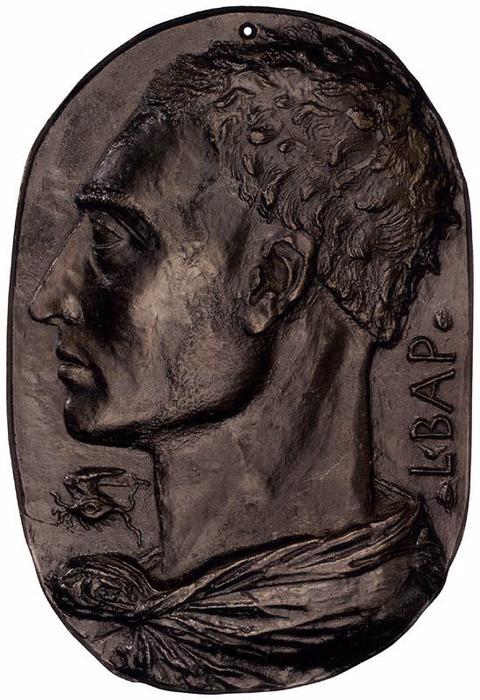
Leon Battista Alberti’s Self-Portrait: A Renaissance Universal
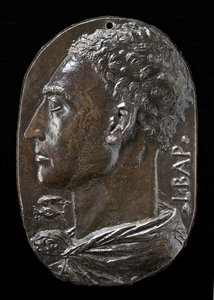
The bronze medal depicting Leon Battista Alberti's self-portrait is more than just a portrait; it’s a concentrated distillation of the humanist ideal, a testament to a life dedicated to the pursuit of knowledge and artistic mastery. Crafted in 1435, this remarkable piece offers a rare glimpse into the mind of one of the most influential figures of the Italian Renaissance – a man who seamlessly blended architecture, philosophy, mathematics, and art. The image itself, rendered with astonishing detail within an oval frame, immediately draws the viewer in, inviting contemplation on the subject’s dignity and intellectual prowess. The muted tones of the bronze, subtly shifting between browns and greys due to the patina of age, speak volumes about the passage of time and the enduring quality of Alberti's legacy.
Composition and Technique: Renaissance Realism Embodied
The composition is strikingly direct. Alberti’s profile dominates the central space, presented with a realism that was revolutionary for its time. The careful modeling of his face – the subtle curve of his cheekbones, the precise rendering of his hair, and the thoughtful expression in his eyes – speaks to Alberti's meticulous approach to art. The artist masterfully utilizes light and shadow to create a sense of three-dimensionality, lending depth and volume to the portrait. Note the fine lines meticulously etched into the bronze, defining every feature with remarkable precision; this technique reflects the Renaissance emphasis on observation and anatomical accuracy. The inclusion of a small bird perched on a branch below adds an intriguing layer of symbolism – a motif frequently associated with wisdom, freedom, or even divine inspiration, concepts deeply intertwined with Alberti’s humanist philosophy.
Symbolism and Context: A Portrait of the Renaissance Ideal
The self-portrait is profoundly symbolic. Alberti wasn't simply depicting his likeness; he was presenting himself as a representation of the “universal man” – a concept central to Renaissance thought. The bird, often interpreted as a symbol of hope and spiritual aspiration, reinforces this idea. Furthermore, the portrait’s placement within an oval frame—a format popular in early Renaissance portraiture—suggests a deliberate attempt to elevate Alberti's status, aligning him with classical ideals of beauty and harmony. Considering his background – born out of wedlock and driven by a relentless desire for intellectual achievement – this self-portrait can be viewed as a powerful assertion of identity and a testament to the transformative potential of human endeavor. The date, 1435, places it firmly within the burgeoning artistic and intellectual climate of Florence, a period marked by unprecedented creativity and a renewed interest in classical antiquity.
Beyond the Bronze: Alberti’s Legacy
Leon Battista Alberti's influence extended far beyond his architectural designs. His treatise *De re aedificatoria* (On Architecture) remains a foundational text for Western architecture, establishing principles of proportion, harmony, and perspective that continue to inform design today. His work on painting, particularly his analysis of linear perspective, revolutionized the way artists represented space and depth. The bronze medal itself serves as a tangible reminder of Alberti’s multifaceted genius – a miniature embodiment of a life dedicated to the pursuit of knowledge and artistic excellence. ArtsDot's hand-painted reproductions capture not only the visual beauty of this remarkable portrait but also the profound intellectual and cultural significance of its subject, offering a unique opportunity to connect with one of the Renaissance’s most extraordinary figures.
Related Artworks
Artist Biography
A Renaissance Universal: The Life and Legacy of Leon Battista Alberti
Born in Genoa in 1404, a city brimming with mercantile energy and intellectual ferment, Leon Battista Alberti emerged as one of the most remarkable figures of the Italian Renaissance. His life was a testament to the humanist ideal – a striving for excellence across a breathtaking spectrum of disciplines. Unlike artists solely dedicated to brush or chisel, Alberti embodied the “universal man,” seamlessly blending artistic creation with scholarly inquiry, architectural innovation, and even cryptographic pursuits. The circumstances of his birth were somewhat unconventional; he was born out of wedlock to Lorenzo di Benedetto Alberti, a Florentine exiled from his home city, and a Bolognese widow. This early experience perhaps fostered in him a sense of independence and a drive to prove himself through intellectual achievement. His formative years unfolded amidst the rigorous academic environments of Padua and Bologna, where he initially pursued legal studies at his father’s behest. However, it was mathematics that truly captured his imagination, offering a welcome sanctuary from the demands of law and laying the groundwork for his later architectural theories. Even in these early days, Alberti demonstrated literary talent, composing his first comedy, *Philodoxius*, around 1424 – a foreshadowing of his future contributions to humanist thought.The Architect of Humanism: Shaping Renaissance Space
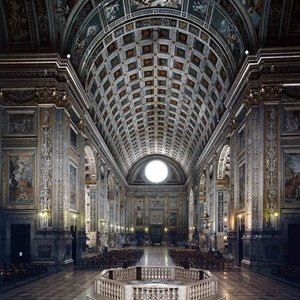
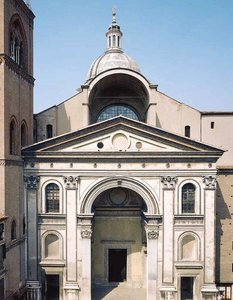
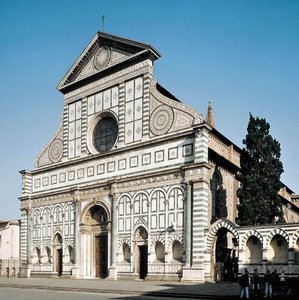
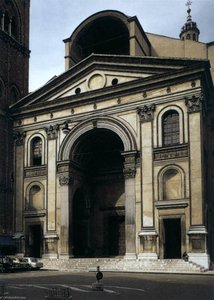
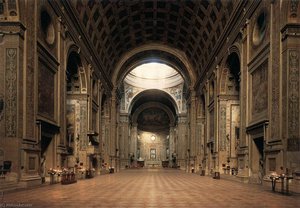
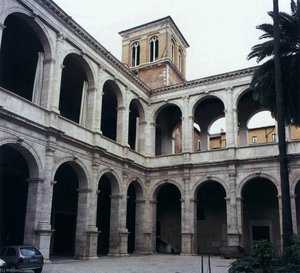
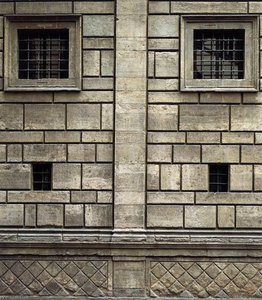
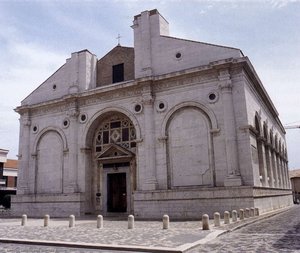
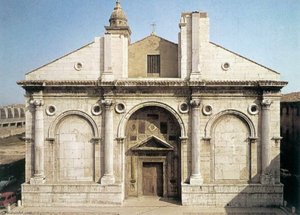
Alberti’s relocation to Rome in 1431 marked a pivotal moment in his career. Entering the service of the papal court and taking holy orders provided him with access to the magnificent ruins of antiquity, igniting a lifelong passion for classical architecture. He didn't merely admire these remnants; he meticulously studied them, seeking to understand the principles that underpinned their enduring beauty and structural integrity. This dedication culminated in his magnum opus, *De re aedificatoria* (On the Art of Building), completed around 1452 but published posthumously in 1485. This treatise wasn’t simply a technical manual; it was a philosophical exploration of architecture as an art form deeply intertwined with human values. Drawing heavily from the writings of Vitruvius, Alberti infused classical principles with his own observations and innovations, emphasizing proportion, symmetry, and harmony as essential elements of design. His architectural projects brought these theories to life. The facade of the Palazzo Rucellai in Florence, begun in 1446, stands as a prime example of his ability to translate classical ideals into a contemporary urban context. Similarly, the Tempio Malatestiano in Rimini and his designs for churches in Mantua – San Sebastiano and the Basilica of Sant'Andrea – showcase his mastery of spatial organization and decorative detail. His work on Santa Maria Novella in Florence demonstrated a remarkable sensitivity to existing structures, seamlessly integrating classical elements into an already established architectural framework.Beyond Buildings: A Polymath’s Diverse Pursuits
To define Alberti solely as an architect would be a profound disservice to the breadth of his intellectual curiosity. He was a true polymath, excelling in fields far removed from the realm of building design. His contributions to art theory were revolutionary, particularly his treatise *De pittura* (On Painting), written around 1435 and later published. This work codified the principles of linear perspective, providing artists with a mathematical framework for creating realistic depictions of space – a technique that fundamentally altered the course of Western painting. Alberti wasn’t merely theorizing; he understood the practical implications of his ideas, offering guidance on composition, color theory, and the representation of human anatomy. His intellectual prowess extended to mathematics and cryptography, where he pioneered frequency analysis—a groundbreaking method for deciphering codes. He even delved into linguistics, philosophy, and cosmology, authoring *De componendis cifris* (On Composing Ciphers) and collaborating with Paolo Toscanelli on astronomical studies. Furthermore, his treatise *De statua* (On Sculpture) explored the principles of sculptural form, demonstrating a holistic understanding of the visual arts.A Lasting Influence: Alberti’s Enduring Legacy
Leon Battista Alberti died in Rome in 1472, leaving behind a legacy that continues to resonate today. His synthesis of classical knowledge with Renaissance humanism profoundly shaped the intellectual and artistic landscape of his era and beyond. *De re aedificatoria* became a cornerstone of architectural education for centuries, influencing generations of architects across Europe. As both a theorist and practitioner, Alberti championed reason, proportion, and harmony in art and architecture, embodying the ideals of the Renaissance “universal man.” His work on perspective fundamentally changed artistic practice, enabling artists to create more realistic and convincing depictions of space. Giorgio Vasari, in his *Lives of the Most Excellent Painters, Sculptors, and Architects*, recognized Alberti’s immense importance, solidifying his place as a pivotal figure in art history. Alberti's influence isn’t confined to specific buildings or treatises; it lies in his holistic approach to knowledge and his unwavering belief in the power of human reason to understand and shape the world around us. He remains an inspiration, reminding us that true creativity flourishes at the intersection of diverse disciplines. His work continues to be studied, admired, and emulated by artists, architects, and scholars alike—a testament to his enduring genius.- Notable Works: Palazzo Rucellai, Tempio Malatestiano, Basilica di Sant'Andrea
- Key Treatises: *De re aedificatoria*, *De pittura*, *De statua*
- Influences: Classical architecture (Vitruvius), Renaissance Humanism
- Legacy: Foundation of Renaissance architectural theory, revolutionizing perspective in art.
Leon Battista Alberti
1404 - 1472 , Italy
Quick Facts
- Artistic Movement Or Style: Renaissance architecture
- Artists Or Movements Influenced By This Artist: ['Renaissance architects']
- Artists Who Influenced This Artist: ['Vitruvius']
- Date Of Birth: February 14, 1404
- Date Of Death: April 25, 1472
- Full Name: Leon Battista Alberti
- Nationality: Italian
- Notable Artworks:
- Palazzo Rucellai
- Tempio Malatestiano
- Sant'Andrea Interior
- Exterior view
- Apse of the Tempietto
- Place Of Birth: Genoa, Italy
Related Articles

The Enduring Legacy of Bronze: A Historical & Artistic Exploration for the Collector
Explore the rich history & enduring appeal of bronze sculpture with expert insights for collectors at ArtsDot. Learn about casting techniques, iconic artists, collecting tips & contemporary interpretations.

Bronze Age to Modern Masters: 10 Sculptures That Redefined Art | ArtsDot
Journey through art history with 10 legendary bronze sculptures – from Michelangelo's David to Rodin’s Thinker. Explore the stories, techniques & timeless beauty of these masterpieces. Find museum-quality reproductions & elevate your home decor on ArtsDot.com.
The Enduring Legacy of Bronze: History, Technique & Artistic Expression for the Collector
Explore the rich history & enduring appeal of bronze sculpture with expert insights for collectors at ArtsDot. Learn about casting techniques, iconic artists, and collecting tips.

The Enduring Legacy of Bronze Sculpture: Technique, Symbolism & Cultural Impact
Explore the rich history & enduring appeal of bronze sculpture with expert insights for collectors. Learn about casting techniques, iconic artists, collecting tips & contemporary interpretations at ArtsDot.
The Enduring Legacy of Bronze Sculpture: A Collector's Guide to Form & Cultural Significance
Explore the rich history & enduring appeal of bronze sculpture with expert insights for collectors at ArtsDot. Learn about casting techniques, iconic artists, and collecting tips to build a discerning art collection.