 Preview
 Send
Send Share
Share
 Details

 Download
 Similars
 X-Ray
X-Ray Diaporama
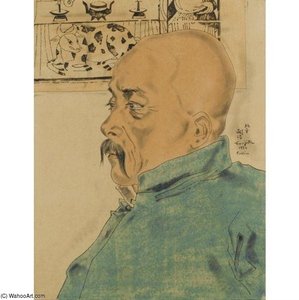
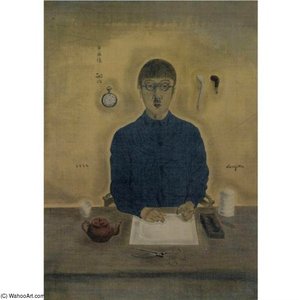
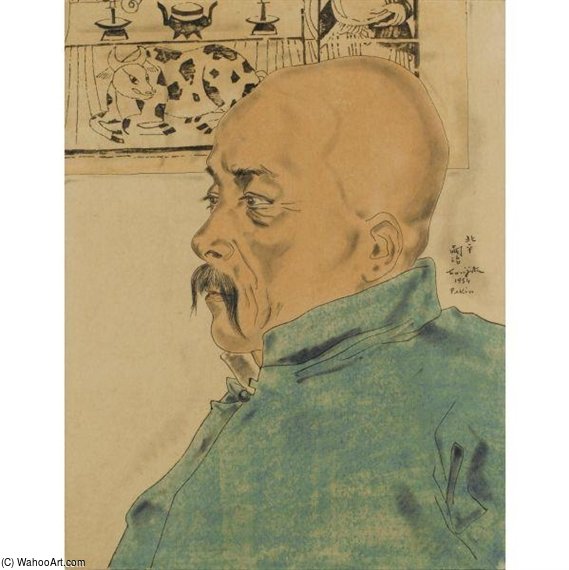
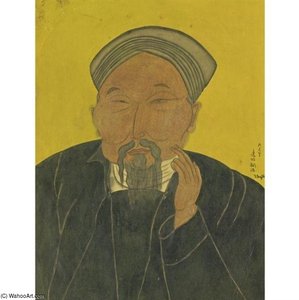
Portrait D'un Pékinois

 Read More
Hand Made Oil Reproduction
Hand-painted oil on canvas in your size and frame, made to order by our artists. ( Buy Print Buy Image)




P118B $10

P118H $10

P118W $10

P438Z $10

P508JH $12

P508YH $12

P805H $10

P805Z $10

P919BZ $10

P919G $10

P919XJ $10

P959ZH $10

P968JZ $12

W106C $8

W218G $10

W218JH $8

W218Y $10

W307PJ $10

W316G $10

W316PJ $8

W316Y $10

W398PJ $8

W4111J $10

W500HY $15

W500JH $15

W692G $12

W849H $8

W940BG $15

W953PJ $8




Pick from our preset sizes that match the artwork's original proportions.

You may enter your own dimensions to fit a specific frame or space. If your selected size does not match the original image's proportions, we will either crop the artwork or extend the painting with additional hand-painted elements. A digital mockup will be sent for your approval before production begins.
Please note that the on-screen preview does not reflect the actual cropping or extension. Only the mockup will accurately show the final composition.
While custom sizes are available, we recommend selecting a dimension from the predefined list to preserve the original proportions.
After order, ArtsDot.com team will email client for instructions and provide a mockup preview
Worldwide Delivery () in 3/4 weeks instead of standard 5 weeks. (27 August). No compromise on quality.

Free Worldwide Express Shipping

High-Quality Linen Canvas

Full Shipping Insurance

Customs Tax Refund Guarantee

True Color Matching Guarantee

60-Day Return Policy (Defects Only)

100% Money-Back Guarantee

Bulk Discount Offer
 Glass option is only available in size under 110 CM

Portrait D'un Pékinois
Reproduction Medium
Reproduction Size
-


Total Price
$ 263
Artwork Description
A Portrait Steeped in Tradition and Quiet Contemplation
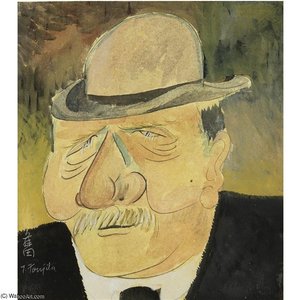
The artwork, titled “Portrait D’un Pékinois,” presents a captivating glimpse into the artistic sensibilities of Léonard Tsuguharu Foujita—a figure who brilliantly merged Eastern aesthetics with Western modernism. Executed sometime between 1886 and 1968 in Tokyo, Japan, this piece transcends mere representation; it embodies a profound meditation on age, wisdom, and cultural heritage. The portrait depicts an elderly man seated calmly against a richly textured backdrop brimming with symbolic objects—a ceramic lion, teapots, and other decorative elements—creating an immersive experience for the viewer.Style and Technique: Bridging East Meets West
Foujita’s distinctive style is immediately recognizable as a masterful fusion of Chinese ink wash painting traditions and subtle watercolor influences. Unlike Western portraiture focused on meticulous realism, Foujita prioritizes expressive brushstrokes and washes that convey emotion rather than precise detail. Visible lines delineate the man's face and outline the intricate background composition, demonstrating an intentional departure from photographic accuracy. The artist employs layered textures achieved through dry brushwork combined with wet washes—a technique honed during his formative years studying Japanese art—resulting in a luminous surface that captures the essence of its subject. This deliberate choice reflects Foujita’s desire to honor both Eastern artistic heritage and the dynamism of European experimentation.Historical Context: The Parisian Avant-Garde Influenced by Japan
Foujita's artistic trajectory unfolded against the backdrop of Paris during the Belle Époque, a period characterized by fervent intellectual curiosity and artistic innovation. He absorbed influences from Impressionism and Symbolism, adapting them to his own unique vision—one deeply rooted in Japanese aesthetics. The inclusion of elements like the ceramic lion speaks to the enduring significance of Chinese symbolism – representing courage and prosperity – within Japanese culture. This juxtaposition underscores Foujita’s role as a pioneer in establishing dialogue between Eastern and Western artistic traditions during a pivotal moment in art history.Symbolism: Layers of Meaning Beyond Appearance
The portrait itself is laden with symbolic resonance. The elderly man's bald head—a motif frequently employed in Buddhist iconography—suggests enlightenment or spiritual transcendence, mirroring Foujita’s own philosophical leanings. Similarly, the mustache embodies dignity and composure, reflecting the idealized image of wisdom and experience. Furthermore, the carefully arranged background objects serve as visual metaphors for longevity, harmony, and cultural continuity – themes central to Japanese artistic thought. Each element contributes to a narrative that invites contemplation on the passage of time and the pursuit of inner peace.Emotional Impact: Quiet Strength and Contemplative Beauty
Ultimately, “Portrait D’un Pékinois” resonates with an undeniable emotional depth. The diffused lighting casts soft shadows that accentuate the contours of the face, fostering a sense of intimacy and vulnerability. Yet, despite this subtle portrayal of emotion, the artwork exudes quiet strength—a testament to Foujita's ability to capture profound beauty within understated simplicity. It’s a piece designed not merely to depict a person but to evoke an experience—one that lingers in the viewer’s mind long after encountering it. This enduring quality speaks volumes about Foujita’s artistic genius and his unwavering commitment to conveying timeless themes of contemplation and grace.Related Artworks
Artist Biography
A Fusion of Worlds: The Life and Art of Léonard Tsuguharu Foujita
Léonard Tsuguharu Foujita, a name that resonates with the vibrant energy of early 20th-century Paris and the delicate grace of Japanese artistic tradition, was an artist who defied easy categorization. Born in Tokyo in 1886, his journey took him from the rigorous training of traditional Japanese painting to the heart of the European avant-garde, where he forged a unique style that blended Eastern sensibilities with Western modernism. Foujita wasn’t merely a painter; he was a cultural bridge, a flamboyant personality, and a master of capturing both beauty and melancholy on canvas.
His early life provided a solid foundation for his artistic pursuits. His father, Fujita Tsuguakira, served as an army medical director, instilling in young Léonard a sense of discipline alongside an appreciation for aesthetics. Even as a primary school student, he demonstrated a keen interest in painting, creating watercolors that hinted at the talent to come. He formally studied yōga – Western-style painting – at the Tokyo National University of Fine Arts and Music, benefiting from the guidance of Seiki Kuroda, a pivotal figure in Japanese art education. Simultaneously, he immersed himself in nihonga, traditional Japanese painting, absorbing techniques that would later become integral to his signature style. These formative years instilled in him a dual perspective, an ability to see the world through both Eastern and Western eyes.
Parisian Rhapsody: A Life Among Artists
In 1913, Foujita embarked on a transformative journey, relocating to Paris – a city then pulsating with artistic innovation. He sought immersion in the European art scene, eager to contribute his voice to the burgeoning modernist movement. It wasn’t long before he became an integral part of the Montparnasse community, befriending some of the most influential artists of the era: Amedeo Modigliani, Chaim Soutine, Fernand Léger, Juan Gris, Pablo Picasso, and Henri Matisse all entered his circle. This vibrant exchange of ideas profoundly shaped his artistic development.
Foujita’s early Parisian works reflected this synthesis of influences. He masterfully combined Japanese ink techniques – particularly the delicate washes and precise lines – with Western painting styles. Portraits, nudes, and still lifes became his favored subjects, each imbued with a distinctive blend of sensuality and restraint. The 1922 portrait of Kiki de Montparnasse, a celebrated muse of the era, catapulted him to recognition and commercial success. This work exemplified his ability to capture not only physical beauty but also an underlying sense of vulnerability and introspection. Perhaps most famously, cats began to appear frequently in his art, becoming a recurring motif that symbolized grace, tranquility, and companionship. His book of cat etchings, published in 1930, garnered international acclaim, solidifying his reputation as the “cat painter” of Paris.
Wartime Shadows and Spiritual Awakening
The early 1930s saw Foujita embark on extensive travels through South and North America, exhibiting his work to enthusiastic audiences. However, his return to Japan in 1933 marked a turning point – one shadowed by the rising tide of nationalism and militarism. He became involved in creating propaganda art for the Japanese military during World War II, a period that remains controversial due to its association with wartime ideology. This decision cast a long shadow over his legacy, prompting criticism both during and after the war.
Following Japan’s defeat, Foujita faced difficulties reintegrating into the Japanese art scene. The post-war climate was unforgiving, and he struggled to find acceptance. Seeking a more welcoming environment, he returned to France in 1950. Yet, it wasn't until a profound spiritual awakening in 1959 that his artistic path found renewed purpose. A visit to the Abbey of Saint-Remi Basilica in Reims led to his conversion to Roman Catholicism, inspiring him to design and build the Foujita Chapel within the basilica’s grounds. This chapel became his magnum opus – a breathtaking space adorned with frescoes and stained glass windows that reflected his deeply held religious beliefs.
A Lasting Legacy: Bridging East and West
Léonard Tsuguharu Foujita continued to paint and create art until his death in Zürich, Switzerland, in 1968. His legacy is complex, encompassing both artistic innovation and the ethical complexities of wartime involvement. He remains a significant figure in the School of Paris, celebrated for his unique style that seamlessly blended Japanese ink techniques with European modernism. His exploration of themes such as beauty, melancholy, spirituality, and cultural identity continues to resonate with audiences today.
Foujita’s art serves as a powerful reminder of the interconnectedness of cultures and the enduring power of artistic expression to transcend boundaries. He was an artist who dared to be different, embracing both his Japanese heritage and his adopted European identity. His work stands as a testament to the transformative potential of cultural exchange and the enduring allure of a truly original vision.
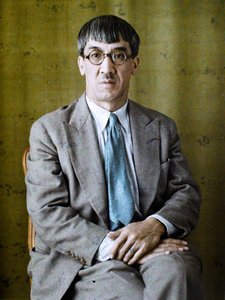
Léonard Tsuguharu Foujita
1886 - 1968 , Japan
Quick Facts
- Artistic Movement Or Style: School of Paris, Expressionism
- Artists Or Movements Influenced By This Artist: School of Paris
- Artists Who Influenced This Artist:
- Seiki Kuroda
- Amedeo Modigliani
- Fernand Léger
- Date Of Birth: November 27, 1886
- Date Of Death: January 29, 1968
- Full Name: Léonard Tsuguharu Foujita
- Nationality: Japanese, French
- Notable Artworks:
- Kiki de Montparnasse
- Le Chat
- Le PÉtit pekinois
- Place Of Birth: Tokyo, Japan
Related Articles
Ephemeral Expressions: Exploring the Nuances of Ink on Paper Through History & Contemporary Art
Explore the captivating world of ink wash painting – from its ancient origins to contemporary masters. Discover techniques, symbolism & conservation insights with ArtsDot.com.
The Beauty of Ink Wash: Discover Serene & Soulful Art for Your Home
Discover the tranquil beauty of ink wash painting. Explore how Sumi-e and monochrome landscapes bring Zen-inspired serenity and soulful elegance to your home decor through expert curation and timeless East Asian aesthetics.
Xie Zhiliu: A Legacy of Ink Wash Painting & Modern Chinese Literati Tradition
Explore the legacy of Xie Zhiliu, a master of Chinese ink wash painting & prominent figure in modern art. Discover his techniques, influences, and contributions to literati tradition. A guide for discerning collectors.
Serenity on Canvas: A Guide to the Timeless Beauty of Japanese Landscape Painting
Discover the serene beauty of Japanese landscape painting. From Hokusai's iconic woodblock prints to meditative sumi-e ink washes, explore a visual journey through the 'floating world' and learn how to bring this timeless Zen aesthetic into your modern home decor.
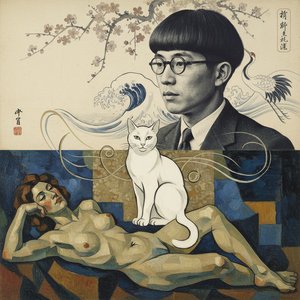
Léonard Foujita: A Poetic Synthesis of Japanese Sensibility & European Modernism
Discover the captivating world of Léonard Foujita, a master bridging Japanese aesthetics & European Modernism. Explore his signature style, diverse works, and enduring legacy – essential reading for discerning art collectors.