Showing 7 artworks with Paul Sérusier and with Symbolism
-
Paul Sérusier
-
Symbolism
Not available for this selection
- Espresso
- Driftwood
- Sap Green
- Putty
Not available for this selection
- Symbolism
- Landscape Painting
- Paul Sérusier
- Abstract Art
- Impressionism
- Color Palette
- Nabis Movement
- Cloisonnism
- French Art
- Synthetism
- French Painter
- Gabriela Zapolska
- Modern Art
- Post-Impressionism
- Breton Art
- Tranquility
- Nabis
- Pont-Aven
- Brittany Folklore
- Reading
- Color Field
- Fine Art Reproduction
- 1892
- Painting
- Green
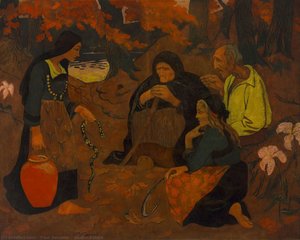
Explore Paul Sérusier's groundbreaking Synthetism style and influence on Les Nabis with 'Snake-Eaters,' a Breton legend captured in evocative browns, reds & blacks by Gabriela Zapolska.
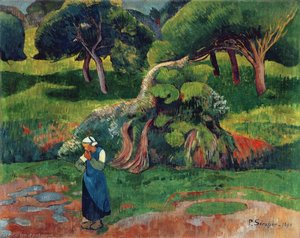
Admire Paul Serusier's 'Landscape at Le Pouldu,' a mesmerizing Post-Impressionist masterpiece capturing Breton tranquility with vibrant colors and symbolic detail. Own a timeless piece of art history.
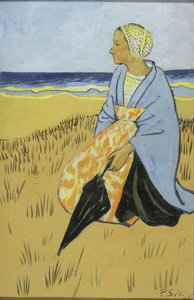
Paul Sérusier's Breton Woman Sitting at the Seashore captures the spirit of Symbolism, reflecting Breton traditions through simplified forms and earthy colors. Inspired by Gauguin and Gabriela Zapolska's collection, it exemplifies his innovative approach to art.
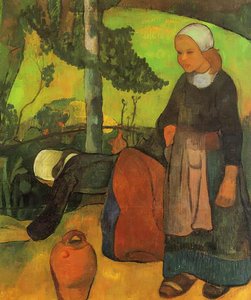
Paul Serusier's 'The Washerwomen,' painted in 1891, is a seminal work of Post-Impressionism and a cornerstone of the Nabi movement. Featuring two women tending to laundry amidst vibrant yellow flowers against a rocky backdrop, it exemplifies Serusier’s innovative approach to color and form—a bold departure from traditional realism.
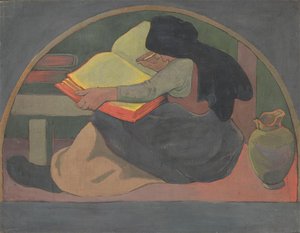
Paul Sérusier's 'The Grammar' (1892) is an iconic Cloisonnism painting, pioneering abstract art & inspiring the Nabis movement. Explore its symbolism and artistic innovation.
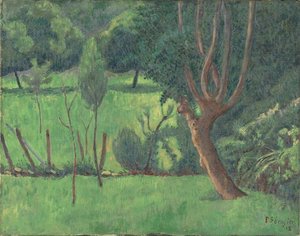
Discover Paul Sérusier's 'Landscape,' a vibrant 1912 painting of a serene green field and trees, showcasing the Nabis artist’s innovative use of color and inspired by nature's tranquility.
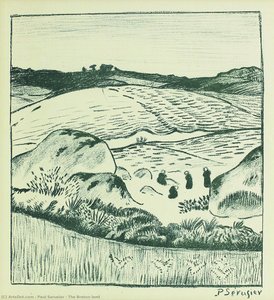
Explore Paul Sérusier's "The Breton Land," a seminal landscape painting embodying the spirit of Impressionism and the pioneering Nabis movement. Discover its evocative depiction of Pont-Aven and Sérusier’s innovative use of cloisonnism.