Showing 18 artworks out of 66 with Mannerist Style

-
Mannerist Style
Not available for this selection
- Black
- Espresso
- Phthalo Green
- Driftwood
- Quinacridone Magenta
- Putty
- Gray
- Rosy Brown
- White
- Clay
- Walnut
- Khaki
- Renaissance Art
- Mannerism
- Religious Iconography
- El Greco
- Fine Art Reproduction
- Oil Painting
- Dramatic Lighting
- Religious Art
- Renaissance
- Renaissance Painting
- Elongated Figures
- Byzantine Influence
- El Greco Painting
- Mannerist Art
- Italian Art
- Mannerist Painting
- Religious Painting
- Decorative Art
- Renaissance Influence
- Florence
- Dramatic Composition
- Mannerist Style
- Color Palette
- Classical Art
- Oil On Canvas
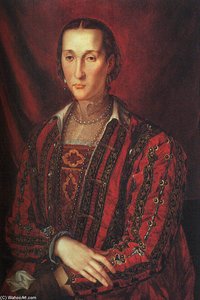
Admire Agnolo Bronzino's masterful portrait of Eleanora di Toledo – a stunning Renaissance masterpiece showcasing Mannerist elegance and meticulous detail. Explore the opulent attire and contemplative gaze of this noblewoman.
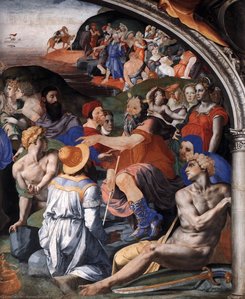
Agnolo Bronzino's monumental fresco portrays Moses leading the Israelites across the Red Sea, symbolizing faith and divine deliverance. Located in Palazzo Vecchio, Florence, this Mannerist masterpiece exemplifies refined elegance and meticulous artistry.
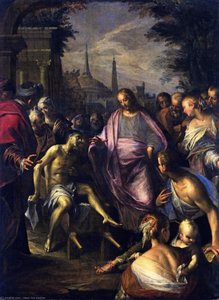
Admire Hans von Aachen's masterpiece – 'The Raising of the Widow’s Son of Niam,' a dramatic Mannerist painting depicting Jesus resurrecting a grieving widow’s son. Explore its rich symbolism and artistic brilliance.
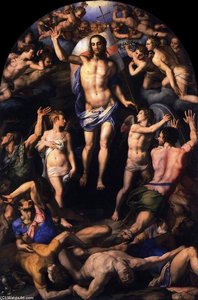
Agnolo Bronzino’s Resurrection embodies Mannerist elegance—a study in idealized beauty achieved through meticulous anatomical precision and ethereal sfumato. This Florentine masterpiece captures Christ's ascension amidst astonished mourners, showcasing Renaissance artistic mastery and inviting you to explore its timeless allure.
Domenico Beccafumi (1486-1551) was a Sienese painter known for his innovative Mannerist style—characterized by dramatic emotion, distorted figures, and opulent decorative detail—particularly in monumental frescoes like “Transit of the Virgin” and “Patriotism.” His early training instilled him with the traditions of Siena while pushing artistic boundaries.
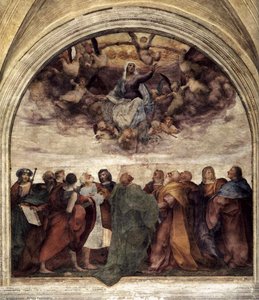
Experience the dramatic beauty of Rosso Fiorentino's 'Assumption of the Virgin,' a monumental fresco showcasing Mannerist innovation and emotional intensity. Explore its rich colors and captivating composition.
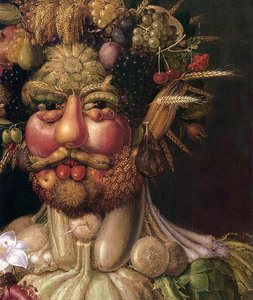
A masterful Mannerist portrait by Giuseppe Arcimboldo reimagines human form as an astonishing assemblage of fruits and vegetables—a vibrant testament to nature's artistry and a captivating glimpse into Renaissance imagination. Explore Vertumnus reproductions at ArtsDot.
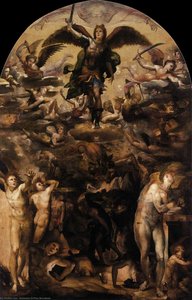
Michelangelo’s influence blended with Bosch's unsettling vision in Domenico Beccafumi’s Mannerist masterpiece, ‘Fall of the Rebel Angels,’ capturing a dramatic celestial conflict and exploring profound psychological depth. Explore this stunning Siena painting and bring its timeless beauty into your home.
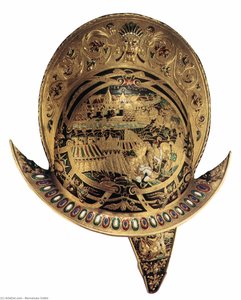
Admire Benvenuto Cellini's masterful Helmet (c. 1570), crafted from repoussé steel and gilded, housed in the Louvre Museum. Explore Renaissance artistry and royal symbolism.
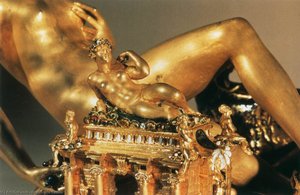
Marvel at Benvenuto Cellini's 'Salt Cellar,' a masterpiece of Renaissance goldsmithing! This intricate, opulent sculpture showcases Mannerist artistry and features mythical figures within the Kunsthistorisches Museum in Vienna.
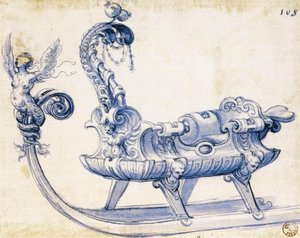
Discover Giuseppe Arcimboldo's 'Sketch for a Sleigh,' a whimsical Mannerist masterpiece from 1585! Explore the intricate details of this sleigh portrait, housed in Florence’s Uffizi Gallery.
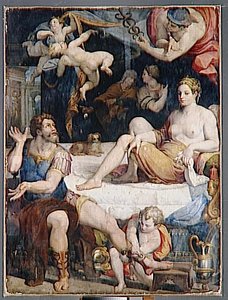
Experience Mannerist drama with Samacchini's Mercury ordering Aeneas to abandon Dido; explore this vibrant masterpiece of fate.
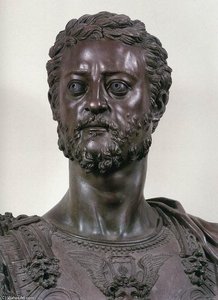
Admire Benvenuto Cellini's stunning bronze bust of Cosimo I, a masterpiece of Florentine Mannerism. Explore the details of this iconic Renaissance sculpture and its rich symbolism.
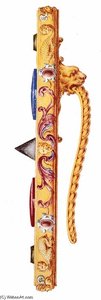
This detailed drawing depicts Cellini’s Cope Pin, created around 1520 for Pope Clement VII. Recognized for its Mannerist style and exquisite craftsmanship—including scales and facial features—it exemplifies Renaissance artistry.
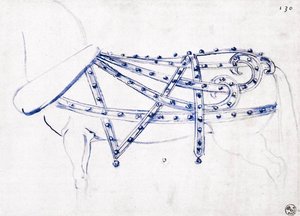
Explore Giuseppe Arcimboldo's masterful Saddle for sleigh horse (1585), a detailed pen and blue wash sketch capturing the intricate design of a sleigh horse harness – a testament to Renaissance precision.
There are wonderful wall paintings in the Cluniac chapel of Château des Moines at Berzé-la-Ville, near Cluny. The chapel contains the tomb of Abbot Hugh of Cluny (1049-1109) who designed the programme of the mural paintings of highly peculiar iconography. These paintings represent the best surviving examples of the art of Cluny.In the apse, Christ is enthroned as omnipotent ruler of the world. To