 Preview
 Send
Send Share
Share
 Details

 Download
 Similars
 X-Ray
X-Ray Diaporama
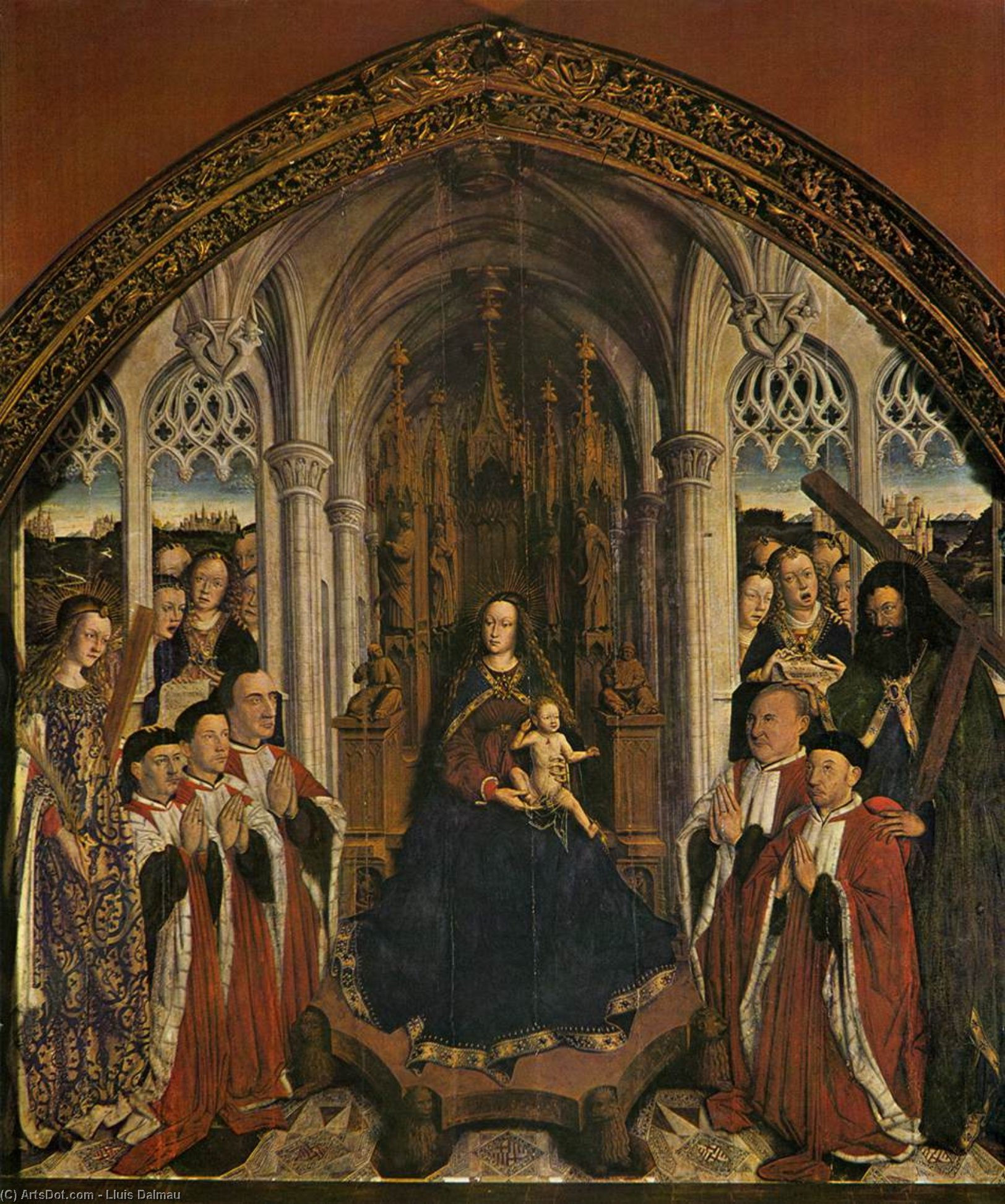
Altarpiece of the Councillors
 Oil On Panel
- Gothic
 1445
1445- Renaissance
 285.0 x 310.0 cm
 Museu Nacional d'Art de Catalunya
 Read More
Hand Made Oil Reproduction
Hand-painted oil on canvas in your size and frame, made to order by our artists. ( Buy Print Buy Image)




P118B $10

P118H $10

P118W $10

P438Z $10

P508JH $12

P508YH $12

P805H $10

P805Z $10

P919BZ $10

P919G $10

P919XJ $10

P959ZH $10

P968JZ $12

W106C $8

W218G $10

W218JH $8

W218Y $10

W307PJ $10

W316G $10

W316PJ $8

W316Y $10

W398PJ $8

W4111J $10

W500HY $15

W500JH $15

W692G $12

W849H $8

W940BG $15

W953PJ $8




Pick from our preset sizes that match the artwork's original proportions.

You may enter your own dimensions to fit a specific frame or space. If your selected size does not match the original image's proportions, we will either crop the artwork or extend the painting with additional hand-painted elements. A digital mockup will be sent for your approval before production begins.
Please note that the on-screen preview does not reflect the actual cropping or extension. Only the mockup will accurately show the final composition.
While custom sizes are available, we recommend selecting a dimension from the predefined list to preserve the original proportions.
After order, ArtsDot.com team will email client for instructions and provide a mockup preview
Worldwide Delivery () in 3/4 weeks instead of standard 5 weeks. (27 August). No compromise on quality.

Free Worldwide Express Shipping

High-Quality Linen Canvas

Full Shipping Insurance

Customs Tax Refund Guarantee

True Color Matching Guarantee

60-Day Return Policy (Defects Only)

100% Money-Back Guarantee

Bulk Discount Offer
 Glass option is only available in size under 110 CM

Altarpiece of the Councillors
Reproduction Medium
Reproduction Size
-


Total Price
$ 538
Artwork Description
A Divine Gathering in Gold and Grace
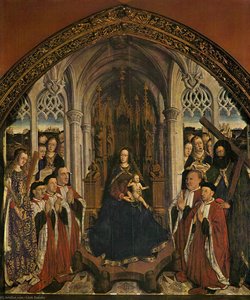
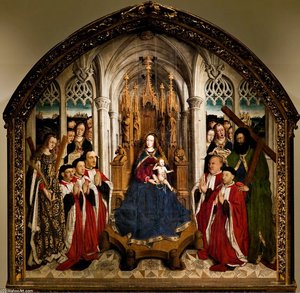
In the heart of the fifteenth century, a transformative era where the spiritual and the earthly began to intertwine through the lens of burgeoning realism, Lluís Dalmau crafted a masterpiece that remains a cornerstone of Catalan devotion. The Altarpiece of the Councillors is not merely a painting; it is a window into a sacred assembly. At its center, the Virgin Mary sits in quiet, luminous majesty, cradling the infant Jesus. She is surrounded by a celestial and noble court—a dense, rhythmic arrangement of saints and dignitaries that draws the viewer into a profound moment of shared reverence. The composition follows a strict pyramidal structure, a technique that provides an unshakable sense of stability and divine order, guiding the eye upward from the detailed figures at the base toward the holy heart of the work.
The atmosphere of the piece is one of overwhelming grandeur and architectural splendor. Dalmau utilizes a Gothic framework, characterized by pointed arches and intricate moldings that suggest the hallowed interior of a private chapel or a grand sanctuary. Through the masterful use of light and shadow, the artist breathes life into the heavy drapery and the textured surfaces of the scene. There is a palpable sense of depth achieved through meticulous layering; while the perspective retains the slightly flattened, iconic quality typical of the Gothic tradition, the interplay of light creates a believable illusion of space that invites the observer to step inside this holy congregation.
The Fusion of Flemish Precision and Spanish Soul
To understand the technical brilliance of this altarpiece, one must look to Dalmau’s unique position as a cultural bridge. Having been deeply influenced by the Northern European masters, particularly the revolutionary Jan van Eyck, Dalmau brought a new level of meticulous detail to the Iberian Peninsula. This influence is visible in the way light dances across the surfaces—the subtle sheen on silk robes, the heavy weight of velvet, and the luminous quality of the skin tones. Using oil paints on wood panel, Dalmau employed sophisticated glazing techniques to build up layers of color, creating a depth of tone that feels almost incandescent from within.
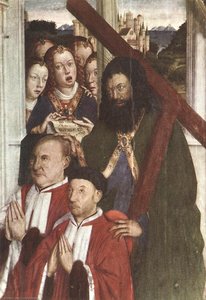
Every brushstroke serves a purpose in this narrative of faith. The textures are rich and tactile, achieved through a controlled impasto that gives the architectural elements and the heavy garments a sculptural presence. This technical mastery allows for a profound symbolic language to emerge: the specific attire of the figures denotes their earthly status and piety, while the inclusion of crosses and ceremonial staffs anchors the scene in the liturgical reality of the 1440s. For the collector or the designer, this painting offers more than just visual beauty; it provides a sophisticated study in how light, texture, and historical weight can transform a space.
An Eternal Presence for the Discerning Collector
For those seeking to infuse an interior with a sense of history, authority, and quiet contemplation, the Altarpiece of the Councillors offers unparalleled inspiration. The artwork evokes an emotional response rooted in awe and tranquility. Its palette, rich with deep tones and golden highlights, possesses a timeless elegance that complements both classical and contemporary settings. Whether placed in a grand hall or a private study, a high-quality reproduction of this work serves as a focal point of intellectual and aesthetic conversation.
Owning a piece of this magnitude is an invitation to surround oneself with the echoes of the Renaissance. It is a celebration of human skill and divine aspiration, captured in a moment where the boundaries between the mortal and the eternal seem to dissolve. As a centerpiece for any curated collection, Dalmau’s work stands as a testament to the enduring power of sacred art to command attention and inspire a sense of profound peace.
Related Artworks
![Virgin And Child With Saint Joseph And Donor [centre Panel Of The Withypool Triptych] — Antonio Solario (lo Zingaro), High Renaissance](/media/artworks/images-thumb/b9/7d/b97d0df3c80849ec91debbc927ef02ec.jpg)
Artist Biography
Lluís Dalmau: A Bridge Between Flanders and Catalonia
Lluís Dalmau, a name perhaps less familiar than those of his contemporaries in the vibrant 15th-century Catalan art scene, nevertheless stands as a pivotal figure bridging the gap between the burgeoning realism of Northern Europe – particularly the influence of Jan van Eyck – and the developing artistic traditions of Spain. Born in Valencia around 1400 and flourishing primarily between 1431 and 1460, Dalmau’s career was marked by a fascinating journey of learning, adaptation, and ultimately, the establishment of a distinctly Catalan style rooted in both Flemish innovation and local sensibilities. His legacy is most powerfully embodied in works like “The Virgin of the Consellers,” a masterpiece currently housed at the Museu Nacional d'Art de Catalunya in Barcelona, offering a rare glimpse into his artistic evolution.Early Influences and the Journey to Flanders
Dalmau’s early life remains somewhat shrouded in mystery, though it is known he was born in Valencia, Spain. Crucially, around 1431, King Alfonso V of Aragon, recognizing the need for a skilled painter within his court, dispatched Dalmau on an extraordinary journey to Bruges, Belgium – a center of artistic innovation at the time. This wasn’t merely a vacation; it was a deliberate immersion in the revolutionary techniques pioneered by Jan van Eyck and his workshop. Van Eyck's meticulous attention to detail, his mastery of oil paint, and his ability to capture light and texture with astonishing realism profoundly impacted Dalmau. The artist spent nearly two years studying these methods, absorbing not just the technical aspects but also the philosophical underpinnings of this new approach to painting – a shift away from the stylized conventions of the Gothic era towards a more naturalistic representation of the world. This experience is considered groundbreaking; it marked one of the first documented instances of a Spanish artist seeking direct instruction and training in the workshops of Northern European masters, laying the foundation for a significant stylistic convergence.A Catalan Style Emerges: Religious Scenes and Altarpieces
Upon his return to Spain, Dalmau brought with him the lessons learned in Flanders, but he didn’t simply replicate Van Eyck's style wholesale. Instead, he skillfully integrated these new techniques into a distinctly Catalan framework. His primary focus remained on religious subjects – particularly depictions of the Virgin Mary and Christ – rendered with a remarkable degree of realism and emotional depth. His altarpieces, in particular, demonstrate his ability to create complex, multi-layered compositions that effectively communicated theological narratives. The “Virgin of the Consellers,” painted in 1443-1445, is perhaps his most celebrated work. This piece showcases Dalmau’s mastery of oil paint and his innovative use of perspective, creating a believable illusion of space within which five prominent city councillors are depicted alongside the Virgin and Saints. The painting's significance lies not only in its technical brilliance but also in its representation of a new artistic paradigm – a fusion of Flemish realism with Catalan iconography and patronage.Technique and Artistic Development
Dalmau’s artistic development is characterized by a gradual refinement of his technique, moving from the more schematic representations of earlier works to the nuanced details and atmospheric effects evident in pieces like “The Virgin of the Consellers.” He skillfully employed oil paint – a relatively new medium at the time – to achieve unprecedented levels of luminosity and depth. His use of light and shadow created a sense of three-dimensionality, while his attention to detail—the textures of fabrics, the expressions on faces, the folds of drapery—brought his figures to life with remarkable immediacy. While often described as influenced by Van Eyck, Dalmau developed his own unique approach, incorporating elements of Catalan artistic tradition and imbuing his works with a subtle emotionality that distinguished him from purely objective representations.Legacy and Historical Significance
Lluís Dalmau’s contribution to the history of Spanish art is considerable. He was instrumental in introducing Flemish realism to Spain, influencing a generation of artists who followed in his footsteps. His work helped to pave the way for the development of a distinctly Catalan style – one characterized by its meticulous detail, emotional depth, and innovative use of oil paint. Furthermore, Dalmau’s patronage by King Alfonso V demonstrated the importance of royal support in fostering artistic innovation during this period. Although relatively few of his works survive, “The Virgin of the Consellers” remains a testament to his genius and a vital link between the artistic traditions of Northern Europe and Spain. His legacy endures as a reminder that artistic exchange and cross-cultural influence can profoundly shape the course of art history.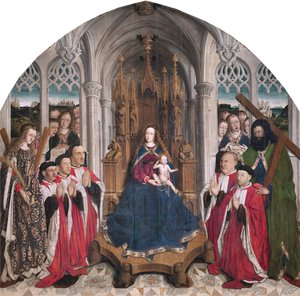
Lluís Dalmau
1400 - 1460 , Spain
Quick Facts
- Artistic Movement Or Style: Van Eyck style, Religious scenes
- Artists Or Movements Influenced By This Artist: ['Medieval Spain art']
- Artists Who Influenced This Artist: ['Jan van Eyck']
- Date Of Birth: 1400 (Valencia)
- Date Of Death: 1460
- Full Name: Lluís Dalmau
- Nationality: Spanish
- Notable Artworks:
- Virgin and Child (1445)
- Sepulcre de Sança Ximenis
- Place Of Birth: Valencia, Spain
Related Articles

The Enduring Legacy of Oil on Canvas: Technique, History & Aesthetic Impact
Explore the rich history & techniques of oil painting – from Renaissance masters to Impressionism. Discover pigments, layering methods, and why this timeless medium endures. Expert insights for artists & art enthusiasts.

Oil on Canvas: A Historical & Technical Exploration of a Timeless Artistic Medium
Explore the rich history & enduring techniques of oil painting on canvas. Discover the science behind its longevity, conservation practices, and contemporary relevance. Expert insights for art enthusiasts.

The Enduring Power of Painting: A Historical & Contemporary Exploration of Form and Emotion
Explore the rich history & enduring techniques of oil painting with ArtsDot. Discover masterpieces, learn about art collecting, and find authentic handmade reproductions crafted by skilled artists.

The Enduring Legacy of Oil on Canvas: Technique, History & Contemporary Practice
Explore the rich history & enduring techniques of oil painting on canvas. Discover the science behind its longevity, conservation practices, and contemporary relevance. Expert insights for art enthusiasts.
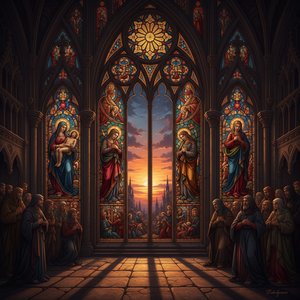
The Radiant Dusk of Medieval Vision: Exploring Late Gothic Art's Synthesis of Faith, Form & Emotionality (c. 1300-1500)
Explore the exquisite beauty & spiritual depth of Late Gothic art (c. 1300-1500). Discover key artists, symbolism, and its lasting influence on the Renaissance. Expert insights at ArtsDot.