 Send
Send Share
Share
 Details

 Download
 Similars
 Diaporama
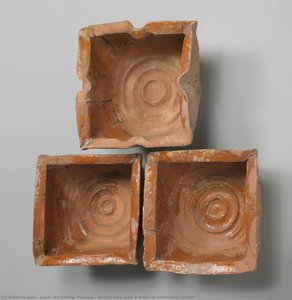
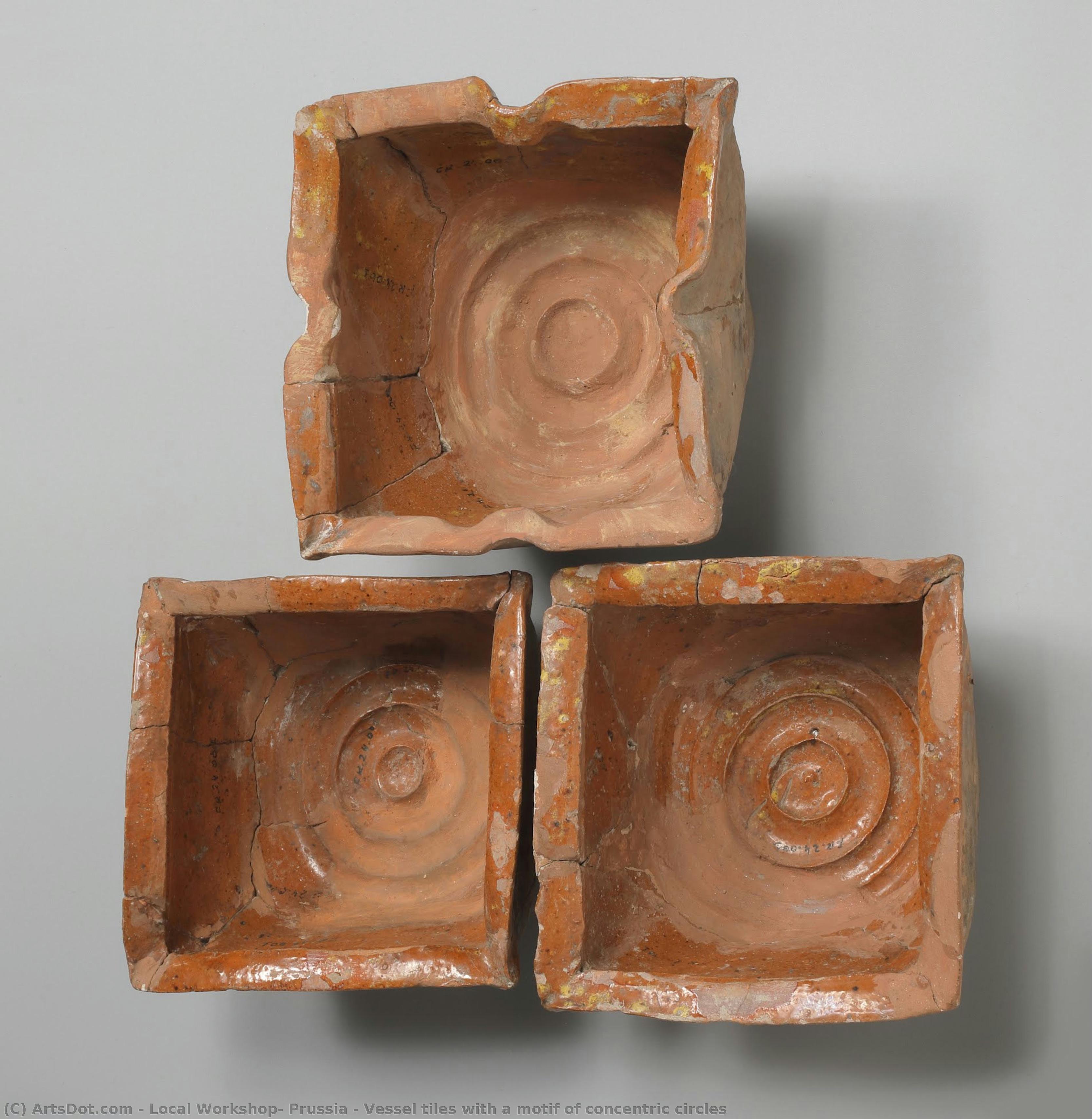
Vessel tiles with a motif of concentric circles


 Read More
Hand Made Oil Reproduction
Hand-painted oil on canvas in your size and frame, made to order by our artists. ( Buy Print Buy Image)




































Pick from our preset sizes that match the artwork's original proportions.

You may enter your own dimensions to fit a specific frame or space. If your selected size does not match the original image's proportions, we will either crop the artwork or extend the painting with additional hand-painted elements. A digital mockup will be sent for your approval before production begins.
Please note that the on-screen preview does not reflect the actual cropping or extension. Only the mockup will accurately show the final composition.
While custom sizes are available, we recommend selecting a dimension from the predefined list to preserve the original proportions.
After order, ArtsDot.com team will email client for instructions and provide a mockup preview
Worldwide Delivery () in 3/4 weeks instead of standard 5 weeks. (24 August). No compromise on quality.

Free Worldwide Express Shipping

High-Quality Linen Canvas

Full Shipping Insurance

Customs Tax Refund Guarantee

True Color Matching Guarantee

60-Day Return Policy (Defects Only)

100% Money-Back Guarantee

Bulk Discount Offer
 Glass option is only available in size under 110 CM

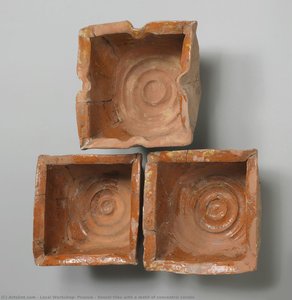
Vessel tiles with a motif of concentric circles
Reproduction Medium
Reproduction Size
-


Total Price
$ 263
Artwork Description
A Glimpse into Medieval Precision
In the quiet presence of these vessel tiles, one finds a profound connection to the tactile history of the 16th century. Crafted by a local workshop in Prussia, these ceramic pieces serve as more than mere utilitarian objects; they are rhythmic echoes of a bygone era of craftsmanship. Each tile, characterized by its warm, reddish-brown hue and matte finish, possesses a grounded, earthy elegance that speaks to the very soil from which they were formed. The arrangement of these vessels—some whole and others fractured to reveal their inner secrets—invites the viewer into a contemplative study of form and permanence. There is an undeniable gravity in their square bases and tapering silhouettes, offering a structural stability that feels both ancient and timeless.
The artistry lies in the hypnotic repetition of the concentric circles etched within the circular indentations. This motif, far from being a simple decorative choice, suggests a deep engagement with geometric symbolism common to the medieval and early Renaissance periods. As light dances across the subtle undulations of the clay, the concentric rings create a sense of movement, drawing the eye inward toward a central point of focus. For the discerning collector or interior designer, these tiles offer a sophisticated way to introduce texture and historical depth into a contemporary space, acting as sculptural anchors that command attention through subtlety rather than spectacle.
The Legacy of Prussian Craftsmanship
To understand these vessels is to understand the industrious spirit of the Prussian workshops. During this period, the regions of Brandenburg and Silesia were hubs of artisanal excellence, where ceramicists mastered the ability to marry durability with intricate design. The technique employed here—likely a combination of careful molding and hand-finishing—demonstrates a mastery over the medium of clay. The uniform color palette suggests a controlled firing process, a testament to the technical skill required to achieve such consistent, soulful tones across multiple pieces. This level of precision reflects a period where every object produced was intended to carry both functional utility and a sense of cultural identity.
Beyond their physical attributes, these tiles evoke an emotional resonance that is difficult to replicate with modern mass production. There is a certain melancholy in the broken fragment, a reminder of the passage of time and the fragility of even the most robust materials. Yet, there is also a sense of continuity; the intact pieces stand as resilient survivors of history. For those seeking to curate an environment filled with meaning, these reproductions offer an opportunity to surround oneself with the spirit of the 1500s—a period where art was not merely observed from a distance but held, used, and integrated into the very fabric of daily life.
Related Artworks


Artist Biography
A Legacy of Medieval Craftsmanship: The Soul of Prussian Ceramics
To wander through the annals of fourteenth-century artistry is to encounter the silent, enduring echoes of the Local Workshop, Prussia. This era of craftsmanship, rooted in the fertile cultural landscapes of Brandenburg and Silesia, represents a profound moment in the history of medieval ceramic art. While the biographical identity of the individual artisan remains shrouded in the mists of time—documented only through the tactile reality of surviving vessels—their presence is felt in every meticulously fired edge and glazed surface. This workshop was not merely a site of production but a crucible of cultural heritage, where the emerging traditions of Warmian pottery began to coalesce into a distinct visual language that would define the region for generations.
The origins of this artistic lineage are deeply intertwined with the socio-political shifts of the 1360s. Born likely within the artisanal heartlands of Brandenburg under the burgeoning influence of the Hohenzollern rule, the creator of these works was a product of an era defined by both movement and stability. It is easy to imagine a formative life spent amidst the rhythmic sounds of the potter's wheel and the intense heat of the kiln, learning the delicate alchemy of glaze formulation through generations of inherited wisdom. The aesthetic vision of this period was heavily informed by the soaring lines of Gothic architecture and the intricate, symbolic narratives found in illuminated manuscripts, all of which infused the ceramic medium with a sense of sacred geometry and structural grandeur.
The Language of Heraldry and Geometric Precision
The true brilliance of the Prussian workshop lies in its ability to transform utilitarian objects into powerful instruments of social communication. The artist’s technique was characterized by an unwavering commitment to geometric precision, a skill that allowed for the seamless integration of complex heraldic emblems onto the curved surfaces of jugs and bowls. These were not merely decorative flourishes; they were the visual shorthand of a hierarchical society. Through the masterful application of coats of arms, rosettes, and concentric circles, the ceramicist captured the very essence of noble lineage and territorial allegiance.
Every vessel served as a canvas for identity, where:
- Heraldic Emblems functioned as permanent markers of political and familial pride.
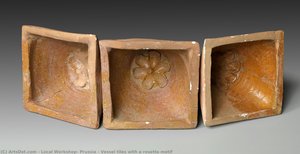
- Rosette Motifs provided a rhythmic, organic counterpoint to the rigid lines of heraldry.
- Concentric Circles offered a sense of cosmic order and mathematical harmony.
Historical Significance and the Endurance of Form
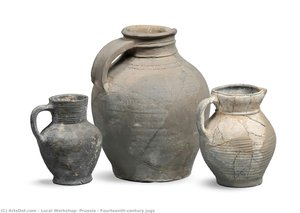
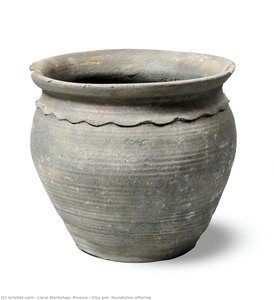
The impact of this local workshop extends far beyond the boundaries of the fourteenth century. By mastering the technical challenges of kiln firing and the chemical complexities of glazes, these artisans laid the groundwork for a tradition of German ceramic excellence that would persist through the centuries. The works produced—ranging from foundation offering clay pots to intricately decorated vessel tiles—stand as archaeological witnesses to a time when art was inseparable from daily life and political structure. Even as the borders of Prussia shifted and the medieval world transitioned into the Renaissance, the fundamental motifs established by this workshop remained embedded in the cultural DNA of the region.
Today, we look upon these fragments of the past not just as relics, but as a testament to the human desire to leave a permanent mark upon the earth. The Local Workshop, Prussia reminds us that true artistry lies in the ability to marry technical mastery with profound symbolic meaning, creating objects that are at once functional and eternal. Through the preservation of these ceramic treasures, the spirit of the medieval artisan continues to speak, offering a window into a world where every curve of a bowl and every stroke of a glaze told a story of belonging, power, and enduring beauty.
local workshop, prussia
Germany
Quick Facts
- Artistic Movement Or Style: Medieval Ceramics
- Artists Or Movements Influenced By This Artist: Santa's workshop
- Artists Who Influenced This Artist: Adolf von Menzel
- Full Name: Local Workshop
- Nationality: German
- Notable Artworks:
- Coat of Arms Tile
- Rosette Motif Tile
- Place Of Birth: Prussia
Related Articles
The Alchemy of Clay: A Collector's Guide to the Mastery, Texture, and Timeless Form of Ceramic Art
Discover the profound beauty of ceramic art. Our expert guide explores the alchemy of clay, texture, and glaze, offering collectors deep insights into mastering earth and fire to create timeless, sculptural masterpieces for any curated collection.
Rosy Brown Hues: 10 Master Paintings & Timeless Decor Ideas |
Explore 10 iconic paintings bathed in captivating rosy brown tones! From Rembrandt to Titian, discover the stories behind these masterpieces & their warm color palettes. Find museum-quality art reproductions and decor inspiration at .

Earthy Hues & Masterpieces: Top 10 Paintings Dominated by Clay Tones |
Explore 10 iconic paintings dominated by rich clay tones – from Rembrandt's warmth to Van Gogh’s earthy landscapes. Discover art history, techniques & find museum-quality reproductions at . Explore the full collection online!

Sandy Brown Masterpieces: 10 Iconic Paintings & Timeless Decor Ideas
Explore 10 iconic paintings bathed in captivating sandy brown tones! From Rembrandt to Monet, discover the stories behind these timeless masterpieces & find museum-quality art reproductions for your home. Explore the full collection on ArtsDot.com.

John George Brown: Capturing American Life & Sentiment in 19th-Century Genre Painting
Explore the captivating genre paintings of John George Brown, celebrated for his realistic depictions of 19th-century American life. Discover his legacy & find museum-quality reproductions at ArtsDot.