 Preview
 Send
Send Share
Share
 Details

 Download
 Similars
 X-Ray
X-Ray Diaporama
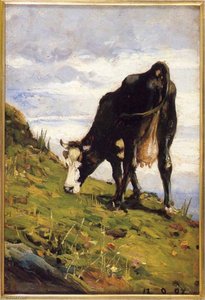
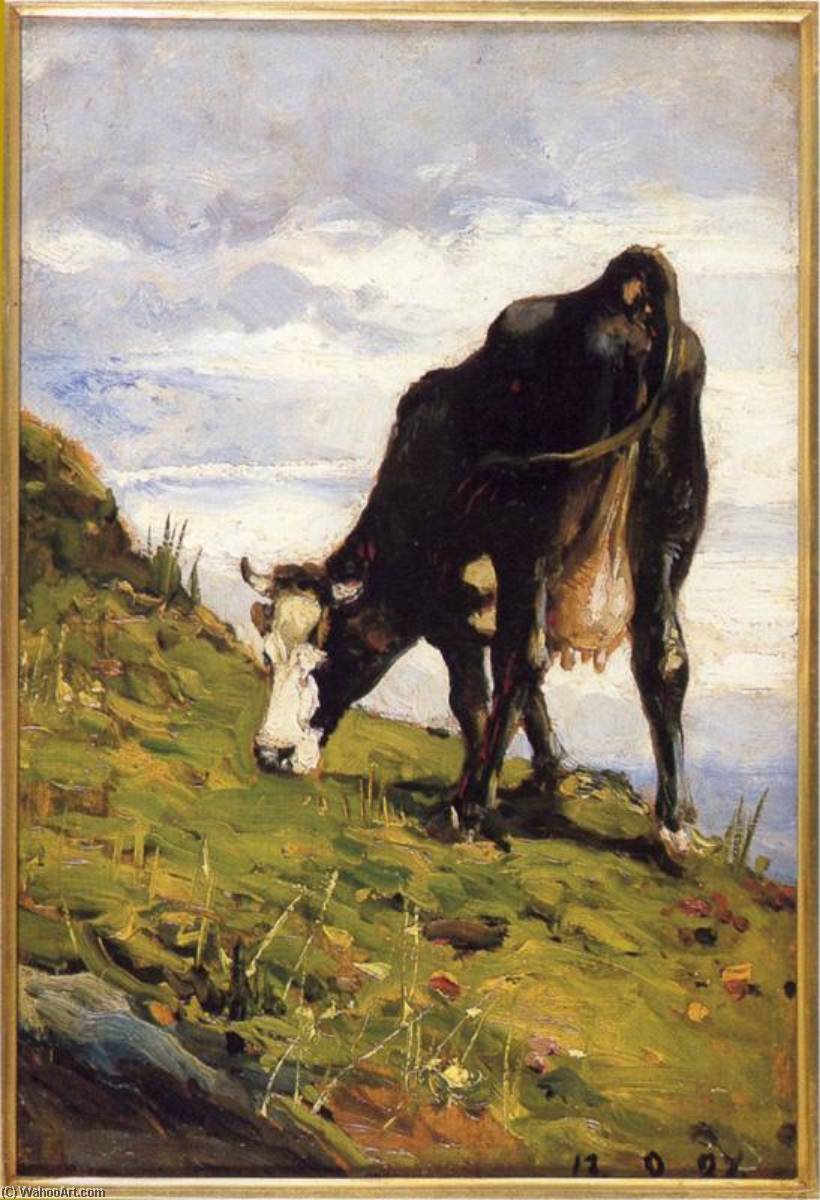
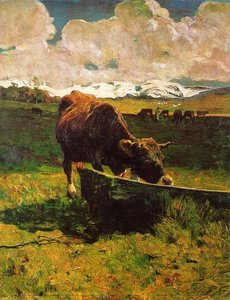
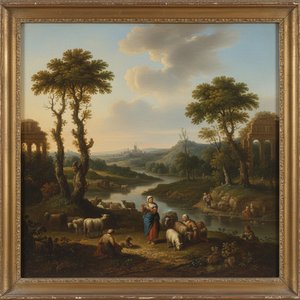
Mucca al pascolo
 Realism
 44.0 x 31.0 cm
 Read More
Hand Made Oil Reproduction
Hand-painted oil on canvas in your size and frame, made to order by our artists. ( Buy Print Buy Image)




P118B $10

P118H $10

P118W $10

P438Z $10

P508JH $12

P508YH $12

P805H $10

P805Z $10

P919BZ $10

P919G $10

P919XJ $10

P959ZH $10

P968JZ $12

W106C $8

W218G $10

W218JH $8

W218Y $10

W307PJ $10

W316G $10

W316PJ $8

W316Y $10

W398PJ $8

W4111J $10

W500HY $15

W500JH $15

W692G $12

W849H $8

W940BG $15

W953PJ $8




Pick from our preset sizes that match the artwork's original proportions.

You may enter your own dimensions to fit a specific frame or space. If your selected size does not match the original image's proportions, we will either crop the artwork or extend the painting with additional hand-painted elements. A digital mockup will be sent for your approval before production begins.
Please note that the on-screen preview does not reflect the actual cropping or extension. Only the mockup will accurately show the final composition.
While custom sizes are available, we recommend selecting a dimension from the predefined list to preserve the original proportions.
After order, ArtsDot.com team will email client for instructions and provide a mockup preview
Worldwide Delivery () in 3/4 weeks instead of standard 5 weeks. (31 August). No compromise on quality.

Free Worldwide Express Shipping

High-Quality Linen Canvas

Full Shipping Insurance

Customs Tax Refund Guarantee

True Color Matching Guarantee

60-Day Return Policy (Defects Only)

100% Money-Back Guarantee

Bulk Discount Offer
 Glass option is only available in size under 110 CM

Mucca al pascolo
Reproduction Medium
Reproduction Size
-


Total Price
$ 263
Related Artworks
Artist Biography
Early Life and Academic Foundations
Lorenzo Delleani, born in the picturesque town of Pollone in the province of Biella, Piedmont, in 1840, emerged from a region steeped in artistic tradition yet poised for change. His early inclination towards painting led him to Turin’s prestigious Albertina Academy, where he became a dedicated pupil of Enrico Gamba and Carlo Arienti. This formative period instilled in Delleani a solid grounding in the established principles of history painting – a genre favored by official circles at the time. He initially pursued this path with diligence, earning recognition for his efforts within the academic framework. However, even during these early stages, a subtle yearning for a more direct engagement with the natural world began to surface, hinting at the artistic evolution that would define his career. The Academy provided him with technical mastery and an understanding of composition, but it was his inherent sensitivity to light and atmosphere that ultimately steered him towards a different horizon.A Shift Towards *Plein Air* and Landscape
The year 1874 marked a turning point in Delleani’s artistic trajectory with his debut at the Paris Salon, an event that exposed his work to an international audience. While initially continuing to explore historical themes, he gradually began to modernize his approach, driven by a growing fascination with capturing the ephemeral beauty of the surrounding landscape. This transition wasn't abrupt; it was a deliberate and thoughtful exploration of new possibilities. By the end of the decade, Delleani had wholeheartedly embraced *plein air* painting – working directly from nature, striving to record the fleeting effects of light and atmosphere in real time. He abandoned the confines of the studio for the open fields and hillsides of Piedmont and Lombardy, seeking to translate his immediate sensory experiences onto canvas. This commitment to direct observation signaled a departure from academic conventions and aligned him with the burgeoning Impressionist movement, though he maintained a distinctly Italian sensibility.Capturing the Essence of Northern Italy
The early 1880s witnessed Delleani’s complete immersion in *plein air* painting. He became renowned for his ability to capture the subtle nuances of light and color as they played across the Piedmontese and Lombard countryside. His canvases are not merely representations of places; they are evocative studies of atmosphere, mood, and the passage of time. Frequent subjects included rolling hills bathed in golden sunlight, misty valleys shrouded in morning haze, and fields transformed by the changing seasons. He developed a distinctive technique characterized by thick, expressive brushstrokes that conveyed a sense of immediacy and vitality. Delleani wasn’t interested in meticulous detail; rather, he sought to distill the *essence* of a scene – its emotional resonance and poetic quality. His palette, though rooted in realism, often incorporated vibrant hues and subtle gradations of tone, creating paintings that were both visually striking and deeply atmospheric.International Recognition and Legacy
Delleani’s dedication to his artistic vision culminated in significant international recognition during the early 20th century. The presentation of approximately forty works at the Venice Biennale in 1905 solidified his reputation as a leading landscape painter, while his participation in the International Exhibition in Munich the same year further expanded his reach and influence. He died in Turin in 1908, leaving behind a substantial body of work that continues to captivate audiences today. Among his pupils were notable artists such as Giuseppe Bozzalla and Giuseppe Buscaglione, ensuring the continuation of his artistic principles. Notably, he often collaborated with his brother, Celestino Delleani (1850-1873), whose untimely death cut short a promising career but left its mark on Lorenzo’s early development. Lorenzo Delleani's legacy lies in his ability to seamlessly blend academic training with a passionate embrace of *plein air* painting, creating landscapes that are both technically accomplished and emotionally resonant. He stands as a testament to the power of observation, the beauty of the natural world, and the enduring appeal of Italian Impressionism.Influences and Artistic Style
- Dutch Golden Age Masters: Delleani’s use of light and atmosphere reveals a clear influence from 17th-century Dutch landscape painters, particularly those known for their realistic depictions of rural scenes.
- Barbizon School: The Barbizon school's emphasis on direct observation and *plein air* painting also played a role in shaping Delleani’s artistic approach. He shared their commitment to capturing the beauty of nature without idealization.
- Italian Landscape Tradition: While embracing modern techniques, Delleani remained deeply rooted in the Italian landscape tradition, drawing inspiration from the rolling hills and picturesque countryside of his native Piedmont and Lombardy.
- Impressionism’s Impact: The Impressionist movement's focus on capturing fleeting moments of light and color significantly influenced Delleani’s palette and brushwork. However, he developed a unique style that blended Impressionistic techniques with his own Italian sensibility.
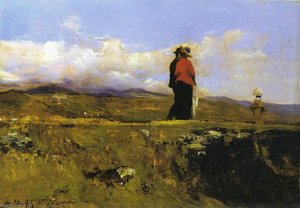
lorenzo delleani
1840 - 1908
Quick Facts
- Artistic Movement Or Style: Romanticism
- Artists Or Movements Influenced By This Artist: ['Dutch Golden Age']
- Artists Who Influenced This Artist:
- Enrico Gamba
- Carlo Arienti
- Date Of Birth: January 17, 1840
- Date Of Death: November 13, 1908
- Full Name: Lorenzo Delleani
- Nationality: Italian
- Notable Artworks:
- Mucca al pascolo
- Giubotto rosso
- Place Of Birth: Pollone, Piedmont
Related Articles
Idyllic Visions: Exploring the Pastoral Scene in Art History – From Arcadia to Modern Interpretations
Explore the captivating history of pastoral art from classical Arcadia to modern masterpieces. Discover key artists like Millet & Cole at ArtsDot. Find serene landscape paintings for your home.
Idyllic Visions: Exploring the Pastoral Tradition in Western Art – Themes, Techniques & Enduring Appeal
Explore the rich history of pastoral art from classical Arcadia to contemporary interpretations. Discover key artists, themes & collecting tips at ArtsDot.

Evocations of Place: A Historical Journey Through Landscape Art
Explore the rich history of landscape art with ArtsDot. Discover renowned artists, movements like Impressionism & Romanticism, and expert guidance for collecting timeless pieces. Find your perfect serene escape today!

John Constable's Masterpieces: Explore 25 Iconic Landscapes for Your Home
Journey through John Constable's 25 most celebrated landscapes. Explore Romanticism, Dedham Vale & his masterful use of light in iconic paintings like 'Hay Wain'. Find museum-quality art reproductions and elevate your home decor on ArtsDot.com.
Nicolaes Berchem: Dutch Golden Age Pastoralism & the Evolution of Landscape Painting
Explore the captivating world of Nicolaes Berchem, a leading Dutch Golden Age painter. Discover his idyllic landscapes, masterful technique & lasting influence on art history. Learn more at ArtsDot.