 Preview
 Send
Send Share
Share
 Details

 Download
 Similars
 X-Ray
X-Ray Diaporama
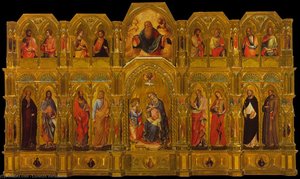
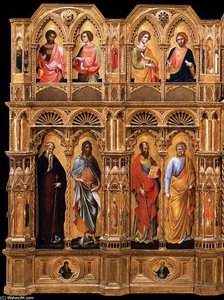
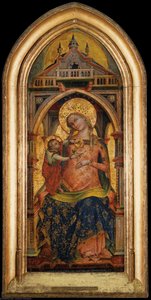
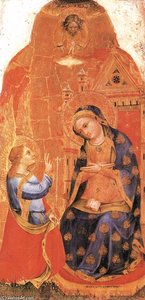
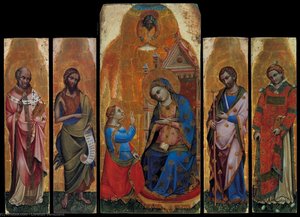
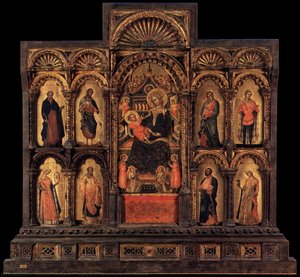
Madonna and Child
 Oil On Panel
- Venetian Renaissance
 1372
1372 126.0 x 56.0 cm
 The Louvre
 Read More
Hand Made Oil Reproduction
Hand-painted oil on canvas in your size and frame, made to order by our artists. ( Buy Print Buy Image)




P118B $10

P118H $10

P118W $10

P438Z $10

P508JH $12

P508YH $12

P805H $10

P805Z $10

P919BZ $10

P919G $10

P919XJ $10

P959ZH $10

P968JZ $12

W106C $8

W218G $10

W218JH $8

W218Y $10

W307PJ $10

W316G $10

W316PJ $8

W316Y $10

W398PJ $8

W4111J $10

W500HY $15

W500JH $15

W692G $12

W849H $8

W940BG $15

W953PJ $8




Pick from our preset sizes that match the artwork's original proportions.

You may enter your own dimensions to fit a specific frame or space. If your selected size does not match the original image's proportions, we will either crop the artwork or extend the painting with additional hand-painted elements. A digital mockup will be sent for your approval before production begins.
Please note that the on-screen preview does not reflect the actual cropping or extension. Only the mockup will accurately show the final composition.
While custom sizes are available, we recommend selecting a dimension from the predefined list to preserve the original proportions.
After order, ArtsDot.com team will email client for instructions and provide a mockup preview
Worldwide Delivery () in 3/4 weeks instead of standard 5 weeks. (17 August). No compromise on quality.

Free Worldwide Express Shipping

High-Quality Linen Canvas

Full Shipping Insurance

Customs Tax Refund Guarantee

True Color Matching Guarantee

60-Day Return Policy (Defects Only)

100% Money-Back Guarantee

Bulk Discount Offer
 Glass option is only available in size under 110 CM

Madonna and Child
Reproduction Medium
Reproduction Size
-


Total Price
$ 263
Artwork Description
The Serene Majesty of Venice: Lorenzo Veneziano’s Madonna and Child
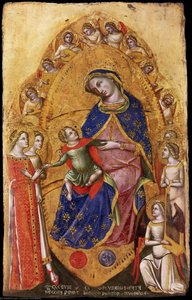
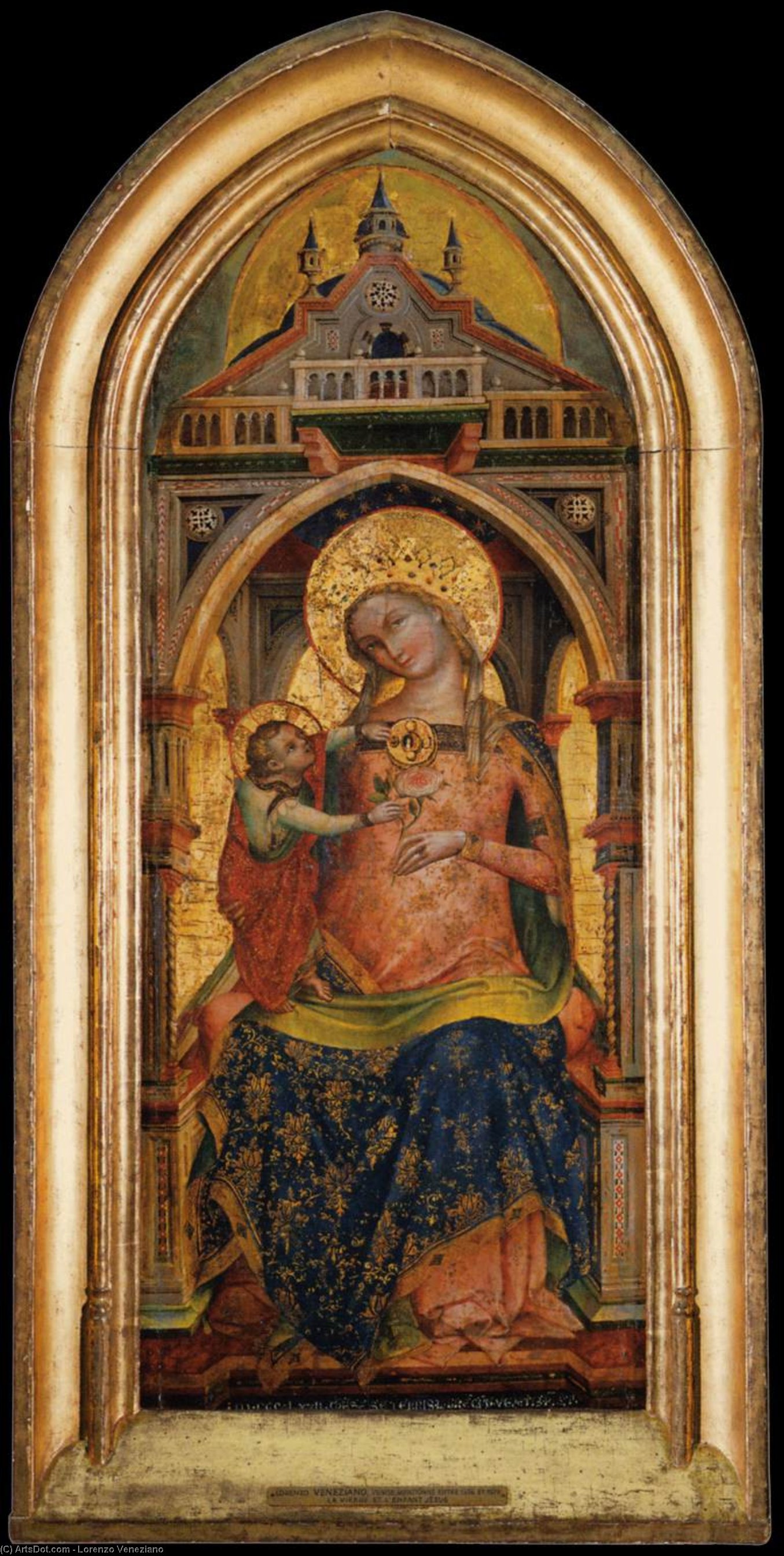
Lorenzo Veneziano's 1372 depiction of the Virgin Mary cradling the Christ Child, housed within the hallowed halls of the Louvre, is more than just a painting; it’s a window into the burgeoning artistic spirit of late medieval Venice. This intimate devotional work, rendered in tempera on poplar panel, embodies a pivotal shift away from the rigid formality of Byzantine iconography and towards the nascent realism that would define the Venetian school – a movement spearheaded by artists like Veneziano himself. The painting's quiet grace and luminous colors immediately draw the viewer into a world of serene contemplation, inviting us to witness a timeless moment of maternal love and divine connection.
Veneziano’s training is believed to have been deeply rooted in the traditions established by his predecessor, Paolo Veneziano, yet he swiftly forged his own distinctive style. Unlike the often-austere figures of Byzantine art, Mary here possesses a palpable humanity – her face etched with gentle sorrow and profound devotion, her hands delicately cradling the infant Jesus. The Christ Child is not depicted as an ethereal being but as a miniature adult, already imbued with a sense of nascent power and grace. This subtle shift towards naturalism reflects the growing influence of humanistic thought in Venice during this period, where artists were increasingly interested in capturing the essence of human experience.
A Symphony of Color and Light
The painting’s technical brilliance lies in Veneziano's masterful manipulation of color and light. He employs a vibrant palette – rich blues, deep reds, and shimmering golds – to create an atmosphere of ethereal beauty. The use of *cloisonné* technique, where thin lines of gold outline the figures and drapery, adds a layer of luxurious detail and enhances the sense of depth. Notably, Veneziano’s approach to light is particularly noteworthy; he eschews the stark contrasts common in Byzantine art, opting instead for soft, diffused illumination that bathes the scene in a warm glow. This creates an intimate and inviting atmosphere, drawing the viewer into the heart of the composition.
The background, subtly rendered with architectural details suggestive of a Venetian church window, provides a sense of context without distracting from the central figures. The stained-glass effect, achieved through careful layering of colors, adds to the painting’s overall luminosity and reinforces its devotional purpose. Even the panel itself, crafted from poplar wood, contributes to the work's aesthetic appeal – its warm tones and subtle graininess provide a grounding element that balances the ethereal quality of the figures.
Symbolism and Spiritual Resonance
Beyond its technical merits, the Madonna and Child is rich in symbolic meaning. The Virgin Mary’s pose—kneeling before the altar—underscores her role as intercessor between humanity and God. The inclusion of a small, intricately carved wooden cross at the base of the painting further emphasizes the theme of sacrifice and redemption. The gesture of Christ reaching towards his mother's face is particularly poignant, suggesting a profound bond of love and mutual understanding.
Furthermore, the composition itself—a carefully balanced arrangement of figures within a defined space—reflects the medieval concept of *geocentrismo*, where God was viewed as the center of the universe. The painting’s overall effect is one of quiet reverence and spiritual contemplation, inviting viewers to reflect on the mysteries of faith and the enduring power of maternal love.
A Legacy of Venetian Art
Lorenzo Veneziano's Madonna and Child stands as a crucial bridge between Byzantine tradition and the burgeoning Renaissance style in Venice. His innovative use of color, light, and naturalism paved the way for subsequent generations of Venetian artists, including Titian and Tintoretto. This painting is not merely a beautiful work of art; it’s a testament to the transformative power of artistic innovation and a poignant reminder of the enduring appeal of religious imagery.
Reproductions of this masterpiece offer an exceptional opportunity to bring its serene beauty into any setting, capturing the essence of Venetian artistry and inviting viewers to contemplate the timeless themes of faith, love, and devotion. Its delicate balance of realism and symbolism continues to resonate with audiences today, solidifying Lorenzo Veneziano’s place as a pivotal figure in the history of art.
Related Artworks
Artist Biography
The Echoes of Byzantium: Unveiling the Legacy of the Master of 1336
The year 1336 resonates within the artistic landscape of Italy, inextricably linked to a figure shrouded in intriguing mystery – the Master of 1336. More accurately known as Giovanni Lipini, this artist’s name, derived from a miraculous fresco depicting the Virgin Mary at Santa Maria delle Grazie in Pistoia, offers a tantalizing glimpse into his origins and enduring influence. While much about his life remains elusive, piecing together fragments of evidence reveals an artist deeply rooted in the traditions of Byzantine painting yet forging a uniquely expressive style that would profoundly impact the burgeoning Renaissance movement. Born around 1301 and tragically passing away in 1379, the Master’s brief but impactful career left behind a legacy of emotionally charged narratives and remarkably detailed figures – works that continue to captivate art historians today.
The early years of the Master's life are largely speculative. He emerged during a period of significant artistic transition in Italy, where the influence of Byzantine painting, brought over by Venetian traders and artists, still held considerable sway. However, this wasn’t simply imitation; rather, it was a careful adaptation and reinterpretation. His work demonstrates a clear debt to Giotto di Bondone, a pivotal figure who began to break away from the rigid conventions of Byzantine art and introduce elements of naturalism and human emotion into his paintings. Giotto's influence, transmitted through artists like Maso di Banco and Puccio di Simone, all active in Pistoia during this period, shaped the Master’s approach – a remarkable synthesis of formal structure and expressive intensity.
- Early Works: The Empoli Polyptych
- The earliest known work attributed to the Master is the magnificent polyptych housed in the Museo della Collegiata in Empoli. This piece, dating from around 1328-1330, showcases his developing style – a careful balance between Byzantine formality and emerging naturalism.
- The Popiglio Panel
- Another significant early work is the panel depicting the Virgin Mary with Child, formerly located in the church of Popiglio and now residing in the Museo Civico in Pistoia. This painting exemplifies the Master’s growing skill in portraying human emotion and capturing subtle details.
The Master's most celebrated work is undoubtedly the fresco depicting the Madonna and Child, found within the Church of San Domenico in Pistoia. This piece, completed around 1336 (the year that gave his name to the artistic designation), stands as a testament to his ability to imbue religious subjects with profound emotional resonance. The figures are rendered with an unprecedented degree of realism – their faces conveying a range of emotions from serene contemplation to heartfelt devotion. The composition is carefully balanced, drawing the viewer's eye towards the central figure of the Virgin Mary and her child.
A Synthesis of Styles: Byzantine Roots and Renaissance Seeds
While firmly rooted in the traditions of Byzantine painting, the Master’s work demonstrates a remarkable willingness to experiment with new techniques and approaches. He skillfully employed tempera on panel, creating luminous surfaces that captured the richness of color and detail. His use of perspective, though rudimentary by Renaissance standards, was noticeably more advanced than that found in contemporary works. The figures are not merely flat representations but possess a palpable sense of volume and depth.
- Color Palette
- The Master favored a rich, jewel-toned palette – deep blues, vibrant reds, and shimmering golds – reminiscent of Byzantine iconography.
- Compositional Techniques
- He employed dynamic compositional techniques, creating a sense of movement and drama within his paintings.
Crucially, the Master’s work wasn't simply a revival of Byzantine styles; it was a deliberate evolution. He absorbed the lessons of Giotto and Maso di Banco, incorporating elements of naturalism and human emotion into his compositions while retaining the formal elegance and spiritual depth of Byzantine art. This synthesis – a harmonious blend of tradition and innovation – is what distinguishes the Master’s work and makes it such a significant contribution to the development of Italian painting.
Historical Context and Legacy
The Master of 1336 operated during a period of profound social and political upheaval in Italy. The Black Death had ravaged Europe, leaving a lasting impact on society and culture. Religious fervor was high, fueled by the desire for divine protection and solace. This context undoubtedly influenced the themes and imagery found in the Master’s paintings – particularly his depictions of the Virgin Mary, who was often invoked as a protector against disease and misfortune.
Despite the relative scarcity of surviving works, the Master's influence is undeniable. He stands as a pivotal figure in the transition from Byzantine to Renaissance painting, bridging the gap between two distinct artistic traditions. His work demonstrates a remarkable sensitivity to human emotion and a profound understanding of religious iconography. The legacy of the Master of 1336 continues to resonate today, reminding us of the enduring power of art to express both spiritual longing and human experience.
Further Resources

lorenzo veneziano
1336 - 1379 , Italy
Quick Facts
- Artistic Movement Or Style: Byzantine art
- Artists Or Movements Influenced By This Artist:
- Giotto
- Duccio
- Artists Who Influenced This Artist:
- Giunta Pisano
- Coppo di Marcovaldo
- Date Of Death: 1302
- Full Name: Cimabue di Giovannino da Fano
- Nationality: Italian
- Notable Artworks:
- Sta. Trinità Madonna
- Madonna Enthroned
- Place Of Birth: Florence, Italy
Related Articles

Jacopo Tintoretto's Masterpieces: 25 Paintings That Define Venetian Drama | ArtsDot
Explore 25 breathtaking masterpieces by Jacopo Tintoretto, the Venetian master of drama and light. Discover the stories behind iconic Renaissance paintings & find museum-quality art reproductions to elevate your home decor on ArtsDot.com.
Illuminating Surfaces: A Comprehensive Exploration of Tempera on Panel Painting Techniques & Historical Significance
Explore the rich history & techniques of tempera painting! Discover Renaissance masters like Botticelli & Fra Angelico, conservation insights, and the enduring legacy of this captivating art form. Learn more now!
Illuminating History: A Comprehensive Exploration of Tempera Painting Techniques & Artistic Legacy
Explore the rich history & techniques of tempera painting! Discover Renaissance masters like Botticelli & Fra Angelico, conservation insights, and the enduring legacy of this captivating art form.
Raphael's Masterpieces: 25 Iconic Paintings & Renaissance Art for Your Home
Explore 25 breathtaking Raphael paintings! Journey through the Italian Renaissance with masterpieces like 'School of Athens' & iconic Madonnas. Find museum-quality art reproductions and elevate your home decor on ArtsDot.com.
Lorenzo Lotto: Unveiling the Enigma of a Venetian Master's Portraits
Explore the captivating world of Lorenzo Lotto, a Venetian Renaissance master renowned for his psychologically insightful portraits & enigmatic symbolism. Discover his life, style, and rediscovered legacy with ArtsDot.