 Send
Send Share
Share
 Details

 Download
 Similars
 Diaporama
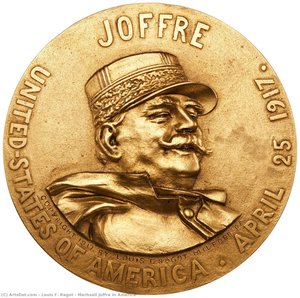
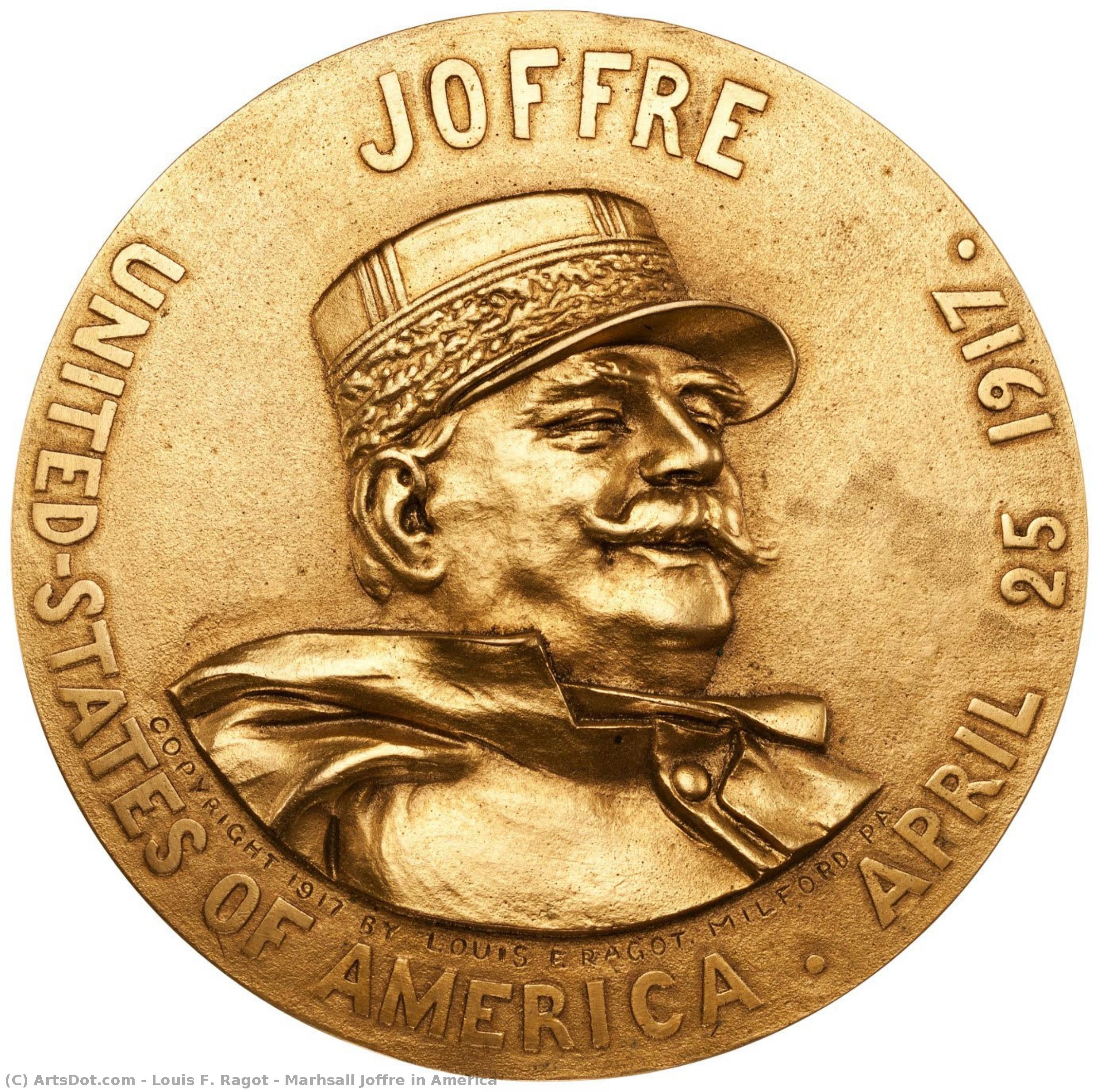
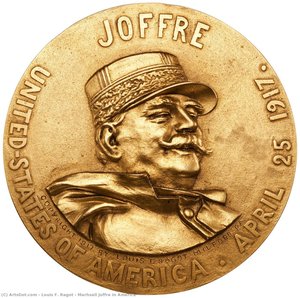
Marhsall Joffre in America


 Read More
Giclée / Art Print
Museum-quality giclée or canvas print with fast production and flexible finish options. ( Buy Hand Made Painting Buy Image)




































Pick from our preset sizes that match the artwork's original proportions.

You may enter your own dimensions to fit a specific frame or space. If your selected size does not match the original image's proportions, we will either crop the artwork or extend the image with a mirrored or solid-fill edge. A digital mockup will be sent for your approval before production begins.
Please note that the on-screen preview does not reflect the actual cropping or extension. Only the mockup will accurately show the final composition.
While custom sizes are available, we recommend selecting a dimension from the predefined list to preserve the original proportions.
Worldwide Delivery () in 2 weeks instead of standard 4/5 weeks. (24 August)

Free Worldwide Express Shipping

High-Quality Linen Canvas

Full Shipping Insurance

Customs Tax Refund Guarantee

True Color Matching Guarantee

60-Day Return Policy (Defects Only)

100% Money-Back Guarantee

Bulk Discount Offer
 Glass option is only available in size under 110 CM

Marhsall Joffre in America
Giclée / Art Print
Reproduction Size
-


Total Price
$ 63
Related Artworks
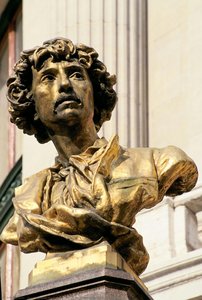

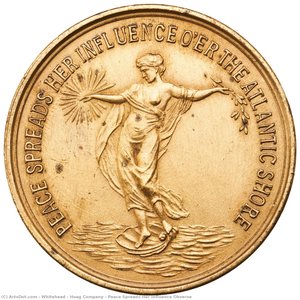
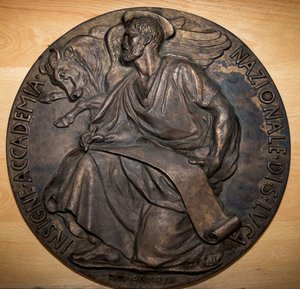
Artist Biography
A Renaissance Soul: The Dual Legacy of Louis F. Ragot
In the grand tapestry of the late nineteenth and early twentieth centuries, few figures embody the spirit of polymathic brilliance quite like Louis F. Ragot. A true Renaissance man, Ragot navigated the worlds of fine art and mechanical engineering with a seamless grace that defied the rigid boundaries of his era. Born in the vibrant, intellectual atmosphere of Paris, France, his early life was steeped in the cultural richness of the Belle Époque. This period, marked by an explosion of creativity and scientific curiosity, provided the perfect crucible for a man whose soul was equally enamored with the delicate curves of a bronze relief and the complex rhythms of a rotary engine.
Ragot’s artistic foundation was laid in the prestigious workshops of Paris, where he studied under the esteemed sculptor Louis Auguste Hiolin. Under Hiolin’s mentorship, Ragot mastered the profound nuances of form, texture, and anatomical precision. This rigorous training allowed him to emerge onto the Parisian art scene with remarkable distinction; his debut at the Salon of 1882 was a triumph of sculptural modeling and portraiture. His early works were characterized by an ability to breathe life into metal, capturing the fleeting essence of human emotion through the permanence of bronze. The acclaim he received from the Salon not only validated his technical prowess but also established him as a rising star in the French sculptural tradition.
From Parisian Salons to American Innovation
The trajectory of Ragot’s life took a dramatic and adventurous turn in 1894 when, driven by familial aspirations, he emigrated to the United States. Settling in Milford, Pennsylvania, Ragot found himself in a landscape that was rapidly transforming through industrial might. Rather than abandoning his artistic roots, he allowed his creative intellect to merge with the burgeoning spirit of American innovation. This period of his life represents a fascinating synthesis of art and science, where the precision required for fine sculpture found a new expression in the realm of mechanical engineering.
Ragot’s inventive mind led him to achieve milestones that would secure his place in the annals of technological history. He became a pioneer of the internal combustion era, most notably through his design of a revolutionary rotary engine, documented under patent 1302709. This invention, which foreshadowed the evolution of automotive technology, showcased a mind capable of visualizing complex mechanical movements with the same clarity he applied to a sculpted face. His thirst for exploration even extended to the skies; around 1910, Ragot achieved the monumental feat of constructing an early airplane, proving that his vision was never bound by the earth.
A Lasting Impression of Art and Industry
The historical significance of Louis F. Ragot lies in his refusal to be confined to a single discipline. To view his work is to witness a dialogue between the aesthetic and the functional. His commemorative works, such as the striking 1917 bronze medal featuring Marshall Joffre, serve as poignant historical artifacts that capture the gravity of the World War I era through the lens of classical relief technique.
His legacy remains a testament to the power of interdisciplinary thinking. Through his life's work, we see how the discipline of a sculptor can inform the precision of an inventor, and how the curiosity of an engineer can enrich the vision of an artist. Ragot’s journey from the studios of Paris to the workshops of Pennsylvania stands as a profound reminder that true genius often resides at the intersection of beauty and progress.
louis f. ragot
France
Quick Facts
- Artistic Movement Or Style: Neoclassicism & Romanticism
- Artists Or Movements Influenced By This Artist: ['Jacques-Louis David']
- Artists Who Influenced This Artist: ['Louis Auguste Hiolin']
- Date Of Birth: Paris, France ()
- Date Of Death: Living
- Full Name: Louis F. Ragot
- Nationality: French-American
- Notable Artworks:
- Marhsall Joffre in America
- Saint Louis Art Museum
- Place Of Birth: Paris
Related Articles

The Enduring Legacy of Bronze: A Historical & Artistic Exploration for the Collector
Explore the rich history & enduring appeal of bronze sculpture with expert insights for collectors at ArtsDot. Learn about casting techniques, iconic artists, collecting tips & contemporary interpretations.

Bronze Age to Modern Masters: 10 Sculptures That Redefined Art | ArtsDot
Journey through art history with 10 legendary bronze sculptures – from Michelangelo's David to Rodin’s Thinker. Explore the stories, techniques & timeless beauty of these masterpieces. Find museum-quality reproductions & elevate your home decor on ArtsDot.com.
The Enduring Legacy of Bronze: History, Technique & Artistic Expression for the Collector
Explore the rich history & enduring appeal of bronze sculpture with expert insights for collectors at ArtsDot. Learn about casting techniques, iconic artists, and collecting tips.

The Enduring Legacy of Bronze Sculpture: Technique, Symbolism & Cultural Impact
Explore the rich history & enduring appeal of bronze sculpture with expert insights for collectors. Learn about casting techniques, iconic artists, collecting tips & contemporary interpretations at ArtsDot.

The Enduring Legacy of Bronze Sculpture: A Collector's Guide to Form & Cultural Significance
Explore the rich history & enduring appeal of bronze sculpture with expert insights for collectors at ArtsDot. Learn about casting techniques, iconic artists, and collecting tips to build a discerning art collection.