

 Preview
 Send
Send Share
Share
 Details

 Download
 Similars
 X-Ray
X-Ray Diaporama
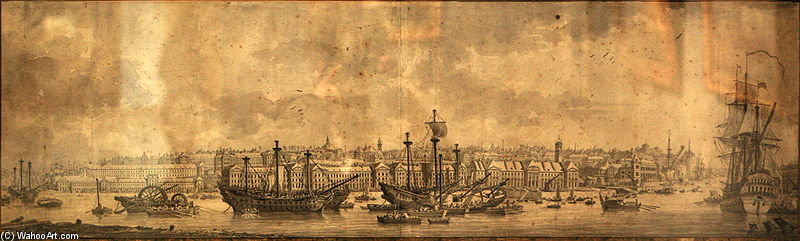
Brest, Penfeld Harbour
 Read More
Purchase a high-resolution, enhanced digital image, far superior to the online preview.
Each file is meticulously prepared by our in-house specialists using advanced tools and expert manual retouching. We ensure every image has exceptional clarity, precise color accuracy, and fine detail.
The final file is delivered via email within 72 hours, optimized for immediate use in professional, editorial, and print environments. This is the same quality trusted by top-tier design studios, publishers, and galleries.
Digital Image
Download a high-resolution file for personal display, printing, and creative projects. ( Buy Print Buy Hand Made Painting)
Included in Every Digital Image Order
Expert Digital Delivery, Guaranteed
When you choose ArtsDot.com, you're not just getting an image - you're receiving a professionally enhanced digital artwork, crafted with precision and backed by a satisfaction guarantee. Here's everything that comes with your order, automatically:

Fast Email Delivery
Your high-resolution digital image file will be emailed to you within 72 hours of ordering - ready for immediate use.

AI-Enhanced Digital File
Your artwork is professionally optimized using advanced AI tools and manual editing, ensuring maximum detail, clarity, and color accuracy.

Free Lifetime Re-Delivery
Accidentally deleted or lost your file? No worries - we'll resend it to you anytime, free of charge.

No Import Fees - Ever
Enjoy your artwork instantly with zero customs, duties, or delivery fees - digital downloads are always tax-free.

Color Accuracy Guarantee
We ensure your digital image reflects the original colors as closely as possible using professional tools and color management.

60-Day Satisfaction Guarantee
If you're not satisfied with your digital image, we'll revise it or refund 100% within 60 days - no questions asked.

100% Money-Back Guarantee
Not satisfied? Get a full refund within 60 days of receiving your digital file - no questions asked.

Bulk Order Discounts
Buy 3 images, save 10% - Buy 5, save 15% - Buy 10+, save 20%. Great for creative projects, galleries, and agencies.
Related Artworks
Artist Biography
A Pioneer of Archaeological Landscape Painting
Louis-François Cassas, born in Tours, France, in 1756, was a figure whose artistic journey mirrored the burgeoning spirit of exploration and documentation that characterized the late 18th and early 19th centuries. He wasn’t simply a painter; he was an architect, archaeologist, and antiquarian—a polymath driven by a profound curiosity for the ancient world. His life unfolded against a backdrop of shifting political landscapes, from the opulence of the French aristocracy to the revolutionary fervor that swept across Europe, all of which profoundly shaped his artistic vision. Cassas’s early exposure to both aristocratic patronage – being the godson of Marquis Louis-François de Gallifet – and practical training within the “Ponts et Chaussés” administration (Bridges and Roads) instilled in him a unique blend of aesthetic sensibility and technical skill. This foundation led him to study under notable artists like Joseph-Marie Vien, a teacher of Jacques-Louis David, and Louis Jean François Lagrenée the Younger, absorbing influences from both Neoclassical and Rococo styles. However, it was his travels to Italy in 1778 that truly ignited his passion and set the course for his life’s work.Voyages of Discovery and Artistic Documentation
Rome, Venice, Naples, and Sicily became Cassas's open-air studio, where he meticulously studied ancient monuments, laying the groundwork for his future archaeological endeavors. This dedication culminated in the *Voyage Pittoresque et Historique de l'Istrie et de la Dalmatie* (1782), a project commissioned by a society of art enthusiasts. The journey through Istria and Dalmatia resulted in detailed illustrations of the region’s antiquities, later published as engravings in 1802. These weren’t merely picturesque views; they were careful records, capturing the state of these ancient sites with remarkable precision. The original watercolors, now held at the Victoria and Albert Museum, stand as testaments to his dedication. But Cassas's travels extended far beyond Italy. His association with Count Choiseul-Gouffier, the French ambassador to the Ottoman Empire, from 1784 to 1787, proved pivotal. Accompanying the ambassador, he documented Constantinople and its surroundings, contributing illustrations for *Voyage Pittoresque de la Grèce*. A brief but significant expedition to Egypt in 1785 allowed him to sketch Alexandria, the pyramids of Giza, and Cairo’s mosques – invaluable early depictions that offered European audiences a glimpse into this mysterious land. He further explored Palmyra in Syria, the Holy Land, and Baalbek in Lebanon, expanding his repertoire of archaeological documentation. These experiences ultimately fueled his most ambitious project: *Voyage Pittoresque de la Syrie, de la Phénicie, de la Palestine et de la Basse Égypte*, begun at the end of the 18th century and becoming his life’s defining achievement.A Monumental Legacy and Artistic Style
The *Voyage Pittoresque* was more than just a travelogue; it was a monumental undertaking that combined artistic skill with scientific observation. Detailed depictions of Syria, Phoenicia, Palestine, and Lower Egypt filled its pages, influencing artists and stage designers for decades to come. Cassas’s style was characterized by a meticulous attention to detail, a commitment to accuracy, and a dramatic use of light and shadow. He didn't simply recreate the landscapes; he imbued them with a sense of history and grandeur, conveying the weight of centuries through his brushstrokes. His work stands apart from earlier depictions of these regions, which often romanticized or distorted reality. Cassas strived for authenticity, presenting the ruins as they were, weathered by time and bearing witness to forgotten civilizations. Following the French Revolution, he returned to France and held positions at the Gobelins tapestry manufactory, contributing his artistic talents to this renowned institution. He also amassed a remarkable collection of over 745 architectural models crafted from cork and terracotta, representing monuments from various countries and epochs – a testament to his lifelong fascination with ancient architecture. This extraordinary collection was eventually sold to the French government for public use and found its home at the École des Beaux-Arts.Historical Significance and Rediscovery
Though largely forgotten after his death in 1827, Louis-François Cassas’s work has experienced a significant revival in recent years. His meticulous documentation of ancient sites provides invaluable insights into their appearance during the late 18th century, offering scholars a unique window into the past. He is now recognized as a pioneer in archaeological landscape painting, skillfully blending artistic expression with scientific observation. His early depictions of Egypt were particularly significant, providing some of the first visual representations of Egyptian monuments for European audiences and contributing to the growing fascination with this ancient civilization. Furthermore, Cassas’s work played a role in the development of Orientalism, shaping perceptions of the Middle East in Europe. His detailed drawings and engravings weren't merely artistic creations; they were crucial contributions to the burgeoning field of archaeology, providing vital visual records for scholars studying the region. Cassas’s legacy extends beyond the art world, reminding us of the power of art to document, preserve, and illuminate our shared human history.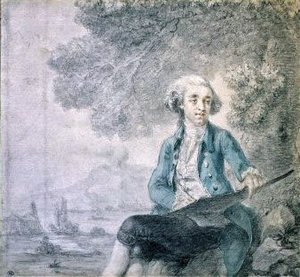
Louis-François Cassas
1756 - 1827 , France
Quick Facts
- Artistic Movement Or Style: Neoclassical, Orientalism
- Artists Or Movements Influenced By This Artist:
- Orientalist art
- Stage designers
- Artists Who Influenced This Artist:
- Joseph-Marie Vien
- Lagrenée the Younger
- Date Of Birth: June 3, 1756
- Date Of Death: November 1, 1827
- Full Name: Louis-François Cassas
- Nationality: French
- Notable Artworks:
- Voyage Pittoresque
- Palmyra city plan
- Place Of Birth: Tours, France

