 Preview
 Send
Send Share
Share
 Details

 Download
 Similars
 X-Ray
X-Ray Diaporama
George Frideric Handel


 Read More
Hand Made Oil Reproduction
Hand-painted oil on canvas in your size and frame, made to order by our artists. ( Buy Print Buy Image)




P118B $10

P118H $10

P118W $10

P438Z $10

P508JH $12

P508YH $12

P805H $10

P805Z $10

P919BZ $10

P919G $10

P919XJ $10

P959ZH $10

P968JZ $12

W106C $8

W218G $10

W218JH $8

W218Y $10

W307PJ $10

W316G $10

W316PJ $8

W316Y $10

W398PJ $8

W4111J $10

W500HY $15

W500JH $15

W692G $12

W849H $8

W940BG $15

W953PJ $8




Pick from our preset sizes that match the artwork's original proportions.

You may enter your own dimensions to fit a specific frame or space. If your selected size does not match the original image's proportions, we will either crop the artwork or extend the painting with additional hand-painted elements. A digital mockup will be sent for your approval before production begins.
Please note that the on-screen preview does not reflect the actual cropping or extension. Only the mockup will accurately show the final composition.
While custom sizes are available, we recommend selecting a dimension from the predefined list to preserve the original proportions.
After order, ArtsDot.com team will email client for instructions and provide a mockup preview
Worldwide Delivery () in 3/4 weeks instead of standard 5 weeks. (17 August). No compromise on quality.

Free Worldwide Express Shipping

High-Quality Linen Canvas

Full Shipping Insurance

Customs Tax Refund Guarantee

True Color Matching Guarantee

60-Day Return Policy (Defects Only)

100% Money-Back Guarantee

Bulk Discount Offer
 Glass option is only available in size under 110 CM

George Frideric Handel
Reproduction Medium
Reproduction Size
-


Total Price
$ 263
Artwork Description
The Majesty of Handel: A Marble Testament
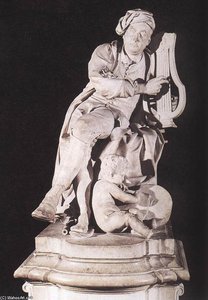
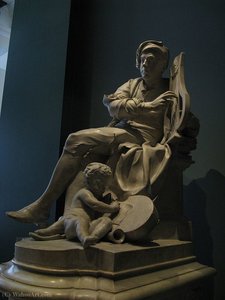
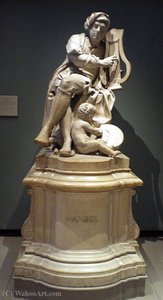
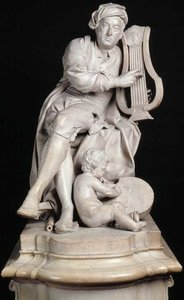
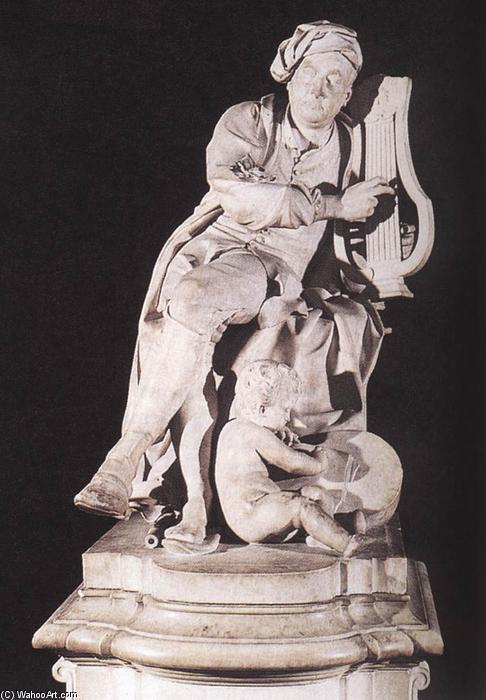
Louis-François Roubiliac’s sculpted portrait of George Frideric Handel stands as more than just a likeness; it's a carefully constructed embodiment of the Baroque era’s grandeur and burgeoning Rococo sensibilities. Completed in 1738, this remarkable marble figure captures not merely the physical appearance of the renowned composer but also his spirit – a potent blend of intellectual rigor, theatrical flair, and profound musical genius. The sculpture resides on a substantial pedestal, its base constructed from what appears to be weathered stone or concrete, lending an air of timeless solidity to the scene. Roubiliac’s masterful manipulation of marble demonstrates a deep understanding of light and shadow, creating a palpable sense of volume and texture that draws the viewer into Handel's world.
Handel is depicted in a seated pose, his posture radiating both authority and contemplative grace. He holds what appears to be a lute or small guitar – an instrument intimately linked with his prolific career as a composer and performer. The detail here is exquisite; observe the meticulous carving of the instrument’s strings, the delicate curve of its body, and the subtle suggestion of its resonance. His attire—a flowing robe draped elegantly over one leg, revealing a bare foot—is characteristic of the period, reflecting both classical ideals of beauty and a touch of aristocratic nonchalance. The folds in the fabric are rendered with astonishing precision, showcasing Roubiliac’s technical skill and his ability to convey movement and texture through purely sculptural means.
A Sculptor Bridging Eras
Louis-François Roubiliac's artistic journey is a fascinating tale of adaptation and innovation. Born in Lyon, France, in 1702, he initially trained under Balthasar Permoser in Dresden, absorbing the dramatic intensity of Baroque sculpture influenced by Bernini’s dynamism. This early exposure to Baroque principles was further refined through studies with Nicolas Coustou in Paris, where he honed his classical techniques and developed a keen eye for proportion and form. Roubiliac's relocation to England in 1730 marked a pivotal shift; he quickly established himself as one of the most celebrated sculptors of the era, skillfully blending Baroque grandeur with the more intimate and playful qualities of Rococo style. His ability to capture not just likeness but also the very essence of his sitters—a remarkable feat achieved during a period of significant artistic transition—cemented his legacy.
Symbolism and Context
The choice of depicting Handel with a musical instrument is deeply symbolic, immediately connecting the sculpture to his profession. The lute, in particular, evokes images of ancient Greece and its legendary musician Orpheus, suggesting that Handel’s music possesses a timeless quality and the power to move audiences across generations. The bare foot, a common motif in classical sculpture, symbolizes connection to the earth and a rejection of worldly vanity – qualities often associated with artistic genius. The dark background serves not as an absence but rather as a deliberate focus on the figure, emphasizing his importance and drawing the viewer’s attention entirely to Handel's presence. The sculpture was commissioned by Jonathan Tyers, owner of Vauxhall Gardens, a fashionable pleasure ground in London during the mid-18th century – a setting that underscores the connection between art, entertainment, and social status.
A Legacy in Marble
Roubiliac’s “George Frideric Handel” is more than just a portrait; it's a testament to the sculptor’s skill, his understanding of Baroque and Rococo aesthetics, and his ability to capture the spirit of a remarkable man. The sculpture’s enduring appeal lies in its combination of technical mastery, symbolic richness, and emotional resonance. Reproductions offer an exceptional opportunity to bring this captivating work into any setting, allowing viewers to appreciate the artistry and historical significance of Handel's life and music. It is a piece that speaks volumes about the intersection of art, culture, and the enduring power of human creativity.
Related Artworks
Artist Biography
A Sculptor Bridging Baroque Grandeur and Rococo Intimacy
Louis-François Roubiliac, a name perhaps less instantly recognizable than those of his sculptural predecessors like Bernini, nevertheless occupies a pivotal position in the history of 18th-century sculpture. Born in Lyon, France, in 1702, Roubiliac’s artistic journey led him from the workshops of Dresden and Paris to ultimately flourish as one of the most celebrated sculptors ever to work in England. His story is one of ambition, skillful adaptation, and a remarkable ability to capture not just likeness but also the very essence of his sitters – an achievement that cemented his legacy during a period of significant artistic transition. Early training under Balthasar Permoser in Dresden proved foundational, exposing him to the dramatic flair of Baroque sculpture, deeply influenced by Bernini himself. This initial immersion was further refined through studies with Nicolas Coustou in Paris, honing his classical techniques and preparing him for the challenges that lay ahead. A disappointment in the Prix de Rome competition spurred a bold move: in 1735, Roubiliac set course for London, seeking new opportunities and a stage upon which to demonstrate his burgeoning talent.Establishing a Reputation in Georgian England
London proved fertile ground for an artist of Roubiliac’s caliber. He quickly established himself as a master portrait sculptor, skillfully navigating the patronage networks of the era. Introductions from figures like Edward Walpole were instrumental in securing early commissions and integrating him into London's artistic circles. However, it was the commission for a seated figure of George Frideric Handel in 1738 that truly catapulted Roubiliac to prominence. Displayed at Vauxhall Gardens, this sculpture wasn’t merely a representation; it was an *interpretation*. Handel is depicted playing an ancient lyre, attended by a putto – a masterful blend of realism and allegorical symbolism that captivated audiences. The work resonated deeply with the public, solidifying Roubiliac's reputation and establishing him as a sculptor capable of both technical brilliance and profound artistic expression. This success led to his founding membership in the St Martin’s Lane Academy, a crucial step in formalizing the burgeoning British art scene and providing a platform for artists to collaborate and refine their craft.Monuments and Masterful Portraiture
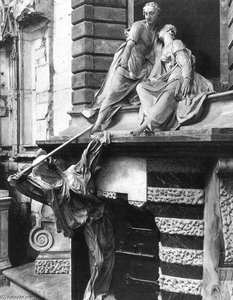
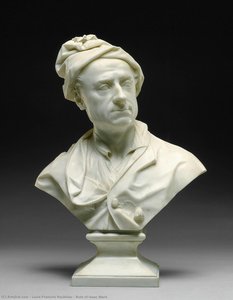
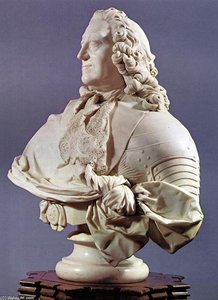
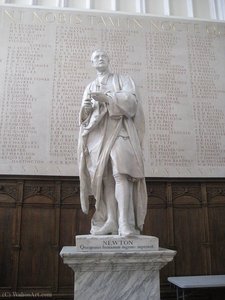
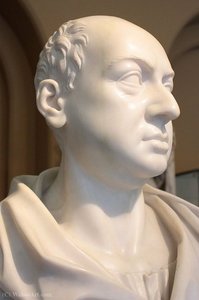
Roubiliac's oeuvre is characterized by two primary focuses: portrait busts and monumental sculptures. His busts are remarkable for their lifelike quality, capturing the individual personalities and social standing of his subjects with astonishing accuracy. He immortalized prominent figures such as Isaac Newton – a bust housed in Trinity College Chapel, Cambridge, that conveys the intellectual weight of the renowned scientist – Martin Folkes, Robert Raymond, Daniel Lock, Robert Bruce Cotton, and John Belchier. These weren’t simply representations; they were psychological portraits rendered in marble, revealing subtle nuances of character and intellect. Beyond portraiture, Roubiliac excelled at large-scale monumental works, most notably those within Westminster Abbey. The monuments dedicated to the Duke of Argyll, Sir Peter Warren, and Marshal Wade are testaments to his dramatic compositional skills and emotional intensity. These weren’t static memorials; they were dynamic narratives carved in stone, evoking a sense of loss, heroism, and remembrance.Style, Influences, and Lasting Legacy
Roubiliac's style is generally classified as Rococo, yet it possesses a distinctive character that sets him apart from his contemporaries. While embracing the elegance and ornamentation associated with the Rococo aesthetic, he infused his work with a remarkable emphasis on realism and emotional expression. His early influences – Permoser’s Baroque dynamism and Coustou's classical precision – were skillfully synthesized into a unique artistic voice. Later in life, a brief stint as a modeller at the Chelsea porcelain factory demonstrated his versatility and willingness to explore different mediums. Towards the end of his career, he undertook tours of Italy, perhaps seeking inspiration or revisiting the roots of sculptural tradition. Roubiliac died in London in 1762, leaving behind a substantial body of work that continues to inspire awe and admiration. His historical significance lies not only in his artistic achievements but also in his role as a pivotal figure in popularizing Rococo sculpture in England and establishing a high standard for portraiture and monumental art during the 18th century. He is rightly considered one of the most accomplished sculptors ever to work on British soil, an artist whose influence can still be detected in the works of later generations. His ability to breathe life into stone, to capture not just form but also feeling, ensures his enduring place in the pantheon of great sculptors.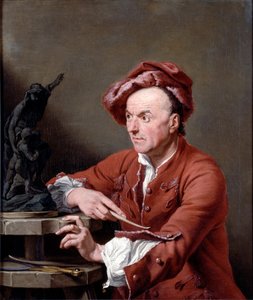
Louis-François Roubiliac
1695 - 1762 , France
Quick Facts
- Artistic Movement Or Style: Rococo
- Artists Or Movements Influenced By This Artist: ['Later British sculptors']
- Artists Who Influenced This Artist:
- Balthasar Permoser
- Nicolas Coustou
- Date Of Birth: 1702
- Date Of Death: 1762
- Full Name: Louis-François Roubiliac
- Nationality: French
- Notable Artworks:
- Handel statue
- Argyll monument
- Newton bust
- Raymond bust
- Folkes bust
- Place Of Birth: Lyon, France
Related Articles

Bronze Sculptures That Defined Art History | ArtsDot
Journey through art history with our Top 10 bronze sculptures! Explore masterpieces by Rodin, Michelangelo & more. Discover stories behind iconic statues and find museum-quality reproductions for your home decor at ArtsDot.com.
The Enduring Allure of Marble in Art History: From Classical Sculpture to Modern Abstraction
Explore the captivating history of marble sculpture from ancient Greece to modern art. Discover renowned artists like Canova & Michelangelo, carving techniques, and investment insights at ArtsDot.

The Enduring Form: Exploring Themes & Techniques in Sculpture Across Historical Periods
Explore the rich history of sculpture from ancient masterpieces to contemporary innovations. Discover key techniques, influential artists & investment potential for discerning art collectors.
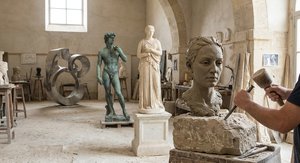
The Enduring Form: Sculpture Across History, Technique & Emotional Resonance
Explore the rich history of sculpture with ArtsDot. Discover key techniques, influential artists & investment potential for discerning collectors. Expert insights into valuing and collecting timeless masterpieces.
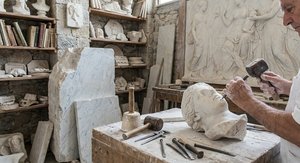
The Enduring Legacy of Marble: A Comprehensive Exploration of Technique, Symbolism & Artistic Expression
Explore the rich history of marble sculpture from antiquity to the Renaissance! Discover key techniques, influential artists & enduring themes in classical art. Expert insights for collectors and enthusiasts at ArtsDot.