 Preview
 Send
Send Share
Share
 Details

 Download
 Similars
 X-Ray
X-Ray Diaporama
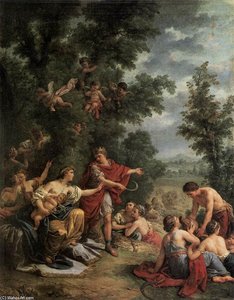
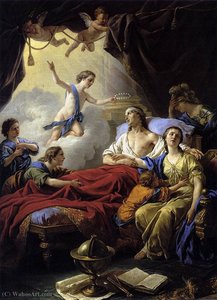
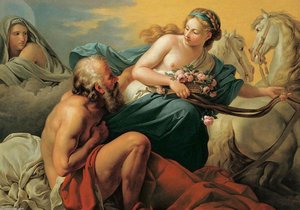
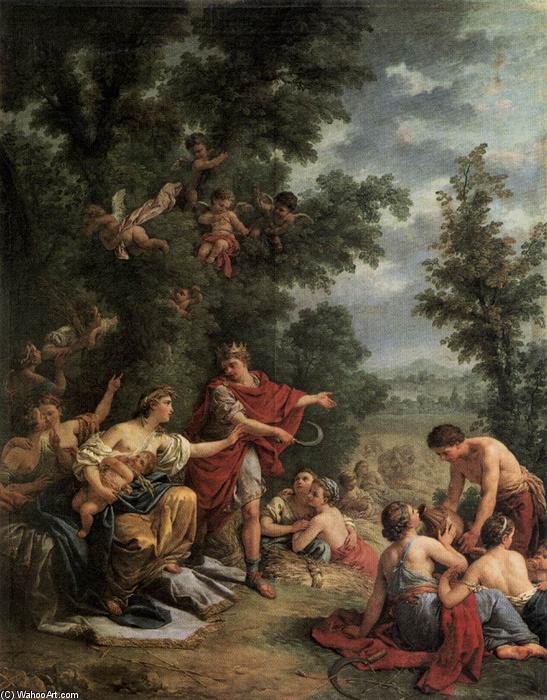
Ceres Teaching Agriculture to King Triptolemus
 Oil On Canvas
- WallArt
- Rococo & Neoclassicism
 1769
1769 339.0 x 234.0 cm
 Musée National du Château
 Read More
Hand Made Oil Reproduction
Hand-painted oil on canvas in your size and frame, made to order by our artists. ( Buy Print Buy Image)




P118B $10

P118H $10

P118W $10

P438Z $10

P508JH $12

P508YH $12

P805H $10

P805Z $10

P919BZ $10

P919G $10

P919XJ $10

P959ZH $10

P968JZ $12

W106C $8

W218G $10

W218JH $8

W218Y $10

W307PJ $10

W316G $10

W316PJ $8

W316Y $10

W398PJ $8

W4111J $10

W500HY $15

W500JH $15

W692G $12

W849H $8

W940BG $15

W953PJ $8




Pick from our preset sizes that match the artwork's original proportions.

You may enter your own dimensions to fit a specific frame or space. If your selected size does not match the original image's proportions, we will either crop the artwork or extend the painting with additional hand-painted elements. A digital mockup will be sent for your approval before production begins.
Please note that the on-screen preview does not reflect the actual cropping or extension. Only the mockup will accurately show the final composition.
While custom sizes are available, we recommend selecting a dimension from the predefined list to preserve the original proportions.
After order, ArtsDot.com team will email client for instructions and provide a mockup preview
Worldwide Delivery () in 3/4 weeks instead of standard 5 weeks. (31 August). No compromise on quality.

Free Worldwide Express Shipping

High-Quality Linen Canvas

Full Shipping Insurance

Customs Tax Refund Guarantee

True Color Matching Guarantee

60-Day Return Policy (Defects Only)

100% Money-Back Guarantee

Bulk Discount Offer
 Glass option is only available in size under 110 CM

Ceres Teaching Agriculture to King Triptolemus
Reproduction Medium
Reproduction Size
-


Total Price
$ 263
A Lesson in Virtue: Exploring Lagrenée’s Ceres Teaching Agriculture to King Triptolemus
The painting *Ceres Teaching Agriculture to King Triptolemus*, executed by Louis Jean François Lagrenée in 1769, stands as a quintessential emblem of Rococo’s waning influence and the ascendance of Neoclassical ideals. More than just a depiction of farming practices, it's a carefully crafted allegory designed to convey moral lessons rooted in Roman mythology – virtues of prudence, wisdom, and benevolent governance. Commissioned during the reign of Frederick II of Prussia, this monumental oil on canvas (339 x 234 cm) exemplifies Lagrenée’s mastery of artistic technique and his profound engagement with classical scholarship.Style and Technique: Rococo's Delicate Embrace
Lagrenée initially trained under Carle van Loo, inheriting the stylistic hallmarks of the French Academy – a preference for pastel hues, shimmering surfaces achieved through glazing techniques, and an emphasis on graceful curves and ornamentation. However, *Ceres Teaching Agriculture to King Triptolemus* subtly transcends the overtly decorative tendencies of Rococo. While retaining the characteristic softness of color palettes typical of the era—particularly the creamy yellows and pale greens dominating Ceres’s attire and the surrounding landscape—the composition demonstrates a newfound restraint in its spatial arrangement. The artist skillfully employs chiaroscuro, creating dramatic contrasts between light and shadow to sculpt the figures and heighten the sense of depth, signaling a move toward the clarity and precision championed by Neoclassical artists.Mythological Narrative: Ceres’s Guidance
The painting recounts the tale from Virgil's *Georgics*, wherein Ceres (Roman goddess of agriculture) imparts knowledge of farming to King Triptolemus (representing European royalty). Ceres, depicted with serene dignity and adorned in flowing robes, patiently instructs Triptolemus on how to cultivate the land—a visual metaphor for nurturing a prosperous kingdom through virtuous leadership. The presence of doves symbolizes peace and fertility, reinforcing the overarching theme of benevolent governance. Notably, Lagrenée meticulously researched Roman iconography, ensuring accuracy in portraying Ceres’s attributes and incorporating classical motifs into the decorative elements of the scene.Symbolism: Beyond the Surface Beauty
Beyond its immediate visual appeal lies a rich tapestry of symbolism. The tree at the center of the composition represents growth, resilience, and the promise of future harvests—a tangible embodiment of Ceres's teachings. The birds circling overhead symbolize divine providence and vigilance, reminding viewers that true success requires constant attention to moral considerations. Furthermore, Lagrenée’s deliberate positioning of Ceres and Triptolemus reinforces the importance of wisdom and humility in achieving political stability. The artist subtly conveys that a ruler must prioritize ethical conduct alongside practical skills if he hopes to secure lasting prosperity for his people.Emotional Impact: A Vision of Ideal Governance
Ultimately, *Ceres Teaching Agriculture to King Triptolemus* aspires to evoke admiration for virtue and inspire contemplation on the responsibilities inherent in leadership. The painting’s luminous colors and graceful lines convey a sense of tranquility and optimism—a deliberate antidote to the anxieties prevalent during the Enlightenment. Lagrenée's masterful execution captures not merely a scene from mythology but also an idealized vision of governance, reflecting the burgeoning desire for moral reform within European society. It remains a powerful testament to the enduring influence of classical art on artistic expression and its capacity to communicate profound philosophical ideas through captivating visual imagery.Related Artworks

Artist Biography
A Life Immersed in Art and Antiquity
Louis-Jean-François Lagrenée, a name resonating with the elegance of Rococo and the burgeoning ideals of Neoclassicism, was born into the artistic heart of Paris in 1724. He wasn’t merely a painter; he was a product of a family steeped in artistry – his younger brother, Jean-Jacques Lagrenée, also achieving renown as a history painter. This familial foundation nurtured an early talent that would blossom under the tutelage of Carle van Loo, a leading figure in the French academic tradition. Van Loo instilled in him not only technical skill but also a deep understanding of composition and form, preparing him for the rigorous demands of the artistic world. Lagrenée’s dedication quickly bore fruit; in 1749, he secured the prestigious Prix de Rome with his depiction of *Joseph interpreting the dreams of Pharaoh*, an achievement that unlocked the doors to further study at the French Academy in Rome from 1750 to 1754. This period proved transformative, exposing him to the masterpieces of antiquity and the celebrated Bolognese School – particularly the works of Guido Reni and Francesco Albani – earning him the affectionate moniker “the French Albani.”From Rococo Grace to Neoclassical Grandeur
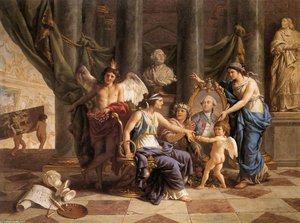
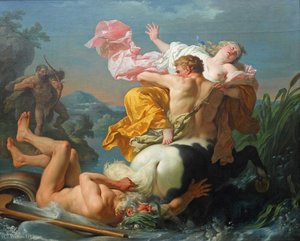
Lagrenée’s artistic journey was one of graceful evolution. Initially, his style embraced the playful ornamentation and delicate sensibilities characteristic of the Rococo period. His early canvases were populated with mythological scenes and portraits that exuded an air of refined elegance. However, his Roman sojourn ignited a passion for classical ideals, subtly shifting his aesthetic trajectory. He began to incorporate elements of Neoclassicism – a renewed emphasis on clarity, order, and moral gravitas – into his work. This transition wasn’t abrupt; rather, it was a gradual assimilation of new influences that enriched his artistic vocabulary. The Abduction of Deianira by the Centaur Nessus, completed around 1755, stands as a testament to this developing style, showcasing both Rococo flourishes and an emerging classical restraint. Beyond individual canvases, Lagrenée became highly sought after for decorative ceiling paintings adorning aristocratic residences across France and beyond, demonstrating his versatility and mastery of large-scale compositions. His allegorical works, such as Allégorie Relative à l'établissement du Museum dans la Grande Galerie du Louvre, exemplify the Neoclassical grandeur he increasingly embraced – a celebration of art, patronage, and the burgeoning cultural landscape of France.An Explorer of Ancient Worlds
Lagrenée’s intellectual curiosity extended far beyond the confines of his studio. He was not content to merely depict antiquity; he yearned to experience it firsthand. This passion led him on a series of remarkable expeditions that intertwined his artistic pursuits with archaeological investigation. From 1781 to 1787, he served as Director of the French Academy in Rome, a position that provided unparalleled access to ancient sites throughout Italy and beyond. His travels through Istria and Dalmatia in 1782 resulted in *Voyage pittoresque et historique de l'Istrie et de la Dalmatie*, a beautifully illustrated two-volume work documenting the region’s landscapes and historical monuments. This was followed by an even more ambitious undertaking: a mission to Constantinople with Count Choiseul-Gouffier from 1784 to 1787, where he created drawings for the ambassador’s *Voyage pittoresque de la Grèce*. His explorations extended further afield, encompassing Egypt in 1785, as well as Syria, Palestine, and Asia Minor – regions largely undocumented by European artists at the time. These journeys weren't simply about recording what he saw; they were acts of discovery, bringing previously unknown ancient wonders to light.A Legacy Beyond the Canvas
Lagrenée’s contributions transcended painting and ventured into the realms of architecture and archaeology. He amassed an extraordinary collection of 745 architectural models crafted from cork and terracotta, meticulously representing diverse styles and epochs. This remarkable assemblage, a testament to his scholarly dedication, was ultimately donated to the École des Beaux-Arts in Paris, becoming an invaluable resource for generations of students. Throughout his career, he regularly exhibited his travel views at the “salons,” the periodic art exhibitions sponsored by the French académie royale, further solidifying his reputation and influence. In later life, Lagrenée held important positions – drawing professor and general inspector at the Gobelins tapestry manufactory – demonstrating the esteem in which he was held within the artistic community. He passed away in Versailles in 1805, leaving behind a legacy as a versatile artist, dedicated antiquarian, and influential figure in French cultural life. While his work experienced periods of relative obscurity after his death, there has been a renewed appreciation for Lagrenée’s contributions to both art history and the study of ancient civilizations – a testament to the enduring power of his vision and scholarship.The Brothers Lagrenée: A Shared Artistic Heritage
It is impossible to discuss Louis-Jean-François Lagrenée without acknowledging the parallel career of his younger brother, Jean-Jacques Lagrenée. While both artists were steeped in classical tradition, their individual styles diverged somewhat. Jean-Jacques leaned more towards history painting and a dramatic, theatrical approach, contributing significantly to the decorative schemes of the Louvre’s Galerie d'Apollon. The brothers shared a commitment to academic rigor and a fascination with antiquity, but expressed these interests through distinct artistic voices. Their collaborative spirit and mutual influence enriched the French art scene of the 18th century, solidifying their place as key figures in the transition from Rococo elegance to Neoclassical grandeur.- Louis-Jean-François: Known for his archaeological explorations and refined mythological scenes.
- Jean-Jacques: Celebrated for his dramatic history paintings and contributions to large-scale decorative projects.
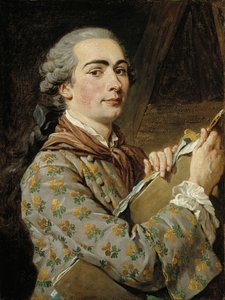
Louis Jean François Lagrenée
1756 - 1827 , France
Quick Facts
- Artistic Movement Or Style: Rococo, Neoclassical
- Artists Who Influenced This Artist:
- Guido Reni
- Francesco Albani
- Date Of Birth: December 30, 1724
- Date Of Death: June 19, 1805
- Full Name: Louis Jean François Lagrenée
- Nationality: French
- Notable Artworks:
- The Abduction of Deianira
- Allegory for the Louvre
- Voyage pittoresque de Grèce
- Place Of Birth: Paris, France
Related Articles

The Enduring Legacy of Oil on Canvas: Technique, History & Aesthetic Impact
Explore the rich history & techniques of oil painting – from Renaissance masters to Impressionism. Discover pigments, layering methods, and why this timeless medium endures. Expert insights for artists & art enthusiasts.

Rococo's Radiant Legacy: 10 Masterpieces for Your Home |
Indulge in the elegance of Rococo! Explore 10 masterpieces by Fragonard, Boucher & Watteau. Discover the stories behind these iconic paintings and bring timeless art to your home with museum-quality reproductions from .

Oil on Canvas: A Historical & Technical Exploration of a Timeless Artistic Medium
Explore the rich history & enduring techniques of oil painting on canvas. Discover the science behind its longevity, conservation practices, and contemporary relevance. Expert insights for art enthusiasts.

The Enduring Power of Painting: A Historical & Contemporary Exploration of Form and Emotion
Explore the rich history & enduring techniques of oil painting with ArtsDot. Discover masterpieces, learn about art collecting, and find authentic handmade reproductions crafted by skilled artists.

The Enduring Legacy of Oil on Canvas: Technique, History & Contemporary Practice
Explore the rich history & enduring techniques of oil painting on canvas. Discover the science behind its longevity, conservation practices, and contemporary relevance. Expert insights for art enthusiasts.