 Preview
 Send
Send Share
Share
 Details

 Download
 Similars
 X-Ray
X-Ray Diaporama
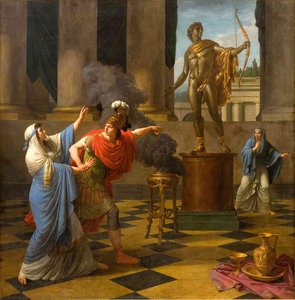
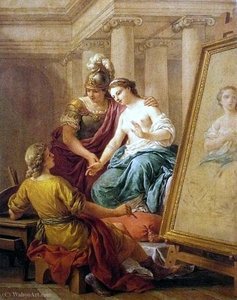
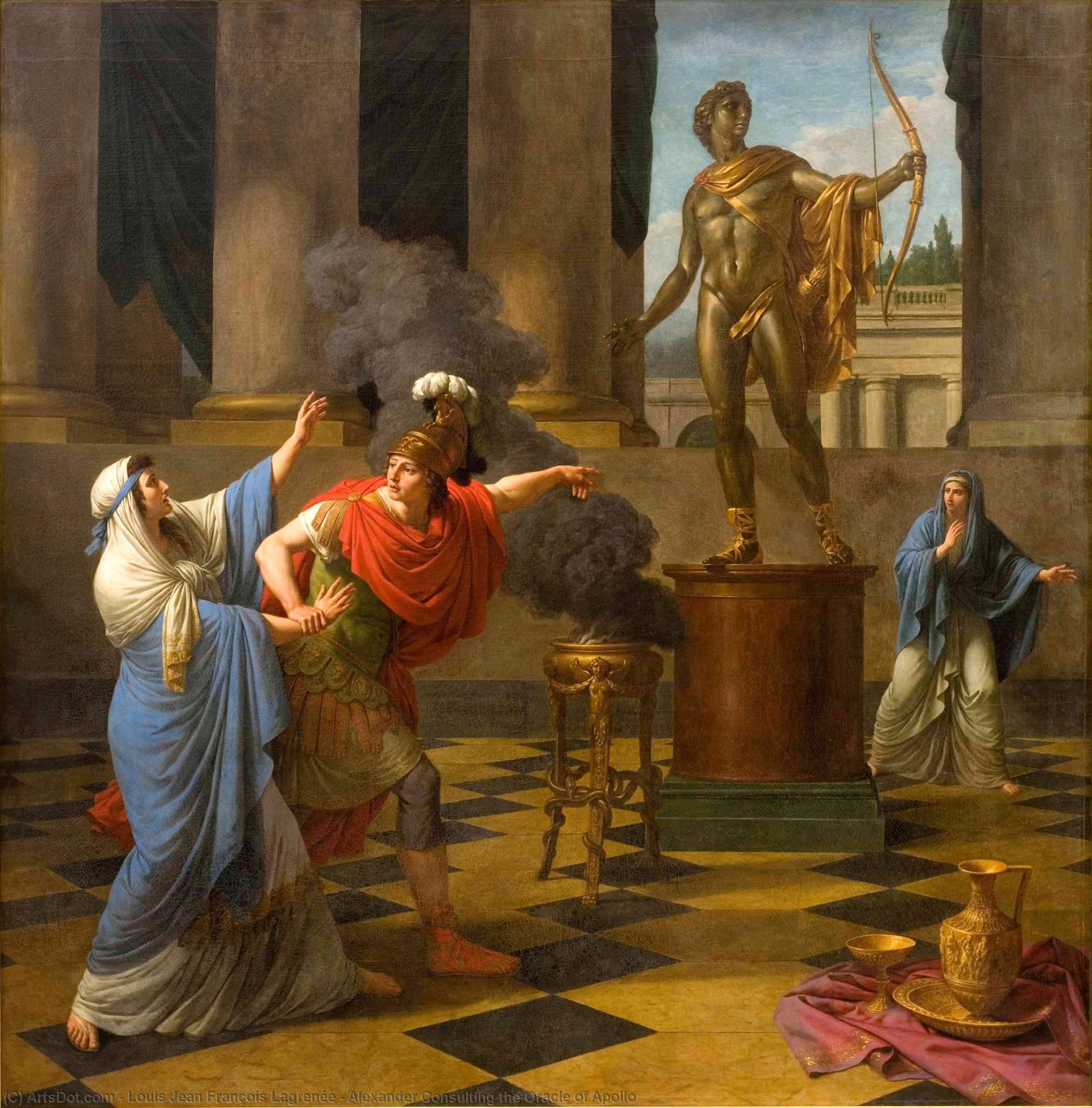
Alexander Consulting the Oracle of Apollo


 Read More
Hand Made Oil Reproduction
Hand-painted oil on canvas in your size and frame, made to order by our artists. ( Buy Print Buy Image)




P118B $10

P118H $10

P118W $10

P438Z $10

P508JH $12

P508YH $12

P805H $10

P805Z $10

P919BZ $10

P919G $10

P919XJ $10

P959ZH $10

P968JZ $12

W106C $8

W218G $10

W218JH $8

W218Y $10

W307PJ $10

W316G $10

W316PJ $8

W316Y $10

W398PJ $8

W4111J $10

W500HY $15

W500JH $15

W692G $12

W849H $8

W940BG $15

W953PJ $8




Pick from our preset sizes that match the artwork's original proportions.

You may enter your own dimensions to fit a specific frame or space. If your selected size does not match the original image's proportions, we will either crop the artwork or extend the painting with additional hand-painted elements. A digital mockup will be sent for your approval before production begins.
Please note that the on-screen preview does not reflect the actual cropping or extension. Only the mockup will accurately show the final composition.
While custom sizes are available, we recommend selecting a dimension from the predefined list to preserve the original proportions.
After order, ArtsDot.com team will email client for instructions and provide a mockup preview
Worldwide Delivery () in 3/4 weeks instead of standard 5 weeks. (17 August). No compromise on quality.

Free Worldwide Express Shipping

High-Quality Linen Canvas

Full Shipping Insurance

Customs Tax Refund Guarantee

True Color Matching Guarantee

60-Day Return Policy (Defects Only)

100% Money-Back Guarantee

Bulk Discount Offer
 Glass option is only available in size under 110 CM

Alexander Consulting the Oracle of Apollo
Reproduction Medium
Reproduction Size
-


Total Price
$ 263
Artwork Description
A Moment Frozen in Antiquity
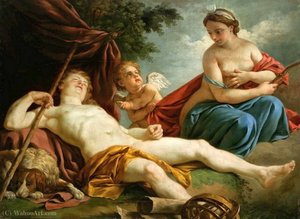
In the grand tapestry of Neoclassical history painting, few moments capture the intersection of mortal ambition and divine guidance as poignantly as Louis Jean François Lagrenée’s Alexander Consulting the Oracle of Apollo. This evocative masterpiece transports the viewer back to the golden age of ancient Greece, a time when the whispers of gods were sought by the most powerful men on earth. The canvas breathes with the weight of destiny, presenting us with Alexander the Great at a pivotal crossroads of his conquest. As he stands before the sacred presence of Apollo, the atmosphere is thick with the tension of anticipation and the solemnity of ritual. Lagrenée does not merely depict a historical event; he invites us into a sanctuary where the boundaries between the human and the divine begin to blur.
The composition is a masterclass in narrative depth, guiding the eye through a carefully choreographed scene of reverence and preparation. At the heart of the work, the interaction between the figures creates a rhythmic flow that speaks to the structured elegance of the French academic tradition. We see the presence of a naked male figure, likely representing the god Apollo himself, serving as a silent, powerful anchor for the composition. The inclusion of secondary figures—one clutching a bow and arrow, perhaps signaling the impending martial endeavors of the Macedonian king—adds layers of subtext regarding the duality of peace and war. Every gesture, from the contemplative stance of the central figures to the subtle activities occurring in the periphery, contributes to an overarching sense of historical gravity.
The Mastery of Light and Neoclassical Grace
Technically, Lagrenée demonstrates the exquisite refinement he acquired during his formative years under Carle van Loo and his transformative residency at the French Academy in Rome. The painting is characterized by a luminous quality that softens the edges of reality, lending the scene a dreamlike, almost mythic texture. His brushwork, though precise enough to satisfy the rigorous standards of the Prix de Rome winner, possesses a fluid grace that prevents the historical subject matter from feeling static or cold. The play of light across the skin of the figures and the architectural elements of the oracle's setting creates a sense of three-dimensional volume, pulling the viewer into the sacred space.
For the discerning collector or interior designer, this piece offers more than just visual beauty; it provides a profound emotional resonance. The painting evokes a sense of wonder and intellectual curiosity, making it an ideal centerpiece for a library, a formal study, or a sophisticated gallery wall. It serves as a conversation starter about leadership, fate, and the enduring human desire to understand our place in the cosmos. Whether displayed as a hand-painted reproduction in a contemporary setting or paired with classical furnishings, Alexander Consulting the Oracle of Apollo brings an air of timeless prestige and scholarly elegance to any environment.
Related Artworks
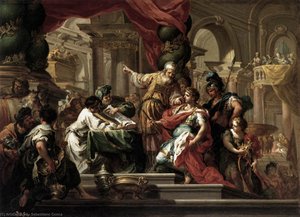
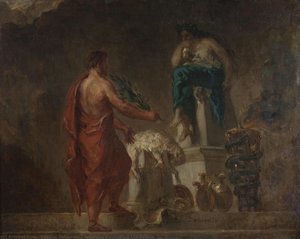
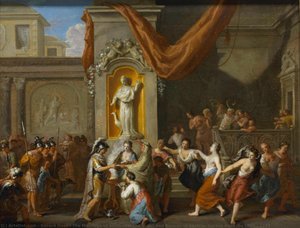
Artist Biography
A Life Immersed in Art and Antiquity
Louis-Jean-François Lagrenée, a name resonating with the elegance of Rococo and the burgeoning ideals of Neoclassicism, was born into the artistic heart of Paris in 1724. He wasn’t merely a painter; he was a product of a family steeped in artistry – his younger brother, Jean-Jacques Lagrenée, also achieving renown as a history painter. This familial foundation nurtured an early talent that would blossom under the tutelage of Carle van Loo, a leading figure in the French academic tradition. Van Loo instilled in him not only technical skill but also a deep understanding of composition and form, preparing him for the rigorous demands of the artistic world. Lagrenée’s dedication quickly bore fruit; in 1749, he secured the prestigious Prix de Rome with his depiction of *Joseph interpreting the dreams of Pharaoh*, an achievement that unlocked the doors to further study at the French Academy in Rome from 1750 to 1754. This period proved transformative, exposing him to the masterpieces of antiquity and the celebrated Bolognese School – particularly the works of Guido Reni and Francesco Albani – earning him the affectionate moniker “the French Albani.”From Rococo Grace to Neoclassical Grandeur
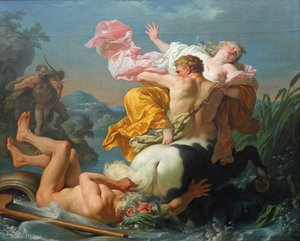
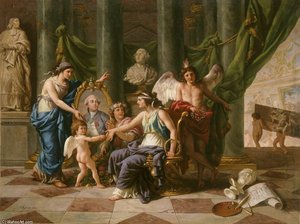
Lagrenée’s artistic journey was one of graceful evolution. Initially, his style embraced the playful ornamentation and delicate sensibilities characteristic of the Rococo period. His early canvases were populated with mythological scenes and portraits that exuded an air of refined elegance. However, his Roman sojourn ignited a passion for classical ideals, subtly shifting his aesthetic trajectory. He began to incorporate elements of Neoclassicism – a renewed emphasis on clarity, order, and moral gravitas – into his work. This transition wasn’t abrupt; rather, it was a gradual assimilation of new influences that enriched his artistic vocabulary. The Abduction of Deianira by the Centaur Nessus, completed around 1755, stands as a testament to this developing style, showcasing both Rococo flourishes and an emerging classical restraint. Beyond individual canvases, Lagrenée became highly sought after for decorative ceiling paintings adorning aristocratic residences across France and beyond, demonstrating his versatility and mastery of large-scale compositions. His allegorical works, such as Allégorie Relative à l'établissement du Museum dans la Grande Galerie du Louvre, exemplify the Neoclassical grandeur he increasingly embraced – a celebration of art, patronage, and the burgeoning cultural landscape of France.An Explorer of Ancient Worlds
Lagrenée’s intellectual curiosity extended far beyond the confines of his studio. He was not content to merely depict antiquity; he yearned to experience it firsthand. This passion led him on a series of remarkable expeditions that intertwined his artistic pursuits with archaeological investigation. From 1781 to 1787, he served as Director of the French Academy in Rome, a position that provided unparalleled access to ancient sites throughout Italy and beyond. His travels through Istria and Dalmatia in 1782 resulted in *Voyage pittoresque et historique de l'Istrie et de la Dalmatie*, a beautifully illustrated two-volume work documenting the region’s landscapes and historical monuments. This was followed by an even more ambitious undertaking: a mission to Constantinople with Count Choiseul-Gouffier from 1784 to 1787, where he created drawings for the ambassador’s *Voyage pittoresque de la Grèce*. His explorations extended further afield, encompassing Egypt in 1785, as well as Syria, Palestine, and Asia Minor – regions largely undocumented by European artists at the time. These journeys weren't simply about recording what he saw; they were acts of discovery, bringing previously unknown ancient wonders to light.A Legacy Beyond the Canvas
Lagrenée’s contributions transcended painting and ventured into the realms of architecture and archaeology. He amassed an extraordinary collection of 745 architectural models crafted from cork and terracotta, meticulously representing diverse styles and epochs. This remarkable assemblage, a testament to his scholarly dedication, was ultimately donated to the École des Beaux-Arts in Paris, becoming an invaluable resource for generations of students. Throughout his career, he regularly exhibited his travel views at the “salons,” the periodic art exhibitions sponsored by the French académie royale, further solidifying his reputation and influence. In later life, Lagrenée held important positions – drawing professor and general inspector at the Gobelins tapestry manufactory – demonstrating the esteem in which he was held within the artistic community. He passed away in Versailles in 1805, leaving behind a legacy as a versatile artist, dedicated antiquarian, and influential figure in French cultural life. While his work experienced periods of relative obscurity after his death, there has been a renewed appreciation for Lagrenée’s contributions to both art history and the study of ancient civilizations – a testament to the enduring power of his vision and scholarship.The Brothers Lagrenée: A Shared Artistic Heritage
It is impossible to discuss Louis-Jean-François Lagrenée without acknowledging the parallel career of his younger brother, Jean-Jacques Lagrenée. While both artists were steeped in classical tradition, their individual styles diverged somewhat. Jean-Jacques leaned more towards history painting and a dramatic, theatrical approach, contributing significantly to the decorative schemes of the Louvre’s Galerie d'Apollon. The brothers shared a commitment to academic rigor and a fascination with antiquity, but expressed these interests through distinct artistic voices. Their collaborative spirit and mutual influence enriched the French art scene of the 18th century, solidifying their place as key figures in the transition from Rococo elegance to Neoclassical grandeur.- Louis-Jean-François: Known for his archaeological explorations and refined mythological scenes.
- Jean-Jacques: Celebrated for his dramatic history paintings and contributions to large-scale decorative projects.
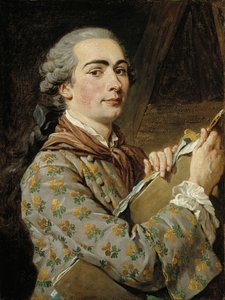
Louis Jean François Lagrenée
1756 - 1827 , France
Quick Facts
- Artistic Movement Or Style: Rococo, Neoclassical
- Artists Who Influenced This Artist:
- Guido Reni
- Francesco Albani
- Date Of Birth: December 30, 1724
- Date Of Death: June 19, 1805
- Full Name: Louis Jean François Lagrenée
- Nationality: French
- Notable Artworks:
- The Abduction of Deianira
- Allegory for the Louvre
- Voyage pittoresque de Grèce
- Place Of Birth: Paris, France
Related Articles
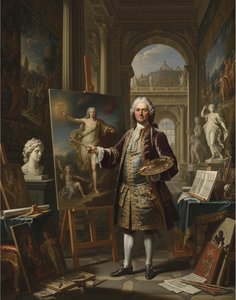
Charles Le Brun: Master of French Baroque Classicism & His Enduring Legacy
Explore the life & art of Charles Le Brun, master of French Baroque Classicism. Discover his royal commissions, influence on Versailles, and enduring legacy through detailed analysis & stunning artworks.
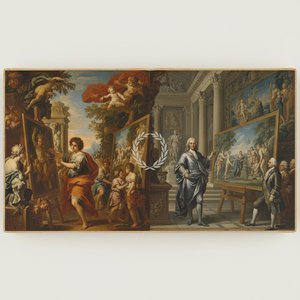
Simon Vouet: A Baroque Master's Journey from Italian Influence to French Classicism
Explore the life & art of Simon Vouet, a pivotal French Baroque painter who introduced Italian styles to France. Discover his masterpieces and lasting influence on 17th-century art.
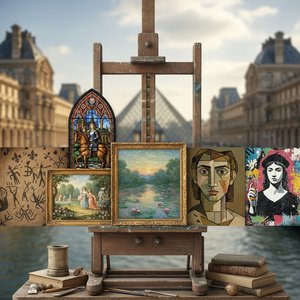
The Enduring Legacy of French Art: Movements, Masters & Cultural Impact
Explore the rich history of French art, from the Salon to Impressionism & beyond. Discover iconic masters, key movements, and expert guidance for collecting timeless masterpieces. ArtsDot.
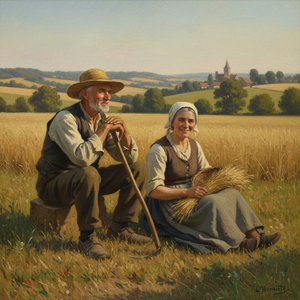
Léon Augustin L'Hermitte: Capturing the Soul of French Rural Life
Discover the captivating realist paintings of Léon Augustin L'Hermitte, masterfully depicting French rural life. Explore his technique, influences & legacy – a cornerstone of 19th-century art.

Paul Huet: Capturing the Essence of French Romanticism Through Light and Landscape
Explore the captivating world of Paul Huet (1803-1869), a master of French Romantic landscape painting. Discover his influence on Barbizon & Impressionism, and browse high-quality reproductions at ArtsDot.