 Preview
 Send
Send Share
Share
 Details

 Download
 Similars
 X-Ray
X-Ray Diaporama
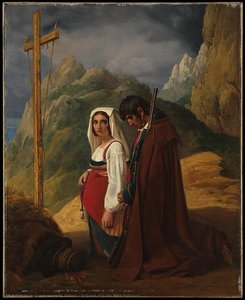
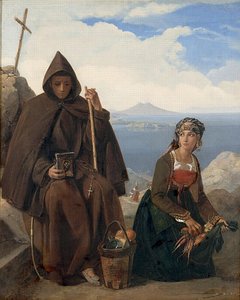
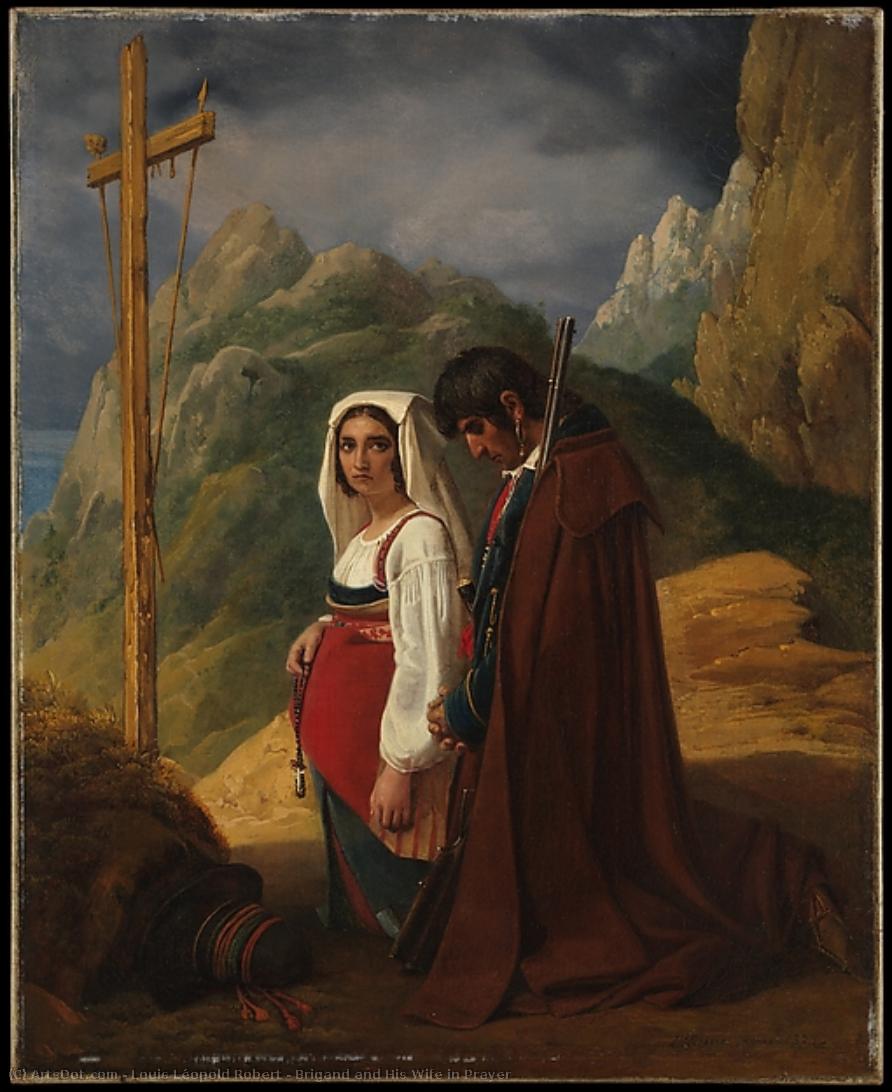
Brigand and His Wife in Prayer
 Oil On Canvas
- WallArt
- Romanticism
 1824
1824 45.0 x 37.0 cm
 Metropolitan Museum of Art
 Read More
Hand Made Oil Reproduction
Hand-painted oil on canvas in your size and frame, made to order by our artists. ( Buy Print Buy Image)




P118B $10

P118H $10

P118W $10

P438Z $10

P508JH $12

P508YH $12

P805H $10

P805Z $10

P919BZ $10

P919G $10

P919XJ $10

P959ZH $10

P968JZ $12

W106C $8

W218G $10

W218JH $8

W218Y $10

W307PJ $10

W316G $10

W316PJ $8

W316Y $10

W398PJ $8

W4111J $10

W500HY $15

W500JH $15

W692G $12

W849H $8

W940BG $15

W953PJ $8




Pick from our preset sizes that match the artwork's original proportions.

You may enter your own dimensions to fit a specific frame or space. If your selected size does not match the original image's proportions, we will either crop the artwork or extend the painting with additional hand-painted elements. A digital mockup will be sent for your approval before production begins.
Please note that the on-screen preview does not reflect the actual cropping or extension. Only the mockup will accurately show the final composition.
While custom sizes are available, we recommend selecting a dimension from the predefined list to preserve the original proportions.
After order, ArtsDot.com team will email client for instructions and provide a mockup preview
Worldwide Delivery () in 3/4 weeks instead of standard 5 weeks. (17 August). No compromise on quality.

Free Worldwide Express Shipping

High-Quality Linen Canvas

Full Shipping Insurance

Customs Tax Refund Guarantee

True Color Matching Guarantee

60-Day Return Policy (Defects Only)

100% Money-Back Guarantee

Bulk Discount Offer
 Glass option is only available in size under 110 CM

Brigand and His Wife in Prayer
Reproduction Medium
Reproduction Size
-


Total Price
$ 288
Artwork Description
A Mountain’s Lament: Robert's "Brigand and His Wife in Prayer"
Louis Léopold Robert’s “Brigand and His Wife in Prayer,” painted in 1824, isn’t merely a depiction of two figures kneeling before a weathered cross; it’s a poignant meditation on faith, hardship, and the enduring spirit of humanity amidst the rugged beauty of Italy. Born in Switzerland but deeply influenced by his time in Rome – a hub for artistic innovation during this period – Robert masterfully blended Romanticism with elements of Neoclassicism, creating an image that resonates with both dramatic intensity and quiet dignity.
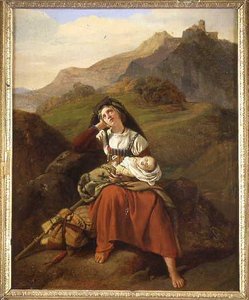
The scene unfolds within the stark landscape of central Italy, a region scarred by centuries of banditry and political upheaval. Robert doesn’t shy away from portraying the reality of these outlaws; the brigand, clad in worn leather and sporting a musket, embodies a life lived on the fringes of society. Yet, alongside him kneels his pregnant wife, her face etched with a profound sorrow that speaks volumes about their circumstances. The simplicity of their attire – a roughspun shirt for the husband, a humble peasant dress for the wife – underscores their vulnerability and reinforces the painting’s core theme: a desperate plea for solace and protection.
The Language of Light and Shadow
Robert's technical skill is immediately apparent in his masterful use of light and shadow. The composition is dominated by a muted palette of blues, greens, and browns, reflecting the somber mood of the scene. A dramatic storm gathers on the horizon, casting long, ominous shadows that stretch across the mountainside, intensifying the sense of isolation and vulnerability. However, a subtle shaft of light breaks through the clouds, illuminating the couple and their makeshift shrine – a small wooden cross placed strategically along a remote road. This interplay of light and darkness isn’t simply aesthetic; it symbolizes hope amidst despair, suggesting that even in the darkest moments, faith can offer a glimmer of solace.
The artist's brushwork is remarkably detailed, particularly evident in the rendering of the rugged terrain and the textures of the figures’ clothing. Robert employs a technique known as “alla prima,” working directly onto the canvas without extensive underpainting, resulting in a sense of immediacy and spontaneity. He builds up layers of paint to create rich, tactile surfaces, capturing not just the appearance but also the essence of the scene – the rough feel of the stone, the worn leather of the brigand’s garments, the delicate folds of the wife's dress.
Symbolism and Historical Context
“Brigand and His Wife in Prayer” is deeply rooted in the historical context of 19th-century Italy. The era was marked by political instability, social unrest, and a growing fascination with the lives of outlaws – figures often romanticized as symbols of resistance against oppressive authority. Robert’s choice to depict this particular scene—a grieving couple seeking divine intervention—reflects a broader trend in Romantic art: an exploration of intense emotions, individual experience, and the sublime power of nature.
The cross itself is laden with symbolism. It represents sacrifice, redemption, and the promise of salvation. By placing it within this desolate landscape, Robert suggests that faith offers a pathway to transcendence—a way to find meaning and purpose in a world often characterized by hardship and uncertainty. The pregnant wife’s pose further amplifies this theme, hinting at the hope for future generations amidst present suffering.
A Timeless Reflection
“Brigand and His Wife in Prayer” is more than just a historical painting; it's a universal meditation on human resilience, faith, and the enduring power of love. Robert’s masterful composition, evocative use of light and shadow, and poignant portrayal of two figures seeking solace before a simple cross create an image that continues to resonate with viewers today. It serves as a powerful reminder that even in the face of adversity, hope—and perhaps divine grace—can be found in the most unexpected places.
Related Artworks
Artist Biography
Charles Robert Leslie: A Pioneer of Literary Portraiture
Born in London in 1794, Charles Robert Leslie’s life and career were shaped by a unique confluence of transatlantic heritage and an unwavering dedication to the art of portraiture. Though his parents hailed from America – his father a painter and wallpaper designer – Leslie spent most of his formative years immersed in the vibrant artistic landscape of England. This dual influence profoundly impacted his work, imbuing it with both a distinctly British sensibility and a subtle awareness of American artistic traditions. Initially hampered by financial constraints that prevented him from pursuing formal training, Leslie’s talent was recognized early on through the patronage of influential figures like Benjamin West, a leading figure at the Royal Academy, who facilitated his entry into the prestigious art world.
Leslie's early career focused primarily on history painting, a genre heavily influenced by the grand style of artists such as Washington Allston and Benjamin West themselves. His initial works, exemplified by *The Murder of Rutland by Lord Clifford*, demonstrate a clear emulation of these masters, showcasing meticulous detail and dramatic compositions. However, recognizing a shift in artistic tastes, Leslie skillfully transitioned to a more accessible and engaging genre: the depiction of literary themes. This marked a pivotal moment in his career, establishing him as a distinctive figure known for translating beloved works of literature into captivating visual narratives. He wasn’t simply painting scenes; he was breathing life into characters and stories that resonated deeply with the public.
The Rise of Literary Portraiture
Leslie's embrace of literary subjects distinguished him from many of his contemporaries, who largely adhered to the conventions of historical painting. His ability to capture the essence of a story – its mood, atmosphere, and characters – within a single canvas was remarkably astute. He frequently drew upon familiar tales, such as Shakespeare’s *Richard III* or Sir Walter Scott's novels, transforming them into visually arresting portraits. This approach proved immensely popular with audiences, who appreciated his skillful blend of artistic technique and narrative storytelling. His paintings weren’t merely decorative; they were invitations to engage with the world of literature itself.
A significant turning point in Leslie’s career came with his biography of John Constable, a work that cemented his reputation as a discerning artist and insightful observer of human nature. *Memoirs of the Life of John Constable* (1843) is widely considered a seminal text in artistic biography, lauded for its meticulous research, intimate portraits of Constable's personality, and astute analysis of his artistic process. This achievement demonstrated Leslie’s ability to not only paint but also to understand and articulate the creative spirit of another artist – a rare and highly valued skill.
Later Years and Legacy
Despite achieving considerable success in England, Leslie experienced a period of personal turmoil when his brother secured a teaching position at West Point, prompting a brief and ultimately unsuccessful return to America. This episode underscored the complexities of his dual heritage and highlighted the challenges he faced navigating between two distinct cultural worlds. Returning permanently to England, Leslie continued to teach painting, shaping generations of artists, and remained dedicated to his craft until his death in 1859.
Leslie’s legacy extends beyond his individual paintings. He played a crucial role in the development of artistic biography, setting a standard for future writers seeking to illuminate the lives and works of their artistic heroes. His work continues to be studied and admired for its skillful blend of historical accuracy, literary insight, and artistic beauty. Charles Robert Leslie’s contribution to both painting and biographical writing remains significant, solidifying his place as a pivotal figure in 19th-century British art.
Notable Works
- The Murder of Rutland by Lord Clifford (c. 1816): Demonstrates early influence from Washington Allston and Benjamin West, showcasing meticulous detail and dramatic composition.
- Londoners Gypsying (c. 1820): A prime example of his genre paintings, drawing inspiration from contemporary literature and capturing the lively atmosphere of London life.
- Portrait of John Constable, R.A. (c. 1830): His most celebrated portrait, a deeply insightful depiction of the renowned landscape painter – a cornerstone of artistic biography.
- Katherine of Aragon with her Maid (1826): A fine example of his ability to capture historical figures and narratives within a single canvas.
- Queen Victoria Receiving the Sacrament at her Coronation (1843): A significant mezzotint reflecting the artistic trends and political climate of the era.
A Teacher and Mentor
Beyond his own artistic output, Charles Robert Leslie’s most enduring contribution may lie in his role as a teacher. He established a renowned painting workshop that nurtured the talents of numerous aspiring artists, including Catherine Caroline Thévenin, who later became his wife and herself a respected painter. His influence extended far beyond his immediate students, shaping the course of British art through the transmission of knowledge and artistic principles.
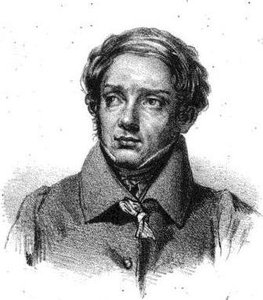
louis léopold robert
1794 - 1835 , Switzerland
Quick Facts
- Artistic Movement Or Style: Anglo-American painting
- Artists Or Movements Influenced By This Artist: ['John Constable']
- Artists Who Influenced This Artist:
- Benjamin West
- Washington Allston
- Date Of Birth: 19 Oct 1794
- Date Of Death: 5 May 1859
- Full Name: Charles Robert Leslie
- Nationality: British
- Notable Artworks:
- The Murder of Rutland
- Londoners Gypsying
- Portrait of John Constable
- Queen Victoria Coronation
- Place Of Birth: London, England
Related Articles

Romantic Landscapes: 10 Masterpieces for Your Home | ArtsDot
Journey through 10 Romantic landscape masterpieces by Friedrich, Turner & Cole. Explore emotional art, sublime nature scenes & iconic 19th-century paintings. Find museum-quality reproductions for your home at ArtsDot.com – discover the full collection online!

Beyond the Horizon: 10 Landscape Masterpieces for Your Home Decor
Journey through 10 breathtaking landscape paintings by Monet, Van Gogh & more! Explore iconic artworks, artistic techniques & find inspiration for your home decor. Museum-quality reproductions at ArtsDot.com. Discover all masterpieces on ArtsDot.com
Hubert Robert: Picturing Ruins, Preserving Memory – A Study of Romantic Antiquarianism & Artistic Innovation
Explore the captivating world of Hubert Robert, master of Romantic landscape painting & 'capriccio' ruins. Discover his historical context, artistic innovations, and collecting insights with ArtsDot.

Evocations of Place: A Historical Journey Through Landscape Art
Explore the rich history of landscape art with ArtsDot. Discover renowned artists, movements like Impressionism & Romanticism, and expert guidance for collecting timeless pieces. Find your perfect serene escape today!

The Sublime and the Picturesque: Exploring Emotion & Nature in Romantic Landscape Painting
Explore the emotional power of Romantic landscape painting! Discover the sublime & picturesque traditions, key artists like Friedrich & Cole, and find your perfect artwork at ArtsDot.