 Preview
 Send
Send Share
Share
 Details

 Download
 Similars
 X-Ray
X-Ray Diaporama
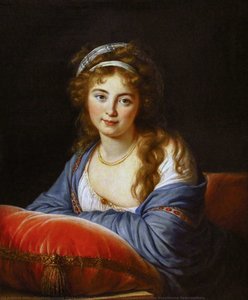
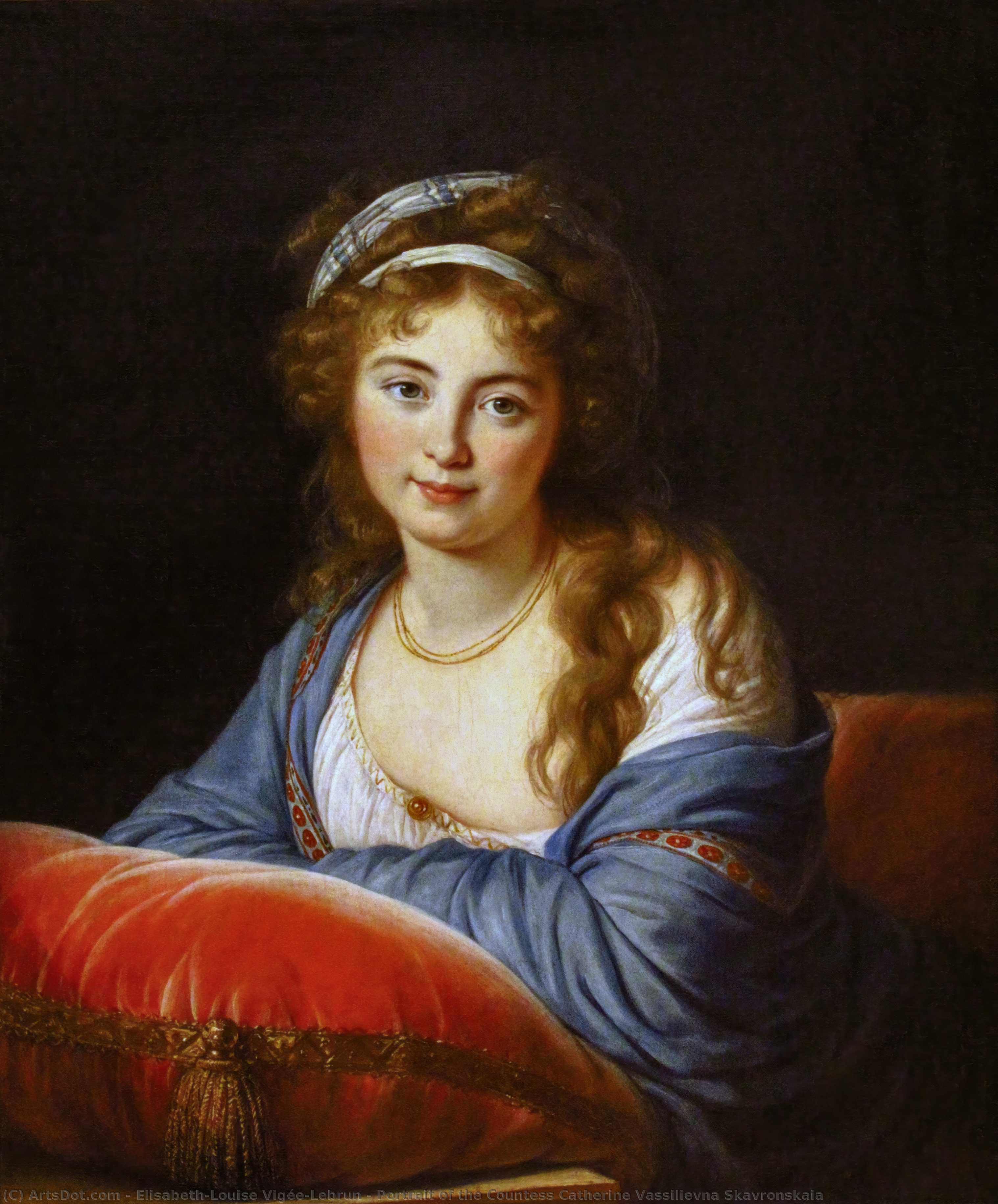
Portrait of the Countess Catherine Vassilievna Skavronskaia


 Read More
Hand Made Oil Reproduction
Hand-painted oil on canvas in your size and frame, made to order by our artists. ( Buy Print Buy Image)




P118B $10

P118H $10

P118W $10

P438Z $10

P508JH $12

P508YH $12

P805H $10

P805Z $10

P919BZ $10

P919G $10

P919XJ $10

P959ZH $10

P968JZ $12

W106C $8

W218G $10

W218JH $8

W218Y $10

W307PJ $10

W316G $10

W316PJ $8

W316Y $10

W398PJ $8

W4111J $10

W500HY $15

W500JH $15

W692G $12

W849H $8

W940BG $15

W953PJ $8




Pick from our preset sizes that match the artwork's original proportions.

You may enter your own dimensions to fit a specific frame or space. If your selected size does not match the original image's proportions, we will either crop the artwork or extend the painting with additional hand-painted elements. A digital mockup will be sent for your approval before production begins.
Please note that the on-screen preview does not reflect the actual cropping or extension. Only the mockup will accurately show the final composition.
While custom sizes are available, we recommend selecting a dimension from the predefined list to preserve the original proportions.
After order, ArtsDot.com team will email client for instructions and provide a mockup preview
Worldwide Delivery () in 3/4 weeks instead of standard 5 weeks. (16 August). No compromise on quality.

Free Worldwide Express Shipping

High-Quality Linen Canvas

Full Shipping Insurance

Customs Tax Refund Guarantee

True Color Matching Guarantee

60-Day Return Policy (Defects Only)

100% Money-Back Guarantee

Bulk Discount Offer
 Glass option is only available in size under 110 CM

Portrait of the Countess Catherine Vassilievna Skavronskaia
Reproduction Medium
Reproduction Size
-


Total Price
$ 263
Artwork Description
A Portrait of Grace and Power: Louise Élisabeth Vigée Le Brun’s Countess Catherine Skavronskaia
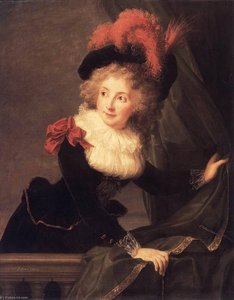
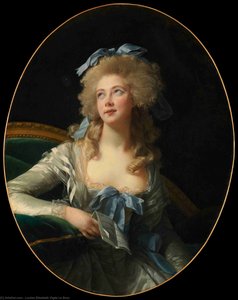
The image before us—a portrait of the Countess Catherine Vassilievna Skavronskaia—is more than a simple likeness; it's a carefully constructed tableau of aristocratic elegance, a testament to the skill and discerning eye of Louise Élisabeth Vigée Le Brun. Painted during the late Rococo period, this work embodies the era’s fascination with light, color, and an idealized vision of beauty and social status. The dark background serves not as mere backdrop but as a deliberate device, intensifying the luminosity of the Countess's pale complexion and drawing the viewer’s attention directly to her captivating presence. The choice of white for her gown, embroidered with delicate blue accents, immediately signals her elevated position within Russian society – a visual shorthand for wealth, refinement, and access to the highest circles.
Rococo Refinement: Technique and Composition
Vigée Le Brun’s mastery lies in her ability to seamlessly blend Rococo exuberance with emerging Neoclassical principles. Observe how she employs light and shadow, particularly the soft illumination from the left that sculpts the Countess's face and hair. This chiaroscuro technique isn’t merely decorative; it imbues the portrait with a sense of depth and volume, lending a tangible quality to her features. The loose curls framing her face are characteristic of the period, suggesting both youthful beauty and a touch of playful sophistication. The vibrant red velvet cushion beneath her hand adds a bold splash of color, anchoring the composition and hinting at the luxuriousness of her surroundings. The artist’s meticulous attention to detail—the delicate embroidery, the subtle curve of the Countess's neck, the gentle expression on her face—demonstrates an unwavering commitment to capturing not just appearance but also the very essence of her subject.
A Window into a World: Historical Context and Symbolism
To fully appreciate this portrait, it’s crucial to understand its historical context. Louise Élisabeth Vigée Le Brun was one of the most prominent female artists of her time, navigating a male-dominated art world with remarkable success. She served as the official painter to Queen Marie Antoinette and later to Madame Therese Hébermann, documenting the lives and fashions of the French aristocracy during a period of immense social and political upheaval. The Countess Catherine Skavronskaia herself was a prominent figure in Russian society, known for her beauty, intelligence, and connections. The portrait likely served as both a personal memento and a statement of status – a visual declaration of her position within the intricate web of European nobility. The inclusion of the red cushion, a symbol of wealth and comfort, further reinforces this message.
Emotional Resonance: A Portrait of Quiet Confidence
Beyond its technical brilliance and historical significance, the portrait possesses a remarkable emotional resonance. The Countess’s serene expression—a slight smile playing on her lips—conveys a sense of quiet confidence and contentment. It's not an overtly dramatic pose; rather, it suggests an inner strength and self-assuredness. Vigée Le Brun skillfully captures this subtle nuance, inviting the viewer to connect with the subject on a deeper level. The portrait isn’t simply a representation of a woman; it’s a glimpse into her personality—a testament to the artist's ability to translate emotion onto canvas. This piece remains a powerful example of how portraiture could simultaneously document history and reveal the individual spirit within.
For those seeking a stunning reproduction of this iconic artwork, ArtsDot offers meticulously crafted hand-painted reproductions that capture the essence of Vigée Le Brun’s masterpiece with unparalleled fidelity. Explore our collection today to bring this exquisite portrait into your home or office – a timeless symbol of elegance and grace.
Related Artworks
Artist Biography
A Life Painted in Elegance: The World of Louise Élisabeth Vigée Le Brun
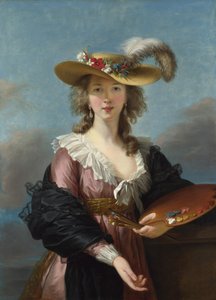
Louise Élisabeth Vigée Le Brun, a name synonymous with the grace and refinement of 18th-century French portraiture, was more than just a painter; she was a chronicler of an era, a master of capturing not merely likeness but also the very essence of her sitters. Born in Paris in 1755, her artistic journey began within a family already steeped in the world of art. Her father, Louis Vigée, a successful pastel portraitist, recognized and nurtured her talent from a remarkably young age, providing early instruction that would lay the foundation for a dazzling career. This familial encouragement was crucial, especially after his untimely death when she was just twelve, prompting her mother to seek further training for Louise with established artists like Blaise Bocquet, Pierre Davesne, and Gabriel Briard. These formative years instilled in her not only technical skill but also an appreciation for the nuances of light, color, and composition that would become hallmarks of her style. Even as a young woman, Vigée Le Brun was already earning a living through her art, demonstrating a precocious talent and unwavering dedication to her craft.
Royal Favor and Artistic Flourishing
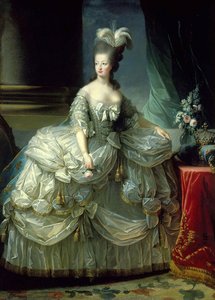
The turning point in Vigée Le Brun’s career arrived with her commission to paint Marie Antoinette in 1778. This wasn't simply an artistic opportunity; it was an entry into the very heart of French society, a world of opulent courts and discerning patrons. The Queen, initially hesitant about sitting for a portrait, quickly warmed to Vigée Le Brun’s ability to portray her with both dignity and approachability – a delicate balance that few artists could achieve. This commission led to a cascade of further royal portraits, establishing Vigée Le Brun as the official portraitist to Marie Antoinette and solidifying her position within the French aristocracy. Her studio became a hub for the elite, attracting members of high society eager to be immortalized on canvas. She possessed an extraordinary gift for capturing not only physical resemblance but also the personality and social standing of her subjects. This talent, combined with her innate charm and diplomatic skills, allowed her to navigate the complex world of courtly patronage with remarkable success. Her style during this period blended elements of Rococo’s playful elegance with a growing Neoclassical sensibility, resulting in portraits that were both fashionable and timeless.
A Style Defined by Grace and Naturalism
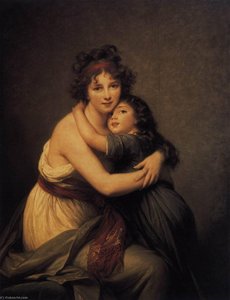
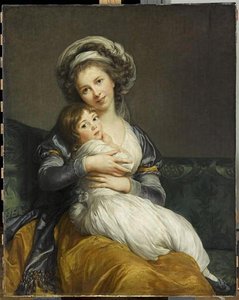
Vigée Le Brun's artistic approach was characterized by a remarkable ability to infuse her portraits with life and emotion. She moved away from the stiff formality of earlier portraiture, opting instead for more natural poses and expressions. Her brushwork was fluid and delicate, creating a sense of softness and luminosity in her paintings. She paid meticulous attention to detail, particularly in the rendering of fabrics, jewelry, and hairstyles – elements that conveyed status and refinement. While influenced by Rococo’s emphasis on pastel shades and decorative flourishes, she also embraced Neoclassical principles of clarity and balance, resulting in a unique style that was both elegant and sophisticated. Notable works like *Self-Portrait with Her Daughter, Julie*, demonstrate her mastery of capturing intimate moments and conveying maternal affection. The numerous portraits of Marie Antoinette, including the iconic depiction of the Queen holding a rose, showcase her ability to portray royalty with both grandeur and humanity. Beyond portraiture, Vigée Le Brun also explored landscape and genre scenes, demonstrating her versatility as an artist.
Exile, Resilience, and Lasting Legacy
The French Revolution irrevocably altered the course of Vigée Le Brun’s life. As a close associate of the royal family, she faced increasing scrutiny and ultimately fled France in 1789 to avoid persecution. This marked the beginning of a period of exile that would take her across Europe – to Russia, Italy, England, Switzerland, and beyond. Despite the upheaval, she continued to paint, finding patronage among European aristocrats and establishing herself as an internationally renowned artist. Her travels broadened her artistic horizons, exposing her to different styles and techniques. Upon returning to France in 1809, she resumed her career, though the political climate had changed dramatically. She published her memoirs, *Souvenirs*, offering a fascinating glimpse into the art world of her time and providing invaluable insights into her life and experiences. Vigée Le Brun’s legacy extends far beyond her technical skill; she was a pioneer for women in the arts, achieving remarkable success in a field dominated by men. Her paintings remain celebrated for their beauty, elegance, and historical significance, offering a captivating window into the world of 18th-century France and solidifying her place as one of history’s most accomplished portraitists. Her ability to capture not just appearances but also the inner lives of her sitters ensures that her work continues to resonate with audiences today.
Louise Élisabeth Vigée Le Brun
1755 - 1842 , France
Quick Facts
- Artistic Movement Or Style: Rococo & Neoclassical
- Artists Who Influenced This Artist:
- Rubens
- Van Dyke
- Rembrandt
- Date Of Birth: April 16, 1755
- Date Of Death: 1842
- Full Name: Louise Élisabeth Vigée Le Brun
- Nationality: French
- Notable Artworks:
- Self-Portrait with Julie
- Portraits of Marie Antoinette
- Queen in Rose Dress
- Place Of Birth: Paris, France
Related Articles
Vigée Le Brun: Portraiture, Patronage & Feminine Identity in 18th-Century France
Explore the life & art of Louise Élisabeth Vigée Le Brun, Marie Antoinette’s renowned portraitist. Discover her Rococo style, self-portraits, and influence on 18th-century French painting. A deep dive into patronage & feminine identity.
Charles Le Brun: Master of French Baroque Classicism & His Enduring Legacy
Explore the life & art of Charles Le Brun, master of French Baroque Classicism. Discover his royal commissions, influence on Versailles, and enduring legacy through detailed analysis & stunning artworks.

Rococo's Radiant Legacy: 10 Masterpieces for Your Home |
Indulge in the elegance of Rococo! Explore 10 masterpieces by Fragonard, Boucher & Watteau. Discover the stories behind these iconic paintings and bring timeless art to your home with museum-quality reproductions from .

The Rococo Aesthetic: Opulence, Rebellion & the Pursuit of Pleasure in 18th-Century Art
Explore the opulent world of Rococo art! Discover its origins, key artists like Watteau & Boucher, and lasting influence on design. Expert insights for collectors & enthusiasts.
Charles-André van Loo: A Study in Rococo Portraiture & the French Court's Artistic Dynamics
Explore the elegant world of Charles-André van Loo, a master of Rococo portraiture at the French court. Discover his life, techniques, and enduring influence on 18th-century art. Hand-painted reproductions available.