 Preview
 Send
Send Share
Share
 Details

 Download
 Similars
 X-Ray
X-Ray Diaporama
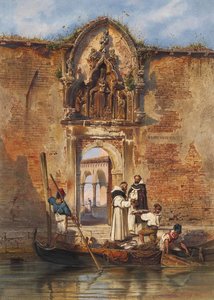
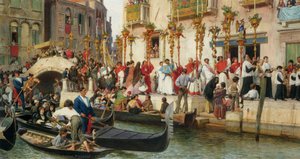
Monks Buying Fish before the Portal of the Madonna della Misericordia
 Acrylic On Canvas
- WallArt
- Genre Painting
 1855
1855 47.0 x 33.0 cm
 National Gallery of Art
 Read More
Hand Made Oil Reproduction
Hand-painted oil on canvas in your size and frame, made to order by our artists. ( Buy Print Buy Image)




P118B $10

P118H $10

P118W $10

P438Z $10

P508JH $12

P508YH $12

P805H $10

P805Z $10

P919BZ $10

P919G $10

P919XJ $10

P959ZH $10

P968JZ $12

W106C $8

W218G $10

W218JH $8

W218Y $10

W307PJ $10

W316G $10

W316PJ $8

W316Y $10

W398PJ $8

W4111J $10

W500HY $15

W500JH $15

W692G $12

W849H $8

W940BG $15

W953PJ $8




Pick from our preset sizes that match the artwork's original proportions.

You may enter your own dimensions to fit a specific frame or space. If your selected size does not match the original image's proportions, we will either crop the artwork or extend the painting with additional hand-painted elements. A digital mockup will be sent for your approval before production begins.
Please note that the on-screen preview does not reflect the actual cropping or extension. Only the mockup will accurately show the final composition.
While custom sizes are available, we recommend selecting a dimension from the predefined list to preserve the original proportions.
After order, ArtsDot.com team will email client for instructions and provide a mockup preview
Worldwide Delivery () in 3/4 weeks instead of standard 5 weeks. (16 August). No compromise on quality.

Free Worldwide Express Shipping

High-Quality Linen Canvas

Full Shipping Insurance

Customs Tax Refund Guarantee

True Color Matching Guarantee

60-Day Return Policy (Defects Only)

100% Money-Back Guarantee

Bulk Discount Offer
 Glass option is only available in size under 110 CM

Monks Buying Fish before the Portal of the Madonna della Misericordia
Reproduction Medium
Reproduction Size
-


Total Price
$ 263
Artwork Description
A Moment of Grace: Ludwig Passini’s Venetian Chronicle
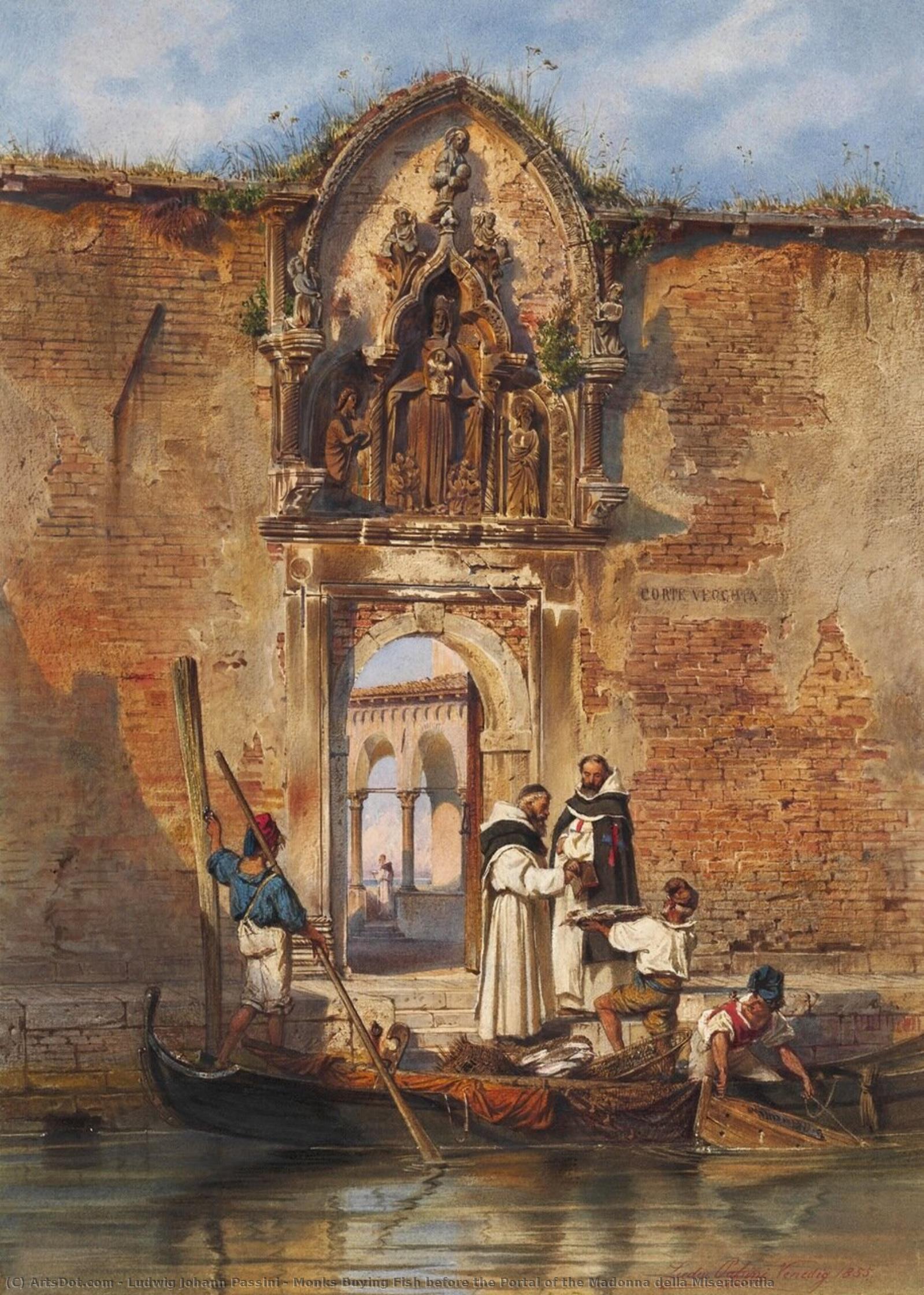
Ludwig Johann Passini's “Monks Buying Fish before the Portal of the Madonna della Misericordia,” painted in 1855, isn’t merely a depiction of a marketplace scene; it’s a carefully constructed tableau brimming with quiet spirituality and the everyday rhythms of Venetian life. The painting transports us to a sun-drenched corner of the city, where the mundane act of purchasing fish becomes imbued with a profound sense of reverence. Passini, a master of genre painting, skillfully captures not just the visual details – the worn brickwork of the church façade, the vibrant colors of the fish, the simple robes of the monks – but also the palpable atmosphere of community and faith.
The composition is remarkably balanced, drawing our eye to the central figures engaged in their transaction. Two men, likely merchants and monks respectively, stand close together, their gestures suggesting a comfortable familiarity. Around them, other individuals bustle about, creating a sense of lively activity that contrasts subtly with the solemnity of the religious portal looming behind. Notice how Passini uses light – dappled sunlight filtering through the buildings – to create depth and highlight key elements within the scene. The artist’s meticulous attention to detail, from the texture of the fish scales to the folds in the monks' garments, speaks volumes about his dedication to realism and his ability to capture the essence of a particular moment in time.
The Madonna della Misericordia: A Focal Point of Devotion
Understanding the context surrounding this painting is crucial to appreciating its deeper meaning. The “Madonna della Misericordia” (Our Lady of Mercy) was a significant devotional image within Venice, and Passini’s choice to depict monks purchasing fish before its portal immediately connects the scene to religious practice. The Madonna della Misericordia was associated with charity and compassion – themes central to Venetian society at the time. The act of buying fish, therefore, isn't simply about acquiring sustenance; it represents a contribution to the community, an embodiment of mercy and generosity.
Furthermore, the portal itself acts as a visual anchor, framing the scene with its architectural grandeur. The weathered brickwork and arched doorway suggest centuries of devotion, grounding the contemporary transaction in a rich historical tradition. The painting subtly invites us to contemplate the intersection between faith, commerce, and daily life – a theme that resonated deeply within the Venetian culture of the 19th century.
Technique and Style: A Masterful Blend
Passini’s technique is characterized by a remarkable blend of realism and sensitivity. He employed watercolor and gouache on paper, creating a luminous quality that perfectly captures the light and atmosphere of Venice. The artist's use of layering and glazing techniques allows him to build up color gradually, achieving subtle variations in tone and texture. Observe how he renders the reflections on the wet fish – a testament to his keen eye for detail and his ability to capture fleeting moments of beauty.
The painting’s style is firmly rooted in the academic tradition, yet it possesses a distinctly Venetian sensibility. Passini was influenced by artists like Carlo Watts, but he developed a unique voice through his focus on everyday subjects and his masterful use of light and color. His work reflects a deep appreciation for the beauty of ordinary life – a quality that makes “Monks Buying Fish” such a compelling and enduring image.
A Legacy of Venetian Charm
Ludwig Passini’s “Monks Buying Fish before the Portal of the Madonna della Misericordia” is more than just a painting; it's a window into the soul of Venice. It offers a glimpse into the daily lives, beliefs, and artistic sensibilities of a vibrant city at the cusp of modernity. Reproductions of this captivating work continue to resonate with viewers today, evoking a sense of nostalgia for a bygone era and reminding us of the enduring power of art to capture the essence of human experience.
Related Artworks
Artist Biography
Ludwig Johann Passini: A Venetian Master of Genre Painting
Ludwig Johann Passini (1832–1903) stands as a pivotal figure in 19th-century Austrian and Italian art, celebrated primarily for his exquisitely rendered genre scenes and captivating watercolors depicting Venetian life. Born in Vienna on July 9, 1832, Passini’s artistic journey began under the tutelage of his father, Johann Nepomuk Passini, a distinguished engraver who instilled in him a foundational understanding of visual craftsmanship. Moving to Trieste in 1850, the Passini family embraced a cosmopolitan existence, shaping Passini's exposure to diverse cultural influences. His formal artistic education culminated at the Vienna Academy of Art, where he honed his skills alongside luminaries like Joseph von Führich and Leopold Kupelwieser. This formative period cemented his stylistic sensibilities – primarily focused on realism—and established him as a student of classical tradition. Recognizing Passini’s talent, Führich encouraged him to pursue studies in Leipzig, furthering his artistic development. Notably, he collaborated closely with Anton Romako at Werner's studio, immersing himself in the vibrant artistic milieu of Venice and Rome during the 1850s and 60s. Passini’s Venetian residency proved transformative, fostering connections with fellow artists like Henry Woods, August von Pettenkofen, Carl van Haanen, Wolkoff, Ruben, and Thoren, who established a studio in Palazzo Vendramin Calergi – a space that would serve as Passini's creative home for three decades. Within this influential environment, he engaged in spirited discussions about artistic vision and technique with contemporaries, shaping his own distinctive approach to painting. The presence of Luigi Mion alongside him solidified the artistic community’s spirit. Passini’s oeuvre is characterized by a remarkable sensitivity to everyday life—particularly Venetian society—and an ability to convey profound human emotion through meticulously observed details. His watercolors captured scenes of bustling marketplaces, intimate domestic interiors, and portraits of ordinary individuals with unwavering compassion. Passini's stylistic evolution mirrored the broader trends of Impressionism and Realism, yet he retained a steadfast commitment to classical principles of composition and color harmony. Among his most celebrated works are “A Shared Confidence” (1870), depicting scholarly figures engaged in intellectual discourse; "Princess Rospigliosi and Baroness Baude," showcasing opulent Venetian aristocratic life; and “Roman Children at Play,” capturing the carefree joy of childhood amidst the grandeur of Rome’s monuments. Furthermore, Passini's portraits—including those of Katherine Bronson and Sir Henry Layard—demonstrate his mastery of psychological realism and his ability to capture the essence of his subjects. His legacy endures as a testament to the enduring power of genre painting and Venetian watercolor artistry during the Belle Époque.
ludwig johann passini
1832 - 1903
Quick Facts
- Artistic Movement Or Style: Realist
- Artists Or Movements Influenced By This Artist: ['Henry Woods']
- Artists Who Influenced This Artist:
- Joseph von Führich
- Leopold Kupelwieser
- Date Of Birth: 1832
- Date Of Death: 1903
- Full Name: Ludwig Johann Passini
- Nationality: Austrian
- Notable Artworks:
- A Shared Confidence
- Roman Children at Play
- Princess Rospigliosi and Baroness Baude
- Place Of Birth: Vienna, Austria
Related Articles
Wilhelmus de Zwart: Capturing Dutch Life Through the Lens of Realism & Impressionism
Explore the captivating world of Wilhelmus de Zwart, a Dutch master bridging Realism & Impressionism. Discover his landscapes, cityscapes, and unique technique – a compelling study for art enthusiasts and collectors.
The Golden Light of Innovation: Exploring the Venetian Renaissance Art Movement (1430–1580)
Explore the Golden Age of Venetian art (1430–1580). Discover Giorgione, Titian & Tintoretto's techniques, the 'colorito' revolution, and lasting influence. Expert insights for collectors & enthusiasts.
From Posters to Palettes: The Ascendance of Hand-Painted Fan Art & the Redefinition of Collectible Fandom
Explore the fascinating world of hand-painted fan art! Discover its rise as a collectible art form, market trends, artist collaborations & investment potential. Expert insights for discerning collectors.

Contemporary Realism: A Revival of Figurative Painting & Identity Exploration
Explore the resurgence of contemporary realism in art. Discover key artists, market insights & the enduring power of figurative painting. Expert guidance for collectors.
Giorgione: Enigma and Innovation in Early Venetian Renaissance Painting
Explore the enigmatic world of Giorgione, a pivotal figure in the Venetian Renaissance. Discover his innovative techniques, iconic paintings like 'The Tempest', and lasting influence on art history. Learn more at ArtsDot.