 Preview
 Send
Send Share
Share
 Details

 Download
 Similars
 X-Ray
X-Ray Diaporama
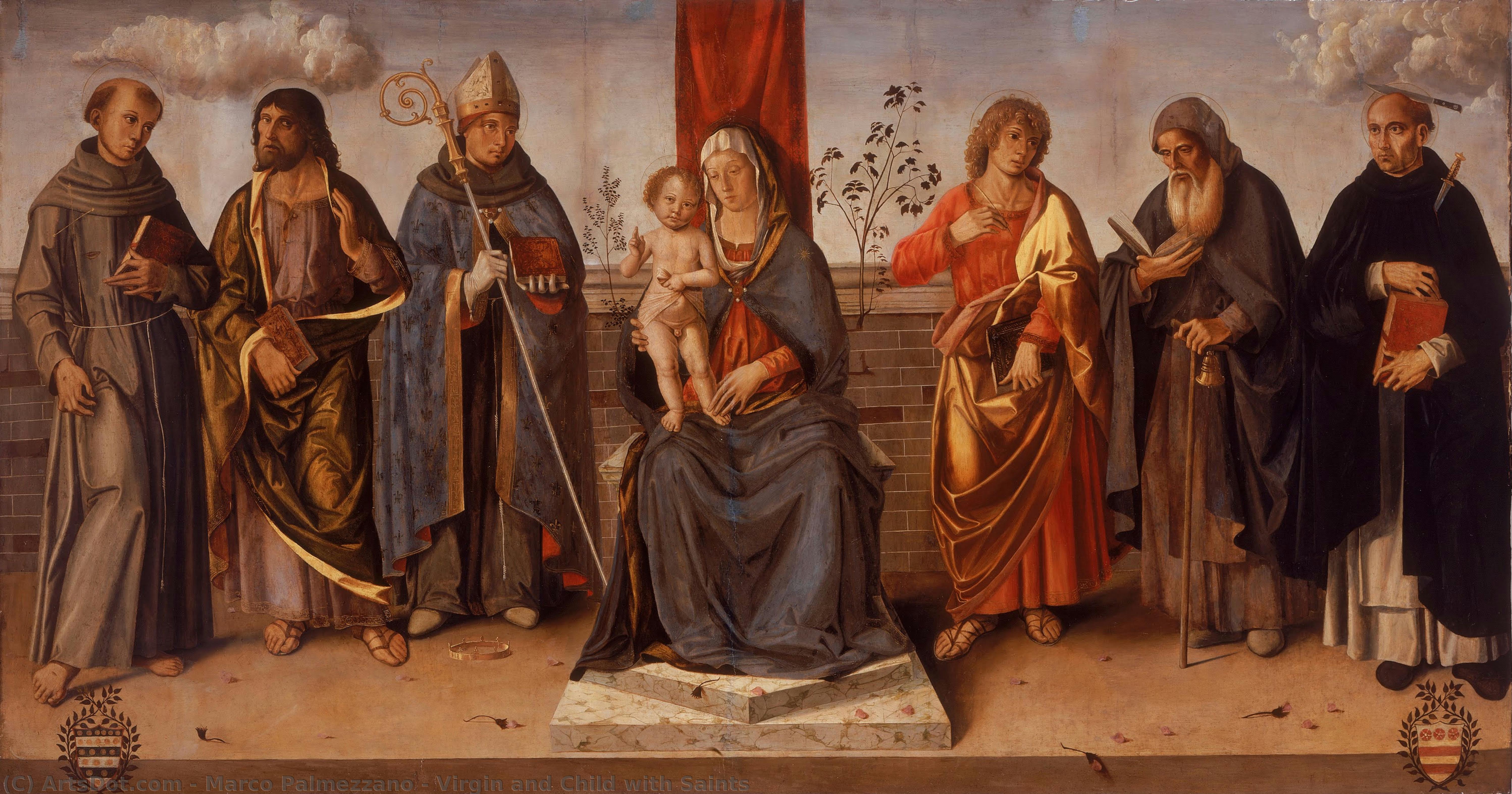
Virgin and Child with Saints
 Renaissance
 1458
1458- Renaissance
 572.0 x 825.0 cm
 Walker Art Gallery
 Read More
Hand Made Oil Reproduction
Hand-painted oil on canvas in your size and frame, made to order by our artists. ( Buy Print Buy Image)




P118B $10

P118H $10

P118W $10

P438Z $10

P508JH $12

P508YH $12

P805H $10

P805Z $10

P919BZ $10

P919G $10

P919XJ $10

P959ZH $10

P968JZ $12

W106C $8

W218G $10

W218JH $8

W218Y $10

W307PJ $10

W316G $10

W316PJ $8

W316Y $10

W398PJ $8

W4111J $10

W500HY $15

W500JH $15

W692G $12

W849H $8

W940BG $15

W953PJ $8




Pick from our preset sizes that match the artwork's original proportions.

You may enter your own dimensions to fit a specific frame or space. If your selected size does not match the original image's proportions, we will either crop the artwork or extend the painting with additional hand-painted elements. A digital mockup will be sent for your approval before production begins.
Please note that the on-screen preview does not reflect the actual cropping or extension. Only the mockup will accurately show the final composition.
While custom sizes are available, we recommend selecting a dimension from the predefined list to preserve the original proportions.
After order, ArtsDot.com team will email client for instructions and provide a mockup preview
Worldwide Delivery () in 3/4 weeks instead of standard 5 weeks. (17 August). No compromise on quality.

Free Worldwide Express Shipping

High-Quality Linen Canvas

Full Shipping Insurance

Customs Tax Refund Guarantee

True Color Matching Guarantee

60-Day Return Policy (Defects Only)

100% Money-Back Guarantee

Bulk Discount Offer
 Glass option is only available in size under 110 CM

Virgin and Child with Saints
Reproduction Medium
Reproduction Size
-


Total Price
$ 263
Artwork Description
A Celestial Gathering: The Divine Presence in Palmazzano’s Masterpiece
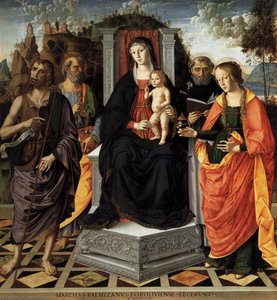
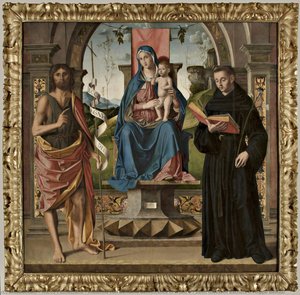
In the quiet, hallowed atmosphere of Marco Palmezzano’s Virgin and Child with Saints, the viewer is invited into a sacred space where the boundaries between the earthly and the divine dissolve. This monumental work, dating from 1458, presents a breathtaking assembly of holy figures gathered around the Virgin Mary and the Christ Child. The composition is anchored by the tender, central presence of the Madonna, whose maternal grace serves as the emotional heartbeat of the piece. Surrounding her is a celestial court of saints—including Francis, Matthew, Louis of Toulouse, John the Evangelist, Anthony Abbot, and Peter Martyr—each rendered with a profound sense of individual devotion. The arrangement, while possessing a certain stiff, formal dignity reminiscent of older traditions, creates a powerful sense of stability and eternal order that commands the attention of any room it inhabits.
The artistry of Palmezzano lies in his ability to weave complex theological narratives into a visually seamless tapestry. To look closely at the floor of this sacred scene is to discover a hidden language of symbols designed to stir the soul. The poppies strewn across the ground serve as poignant emblems of mortality and death, yet they are juxtaposed against a delicate sapling breaking through the stone wall—a breathtaking metaphor for new life and the triumph of Christ over the grave. For the discerning collector or interior designer, these layers of meaning offer a profound depth; the painting is not merely a decorative element but a meditative tool that speaks to the cyclical nature of existence, making it an intellectually stimulating centerpiece for a sophisticated collection.
Technically, the work exemplifies the transition of Italian Renaissance sensibilities, blending structured geometry with a burgeoning interest in naturalistic detail. The light falls across the heavy, liturgical garments of the saints, highlighting the rich textures of fabric and the soft, luminous skin of the Christ Child. This mastery of light and shadow creates a three-dimensional presence that brings the figures into the viewer's immediate reality. Historically, the painting likely served as a celebratory union between the prestigious Michiel and Donà families of Venice, evidenced by the heraldic shields tucked into the lower corners. This connection to Venetian nobility adds an aura of prestige and historical weight to the work.
For those seeking to integrate fine art into a contemporary living space, a high-quality reproduction of this masterpiece offers more than just aesthetic beauty; it provides an infusion of history, spirituality, and timeless elegance. Whether placed in a grand library, a formal dining hall, or a curated gallery wall, the Virgin and Child with Saints acts as a window into the Renaissance spirit. Its ability to evoke reverence and contemplation makes it an incomparable choice for creating an atmosphere of peace, sophistication, and enduring cultural significance.
Related Artworks

Artist Biography
Gerard David: A Master of Early Netherlandish Portraiture
Gerard David, born around 1460 in Oudewater, Netherlands, and tragically dying in Bruges circa 1523, stands as a pivotal figure in the burgeoning world of early Netherlandish painting. While often overshadowed by his more flamboyant contemporaries like Jan van Eyck and Rogier van der Weyden, David’s meticulous realism, profound psychological insight, and innovative use of color quietly established him as one of the most significant artists of his era. His career unfolded primarily within the vibrant commercial hub of Bruges, a city renowned for its thriving art trade and cosmopolitan atmosphere – a setting that profoundly shaped his artistic vision. David's legacy isn’t defined by grand, sweeping narratives but rather by an extraordinary ability to capture the essence of human experience within remarkably detailed and subtly expressive portraits and altarpieces.Early Life and Artistic Training
Information regarding David’s formative years remains somewhat elusive, shrouded in the typical gaps of historical records for artists of his time. However, it is generally accepted that he spent his early adulthood in Bruges, quickly establishing himself as a respected member of the city's painter’s guild by 1494. Crucially, David was apprenticed to the renowned master, Antonello da Messina, who had recently arrived in Bruges and brought with him a distinctly Venetian influence – a vibrant palette and a looser, more expressive approach to form. This exposure proved transformative, injecting a dynamism into David’s work that distinguished it from the prevailing stylistic conventions of the time. He also benefited greatly from the tutelage of Hugo van der Goes, whose powerful emotionalism and dramatic compositions undoubtedly left an indelible mark on David's artistic development. The influence of Jan van Eyck is also evident in his meticulous attention to detail and mastery of oil paint, though David ultimately developed a more restrained and psychologically nuanced style.Key Works and Artistic Style
David’s oeuvre is characterized by an extraordinary level of realism, achieved through painstaking observation and an unparalleled understanding of human anatomy and expression. Unlike the often idealized representations favored by some of his contemporaries, David depicted his subjects with a remarkable honesty, capturing their individual personalities and emotional states with subtle grace. His portraits are particularly noteworthy for their psychological depth; he doesn’t merely record likenesses but rather attempts to convey the inner lives of his sitters. The *Portrait of the Duke of Urbino* (circa 1465-1466) exemplifies this approach, revealing a complex interplay of power and vulnerability within the subject's gaze. Beyond portraits, David excelled in altarpieces, notably the *Polyptych of the Misericordia* (1460-1462), which showcases his mastery of perspective, color, and narrative composition. The detail is astonishing – from the folds of clothing to the expressions on the faces of the figures—and the emotional impact is profound. His most famous work, *The Judgment of Cambyses* (c. 1485-1490), a pair of terrifyingly realistic depictions of the gruesome execution of Sisamnes, demonstrates his willingness to confront difficult themes and explore the darker aspects of human nature. The scene’s visceral impact is heightened by David's masterful use of color and light, creating a dramatic and unsettling atmosphere.Influence and Legacy
David’s influence on subsequent generations of artists was considerable, though often indirect. His meticulous realism and psychological insight served as a model for many portraitists who followed him, while his innovative use of color helped to pave the way for later developments in Renaissance painting. He is considered one of the key figures in establishing Bruges as a major center of artistic production during the early 16th century. Despite being somewhat overlooked during his lifetime and for centuries afterward, David’s work has been increasingly recognized for its profound beauty and artistic merit. Today, his paintings are treasured possessions of museums around the world, offering viewers a rare glimpse into the mind and soul of a truly exceptional artist. His legacy lies not just in the technical brilliance of his art but also in his ability to capture the complexities of human experience with remarkable sensitivity and skill.Historical Context and Significance
David’s artistic career unfolded during a period of significant social, economic, and cultural change in Europe. The rise of the merchant class in cities like Bruges created a demand for portraits and other works of art that reflected their wealth and status. At the same time, the rediscovery of classical antiquity spurred a renewed interest in humanism and realism in art. David’s work reflects both these trends – his portraits are often commissioned by wealthy patrons, while his meticulous attention to detail and psychological insight demonstrate a deep understanding of human nature. His paintings provide valuable insights into the social and cultural life of Bruges during the late 15th and early 16th centuries. Furthermore, David’s career coincided with a period of intense artistic rivalry between Flemish and Italian painters, and his success helped to establish the reputation of the Flemish school as one of the leading artistic forces in Europe.
marco palmezzano
1460 - 1539 , Italy
Quick Facts
- Artistic Movement Or Style: Early Renaissance
- Artists Or Movements Influenced By This Artist: ['Correggio']
- Artists Who Influenced This Artist:
- Leonardo da Vinci
- Antonello da Messina
- Date Of Birth: c. 1460
- Date Of Death: c. 1524
- Full Name: Andrea Solari
- Nationality: Italian
- Notable Artworks:
- Madonna with Green Cushion
- Ecce Homo (Poldi-Pezzoli)
- Place Of Birth: Milan, Lombardy
Related Articles
Uffizi's 25 Masterpieces: Renaissance Art & Timeless Decor Inspiration
Journey through the Uffizi Gallery's 25 most iconic Renaissance artworks! Explore Botticelli, Leonardo da Vinci & Michelangelo’s masterpieces. Find museum-quality art reproductions and curated decor ideas to bring timeless Italian beauty into your home. Discover all masterpieces on ArtsDot.com

Fra Angelico's Masterpieces: 25 Renaissance Paintings for Your Home | ArtsDot
Explore 25 breathtaking masterpieces by Fra Angelico, a Renaissance master. Discover the stories behind his iconic frescoes, Annunciations & religious art. Find museum-quality reproductions and elevate your home decor with ArtsDot.com.
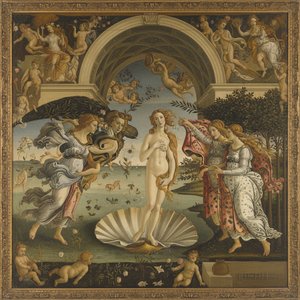
Botticelli's Masterpieces: Explore 25 Iconic Renaissance Paintings | ArtsDot
Journey through Botticelli's world with 25 iconic Renaissance paintings. Explore 'Birth of Venus,' 'Primavera,' and more—stories, techniques & timeless beauty. Find museum-quality art reproductions for your home at ArtsDot.com.
Raphael's Masterpieces: 25 Iconic Paintings & Renaissance Art for Your Home
Explore 25 breathtaking Raphael paintings! Journey through the Italian Renaissance with masterpieces like 'School of Athens' & iconic Madonnas. Find museum-quality art reproductions and elevate your home decor on ArtsDot.com.
Leonardo da Vinci's Masterpieces: Explore 25 Iconic Artworks for Your Home | ArtsDot
Journey through Leonardo da Vinci's genius with our curated selection of 25 iconic artworks. Explore the stories behind Mona Lisa, The Last Supper & more Renaissance masterpieces. Find museum-quality art reproductions for your home at ArtsDot.com.