 Preview
 Send
Send Share
Share
 Details

 Download
 Similars
 X-Ray
X-Ray Diaporama
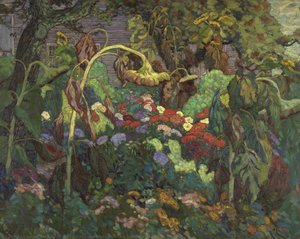
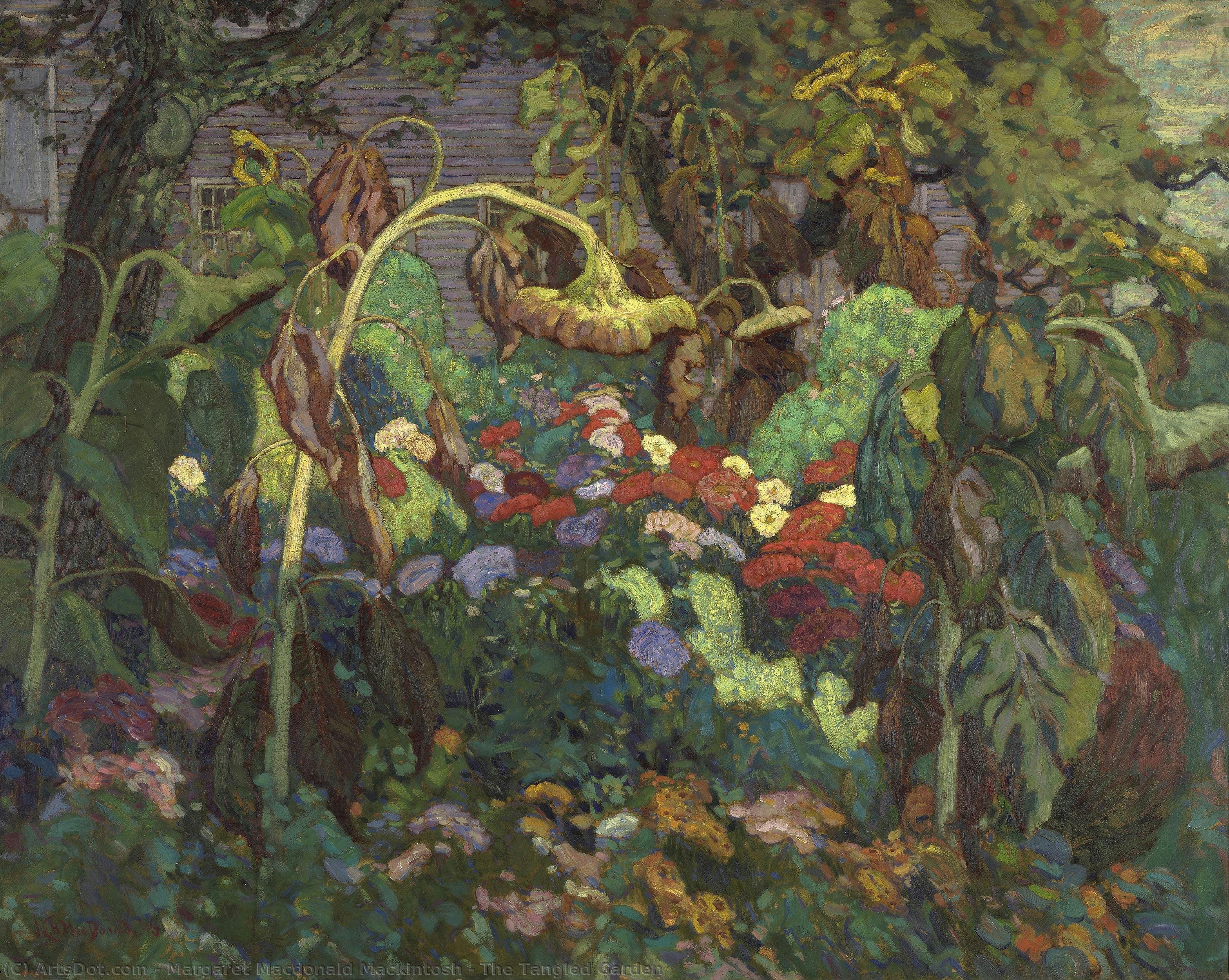
The Tangled Garden
 Acrylic On Canvas
- WallArt
- Glasgow Style
 1916
1916 121.0 x 152.0 cm
 National Gallery of Canada
 Read More
Hand Made Oil Reproduction
Hand-painted oil on canvas in your size and frame, made to order by our artists. ( Buy Print Buy Image)




P118B $10

P118H $10

P118W $10

P438Z $10

P508JH $12

P508YH $12

P805H $10

P805Z $10

P919BZ $10

P919G $10

P919XJ $10

P959ZH $10

P968JZ $12

W106C $8

W218G $10

W218JH $8

W218Y $10

W307PJ $10

W316G $10

W316PJ $8

W316Y $10

W398PJ $8

W4111J $10

W500HY $15

W500JH $15

W692G $12

W849H $8

W940BG $15

W953PJ $8




Pick from our preset sizes that match the artwork's original proportions.

You may enter your own dimensions to fit a specific frame or space. If your selected size does not match the original image's proportions, we will either crop the artwork or extend the painting with additional hand-painted elements. A digital mockup will be sent for your approval before production begins.
Please note that the on-screen preview does not reflect the actual cropping or extension. Only the mockup will accurately show the final composition.
While custom sizes are available, we recommend selecting a dimension from the predefined list to preserve the original proportions.
After order, ArtsDot.com team will email client for instructions and provide a mockup preview
Worldwide Delivery () in 3/4 weeks instead of standard 5 weeks. (17 August). No compromise on quality.

Free Worldwide Express Shipping

High-Quality Linen Canvas

Full Shipping Insurance

Customs Tax Refund Guarantee

True Color Matching Guarantee

60-Day Return Policy (Defects Only)

100% Money-Back Guarantee

Bulk Discount Offer
 Glass option is only available in size under 110 CM

The Tangled Garden
Reproduction Medium
Reproduction Size
-


Total Price
$ 263
Artwork Description
The Tangled Garden – A Vision of Celtic Mysticism
Margaret Macdonald Mackintosh’s “The Tangled Garden,” completed in 1916, stands as a cornerstone of the Glasgow Style and embodies the profound influence of Celtic mythology on Art Nouveau aesthetics. Painted during a period marked by both artistic experimentation and societal upheaval—the First World War casting its shadow over Europe—Mackintosh sought to capture not merely visual beauty but also an inner landscape infused with spiritual resonance. The artwork’s genesis lies in the Glasgow School of Art, where Mackintosh honed her skills alongside fellow artists like Charles Rennie Mackintosh and Herbert MacNair, fostering a collaborative spirit that prioritized innovation and challenging conventional artistic norms. This environment nurtured a distinctive visual language rooted in symbolism and informed by folklore—elements crucial to understanding the painting’s enduring appeal.- Subject Matter: The composition depicts a lush garden scene dominated by twisting vines and flowering plants, reflecting the cyclical rhythms of nature and mirroring Celtic beliefs about interconnectedness between humanity and the natural world.
- Style: Mackintosh's approach aligns perfectly with the Glasgow Style—a movement characterized by geometric forms, stylized ornamentation, and muted color palettes—creating a harmonious blend of elegance and restraint.
- Technique: Executed in oil on canvas, “The Tangled Garden” showcases Mackintosh’s meticulous attention to detail, utilizing layering techniques to achieve depth and luminosity. The artist skillfully employs hatching and cross-hatching to convey texture and create an atmosphere of serene contemplation.
Celtic Symbolism – Roots of Inspiration
The pervasive Celtic motifs within the painting—particularly spirals and interwoven lines—are deliberately chosen to evoke ancient pagan traditions celebrating fertility, rebirth, and cosmic harmony. Spirals represent eternity and cyclical renewal, mirroring the Celtic reverence for seasonal changes and the sacredness of the land. The intertwining vines symbolize unity and interconnectedness, reflecting Celtic beliefs about the interdependence of all living things. These symbols transcend mere decoration; they communicate a deeper spiritual message—a yearning for transcendence and an affirmation of life’s inherent beauty. Mackintosh's artistic vision draws heavily from Celtic mythology and folklore, demonstrating her commitment to exploring themes of spirituality and symbolism within her artwork.Emotional Impact – Tranquility Amidst Turmoil
Despite the anxieties of wartime Britain, “The Tangled Garden” exudes a palpable sense of tranquility—a deliberate counterpoint to the pervasive fear and uncertainty of the era. Mackintosh’s masterful use of color—primarily muted greens and browns—creates an atmosphere of calm contemplation, inviting viewers into a meditative state. The gentle curves of the foliage and vines offer solace and reassurance, suggesting that beauty and harmony can endure even in times of darkness. This emotional resonance speaks to the painting's enduring power—its ability to transport us beyond the immediate concerns of daily life and reconnect us with the timeless rhythms of nature.Legacy – A Lasting Impression
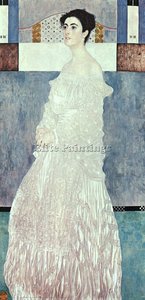
“The Tangled Garden” remains a testament to Margaret Macdonald Mackintosh’s artistic genius and her contribution to Art Nouveau's exploration of spiritual themes. Its influence extends beyond its immediate aesthetic qualities, shaping subsequent generations of artists interested in blending Celtic mythology with modernist techniques. Today, reproductions of this captivating artwork continue to inspire interior designers and collectors alike—serving as a reminder that art can transcend time and place, communicating universal truths about beauty, harmony, and the enduring power of imagination.Related Artworks


Artist Biography
A Visionary of the Glasgow Style
Margaret Macdonald Mackintosh, born in Port Glasgow, Scotland, on November 5th, 1864, stands as a pivotal figure in the development of the Glasgow Style and its contribution to the broader Art Nouveau movement. Though often recognized through the lens of her marriage to Charles Rennie Mackintosh, her artistic voice was distinct, powerful, and integral to shaping the aesthetic landscape of turn-of-the-century Britain. Her early life saw a family relocation from Staffordshire, England, following her father’s engineering career, eventually settling in Glasgow – a city that would become both her creative home and the crucible for a new artistic identity. She, alongside her sister Frances, received art education at the Glasgow School of Art, an institution fostering experimentation and challenging conventional Victorian norms. This environment proved fertile ground for their burgeoning talent, allowing them to forge a unique visual language steeped in symbolism and organic forms.The Flourishing of ‘The Four’
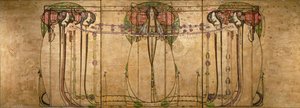
Margaret's artistic journey truly gained momentum through her collaboration with Frances Macdonald, Charles Rennie Mackintosh, and Herbert MacNair – collectively known as “The Four.” This collective represented a radical departure from established artistic traditions. Their work, characterized by elongated figures, flowing lines, and intricate patterns inspired by Celtic art, Japanese woodcuts, and the natural world, quickly garnered attention—and sometimes controversy. They embraced a deliberately stylized aesthetic, often described as ‘spook school’ due to its hauntingly beautiful and somewhat unsettling quality. This group's influence extended beyond painting; they designed interiors, furniture, textiles, and graphics, blurring the boundaries between fine art and applied design. Margaret’s contributions were particularly notable in gesso panels, metalwork, and watercolor paintings, showcasing a remarkable ability to translate complex ideas into visually arresting forms. Her skill lay not merely in decoration but in imbuing her designs with a sense of mystery and emotional resonance. The collaborative spirit fostered within “The Four” allowed for cross-pollination of ideas and techniques, resulting in a cohesive yet diverse body of work that defined the Glasgow Style.Symbolism and Artistic Innovation
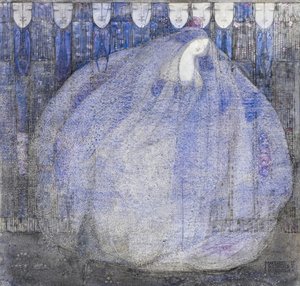
Margaret Macdonald Mackintosh’s artistic vision was deeply rooted in symbolism. Her paintings, such as The Mysterious Garden, housed at the Scottish National Gallery, are not simply depictions of landscapes but rather explorations of inner states and psychological realms. These works often feature ethereal figures amidst lush vegetation, evoking a sense of enchantment and melancholy. The use of muted colors, sinuous lines, and symbolic motifs—like birds, flowers, and celestial bodies—creates an atmosphere of dreamlike ambiguity. The Tangled Garden, a larger oil-on-board piece at the National Gallery of Canada, exemplifies this approach, presenting a dense, interwoven composition that suggests both beauty and constraint. Her designs for interiors, often executed in collaboration with Charles Rennie Mackintosh, extended this symbolic language into three dimensions. The tearooms they designed—most notably the Willow Tearooms—were not merely places to dine but immersive artistic experiences, where every detail, from the furniture to the lighting, contributed to a unified aesthetic vision. She was also adept at metalwork and embroidery, creating intricate designs that showcased her mastery of different media.Legacy and Lasting Influence
Despite facing periods of relative obscurity following Charles Rennie Mackintosh’s declining health and their subsequent move to France in search of a warmer climate, Margaret Macdonald Mackintosh's legacy has experienced a significant resurgence in recent decades. Her work is now recognized as essential to understanding the development of modern design and its connection to broader cultural movements. Her influence can be seen in the work of later artists and designers who embraced organic forms, symbolism, and the integration of art into everyday life. The rediscovery of her contributions has also prompted a re-evaluation of the historical narrative surrounding the Glasgow Style, acknowledging Margaret’s independent artistic merit rather than solely defining her role through her relationship with her husband. Her innovative use of materials, her evocative imagery, and her commitment to creating holistic design experiences continue to inspire artists and designers today. She passed away on January 7th, 1933, in London, leaving behind a body of work that continues to captivate and challenge viewers, solidifying her place as a true visionary of the Art Nouveau era.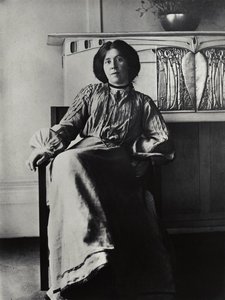
Margaret Macdonald Mackintosh
1864 - 1933 , United Kingdom
Quick Facts
- Artistic Movement Or Style: Glasgow Style, Art Nouveau
- Artists Or Movements Influenced By This Artist:
- Gustav Klimt
- Josef Hoffmann
- Date Of Birth: November 5, 1864
- Date Of Death: January 7, 1933
- Full Name: Margaret Macdonald Mackintosh
- Nationality: Scottish
- Notable Artworks:
- The Mysterious Garden
- The Tangled Garden
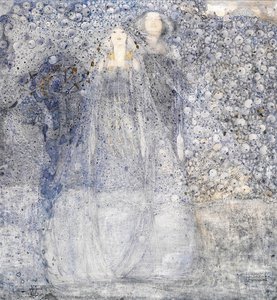
- Silver Apples of Moon
- Place Of Birth: Port Glasgow, UK
Related Articles
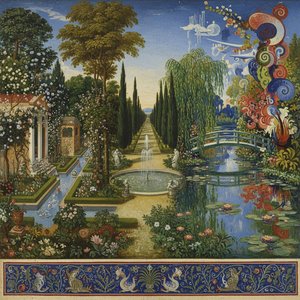
Cultivating Paradise: A Historical & Artistic Exploration of Gardens in Painting
Explore the rich history of gardens in painting! Discover masterpieces from Renaissance to Impressionism & beyond. Learn about symbolism, artists like Monet & Klimt, and find your perfect artwork at ArtsDot.
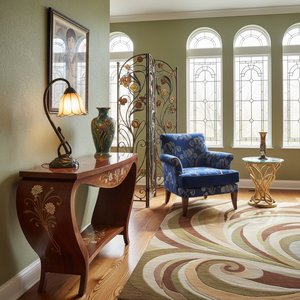
Art Nouveau's Golden Age: 10 Masterpieces for Your Home |
Journey into Art Nouveau's golden age! Explore 10 masterpieces by Klimt, Mucha & more. Discover captivating stories behind iconic paintings, floral motifs & flowing lines. Find museum-quality art reproductions for your home at .
The Flowing Line & Flourishing Form: Exploring Art Nouveau's Aesthetic Legacy
Explore the captivating world of Art Nouveau! Discover its origins, key artists like Horta & Mucha, regional styles, innovative techniques, and lasting influence on architecture & design. A comprehensive guide for art enthusiasts.
Alphonse Mucha: A Comprehensive Exploration of Art Nouveau's Master of Decorative Symbolism
Explore the life & art of Alphonse Mucha, master of Art Nouveau! Discover his iconic posters, stunning illustrations, and the monumental Slav Epic. A comprehensive guide for collectors & enthusiasts.
Blossoms of Time: A Historical & Aesthetic Exploration of Floral Painting Across Cultures
Explore the rich history of floral painting! Discover symbolism, techniques & masterpieces from Van Huysum to O'Keeffe. Expert insights for art lovers & collectors at ArtsDot.