 Preview
 Send
Send Share
Share
 Details

 Download
 Similars
 X-Ray
X-Ray Diaporama
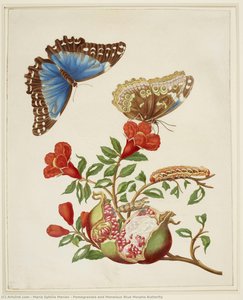
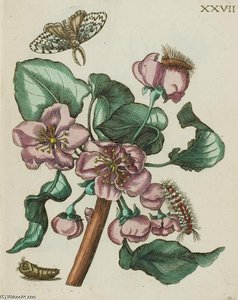
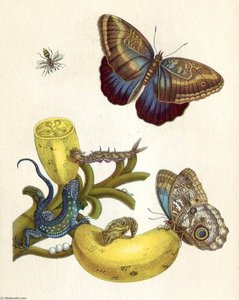
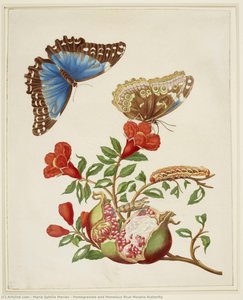
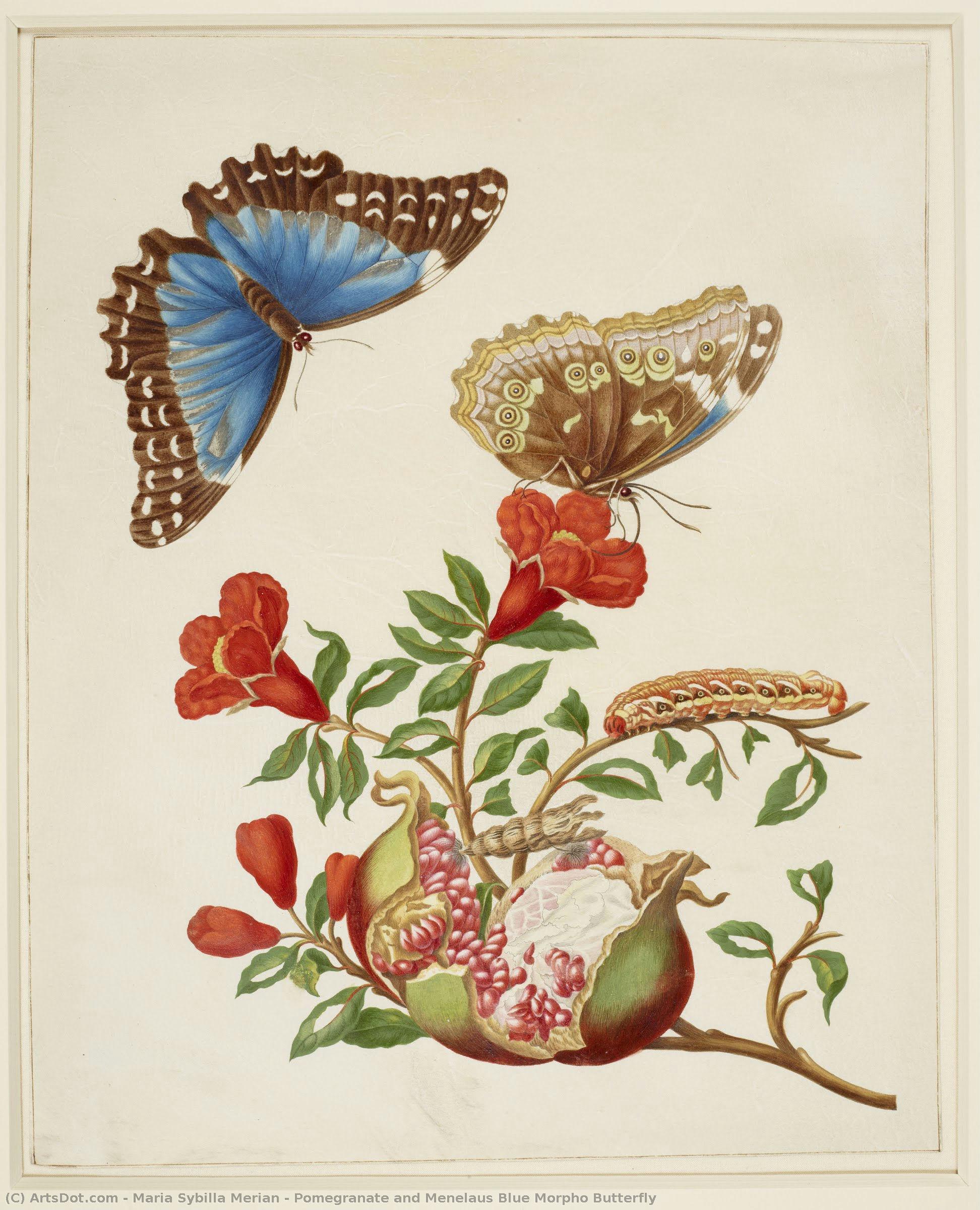
Pomegranate and Menelaus Blue Morpho Butterfly
 Acrylic On Canvas
- WallArt
- Baroque Botanical Illustration
 1703
1703 37.0 x 30.0 cm
 Royal Collection
 Read More
Giclée / Art Print
Museum-quality giclée or canvas print with fast production and flexible finish options. ( Buy Hand Made Painting Buy Image)




P118B $10

P118H $10

P118W $10

P438Z $10

P508JH $12

P508YH $12

P805H $10

P805Z $10

P919BZ $10

P919G $10

P919XJ $10

P959ZH $10

P968JZ $12

W106C $8

W218G $10

W218JH $8

W218Y $10

W307PJ $10

W316G $10

W316PJ $8

W316Y $10

W398PJ $8

W4111J $10

W500HY $15

W500JH $15

W692G $12

W849H $8

W940BG $15

W953PJ $8




Pick from our preset sizes that match the artwork's original proportions.

You may enter your own dimensions to fit a specific frame or space. If your selected size does not match the original image's proportions, we will either crop the artwork or extend the image with a mirrored or solid-fill edge. A digital mockup will be sent for your approval before production begins.
Please note that the on-screen preview does not reflect the actual cropping or extension. Only the mockup will accurately show the final composition.
While custom sizes are available, we recommend selecting a dimension from the predefined list to preserve the original proportions.
Worldwide Delivery () in 2 weeks instead of standard 4/5 weeks. (26 August)

Free Worldwide Express Shipping

High-Quality Linen Canvas

Full Shipping Insurance

Customs Tax Refund Guarantee

True Color Matching Guarantee

60-Day Return Policy (Defects Only)

100% Money-Back Guarantee

Bulk Discount Offer
 Glass option is only available in size under 110 CM

Pomegranate and Menelaus Blue Morpho Butterfly
Giclée / Art Print
Reproduction Size
-


Total Price
$ 63
Collectible Description
A Window Into Suriname’s Insect World: Maria Sibylla Merian's ‘Pomegranate and Menelaus Blue Morpho Butterfly’
Maria Sibylla Merian’s “Pomegranate and Menelaus Blue Morpho Butterfly” isn’t merely a botanical illustration; it’s a testament to scientific curiosity, artistic vision, and the burgeoning fascination with the natural world during the Enlightenment. Executed in 1702-03 as plate nine from her groundbreaking *Metamorphosis Insectorum Surinamensium*, this exquisite watercolor captures a moment of profound beauty—and intellectual discovery—that continues to resonate centuries later. The painting depicts a branch laden with pomegranate blossoms, against which rests the iridescent sapphire wing of a Menelaus blue morpho butterfly (*Morpho menelaus*) and its larval stage – a caterpillar adorned with striking bands of yellow and black. Merian’s meticulous observation of insect life cycles was revolutionary for her time, challenging prevailing beliefs about spontaneous generation and advocating for empirical study as the path to understanding God's creation. This wasn’t simply about documenting insects; it was about revealing their intricate transformations—a microcosm mirroring the larger processes shaping the natural world. Merian’s technique is characterized by a masterful blend of watercolor and bodycolor, applied over lightly etched vellum with gum arabic and silver paint. The etching process ensured precise outlines, allowing Merian to capture the delicate details of both the butterfly and its caterpillar—a testament to her dedication to accuracy. Furthermore, she employed a clever method known as ‘counterproofing,’ transferring a reversed image onto vellum before applying color by hand. This technique maximized artistic expression while maintaining scientific rigor, resulting in a stunning visual record that transcends mere representation. The historical context surrounding *Metamorphosis* is crucial to appreciating the painting’s significance. Merian undertook an arduous expedition to Suriname—then a Dutch colony—accompanied by her daughter Dorothea, driven by an unwavering desire to study Surinamese insects firsthand. This journey represented a bold step beyond the confines of European laboratories and observatories, immersing Merian in an environment teeming with exotic flora and fauna. The resulting book wasn’t just a scientific treatise; it was also a powerful statement about human intellect's capacity for wonder and discovery—a celebration of the natural world viewed through the lens of reason and observation. Beyond its technical brilliance and historical importance, “Pomegranate and Menelaus Blue Morpho Butterfly” possesses an undeniable emotional impact. The vibrant colors—particularly the luminous blue of the butterfly’s wings—evoke a sense of awe and wonder, transporting the viewer to the lush landscapes of Suriname. Simultaneously, the depiction of metamorphosis symbolizes transformation, resilience, and the cyclical nature of life itself—themes that continue to inspire artists and thinkers today. This painting stands as an enduring emblem of scientific inquiry coupled with artistic beauty—a timeless masterpiece capturing a pivotal moment in the history of natural science and visual art.- Provenance: Dr Richard Mead (1673–1754); his sale (London, Abraham Langford, 13–16 January 1755, lot 66), where purchased by an unknown collector; sold 15 June 1768 (London, Paterson and Eve, lot 572), where purchased by Sir John Hill via Wilson; George III by c.1810
- Medium: Watercolor, Bodycolor, Vellum, Gum Arabic, Silver Paint
- Dimensions: 37.16 x 30.2 cm (vellum sheet)
- Repository Number: RCIN 921162
Related Artworks
Artist Biography
A Life Unfurled: The Botanical Brilliance of Maria Sibylla Merian
Maria Sibylla Merian, born in Frankfurt in 1647, was a figure remarkably ahead of her time—a naturalist, scientific illustrator, and an artist whose dedication to meticulous observation transformed our understanding of the insect world. Her story isn’t simply one of artistic talent; it's a testament to unwavering curiosity, courageous exploration, and a profound connection to the natural world that defied the conventions of 17th and early 18th-century society. Growing up amidst the bustling trade and intellectual currents of Frankfurt, Merian’s initial exposure to art came through her family. Her father, Matthäus Merian the Elder, was a renowned engraver and publisher, providing a foundation in visual representation. However, it was her stepfather, Jacob Marrel, a skilled still life painter, who actively fostered her artistic inclinations, encouraging her drawing and painting skills from a young age. This early nurturing wasn’t limited to technique; Merian developed an intense fascination with insects, meticulously collecting and studying them—a pursuit considered unusual, if not eccentric, for a woman of that era. Even as a child, she didn't merely depict butterflies and caterpillars; she sought to understand their complete life cycles, a revolutionary approach in a time when the prevailing belief was spontaneous generation – the idea that insects simply arose from mud or decaying matter.From European Gardens to Surinamese Rainforests
Merian’s artistic career blossomed alongside her scientific investigations. She received formal training from Marrel and his pupil, Abraham Mignon, honing her skills in rendering botanical details with exquisite precision. Her early works focused on the flora of Europe, culminating in publications like *Neues Blumenbuch* (“New Book of Flowers”), showcasing her talent for floral illustration. However, it was her groundbreaking work on insect metamorphosis that truly set her apart. Published in 1679 and 1683, *Der Raupen wunderbare Verwandelung und sonderbare Blumennahrung* ("The Wonderful Transformation of Caterpillars and Their Peculiar Nourishment from Flowers") documented the life cycles of European insects with unprecedented accuracy. Each plate wasn’t just a beautiful image; it was a carefully researched record of an insect's development, its host plant, and its interactions within its environment. But Merian harbored a deeper ambition: to study insects in their natural habitat, free from the constraints of European gardens. This led to an extraordinary undertaking—a self-funded expedition to Dutch Guiana (modern-day Suriname) in 1699, accompanied by her daughter Dorothea. For two years, she immersed herself in the rainforests, documenting the exotic insects, plants, and animals with unwavering dedication, despite facing harsh conditions and considerable personal risk.Metamorphosis Surinamensis: A Legacy of Observation
The culmination of Merian’s South American journey was *Metamorphosis Insectorum Surinamensium* (1705), a monumental work that cemented her legacy as a pioneering naturalist and illustrator. This two-volume publication presented detailed depictions of the insects of Suriname, their life cycles, and their relationships with the surrounding flora. Unlike previous natural history illustrations which often focused on isolated specimens, Merian’s plates depicted insects interacting with their host plants, showcasing a holistic understanding of ecological connections. Her illustrations weren't merely scientific records; they were vibrant works of art, imbued with a sense of wonder and appreciation for the beauty of the natural world. The work was revolutionary not only for its artistic quality but also for its scientific accuracy. Merian challenged existing beliefs about insect behavior and development, providing compelling evidence against spontaneous generation. She meticulously documented previously unknown species, contributing significantly to the field of entomology. *Metamorphosis Insectorum Surinamensium* became a landmark publication, influencing generations of naturalist illustrators and scientists.A Lasting Impact on Art and Science
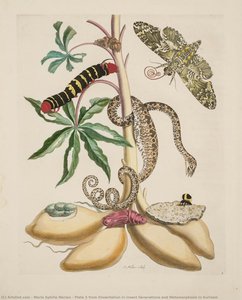
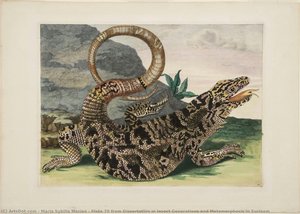
Maria Sibylla Merian’s influence extends far beyond the realm of natural history illustration. Her work bridged the gap between art and science, demonstrating that meticulous observation and artistic skill could be powerful tools for scientific discovery. She challenged societal norms by pursuing her passion for natural history with unwavering determination, paving the way for future female scientists and artists. David Attenborough has rightly recognized Merian as a pivotal figure in entomology, acknowledging her groundbreaking contributions to our understanding of insect life cycles. Her legacy continues to inspire artists, scientists, and nature enthusiasts alike. Today, her original illustrations are highly prized possessions of museums and private collectors worldwide. Reproductions of her work—like “Plate 70 from Dissertation in Insect Generations and Metamorphosis in Surinam” or the exquisite detail found in "Erucarum Ortus, Alimentum Et Paradoxa Metamorphosis"—allow us to appreciate her artistic skill and scientific insight. Maria Sibylla Merian’s life was a testament to the power of curiosity, observation, and a deep reverence for the natural world—a legacy that continues to resonate centuries after her passing.- Key Contributions: Published her first book of natural illustrations in 1675; documented evidence on the process of metamorphosis and plant hosts of 186 European insect species; traveled to Dutch Guiana in 1699 to study tropical insects; published *Metamorphosis Insectorum Surinamensium* in 1705.
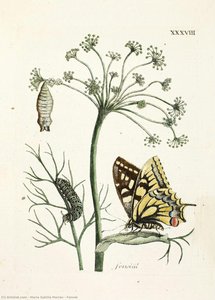
- Notable Works: *Metamorphosis Insectorum Surinamensium* (1705), *Erucarum Ortus, Alimentum Et Paradoxa Metamorphosis*, “Fennel”, and "Plate 70 from Dissertation in Insect Generations and Metamorphosis in Surinam".
- Influences: Her stepfather Jacob Marrel, a still life painter; the scientific curiosity of her era.
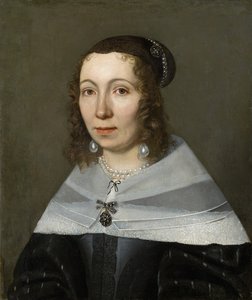
maria sybilla merian
1647 - 1717 , Italy
Quick Facts
- Artistic Movement Or Style: Natural History Art
- Artists Or Movements Influenced By This Artist:
- Naturalist Illustrators
- Entomology
- Artists Who Influenced This Artist:
- Jacob Marrel
- Abraham Mignon
- Date Of Birth: April 2, 1647
- Date Of Death: January 13, 1717
- Full Name: Maria Sibylla Merian
- Nationality: German
- Notable Artworks:
- Metamorphosis Insectorum Surinamensium
- Erucarum Ortus
- Fennel
- Plate 70 from Dissertation...
- Place Of Birth: Frankfurt, Germany
Related Articles
The Evocative Detail of Nature: A History of Naturalistic Illustration
Explore the rich history of botanical illustration! Discover pioneering artists like Maria Sibylla Merian & Marianne North. Learn about scientific precision, artistic expression, and find museum-quality reproductions at ArtsDot.
The Flourishing Canvas: A Historical & Artistic Exploration of Botanical Illustration
Explore the rich history of botanical illustration! Discover key artists like Havell & Barraband, learn about scientific accuracy & aesthetic beauty. Shop museum-quality reproductions at ArtsDot.
The Flourishing Canvas: A Historical Journey Through Botanical Illustration
Explore the captivating history of botanical illustration! Discover renowned artists like Robert Havell & Mary Walcott, learn about techniques, and find museum-quality art at ArtsDot.com.
The Flourishing Canvas: A Historical Journey Through Botanical Illustration
Explore the captivating history of botanical illustration! Discover renowned artists like Robert Havell & Mary Walcott, learn about techniques, and find museum-quality art at ArtsDot.com.

Victorian Botanical Painting: Science, Art & Aesthetic Sensibility
Explore the exquisite world of Victorian botanical art! Discover the science & artistry behind stunning floral illustrations by Gould, Muckley & more. Learn about collecting, value & investment at ArtsDot.