 Preview
 Send
Send Share
Share
 Details

 Download
 Similars
 X-Ray
X-Ray Diaporama
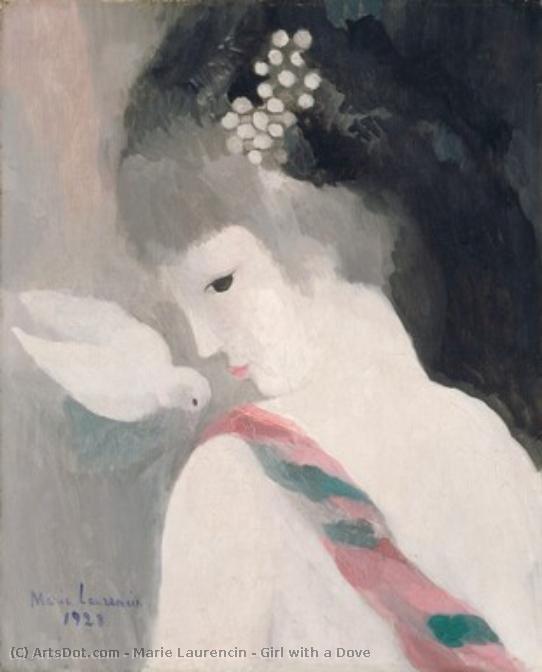
Girl with a Dove


 Read More
Hand Made Oil Reproduction
Hand-painted oil on canvas in your size and frame, made to order by our artists. ( Buy Print Buy Image)




































Pick from our preset sizes that match the artwork's original proportions.

You may enter your own dimensions to fit a specific frame or space. If your selected size does not match the original image's proportions, we will either crop the artwork or extend the painting with additional hand-painted elements. A digital mockup will be sent for your approval before production begins.
Please note that the on-screen preview does not reflect the actual cropping or extension. Only the mockup will accurately show the final composition.
While custom sizes are available, we recommend selecting a dimension from the predefined list to preserve the original proportions.
After order, ArtsDot.com team will email client for instructions and provide a mockup preview
Worldwide Delivery () in 3/4 weeks instead of standard 5 weeks. (23 August). No compromise on quality.

Free Worldwide Express Shipping

High-Quality Linen Canvas

Full Shipping Insurance

Customs Tax Refund Guarantee

True Color Matching Guarantee

60-Day Return Policy (Defects Only)

100% Money-Back Guarantee

Bulk Discount Offer
 Glass option is only available in size under 110 CM

Girl with a Dove
Reproduction Medium
Reproduction Size
-


Total Price
$ 263
Artwork Description
Marie Laurencin's "Girl with a Dove": A Study in Serene Elegance
- Artist: Marie Laurencin
- Date: 1928
- Size: 46 x 38 cm
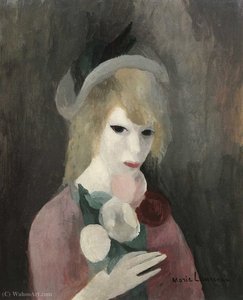
“Girl with a Dove,” painted by Marie Laurencin in 1928, is a captivating pastel portrait that exemplifies the artist's signature style—a harmonious blend of Cubism, Art Deco, and Impressionism. This work showcases Laurencin’s ability to capture a sense of quiet contemplation and feminine grace through soft colors, flattened perspectives, and elegant figures.
Composition and Visual Harmony
The composition is vertically oriented, drawing the viewer's eye directly to the young woman who occupies most of the frame. Positioned slightly off-center, she exudes a sense of poised serenity. The dove, gently resting against her cheek, serves as the central focal point, creating an intimate and symbolic connection between the subject and nature. The deliberate lack of background detail further emphasizes this connection, focusing attention on the woman and the bird. Laurencin’s use of soft, blurred lines contributes to a dreamlike quality, eschewing sharp outlines in favor of subtle shifts in color and tone that suggest form rather than rigidly define it.
Color Palette and Technique
Laurencin's masterful use of color creates a harmonious and gentle visual experience. The palette is dominated by soft grays, whites, and delicate pinks, creating an atmosphere of tranquility. Accents of teal and coral in the scarf draped around the woman’s shoulders add subtle warmth and visual interest. The technique employed appears to involve layering thin washes of oil paint, meticulously blended to achieve seamless transitions between colors. This creates a smooth, ethereal texture that lacks pronounced brushstrokes, further enhancing the work's delicate quality.
Symbolism and Emotional Resonance
The dove, universally recognized as a symbol of peace, purity, and spiritual grace, is central to the artwork’s meaning. Its presence alongside the young woman evokes feelings of tranquility and gentle contemplation. Her expression, serene yet slightly melancholic, adds depth and complexity to the portrait. Laurencin's work often explores themes of femininity, innocence, and introspection, and "Girl with a Dove" beautifully encapsulates these recurring motifs. The flattened perspective, characteristic of Laurencin’s style, fosters a sense of intimacy and closeness, drawing the viewer into the quiet world of the subject.
Historical Context and Artistic Significance
Marie Laurencin (1883-1956) was a significant figure in the Parisian avant-garde during the early 20th century. As a member of the Cubists associated with the Section d'Or, she exhibited alongside prominent artists like Pablo Picasso, Jean Metzinger, and Albert Gleizes. Her unique style, however, distinguished her from many of her contemporaries. While influenced by Cubism’s geometric forms and flattened perspectives, Laurencin infused her work with a lyrical grace and an emphasis on feminine subjects that set her apart. "Girl with a Dove" exemplifies this distinctive aesthetic—a testament to Laurencin's enduring contribution to modern art.
Related Artworks

Artist Biography
A Parisian Muse: The Life and Art of Marie Laurencin
Marie Laurencin emerged from the vibrant artistic landscape of early 20th-century Paris as a distinctive voice, a painter who navigated the complexities of Cubism while forging her own path toward a uniquely feminine aesthetic. Born in 1883, her life was marked by both privilege and independence, shaping an artistic vision that celebrated grace, intimacy, and the subtle power of women. Raised primarily by her mother following her father’s early death, Laurencin received a foundational education in technique at Sèvres porcelain manufactory before gravitating towards oil painting and enrolling at the Académie Humbert. This formal training provided a solid base, but it was her immersion into the Parisian avant-garde that truly ignited her artistic spirit.Embracing Modernity: Cubism and the Section d’Or
Laurencin quickly found herself drawn to the revolutionary ideas circulating within the circles of Pablo Picasso and Guillaume Apollinaire. She became an integral part of the *Section d’Or*, a collective of artists—including Jean Metzinger, Albert Gleizes, Robert Delaunay, and Henri Le Fauconnier—dedicated to exploring the principles of Cubism. Exhibiting at the Salon des Indépendants and the Salon d'Automne between 1910 and 1912, Laurencin’s early works demonstrate a clear engagement with the fragmented forms and geometric explorations characteristic of the movement. However, even in these initial experiments, hints of her individual style began to emerge. Her romantic relationship with Apollinaire further cemented her position within this influential milieu; he became both a muse and a champion of her work. Simultaneously, she found kinship and inspiration within Natalie Clifford Barney’s salon—a haven for American expatriates and members of the lesbian community—contributing to a network of artistic and intellectual exchange that profoundly shaped her perspective.A Feminine Vision: Style and Themes
While deeply influenced by Cubism, Laurencin ultimately transcended its rigid structures, developing a style distinctly her own. She softened the harsh angles and stark geometries favored by Picasso and Braque, opting instead for curvilinear forms and a delicate palette of pastel colors. Her canvases are populated primarily by women—often depicted in groups or intimate portraits—radiating an aura of elegance and quiet contemplation. Unlike many of her Cubist contemporaries who focused on industrial subjects or abstract concepts, Laurencin centered her art around themes of beauty, grace, and the feminine experience. She captured a world seen through a woman’s eyes, imbued with sensitivity and emotional nuance. This focus wasn't merely representational; it was a deliberate assertion of a female gaze within a predominantly male-dominated artistic landscape. Her work began to bridge Cubism with emerging movements like Art Deco and Impressionism, creating a unique synthesis of modern styles.Later Years and Lasting Legacy
The outbreak of World War I disrupted Laurencin’s life and career. She sought refuge in Spain with her husband, Baron Otto von Waëtjen, losing her French citizenship through marriage—a circumstance that underscored the societal constraints placed upon women at the time. Following their divorce in 1920, she returned to Paris and enjoyed a period of considerable success throughout the 1920s and 30s. However, the economic hardships of the Depression impacted her later years, leading her to supplement her income by teaching art. Despite these challenges, Laurencin continued to paint, refining her signature style and exploring new avenues of expression. Today, Marie Laurencin is increasingly recognized as a pivotal figure in early 20th-century art—one of the few female Cubist painters who challenged gender norms and expanded the boundaries of modernism. The Musée Marie Laurencin, established in Nagano Prefecture, Japan, stands as a testament to her enduring legacy, housing over 500 of her works and ensuring that her unique vision continues to inspire generations of artists and art lovers alike. Her paintings remain captivating not only for their aesthetic beauty but also for the subtle yet powerful statement they make about femininity, independence, and the pursuit of artistic freedom.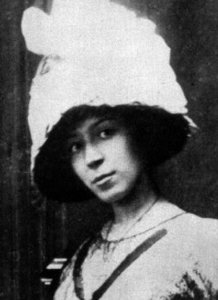
Marie Laurencin
1883 - 1956 , France
Quick Facts
- Artistic Movement Or Style: Cubism, Art Deco
- Artists Or Movements Influenced By This Artist:
- Art Deco
- Impressionism
- Artists Who Influenced This Artist:
- Pablo Picasso
- Georges Braque
- Date Of Birth: 1883
- Date Of Death: 1956
- Full Name: Marie Laurencin
- Nationality: French
- Notable Artworks:
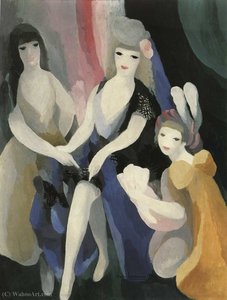
- Les Jeunes Filles
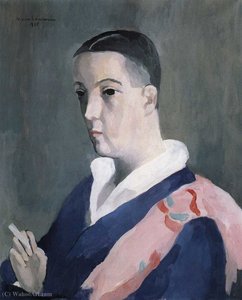
- Autoportrait
- Girl with a Dove
- Place Of Birth: Paris, France
Related Articles
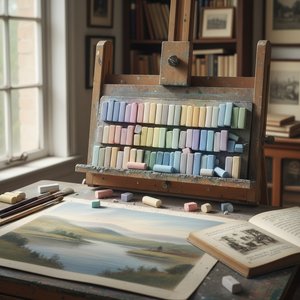
The Subtleties of Pastel: A Comprehensive Exploration of Technique, History & Emotional Resonance
Explore the captivating world of pastel art! Discover its rich history, Impressionistic masters like Degas, emotional power & unique techniques. Find museum-quality reproductions at ArtsDot.
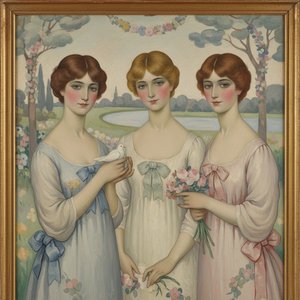
Marie Laurencin: Poetics of Intimacy & Modernity in Early 20th-Century Painting
Explore the captivating world of Marie Laurencin, a key figure in Parisian Cubism & Modern art. Discover her unique feminine aesthetic, intimate portraits, and lasting influence on early 20th-century painting.
The Subdued Radiance of Pastel: Exploring Nuance & Emotion in Art
Explore the nuanced world of pastel art! Discover its history, techniques & emotional power with expert insights from ArtsDot.com. Find museum-quality reproductions and learn about collecting this delicate medium.
Jacob Henricus Maris: A Master of Dutch Atmospheric Realism & the Intimate Landscape
Explore the captivating world of Jacob Henricus Maris, a leading figure of the Dutch Hague School. Discover his atmospheric landscapes, signature brushstrokes & lasting influence on 19th-century art. Learn more at ArtsDot.
The Subdued Radiance of Pastel Palettes: Exploring Emotional Resonance in Art History
Explore the emotional power of pastel palettes in art history! Discover Impressionism, Post-Impressionism & color psychology insights. Find museum-quality reproductions at ArtsDot.