 Preview
 Send
Send Share
Share
 Details

 Download
 Similars
 X-Ray
X-Ray Diaporama
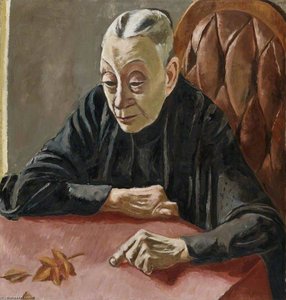
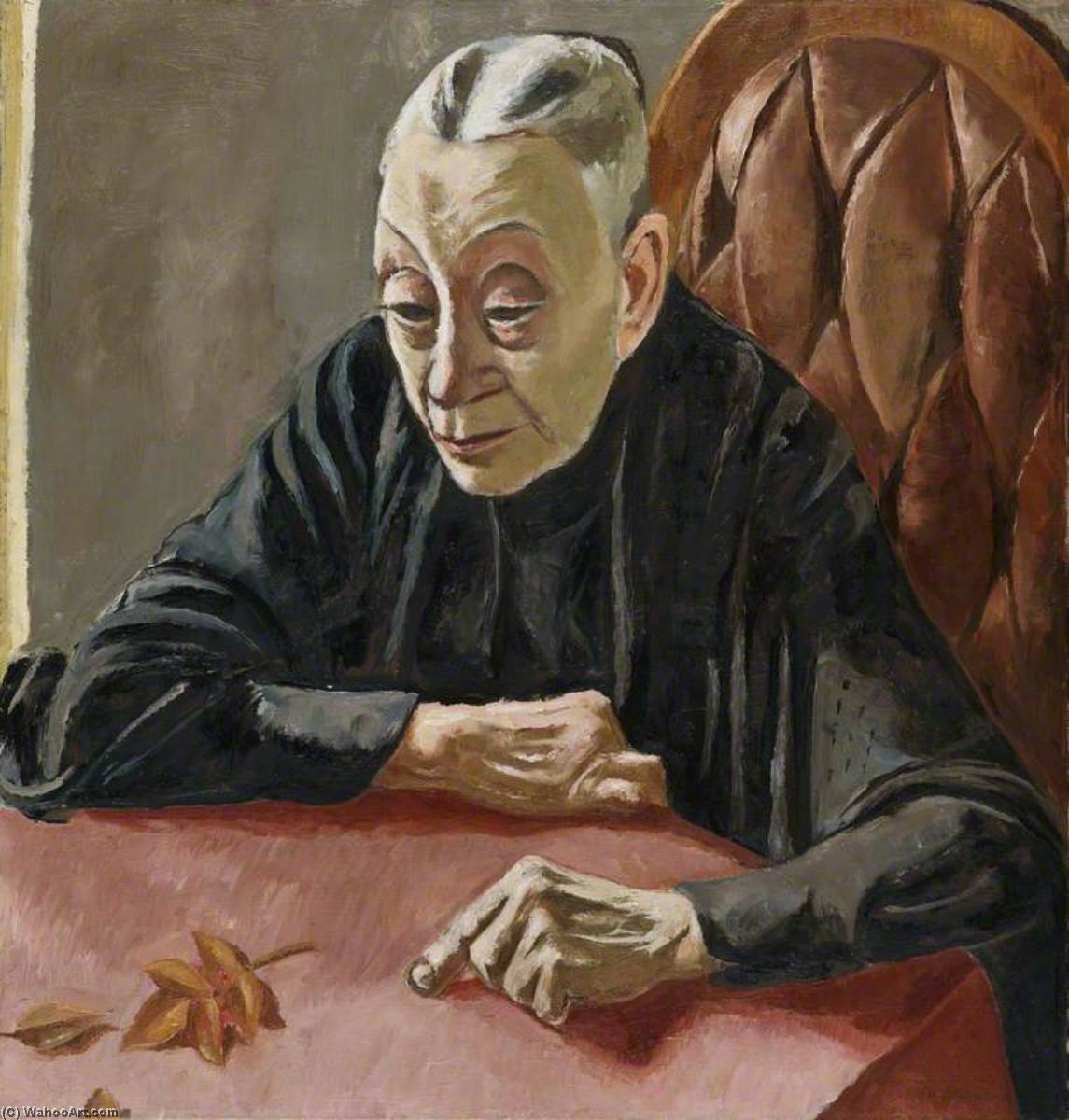
Fraulein Engelhardt
 Contemporary Realism
 1927
1927 63.0 x 60.0 cm
 Read More
Giclée / Art Print
Museum-quality giclée or canvas print with fast production and flexible finish options. ( Buy Hand Made Painting Buy Image)




































Pick from our preset sizes that match the artwork's original proportions.

You may enter your own dimensions to fit a specific frame or space. If your selected size does not match the original image's proportions, we will either crop the artwork or extend the image with a mirrored or solid-fill edge. A digital mockup will be sent for your approval before production begins.
Please note that the on-screen preview does not reflect the actual cropping or extension. Only the mockup will accurately show the final composition.
While custom sizes are available, we recommend selecting a dimension from the predefined list to preserve the original proportions.
Worldwide Delivery () in 2 weeks instead of standard 4/5 weeks. (26 August)

Free Worldwide Express Shipping

High-Quality Linen Canvas

Full Shipping Insurance

Customs Tax Refund Guarantee

True Color Matching Guarantee

60-Day Return Policy (Defects Only)

100% Money-Back Guarantee

Bulk Discount Offer
 Glass option is only available in size under 110 CM

Fraulein Engelhardt
Giclée / Art Print
Reproduction Size
-


Total Price
$ 63
Related Artworks
Artist Biography
A Dreamlike Vision of Vienna and Beyond
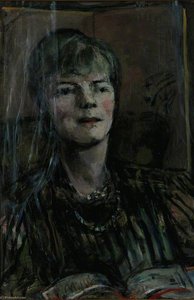
The life of Marie-Louise von Motesiczky was a tapestry woven from the threads of aristocratic elegance, profound cultural heritage, and the turbulent shadows of twentieth-century history. Born in Vienna on October 24, 1906, she entered a world steeped in the intellectual and artistic splendor of the Habsburg Empire. Her lineage was one of immense cultural significance; her father, Edmund von Motesiczky, was a gifted amateur cellist, while her mother, Henriette von Lieben, belonged to one of Vienna’s most prosperous and cultured dynasties. This upbringing, characterized by a family salon that mirrored the literary circles of Hugo von Hofmannsthal, provided a fertile ground for a young mind to cultivate an early appreciation for the sublime. Even the whispers of psychoanalysis permeated her domestic sphere, as her grandmother was among the early patients of Sigmund Freud, embedding a sense of psychological depth into the very fabric of her childhood.
Motesiczky’s artistic journey began with a precocious departure from traditional schooling. At only thirteen, she abandoned formal education to pursue the rigorous study of art across the great cultural capitals of Europe. Her wanderings took her through Vienna, The Hague, Paris, and Berlin, each city adding a new layer of nuance to her developing vision. However, it was in Frankfurt am Main that her trajectory was irrevocably altered. At the Städelschule, she joined the masterclass of Max Beckmann, a meeting that would forge a lifelong friendship and leave an indelible mark on her technique. From Beckmann, she inherited a capacity for expressive power, learning to utilize jagged lines and emotionally charged compositions to convey the complexities of the human condition. This period of intense formation was further enriched by the influence of Oskar Kokoschka, whose mastery of psychological portraiture encouraged Moteczizky to explore themes of vulnerability, inner turmoil, and the hidden recesses of the soul.
The Shadow of Exile and the British Transition
The tranquility of her early artistic development was shattered by the encroaching darkness of the Nazi era. The Anschluss of 1938 brought a sudden and terrifying transformation to her homeland, forcing Motesiczky and her mother to flee the fascist annexation of Austria. Their journey through Amsterdam toward London was not merely a physical relocation but a profound displacement of identity. As an émigré artist, Motesiczky had to navigate the complexities of rebuilding a life in a foreign land, eventually becoming a naturalized British subject in 1948. This period of exile, while marked by loss, also facilitated her emergence as a significant figure within the mid-twentieth-century British art scene. The displacement served as a catalyst for a new kind of introspection, where the memories of a lost Vienna began to merge with the realities of her new English surroundings.
In London, her work evolved into a unique synthesis of her European training and her lived experience of upheaval. She became known for a style that could be described as dreamlike and symbolic, often blurring the lines between reality and fantasy. Her portraits were rarely mere likenesses; instead, they were explorations of character and spirit, imbued with a sense of quiet mystery. This period saw her cultivating connections with a vibrant artistic milieu, including figures such as Marie Duras and the art historian Sir Ernst Gombrich, ensuring that her voice remained part of a larger, international dialogue. Her ability to capture the ephemeral nature of thought and emotion through a lens of soft, often ethereal light, allowed her to create works that felt both deeply personal and universally resonant.
Legacy of an Introspective Master
The enduring significance of Marie-Louise von Motesiczky lies in her ability to translate the profound psychological shifts of her era into a visual language of haunting beauty. Her oeuvre stands as a testament to the resilience of the creative spirit in the face of historical catastrophe. Through her mastery of symbolic portraiture and her evocative use of space, she bridged the gap between the expressive intensity of German Expressionism and a more delicate, introspective European tradition. Her paintings often serve as windows into a vanished world, capturing the essence of a Viennese elegance that was forever altered by the twentieth century.
Today, her legacy is preserved through her presence in major institutions, most notably the Tate, where her works continue to invite viewers into her uniquely textured reality. Her contribution to art history is defined by several key elements:
- The Synthesis of Influences: The seamless integration of Beckmann’s expressive structuralism with Kokoschka’s psychological depth.
- The Art of the Émigré: A profound exploration of identity, memory, and displacement through the lens of a displaced European artist.
- Symbolic Narrative: The use of dreamlike imagery and symbolic motifs to navigate themes of vulnerability and the subconscious.
- Cultural Bridge-Building: Acting as a vital link between the rich traditions of pre-war Vienna and the evolving landscape of mid-century British art.
marie louise von motesiczky
1906 - 1996
Quick Facts
- Artistic Movement Or Style: Expressionist painting
- Artists Or Movements Influenced By This Artist: ['Fantasy art paintings']
- Artists Who Influenced This Artist:
- Max Beckmann
- Oskar Kokoschka
- Date Of Birth: 1906
- Date Of Death: 1996
- Full Name: Marie Louise von Motesiczky
- Nationality: Austrian
- Notable Artworks:
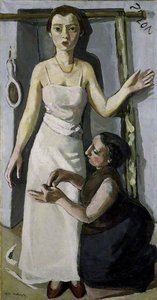
- At the Dressmaker's
- Portrait of Elizabeth
- Place Of Birth: Vienna, Austria
Related Articles
Jacob Henricus Maris: A Master of Dutch Atmospheric Realism & the Intimate Landscape
Explore the captivating world of Jacob Henricus Maris, a leading figure of the Dutch Hague School. Discover his atmospheric landscapes, signature brushstrokes & lasting influence on 19th-century art. Learn more at ArtsDot.
Eugen von Blaas: Capturing Alpine Life & Sentiment in 19th-Century Austrian Painting
Discover the captivating world of Eugen von Blaas! Explore his exquisite 19th-century paintings capturing Venetian life & Alpine beauty. Learn about his Academic Classicism style and find museum-quality reproductions at ArtsDot.
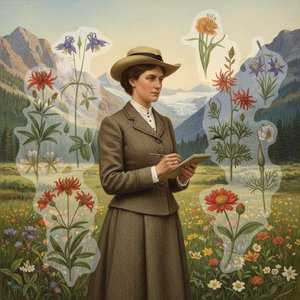
Mary Vaux Walcott: Botanical Precision & Artistic Vision in American Conservation
Discover the exquisite botanical watercolors of Mary Vaux Walcott, celebrated as the 'Audubon of Botany.' Explore her life, art, and lasting impact on American conservation through detailed illustrations & Smithsonian contributions.
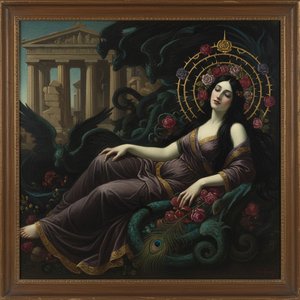
Franz von Stuck: Symbolism, Decadence & the Pursuit of Ideal Beauty
Explore the captivating world of Franz von Stuck, a leading Symbolist painter. Discover his mythological masterpieces, decadent themes, & investment potential. Expert analysis for discerning collectors.
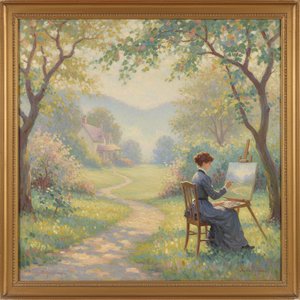
Mary Agnes Yerkes: A Study in American Impressionism & Atmospheric Light
Explore the captivating world of Mary Agnes Yerkes, a resilient American Impressionist painter renowned for her vibrant landscapes of the West & National Parks. Discover her unique style and enduring legacy.