 Preview
 Send
Send Share
Share
 Details

 Download
 Similars
 X-Ray
X-Ray Diaporama
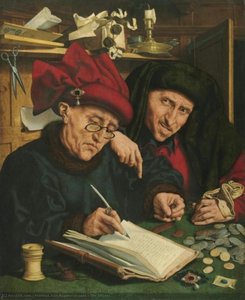
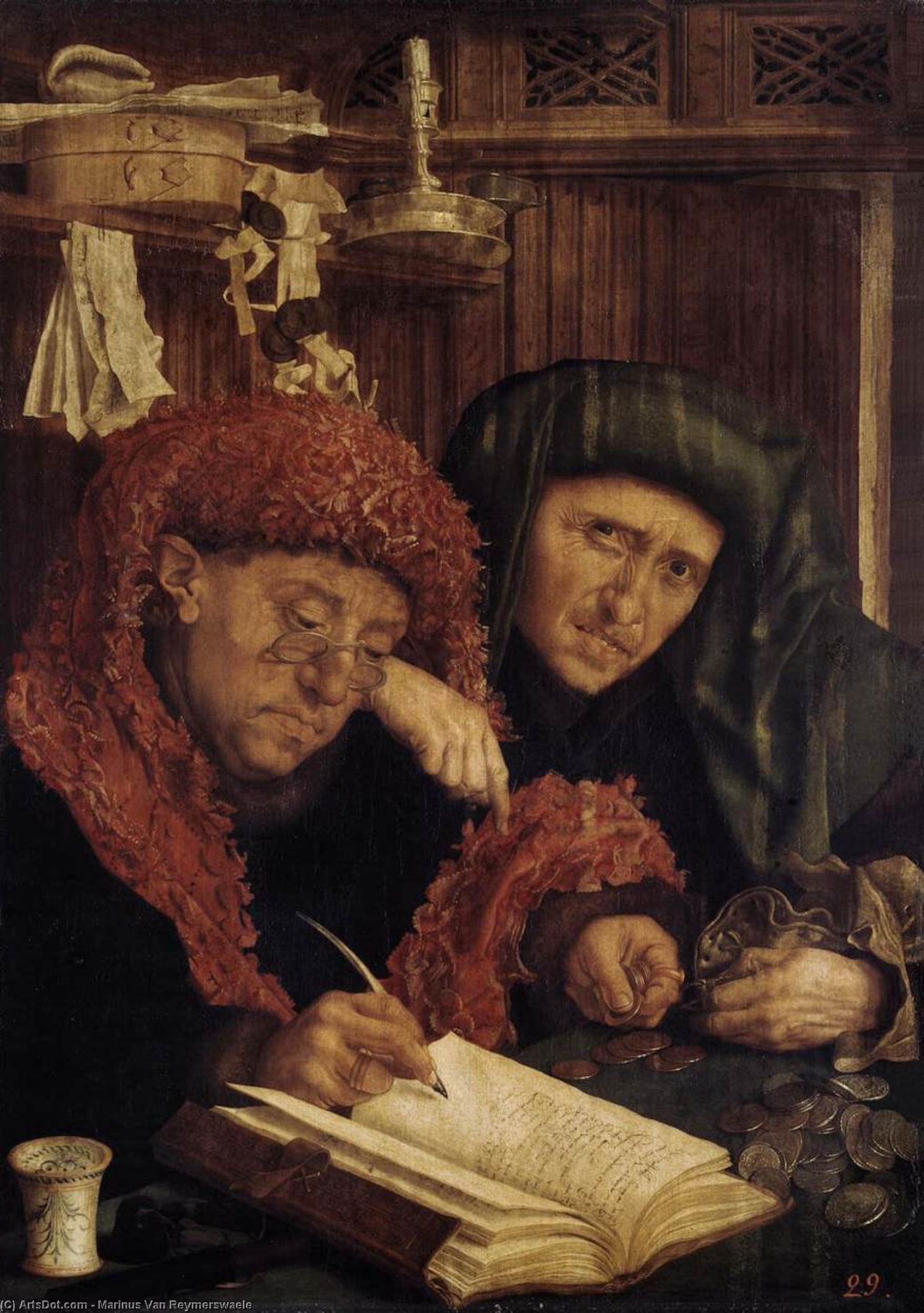
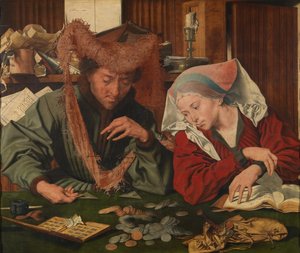
The Tax Collectors
 Oil On Canvas
- WallArt
- Renaissance Realism
 84.0 x 60.0 cm
 Hermitage Museum
 Read More
Hand Made Oil Reproduction
Hand-painted oil on canvas in your size and frame, made to order by our artists. ( Buy Print Buy Image)




P118B $10

P118H $10

P118W $10

P438Z $10

P508JH $12

P508YH $12

P805H $10

P805Z $10

P919BZ $10

P919G $10

P919XJ $10

P959ZH $10

P968JZ $12

W106C $8

W218G $10

W218JH $8

W218Y $10

W307PJ $10

W316G $10

W316PJ $8

W316Y $10

W398PJ $8

W4111J $10

W500HY $15

W500JH $15

W692G $12

W849H $8

W940BG $15

W953PJ $8




Pick from our preset sizes that match the artwork's original proportions.

You may enter your own dimensions to fit a specific frame or space. If your selected size does not match the original image's proportions, we will either crop the artwork or extend the painting with additional hand-painted elements. A digital mockup will be sent for your approval before production begins.
Please note that the on-screen preview does not reflect the actual cropping or extension. Only the mockup will accurately show the final composition.
While custom sizes are available, we recommend selecting a dimension from the predefined list to preserve the original proportions.
After order, ArtsDot.com team will email client for instructions and provide a mockup preview
Worldwide Delivery () in 3/4 weeks instead of standard 5 weeks. (17 August). No compromise on quality.

Free Worldwide Express Shipping

High-Quality Linen Canvas

Full Shipping Insurance

Customs Tax Refund Guarantee

True Color Matching Guarantee

60-Day Return Policy (Defects Only)

100% Money-Back Guarantee

Bulk Discount Offer
 Glass option is only available in size under 110 CM

The Tax Collectors
Reproduction Medium
Reproduction Size
-


Total Price
$ 263
Artwork Description
A Window Into Venetian Renaissance: Exploring Marinus van Reymerswaele’s “The Tax Collectors”
The Hermitage Museum in St. Petersburg houses a remarkable painting by Marinus van Reymerswaele, commonly known as Titian – a titan of Venetian Renaissance art whose influence reverberates through centuries of artistic endeavor. Completed sometime around 1506, "The Tax Collectors" transcends mere depiction; it’s an immersive experience into the intellectual and social milieu of its time, skillfully rendered with meticulous attention to detail and infused with a profound understanding of color theory. This essay delves into the artwork's multifaceted layers, examining its subject matter, stylistic innovations, artistic technique, historical significance, and enduring emotional resonance.Subject Matter and Narrative Context
The painting portrays two figures engaged in what appears to be a formal tax assessment – a commonplace activity within Venetian society during Titian’s era. However, Titian doesn't simply record an everyday scene; he elevates it into a tableau of restrained dignity and intellectual contemplation. The seated man, presumably representing authority or legal profession, holds a book open before him, suggesting erudition and deliberation. His gaze is directed inward, hinting at the complexities of thought and decision-making inherent in his role. Beside him stands another gentleman, equally absorbed in reading – mirroring the posture and conveying a similar sense of intellectual engagement. This deliberate pairing underscores the importance of knowledge and reasoned judgment within the framework of civic responsibility. The inclusion of a scale and scissors reinforces the theme of legal proceedings and the meticulous weighing of evidence.Stylistic Innovation: Venetian Colorism
Titian’s mastery lies not only in his anatomical accuracy but also in his revolutionary approach to color – a hallmark of Venetian painting during this period, termed “colorism.” Unlike the cooler palettes favored by Florentine artists like Leonardo da Vinci and Michelangelo, Titian embraced warm hues—deep reds, ochres, and golds—creating an atmosphere of opulent richness and sensual vibrancy. He achieved this effect through layering thin glazes of pigment upon a preparatory underpainting, allowing for subtle gradations of color that imbue the scene with luminosity and depth. This technique wasn’t merely decorative; it served to heighten emotional impact and convey psychological nuance – mirroring the humanist ideals prevalent in Venice at the time.Technique and Artistic Detail
Titian's meticulous craftsmanship is evident throughout “The Tax Collectors.” The artist employed oil paint on canvas, a medium that allowed for unparalleled blending and tonal control. He meticulously rendered textures—the folds of clothing, the surface of the desk—creating an illusion of realism that captivated viewers. Furthermore, Titian’s masterful use of chiaroscuro – the interplay between light and shadow – sculpts the figures' forms and emphasizes their expressions, conveying a sense of solemn seriousness. The subtle shading contributes to the painting’s overall mood, reinforcing its contemplative atmosphere.Historical Significance: Reflecting Renaissance Humanism
“The Tax Collectors” stands as a quintessential example of Venetian Renaissance humanism—a philosophical movement that championed reason, observation, and the study of classical antiquity. Titian's depiction of intellectual pursuits aligns perfectly with humanist ideals, reflecting the burgeoning interest in scholarly discourse and ethical conduct during this transformative era. The painting’s quiet dignity speaks to the values of civic virtue and contemplative reflection – qualities highly esteemed by Renaissance thinkers and artists alike. It serves as a poignant reminder that even seemingly mundane activities could be imbued with profound symbolic meaning within the context of intellectual and moral inquiry.Emotional Impact: A Portrait of Dignified Reflection
Ultimately, “The Tax Collectors” transcends its subject matter to evoke a powerful emotional response in the viewer. The painting’s subdued palette and contemplative poses inspire contemplation on themes of intellect, responsibility, and inner life. It invites us to consider the importance of reasoned judgment and ethical conduct—values that continue to resonate across cultures and generations. More than just a depiction of a legal transaction, Titian's masterpiece offers a glimpse into the soul of Renaissance Venice – a testament to artistic brilliance and enduring human fascination with beauty and contemplation.Related Artworks




Artist Biography
Titian: The Sun of Venice
The decade of the 1490s witnessed a burgeoning Renaissance across Europe, and within that vibrant landscape, Titian – born Tiziano Vecellio around 1488/90 in the small Alpine town of Pieve di Cadore – emerged as one of its most dazzling stars. His life, spanning nearly eight decades, coincided with a period of immense artistic transformation, marked by shifts from the more rigid formality of early Renaissance Florence to the richer, more sensual palettes and dynamic compositions that would define Venetian painting for generations. His story is not simply one of technical mastery; it’s a reflection of the evolving cultural currents of his time – a testament to ambition, patronage, and the enduring power of color.
Titian's early training was conventional for an aspiring artist of his era. He began as a pupil in the workshop of Sebastiano Zuccato, a renowned mosaicist in Venice, before briefly joining the studio of Gentile Bellini, one of the city’s most established masters. However, it was through his association with Giorgione – a figure whose influence would ripple throughout Titian's career – that he truly began to forge his own distinctive style. Giorgione’s innovative use of color and atmospheric perspective, coupled with a focus on capturing fleeting moments of beauty, provided a crucial foundation for Titian’s later development. The pair collaborated on the magnificent frescoes adorning the ‘Scuola del Santo’ in Padua, a project that cemented their bond and established Titian as a rising talent.
The Rise to Prominence
Following Giorgione's untimely death in 1510, Titian seized his opportunity. He quickly established himself as an independent artist, attracting the attention of wealthy patrons throughout Italy – from the powerful Medici family in Florence to the dukes and princes of Ferrara, Mantua, and Urbino. His versatility was remarkable; he excelled at a wide range of subjects, including portraits, mythological scenes, religious altarpieces, and landscapes. He wasn’t simply a painter; he was a courtier, a diplomat, and a master of presentation, understanding the importance of cultivating relationships with his clients.
Titian's early works are characterized by a delicate lyricism and a fondness for pastoral settings – scenes of shepherds, nymphs, and idyllic landscapes bathed in soft light. However, as he matured, his style underwent a dramatic transformation. He embraced bolder colors, looser brushwork, and a more dynamic approach to composition. His later paintings are infused with a sensual energy and a profound understanding of human emotion. The ‘Assumption of the Virgin’ (1516-18) for Santa Maria Gloriosa dei Frari in Venice is a prime example of this evolution – a monumental altarpiece that redefined Venetian painting and set a new standard for grandeur and emotional intensity.
Technique and Innovation
Titian's mastery of color was unparalleled. He developed a unique technique known as “color glazing,” applying thin, translucent layers of paint to build up rich, luminous surfaces. This method allowed him to achieve an astonishing range of hues and tones – from the deepest ultramarine blues to the most vibrant reds and yellows. He also experimented extensively with different pigments, constantly seeking new ways to capture the nuances of light and shadow. His use of *chiaroscuro*—the dramatic contrast between light and dark—became a hallmark of his style, adding depth and drama to his compositions.
Beyond color, Titian’s innovations extended to composition and brushwork. He moved away from the rigid formality of earlier Renaissance painting, embracing a more fluid and expressive approach. His brushstrokes were often loose and gestural, conveying a sense of movement and spontaneity. He also pioneered new techniques for depicting drapery and texture, creating fabrics that seemed to shimmer and flow with life.
Legacy and Influence
Titian’s influence on subsequent generations of artists is immeasurable. He was followed by a succession of Venetian painters – including Tintoretto, Veronese, and Bassano – who built upon his innovations and established the Venetian school as one of the most important artistic centers in Europe. His techniques were studied and imitated throughout the 17th century and beyond, shaping the course of Western art history.
Titian’s legacy extends far beyond the canvas. He was a shrewd businessman, a charismatic personality, and a keen observer of human nature. His life embodies the spirit of the Renaissance – a period of unprecedented creativity, innovation, and cultural exchange. He remains one of the most beloved and admired artists in history, celebrated for his dazzling colors, dramatic compositions, and profound understanding of beauty.
marinus van reymerswaele
1490 - 1546 , Netherlands
Quick Facts
- Artistic Movement Or Style: Renaissance painting”
- Artists Or Movements Influenced By This Artist: ['Venetian School”,\n “European painting”']
- Artists Who Influenced This Artist:
- Giorgione
- Giovanni Bellini
- Date Of Birth: c. 1490
- Date Of Death: 1576
- Full Name: Tiziano Vecellio”
- Nationality: Venetian
- Notable Artworks:
- Assumption of the Virgin
- Venus of Urbino
- Bacchus and Ariadne
- Place Of Birth: Pieve di Cadore, Italy
Related Articles
Hermitage Masterpieces: 25 Art Treasures to Inspire Your Home Decor
Journey through the Hermitage Museum's 25 greatest artworks! Explore masterpieces by Rembrandt, Leonardo da Vinci & Vermeer. Find museum-quality art reproductions and curated decor ideas to bring timeless beauty home. Discover all masterpieces on ArtsDot.com.

Oil on Canvas: A Historical & Technical Exploration of a Timeless Artistic Medium
Explore the rich history & enduring techniques of oil painting on canvas. Discover the science behind its longevity, conservation practices, and contemporary relevance. Expert insights for art enthusiasts.

The Enduring Legacy of Oil on Canvas: Technique, History & Aesthetic Impact
Explore the rich history & techniques of oil painting – from Renaissance masters to Impressionism. Discover pigments, layering methods, and why this timeless medium endures. Expert insights for artists & art enthusiasts.

The Enduring Legacy of Oil on Canvas: Technique, History & Contemporary Practice
Explore the rich history & enduring techniques of oil painting on canvas. Discover the science behind its longevity, conservation practices, and contemporary relevance. Expert insights for art enthusiasts.
Titian: Innovation, Technique & the Venetian Renaissance Portrait Tradition
Explore the revolutionary techniques & enduring legacy of Titian, the master of Venetian Renaissance portraiture. Discover insights for collectors & appreciate his impact on art history.