 Preview
 Send
Send Share
Share
 Details

 Download
 Similars
 X-Ray
X-Ray Diaporama
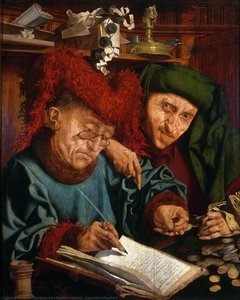
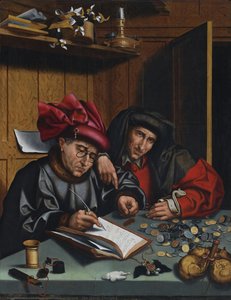
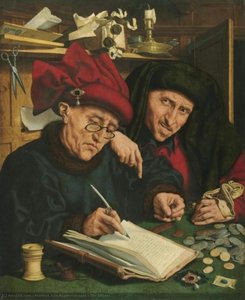
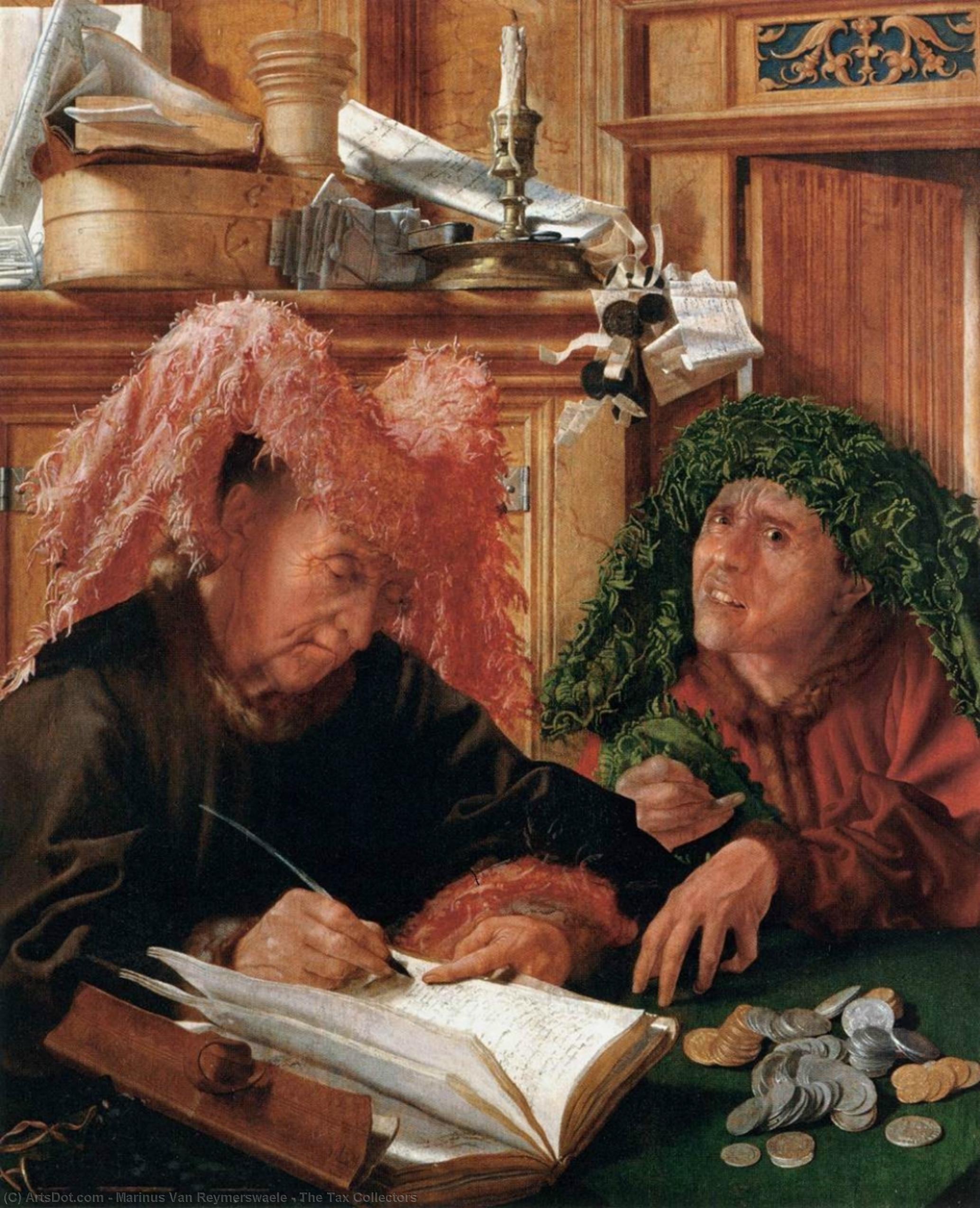
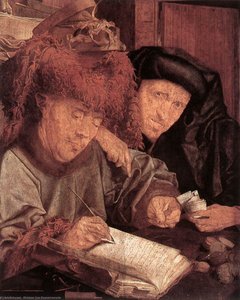
The Tax Collectors
 Oil On Panel
- Northern Renaissance
 1540
1540 94.0 x 77.0 cm
 The Louvre
 Read More
Hand Made Oil Reproduction
Hand-painted oil on canvas in your size and frame, made to order by our artists. ( Buy Print Buy Image)




P118B $10

P118H $10

P118W $10

P438Z $10

P508JH $12

P508YH $12

P805H $10

P805Z $10

P919BZ $10

P919G $10

P919XJ $10

P959ZH $10

P968JZ $12

W106C $8

W218G $10

W218JH $8

W218Y $10

W307PJ $10

W316G $10

W316PJ $8

W316Y $10

W398PJ $8

W4111J $10

W500HY $15

W500JH $15

W692G $12

W849H $8

W940BG $15

W953PJ $8




Pick from our preset sizes that match the artwork's original proportions.

You may enter your own dimensions to fit a specific frame or space. If your selected size does not match the original image's proportions, we will either crop the artwork or extend the painting with additional hand-painted elements. A digital mockup will be sent for your approval before production begins.
Please note that the on-screen preview does not reflect the actual cropping or extension. Only the mockup will accurately show the final composition.
While custom sizes are available, we recommend selecting a dimension from the predefined list to preserve the original proportions.
After order, ArtsDot.com team will email client for instructions and provide a mockup preview
Worldwide Delivery () in 3/4 weeks instead of standard 5 weeks. (22 August). No compromise on quality.

Free Worldwide Express Shipping

High-Quality Linen Canvas

Full Shipping Insurance

Customs Tax Refund Guarantee

True Color Matching Guarantee

60-Day Return Policy (Defects Only)

100% Money-Back Guarantee

Bulk Discount Offer
 Glass option is only available in size under 110 CM

The Tax Collectors
Reproduction Medium
Reproduction Size
-


Total Price
$ 263
Artwork Description
The Tax Collectors by Marinus van Reymerswaele: A Window into Renaissance Dutch Life
Marinus van Reymerswaele’s “The Tax Collectors,” painted around 1540, isn't merely a depiction of a mundane scene; it’s a meticulously crafted snapshot of 16th-century Dutch society – a world grappling with burgeoning wealth, shifting power dynamics, and the ever-present realities of governance. This panel painting, now housed in the Louvre Museum, offers a remarkably intimate glimpse into the lives of ordinary citizens, elevated by Reymerswaele’s masterful use of color, light, and detail. The work transcends its subject matter to become a poignant commentary on social order, economic pressures, and the subtle tensions simmering beneath the surface of daily life.
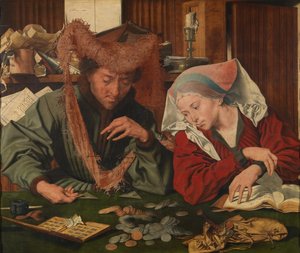
Reymerswaele, a key figure in the development of Dutch genre painting, was deeply influenced by the artistic innovations emerging from Florence and Antwerp. His style blends elements of realism with a distinctly Northern European sensibility – a preference for earthy tones, carefully observed details, and a focus on capturing the essence of human experience. “The Tax Collectors” exemplifies this approach perfectly. The scene unfolds within a modestly furnished room, bathed in diffused light that suggests an early morning hour. A table dominates the composition, cluttered with essential objects: a ledger, a coin purse, a bowl of coins, and a partially consumed cup – all meticulously rendered to convey a sense of immediacy and authenticity.
The Figures and Their Roles
At the center of the painting stand two men, identified as tax collectors. One, dressed in dark clothing, is actively engaged in writing within his ledger, his brow furrowed in concentration. His posture suggests diligence and responsibility – a vital role in maintaining the financial stability of the city. Across from him sits another figure, seemingly overseeing the proceedings with a watchful gaze. The details of their attire—the simple robes and modest furnishings—speak volumes about their social standing: they are not wealthy men, but individuals whose livelihood depends on collecting taxes for the local authorities. The inclusion of these figures is deliberate; Reymerswaele isn’t simply illustrating a transaction; he's presenting them as representatives of a system that shaped daily life.
Notably absent is any indication of authority or power. The tax collectors are presented as ordinary men, performing their duties with quiet seriousness. This lack of overt grandeur underscores the painting’s subtle critique of social hierarchy and the potential for corruption inherent in systems reliant on collecting revenue. The composition subtly invites the viewer to contemplate the ethical implications of their roles – a theme that resonates powerfully even today.
Technique and Artistic Choices
Reymerswaele's technical skill is evident in every brushstroke. He employs a meticulous approach, layering thin glazes of oil paint to create a rich, luminous surface. The use of chiaroscuro – the dramatic contrast between light and shadow – adds depth and volume to the figures and objects, drawing the viewer’s eye to key details. The artist's attention to texture is particularly noteworthy; you can almost feel the roughness of the wooden table, the smoothness of the coins, and the folds in the men’s clothing.
Furthermore, Reymerswaele masterfully utilizes color to convey mood and atmosphere. The muted palette—dominated by browns, ochres, and grays—reflects the somber nature of the subject matter, while subtle touches of red and gold highlight key elements, such as the coins and the tax collector’s ledger. The careful balance between light and shadow creates a sense of realism and immediacy, inviting the viewer to step into the scene and observe the unfolding drama.
Symbolism and Historical Context
“The Tax Collectors” is more than just a portrait; it's a reflection of the social and economic realities of 16th-century Netherlands. The painting emerged during a period of significant political and economic change, as the Dutch Republic struggled to assert its independence from Spain. Tax collection was a contentious issue, often fraught with corruption and abuse. Reymerswaele’s depiction of the tax collectors subtly acknowledges this tension, suggesting that their role—while essential for maintaining order—was also subject to scrutiny and potential exploitation.
The inclusion of everyday objects – the ledger, the coins, the cup – serves as a reminder of the material realities of life. These seemingly mundane items become symbolic representations of wealth, power, and social status. Through his careful observation and skillful rendering, Reymerswaele transforms a simple scene into a powerful commentary on human nature and the complexities of society. “The Tax Collectors” remains a compelling work of art, offering a valuable window into the past and prompting us to reflect on the enduring challenges of governance and social justice.
Related Artworks


Artist Biography
Titian: The Sun of Venice
The decade of the 1490s witnessed a burgeoning Renaissance across Europe, and within that vibrant landscape, Titian – born Tiziano Vecellio around 1488/90 in the small Alpine town of Pieve di Cadore – emerged as one of its most dazzling stars. His life, spanning nearly eight decades, coincided with a period of immense artistic transformation, marked by shifts from the more rigid formality of early Renaissance Florence to the richer, more sensual palettes and dynamic compositions that would define Venetian painting for generations. His story is not simply one of technical mastery; it’s a reflection of the evolving cultural currents of his time – a testament to ambition, patronage, and the enduring power of color.
Titian's early training was conventional for an aspiring artist of his era. He began as a pupil in the workshop of Sebastiano Zuccato, a renowned mosaicist in Venice, before briefly joining the studio of Gentile Bellini, one of the city’s most established masters. However, it was through his association with Giorgione – a figure whose influence would ripple throughout Titian's career – that he truly began to forge his own distinctive style. Giorgione’s innovative use of color and atmospheric perspective, coupled with a focus on capturing fleeting moments of beauty, provided a crucial foundation for Titian’s later development. The pair collaborated on the magnificent frescoes adorning the ‘Scuola del Santo’ in Padua, a project that cemented their bond and established Titian as a rising talent.
The Rise to Prominence
Following Giorgione's untimely death in 1510, Titian seized his opportunity. He quickly established himself as an independent artist, attracting the attention of wealthy patrons throughout Italy – from the powerful Medici family in Florence to the dukes and princes of Ferrara, Mantua, and Urbino. His versatility was remarkable; he excelled at a wide range of subjects, including portraits, mythological scenes, religious altarpieces, and landscapes. He wasn’t simply a painter; he was a courtier, a diplomat, and a master of presentation, understanding the importance of cultivating relationships with his clients.
Titian's early works are characterized by a delicate lyricism and a fondness for pastoral settings – scenes of shepherds, nymphs, and idyllic landscapes bathed in soft light. However, as he matured, his style underwent a dramatic transformation. He embraced bolder colors, looser brushwork, and a more dynamic approach to composition. His later paintings are infused with a sensual energy and a profound understanding of human emotion. The ‘Assumption of the Virgin’ (1516-18) for Santa Maria Gloriosa dei Frari in Venice is a prime example of this evolution – a monumental altarpiece that redefined Venetian painting and set a new standard for grandeur and emotional intensity.
Technique and Innovation
Titian's mastery of color was unparalleled. He developed a unique technique known as “color glazing,” applying thin, translucent layers of paint to build up rich, luminous surfaces. This method allowed him to achieve an astonishing range of hues and tones – from the deepest ultramarine blues to the most vibrant reds and yellows. He also experimented extensively with different pigments, constantly seeking new ways to capture the nuances of light and shadow. His use of *chiaroscuro*—the dramatic contrast between light and dark—became a hallmark of his style, adding depth and drama to his compositions.
Beyond color, Titian’s innovations extended to composition and brushwork. He moved away from the rigid formality of earlier Renaissance painting, embracing a more fluid and expressive approach. His brushstrokes were often loose and gestural, conveying a sense of movement and spontaneity. He also pioneered new techniques for depicting drapery and texture, creating fabrics that seemed to shimmer and flow with life.
Legacy and Influence
Titian’s influence on subsequent generations of artists is immeasurable. He was followed by a succession of Venetian painters – including Tintoretto, Veronese, and Bassano – who built upon his innovations and established the Venetian school as one of the most important artistic centers in Europe. His techniques were studied and imitated throughout the 17th century and beyond, shaping the course of Western art history.
Titian’s legacy extends far beyond the canvas. He was a shrewd businessman, a charismatic personality, and a keen observer of human nature. His life embodies the spirit of the Renaissance – a period of unprecedented creativity, innovation, and cultural exchange. He remains one of the most beloved and admired artists in history, celebrated for his dazzling colors, dramatic compositions, and profound understanding of beauty.
marinus van reymerswaele
1490 - 1546 , Netherlands
Quick Facts
- Artistic Movement Or Style: Renaissance painting”
- Artists Or Movements Influenced By This Artist: ['Venetian School”,\n “European painting”']
- Artists Who Influenced This Artist:
- Giorgione
- Giovanni Bellini
- Date Of Birth: c. 1490
- Date Of Death: 1576
- Full Name: Tiziano Vecellio”
- Nationality: Venetian
- Notable Artworks:
- Assumption of the Virgin
- Venus of Urbino
- Bacchus and Ariadne
- Place Of Birth: Pieve di Cadore, Italy
Related Articles
Genre Painting: A Window into Daily Life & Societal Values of the Dutch Golden Age
Explore the captivating world of Dutch Golden Age genre painting! Discover realistic depictions of daily life, masterful artists like Ostade & Metsu, and hidden symbolism. Learn about this influential art movement with ArtsDot.

Golden Age Reflections: Dutch Baroque Painting & Cultural Innovation
Explore the Dutch Golden Age of painting! Discover key artists like Vermeer & ter Borch, their innovative techniques, and the rich cultural context behind these Baroque masterpieces. Learn about collecting & appreciating this iconic art period.

Illuminating Realism: Exploring the Dutch Golden Age of Painting (1600-1700)
Explore the Dutch Golden Age of painting (1600-1700) with ArtsDot. Discover Rembrandt, Vermeer & other masters. Learn about techniques, history & find museum-quality reproductions.

Illuminating Innovation: Exploring the Dutch Golden Age of Painting
Explore the Dutch Golden Age of painting with ArtsDot. Discover Rembrandt, Vermeer & other Masters. Learn about key characteristics, iconic artworks, and lasting influence. Expert insights for collectors & enthusiasts.
Jan Steen: A Master of Dutch Genre Painting & the Golden Age
Explore the life & art of Jan Steen, a leading Dutch Golden Age painter renowned for his humorous genre scenes & insightful social commentary. Discover his techniques, legacy, and collecting tips.