- Home

- Oil Painting Reproduction
- mark catesby, english, born essex, england 1682/1683-died london, england 1749
 Preview
 Send
Send Share
Share
 Details

 Download
 Similars
 X-Ray
X-Ray Diaporama
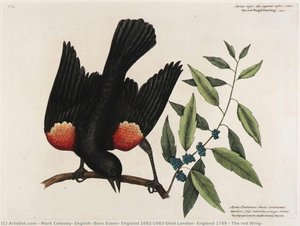
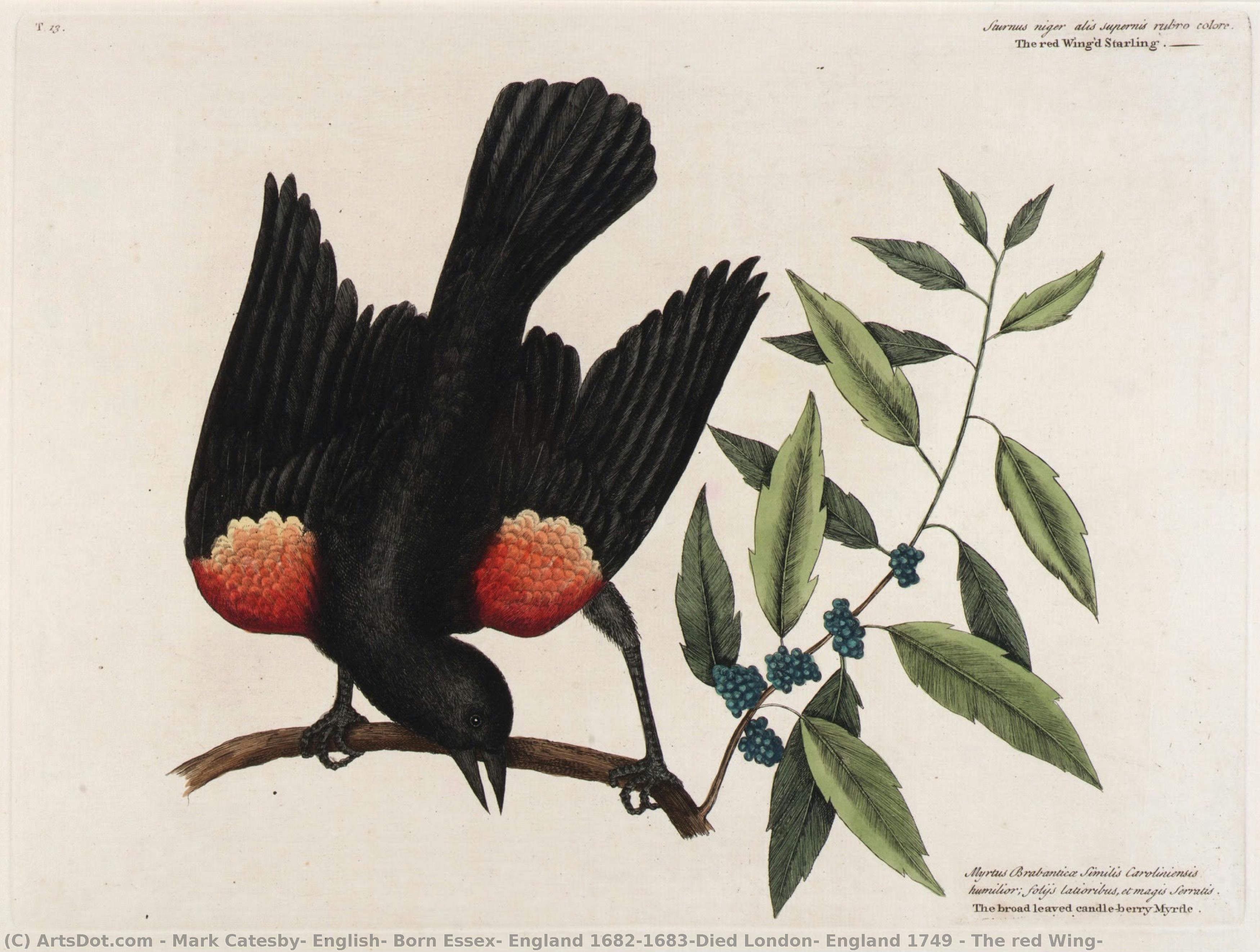
The red Wing
 Naturalistic Illustration
 1731
1731 26.0 x 35.0 cm
 Smithsonian American Art Museum
 Read More
Hand Made Oil Reproduction
Hand-painted oil on canvas in your size and frame, made to order by our artists. ( Buy Print Buy Image)




































Pick from our preset sizes that match the artwork's original proportions.

You may enter your own dimensions to fit a specific frame or space. If your selected size does not match the original image's proportions, we will either crop the artwork or extend the painting with additional hand-painted elements. A digital mockup will be sent for your approval before production begins.
Please note that the on-screen preview does not reflect the actual cropping or extension. Only the mockup will accurately show the final composition.
While custom sizes are available, we recommend selecting a dimension from the predefined list to preserve the original proportions.
After order, ArtsDot.com team will email client for instructions and provide a mockup preview
Worldwide Delivery () in 3/4 weeks instead of standard 5 weeks. (16 August). No compromise on quality.

Free Worldwide Express Shipping

High-Quality Linen Canvas

Full Shipping Insurance

Customs Tax Refund Guarantee

True Color Matching Guarantee

60-Day Return Policy (Defects Only)

100% Money-Back Guarantee

Bulk Discount Offer
 Glass option is only available in size under 110 CM

The red Wing
Reproduction Medium
Reproduction Size
-


Total Price
$ 263
Related Artworks






Artist Biography
The Visionary Eye of Mark Catesby
In the golden age of scientific discovery, few figures captured the raw, untamed essence of the New World as vividly as Mark Catesby. Born in the quiet landscapes of Essex, England, around 1683, Catesby possessed a spirit that could not be contained by the borders of Europe. While his early education in classical studies and mathematics provided him with the analytical rigor necessary for scientific inquiry, it was an innate passion for ornithology that would ultimately lead him across the Atlantic. His journey was more than a mere expedition; it was a profound artistic and scientific pilgrimage that sought to bridge the gap between the known European natural world and the mysterious, vibrant ecosystems of North America.
Catesby’s arrival in Virginia in 1712 marked the beginning of a transformative era for both natural history and botanical art. Moving through the tidewater regions and eventually venturing into the lush territories of Carolina, Florida, and the Bahama Islands, he acted as both an explorer and a chronicler. Unlike many of his contemporaries who relied on dried specimens or second-hand descriptions, Catesby sought the living pulse of nature. He observed birds in flight, reptiles amidst foliage, and the delicate interplay between flora and fauna, translating these fleeting moments into permanent, exquisite records that would stun the scientific community upon their return to England.
A Masterpiece of Scientific Illustration
The crowning achievement of Catesby’s career remains his monumental publication, The Natural History of Carolina, Florida and the Bahama Islands. Produced between 1729 and 1747, this work was a revolutionary treatise that fundamentally altered the Western understanding of American biodiversity. Through a painstaking process of collecting specimens and rendering them in detailed watercolors and etchings, Catesky produced 220 plates of unparalleled beauty and accuracy. Each plate served as a window into a world previously unseen by European eyes, featuring an array of birds, reptiles, amphibians, fish, insects, and plants.
His technique was characterized by a remarkable marriage of scientific precision and artistic grace. Catesby did not merely illustrate subjects in isolation; he often depicted them within their ecological context, showing the symbiotic relationships between plants and the creatures that inhabited them. This approach predated many modern ecological concepts and gave his work a narrative depth that set it apart from purely taxonomic drawings. The vibrant colors and meticulous textures of his watercolors—such as those seen in his famous depiction of the Red Winged Starling—conveyed a sense of life and vitality that made his scientific observations feel deeply personal and emotionally resonant.
Legacy and Historical Significance
The impact of Mark Catesby’s work reverberated through the centuries, establishing him as a foundational figure in the tradition of naturalistic illustration. Before the arrival of John James Audubon, whose Birds of America would later become a legendary standard, Catesby’s volumes stood as the most significant illustrated record of North American life. His ability to document the habits and environments of species with such fidelity earned him a permanent place in the annals of both art and science. He paved the way for future generations of naturalists, proving that rigorous scientific observation could be elevated through the medium of fine art.
Beyond his technical contributions, Catesby’s life represents the quintessential Enlightenment pursuit: the quest to categorize, understand, and celebrate the wonders of the natural world. His legacy is found not only in museum archives but in the very way we perceive the beauty of the wild. Through his eyes, the flora and fauna of the New World were transformed from mere curiosities into subjects of profound scientific importance and aesthetic wonder, ensuring that his name remains synonymous with the dawn of American natural history.
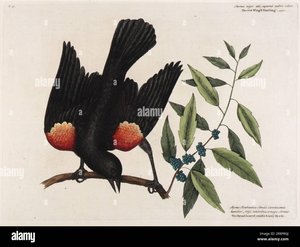
mark catesby, english, born essex, england 1682/1683-died london, england 1749
1682 - 1749 , United Kingdom
Quick Facts
- Artistic Movement Or Style: Botanical Illustration
- Date Of Birth: 1682/1683
- Full Name: Mark Catesby
- Nationality: English
- Notable Artworks:
- The Red Wing
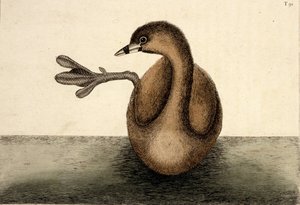
- The Pied-billed Dobchick
- Place Of Birth: Essex, United Kingdom
Related Articles

Mark Rothko's Masterpieces: 25 Paintings That Define Abstract Expressionism | ArtsDot
Explore 25 iconic Mark Rothko paintings that define Abstract Expressionism. Discover the stories, colors & emotions behind these masterpieces. Find museum-quality art reproductions and curated decor ideas at ArtsDot.com.
The Flourishing Canvas: A Historical & Artistic Exploration of Botanical Illustration
Explore the rich history of botanical illustration! Discover key artists like Havell & Barraband, learn about scientific accuracy & aesthetic beauty. Shop museum-quality reproductions at ArtsDot.
The Flourishing Canvas: A Historical Journey Through Botanical Illustration
Explore the captivating history of botanical illustration! Discover renowned artists like Robert Havell & Mary Walcott, learn about techniques, and find museum-quality art at ArtsDot.com.
The Flourishing Canvas: A Historical Journey Through Botanical Illustration
Explore the captivating history of botanical illustration! Discover renowned artists like Robert Havell & Mary Walcott, learn about techniques, and find museum-quality art at ArtsDot.com.

Victorian Botanical Painting: Science, Art & Aesthetic Sensibility
Explore the exquisite world of Victorian botanical art! Discover the science & artistry behind stunning floral illustrations by Gould, Muckley & more. Learn about collecting, value & investment at ArtsDot.