 Preview
 Send
Send Share
Share
 Details

 Download
 Similars
 X-Ray
X-Ray Diaporama
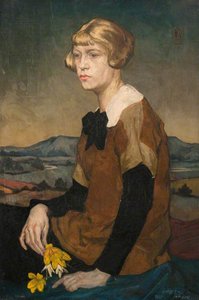
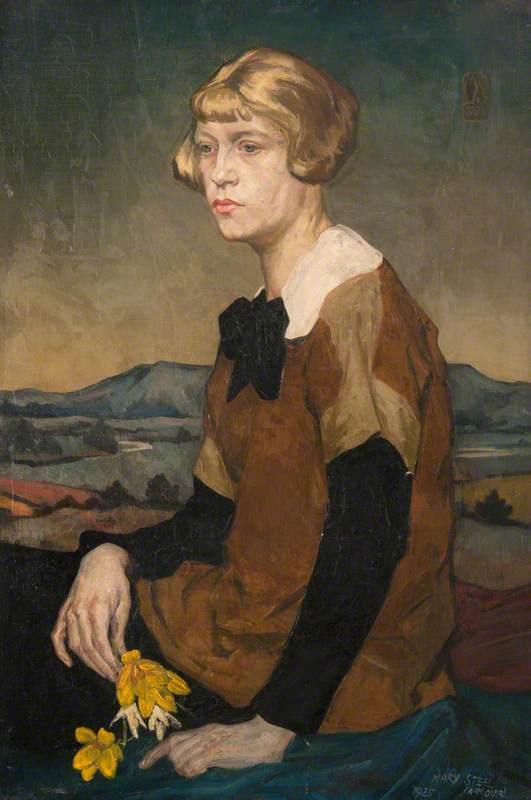
Miss Clelland
 Contemporary Realism
 1925
1925 116.0 x 68.0 cm
 Read More
Hand Made Oil Reproduction
Hand-painted oil on canvas in your size and frame, made to order by our artists. ( Buy Print Buy Image)




































Pick from our preset sizes that match the artwork's original proportions.

You may enter your own dimensions to fit a specific frame or space. If your selected size does not match the original image's proportions, we will either crop the artwork or extend the painting with additional hand-painted elements. A digital mockup will be sent for your approval before production begins.
Please note that the on-screen preview does not reflect the actual cropping or extension. Only the mockup will accurately show the final composition.
While custom sizes are available, we recommend selecting a dimension from the predefined list to preserve the original proportions.
After order, ArtsDot.com team will email client for instructions and provide a mockup preview
Worldwide Delivery () in 3/4 weeks instead of standard 5 weeks. (22 August). No compromise on quality.

Free Worldwide Express Shipping

High-Quality Linen Canvas

Full Shipping Insurance

Customs Tax Refund Guarantee

True Color Matching Guarantee

60-Day Return Policy (Defects Only)

100% Money-Back Guarantee

Bulk Discount Offer
 Glass option is only available in size under 110 CM

Miss Clelland
Reproduction Medium
Reproduction Size
-


Total Price
$ 263
Related Artworks
Artist Biography
A Life Immersed in Scottish Light: The Art of Mary Nicol Neill Armour
Mary Nicol Neill Armour, born in 1902 in the industrial heartland of Blantyre, Scotland, emerged as a quietly powerful voice within the landscape and still life traditions of her nation. Her journey from aspiring teacher to celebrated artist, Honorary President of both the Glasgow School of Art and the Royal Glasgow Institute of the Fine Arts, is one marked by dedication, resilience, and an unwavering commitment to observing the world around her with a discerning eye. Armour’s early inclination towards education was swiftly redirected by the perceptive guidance of Penelope Beaton, an art teacher who recognized a nascent talent and encouraged young Mary to pursue formal training at the Glasgow School of Art in 1920. This decision proved pivotal, laying the foundation for a career that would span decades and leave an indelible mark on Scottish art.Formative Years and Artistic Partnership
The Glasgow School of Art provided Armour with a rigorous grounding in artistic principles under the tutelage of Maurice Greiffenhagen and David Forrester Wilson. However, even within this structured environment, her independent spirit shone through—a testament to which is her choice of subject matter for her diploma project: a ‘Pit Head Scene’ rather than the conventionally expected religious motif. This early defiance signaled a desire to engage with the realities of Scottish life, a theme that would subtly permeate much of her later work. In 1927, she married fellow landscape painter William Armour, forging an artistic partnership built on mutual respect and shared exploration. Together they founded the Milngavie Art Club, fostering a vibrant community for artists in their local area. Marriage, however, initially necessitated relinquishing her teaching post due to prevailing regulations of the time—a sacrifice that, while providing more dedicated painting hours, conflicted with her inherent passion for education.Developing a Distinctive Vision
Armour’s artistic development was characterized by a gradual refinement of technique and a deepening engagement with color and composition. She exhibited consistently at prestigious venues including the Royal Academy in London and the Royal Scottish Academy in Edinburgh, earning recognition for her evocative depictions of both rural landscapes and intimate still lifes. The 1937 Guthrie Prize awarded to her by the Royal Scottish Academy was an early affirmation of her growing talent. Her work during this period often featured earthy tones and impressionistic brushwork, capturing a sense of nostalgia and tranquility. However, it wasn’t merely aesthetic beauty that drove Armour; she sought to imbue her paintings with intellectual depth, believing that “the thinking takes far more time than the actual manipulation of the oil paint.” This thoughtful approach is evident in the carefully arranged compositions of her still lifes, where symbolic fruit and objects are imbued with subtle meaning.A Pioneer for Women in Art
Armour’s career unfolded during a period when opportunities for women artists were limited. Her election as an associate of the Royal Scottish Watercolour Society in 1941, followed by full membership in 1956, and ultimately her groundbreaking appointment as a member of the Royal Scottish Academy in 1958—only the second woman to achieve this honor—were significant milestones. These achievements not only validated her artistic merit but also paved the way for future generations of female artists. Following the repeal of legislation restricting married women from teaching, Armour returned to Glasgow School of Art in 1951, where she taught still life painting until 1962. Her influence on students was profound, particularly those returning servicemen whose training had been interrupted by the war and who brought a renewed enthusiasm for modern European art.Legacy and Enduring Influence
The latter part of Armour’s career saw a flourishing of creativity as she dedicated herself fully to painting after retirement from teaching. She received the Cargill Prize from the Royal Glasgow Institute of the Fine Arts in 1972, further cementing her reputation within the Scottish art world. Even as her eyesight began to diminish in the late 1980s, Armour remained a tireless advocate for emerging artists, establishing awards and prizes—including the eponymous “Armour Award”—that continue to support young painters today. Her paintings are held in numerous public collections, including those of Glasgow Municipal Gallery and the Art Galleries of Aberdeen, serving as enduring testaments to her skill, sensitivity, and unwavering dedication to capturing the beauty and essence of Scotland’s landscapes and still lifes. Mary Nicol Neill Armour stands as a pivotal figure—a pioneering artist, dedicated teacher, and an inspiring role model whose legacy continues to resonate within the Scottish art community.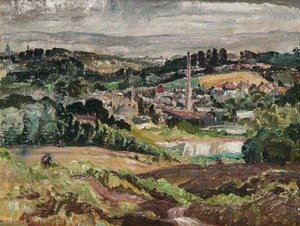
mary nicol neill armour
1902 - 2000
Quick Facts
- Artistic Movement Or Style: Landscape & Still Life
- Artists Who Influenced This Artist: ['Penelope Beaton']
- Date Of Birth: March 27, 1902
- Date Of Death: July 5, 2000
- Full Name: Mary Nicol Neill Armour
- Nationality: Scottish
- Notable Artworks:
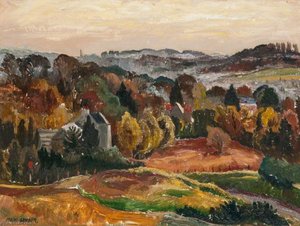
- Spring at Milngavie
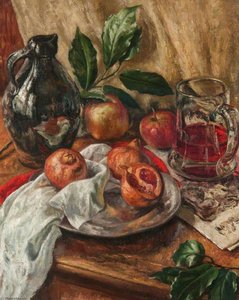
- Still Life with Pomegranate
- Miss Clelland
- Pit Head Scene
- Place Of Birth: Blantyre, Scotland
Related Articles
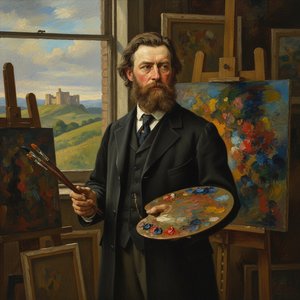
George Paul Chalmers: Rediscovering the Angus Rembrandt & Scottish Colourist Roots
Explore the captivating world of George Paul Chalmers (1833-1878), a pivotal Scottish painter. Discover his landscapes, portraits & connection to the Aesthetic Movement and Colourists. Learn about this 'Angus Rembrandt's' legacy with ArtsDot.
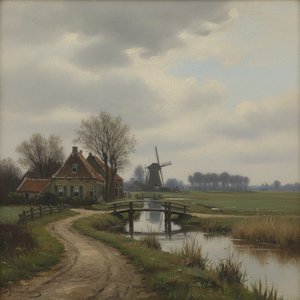
Jacob Henricus Maris: A Master of Dutch Atmospheric Realism & the Intimate Landscape
Explore the captivating world of Jacob Henricus Maris, a leading figure of the Dutch Hague School. Discover his atmospheric landscapes, signature brushstrokes & lasting influence on 19th-century art. Learn more at ArtsDot.
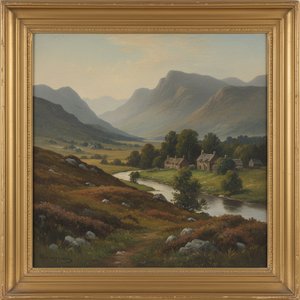
Sir John Watson Gordon: A Study in Scottish Landscape Painting & Tonal Impressionism
Explore the captivating portraits of Sir John Watson Gordon, a leading Scottish master. Discover his evolution from neoclassical style to atmospheric Tonalism and influence on 19th-century British art. Learn about his iconic sitters & legacy.
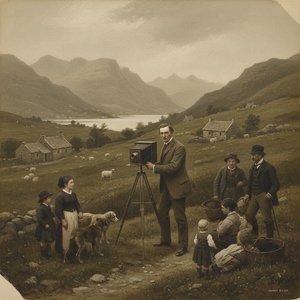
James Giles: Capturing Scottish Life Through the Lens of British Realism
Explore the life & work of James Giles (1801-1870), a master of Scottish landscape painting and favored artist of Queen Victoria. Discover his atmospheric realism & royal commissions.
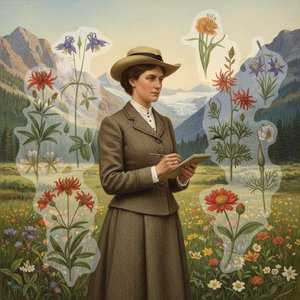
Mary Vaux Walcott: Botanical Precision & Artistic Vision in American Conservation
Discover the exquisite botanical watercolors of Mary Vaux Walcott, celebrated as the 'Audubon of Botany.' Explore her life, art, and lasting impact on American conservation through detailed illustrations & Smithsonian contributions.