 Preview
 Send
Send Share
Share
 Details

 Download
 Similars
 X-Ray
X-Ray Diaporama
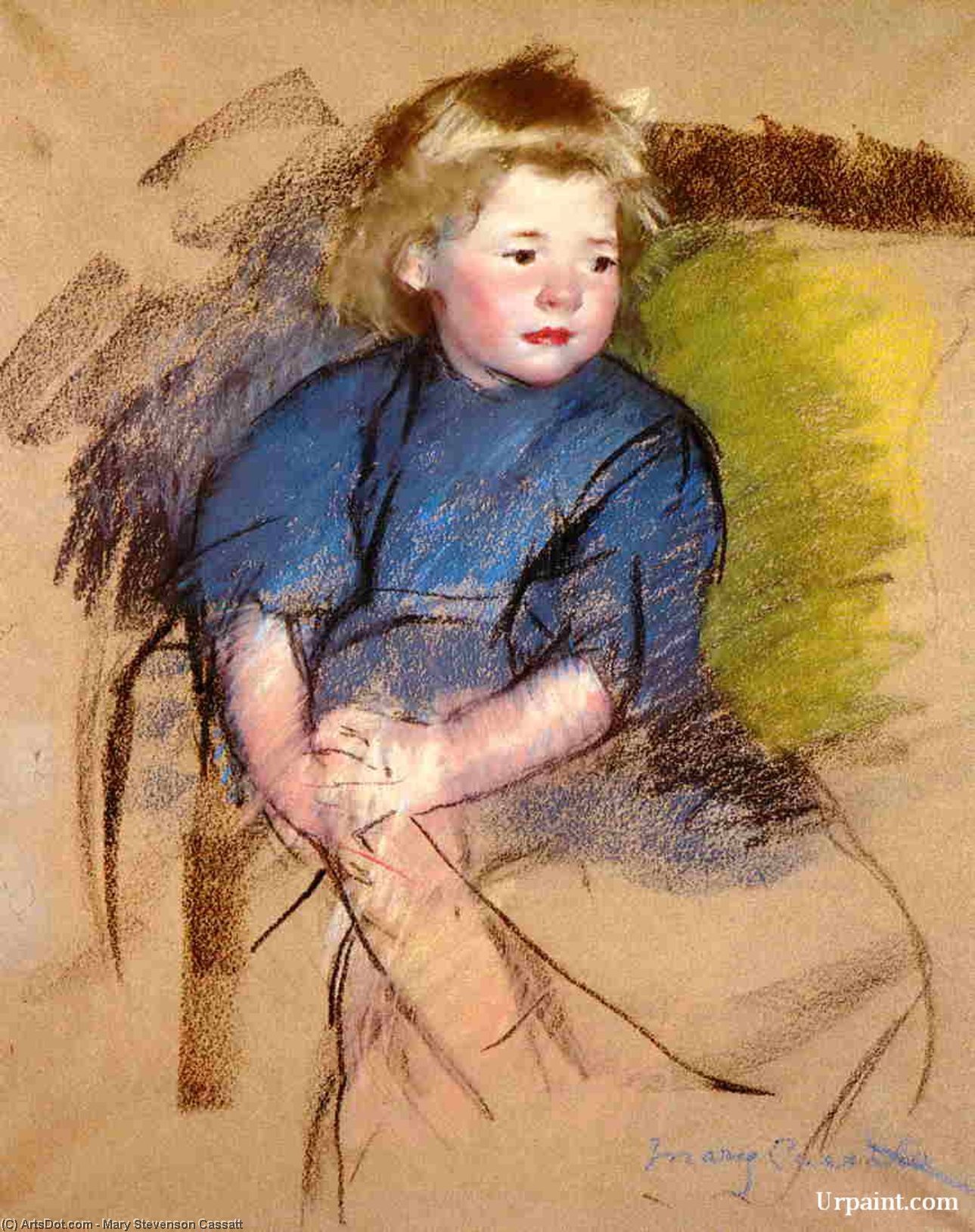
Portrait of a Young Girl (Simone)
 Pastel
- Impressionism
 1903
1903- 19th Century
 70.0 x 57.0 cm
 Read More
Giclée / Art Print
Museum-quality giclée or canvas print with fast production and flexible finish options. ( Buy Hand Made Painting Buy Image)




P118B $10

P118H $10

P118W $10

P438Z $10

P508JH $12

P508YH $12

P805H $10

P805Z $10

P919BZ $10

P919G $10

P919XJ $10

P959ZH $10

P968JZ $12

W106C $8

W218G $10

W218JH $8

W218Y $10

W307PJ $10

W316G $10

W316PJ $8

W316Y $10

W398PJ $8

W4111J $10

W500HY $15

W500JH $15

W692G $12

W849H $8

W940BG $15

W953PJ $8




Pick from our preset sizes that match the artwork's original proportions.

You may enter your own dimensions to fit a specific frame or space. If your selected size does not match the original image's proportions, we will either crop the artwork or extend the image with a mirrored or solid-fill edge. A digital mockup will be sent for your approval before production begins.
Please note that the on-screen preview does not reflect the actual cropping or extension. Only the mockup will accurately show the final composition.
While custom sizes are available, we recommend selecting a dimension from the predefined list to preserve the original proportions.
Worldwide Delivery () in 2 weeks instead of standard 4/5 weeks. (2 September)

Free Worldwide Express Shipping

High-Quality Linen Canvas

Full Shipping Insurance

Customs Tax Refund Guarantee

True Color Matching Guarantee

60-Day Return Policy (Defects Only)

100% Money-Back Guarantee

Bulk Discount Offer
 Glass option is only available in size under 110 CM

Portrait of a Young Girl (Simone)
Giclée / Art Print
Reproduction Size
-


Total Price
$ 63
A Glimpse into Edwardian Innocence: The Portrait of a Young Girl
To stand before this portrait is to step directly into the sun-dappled drawing rooms of the early twentieth century, a moment captured with exquisite tenderness. Mary Stevenson Cassatt’s Portrait of a Young Girl (Simone) is more than just a likeness; it is an intimate meditation on childhood, poise, and the delicate passage of time. The subject, seated gracefully upon a chair, engages the viewer with a direct, knowing gaze that belies her apparent youth. Her posture—legs crossed with natural ease—suggests a studied moment of quiet contemplation, inviting us to wonder about the thoughts passing behind those luminous eyes.
The Whisper of Impressionism in Pastel Hues
Technically, this work is a masterclass in impressionistic handling, executed primarily in soft, evocative pastels. Cassatt employs these delicate pigments not merely for color, but for atmosphere itself. The pastel medium allows the light to seem almost palpable, giving the entire scene an ethereal glow that seems to emanate from within the canvas. Observe the interplay between the vibrant blue of her shirt and the cheerful yellow of her skirt; these colors are rendered with a luminous quality characteristic of the period, yet they feel uniquely personal to this sitter. The background elements, including the visible chairs, dissolve into soft suggestions of form rather than hard lines, allowing the focus to remain entirely on the gentle presence of the girl.
Cassatt’s Vision: Domesticity and the Modern Woman
Within the broader context of late nineteenth-century art, Cassatt carved out a vital niche. While many contemporaries focused on grand historical narratives or dramatic outdoor scenes, Cassatt found her profound subject matter in the domestic sphere—the lives, interactions, and quiet dignity of women and children. This portrait exemplifies that dedication. It speaks to an era where the private life held as much artistic weight as public spectacle. Her ability to imbue a simple sitting with such emotional depth elevates this piece beyond mere genre painting; it becomes a profound study in human connection.
Symbolism and Enduring Appeal for the Collector
The symbolism here is subtle but rich. The crossed legs suggest both youthful femininity and an emerging self-possession, while her direct gaze acts as a bridge across the decades separating us from 1903. For the collector or interior designer, this piece offers unparalleled warmth. Reproducing this work allows one to infuse a space with the gentle sophistication of turn-of-the-century American artistry. It functions beautifully in drawing rooms, studies, or nurseries, adding an immediate layer of cultured romance and nostalgic beauty that complements both antique furnishings and modern minimalist design alike.
A Touch of Timeless Grace
To own a reproduction of Portrait of a Young Girl (Simone) is to possess a piece of art history imbued with enduring grace. It captures the fleeting perfection of youth while celebrating the sophisticated artistic vision of Mary Stevenson Cassatt. The soft textures and pastel palette ensure that this portrait remains captivating, offering not just decoration, but a continuous, gentle conversation starter for any discerning eye.
Related Artworks

Artist Biography
A Life Dedicated to Impressionism and Domesticity
Mary Stevenson Cassatt, a name forever linked with intimate portrayals of women and children within the radiant world of late 19th-century Impressionism, forged an exceptional path as an American artist who discovered her artistic sanctuary in France. Born on May 22, 1844, in Allegheny City, Pennsylvania – now part of Pittsburgh – Cassatt’s upbringing was steeped in privilege and a cultivated awareness of culture. Her family, with roots tracing back to French Huguenots, placed high value on education and travel, instilling within young Mary a cosmopolitan perspective that would profoundly shape her artistic vision. While societal norms often confined women to domestic spheres, Cassatt's mother, Katherine Kelso Johnston, actively encouraged her daughter’s burgeoning interest in art, recognizing and nurturing a talent that defied convention. This early support proved invaluable as Cassatt navigated the challenges of pursuing a professional career within a male-dominated field.
From Philadelphia to Parisian Immersion
Cassatt's formal artistic training commenced at the Pennsylvania Academy of the Fine Arts in Philadelphia at the age of fifteen, a bold step for a young woman during the Civil War era. Despite encountering skepticism and subtle discouragement from some instructors and fellow students, she persevered through years of diligent study. However, feeling constrained by the academy’s deliberate pace and traditional methods, Cassatt sought broader horizons. A pivotal moment arrived in 1866 when she relocated to Paris, accompanied by her mother and family friends as chaperones. This move marked a turning point in her artistic development. She studied privately with established artists affiliated with the École des Beaux-Arts, including Jean-Léon Gérôme, absorbing technical skills while simultaneously immersing herself in the burgeoning Parisian art scene. It was during this period that Cassatt began to gravitate towards the innovative ideas of the Impressionists, a group challenging academic conventions and striving to capture the fleeting moments of modern life. A particularly significant relationship blossomed with Edgar Degas, who recognized her exceptional talent and invited her to exhibit alongside the Impressionist circle. Their connection extended beyond exhibition; Degas became a mentor, encouraging Cassatt’s exploration of printmaking techniques, especially color aquatint, which would become an integral part of her artistic repertoire. He profoundly influenced her compositional choices, particularly in his emphasis on asymmetrical arrangements and cropped figures – elements that would come to define her unique style.
Capturing Modern Womanhood: Style and Themes
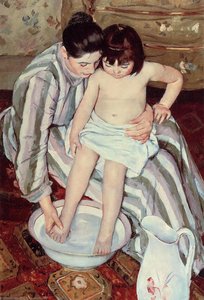
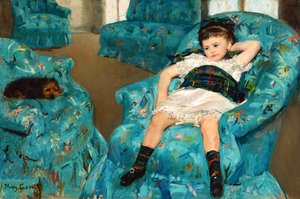
Cassatt’s artistic style evolved to embrace the hallmarks of Impressionism – visible brushstrokes, a focus on light and color, and a commitment to depicting contemporary life. Yet, she infused her work with a distinct clarity and precision that set it apart from some of her contemporaries. Unlike many male Impressionists who favored landscapes or Parisian nightlife, Cassatt centered her art around the social and private worlds of women, particularly mothers and children. She portrayed scenes of domesticity – bathing rituals, tea parties, quiet moments of connection – with remarkable intimacy and psychological depth. Her paintings are not merely depictions of everyday life; they are sensitive explorations of maternal bonds, female relationships, and the complexities of modern womanhood. Key works like The Boating Party (1894), The Child’s Bath (in various versions), and Little Girl in a Blue Armchair exemplify her ability to capture fleeting moments with both technical skill and emotional resonance. Furthermore, Cassatt was deeply influenced by Japanese *ukiyo-e* woodblock prints, evident in her compositions' flattened perspective, bold color choices, and elegant simplicity. This Japonisme influence added another layer of sophistication to her already distinctive style, influencing her use of pattern and the arrangement of forms within a space. She admired the way these prints captured everyday life with such directness and grace, qualities she sought to emulate in her own work.
Legacy and Historical Significance
Mary Cassatt’s contributions to the art world extend far beyond her captivating paintings and masterful prints. Often recognized as one of the “three great ladies” of Impressionism, alongside Berthe Morisot and Marie Bracquemond, she shattered barriers for women artists and paved the way for future generations. She played a vital role in bridging American and European art, introducing Impressionist ideas to an American audience and significantly contributing to the development of American Impressionism. Her work offered a nuanced and sympathetic portrayal of women’s lives during a period when they were often marginalized or stereotyped in art. Her depictions of motherhood are particularly celebrated for their honesty and emotional depth, challenging conventional representations and celebrating the strength and tenderness of maternal love. Today, her works are held in prestigious museums worldwide, including the Art Institute of Chicago (The Child’s Bath), the National Portrait Gallery in London (a portrait by Degas), and countless other institutions, ensuring that her legacy continues to inspire and resonate with audiences around the globe. She remains a powerful symbol of artistic independence and a testament to the enduring power of art to illuminate the human experience.
Further Exploration
- Online Resources: Explore Mary Cassatt’s life and work further through resources like Wikipedia (https://en.wikipedia.org/wiki/Mary_Cassatt) and ArtsDot.
- Museum Collections: Discover her masterpieces in renowned museums worldwide, including the Art Institute of Chicago and the National Portrait Gallery in London.
- Related Artists: Delve into the works of Edgar Degas, Berthe Morisot, and Marie Bracquemond to understand the broader context of Impressionism and the contributions of women artists during this period.
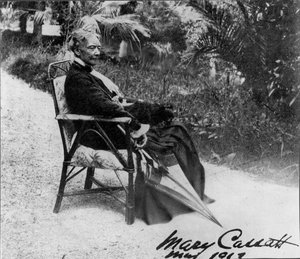
Mary Stevenson Cassatt
1843 - 1926 , United States of America
Quick Facts
- Artistic Movement Or Style: Impressionism
- Artists Or Movements Influenced By This Artist: ['American Impressionism']
- Artists Who Influenced This Artist:
- Edgar Degas
- Jean-Léon Gérôme
- Date Of Birth: May 22, 1844
- Date Of Death: 1926
- Full Name: Mary Stevenson Cassatt
- Nationality: American
- Notable Artworks:
- The Boating Party
- Child's Bath
- Little Girl in Blue Armchair
- Place Of Birth: Pittsburgh, USA
Related Articles

Capturing a Nation's Light: Exploring the American Impressionist Movement
Explore the captivating world of American Impressionism! Discover key artists, techniques & its lasting impact on art history. Find museum-quality reproductions and expert guidance at ArtsDot.
Mary Cassatt: Modernity, Motherhood & the Impressionist Gaze – A Timeless Legacy
Explore the life & art of Mary Cassatt, a pivotal American Impressionist renowned for intimate portrayals of women & children. Discover her unique style, legacy, and groundbreaking techniques at ArtsDot.
American Realism's Defining Works: 10 Masterpieces for Your Home
Explore 10 defining American Realism masterpieces – Hopper, Homer & more. Discover the stories behind these iconic paintings and bring timeless art to your home with ArtsDot's museum-quality reproductions. Explore the full collection online.
Renoir's Masterpieces: Explore 25 Iconic Paintings & Bring Art Home | ArtsDot
Explore 25 iconic Pierre-Auguste Renoir paintings! Discover the stories behind Impressionist masterpieces like 'Dance at Le Moulin de la Galette' & 'Luncheon of the Boating Party'. Find museum-quality art reproductions and elevate your home decor with ArtsDot.com.
The Subtleties of Pastel: A Comprehensive Exploration of Technique, History & Emotional Resonance
Explore the captivating world of pastel art! Discover its rich history, Impressionistic masters like Degas, emotional power & unique techniques. Find museum-quality reproductions at ArtsDot.